 Beyond Nuclear International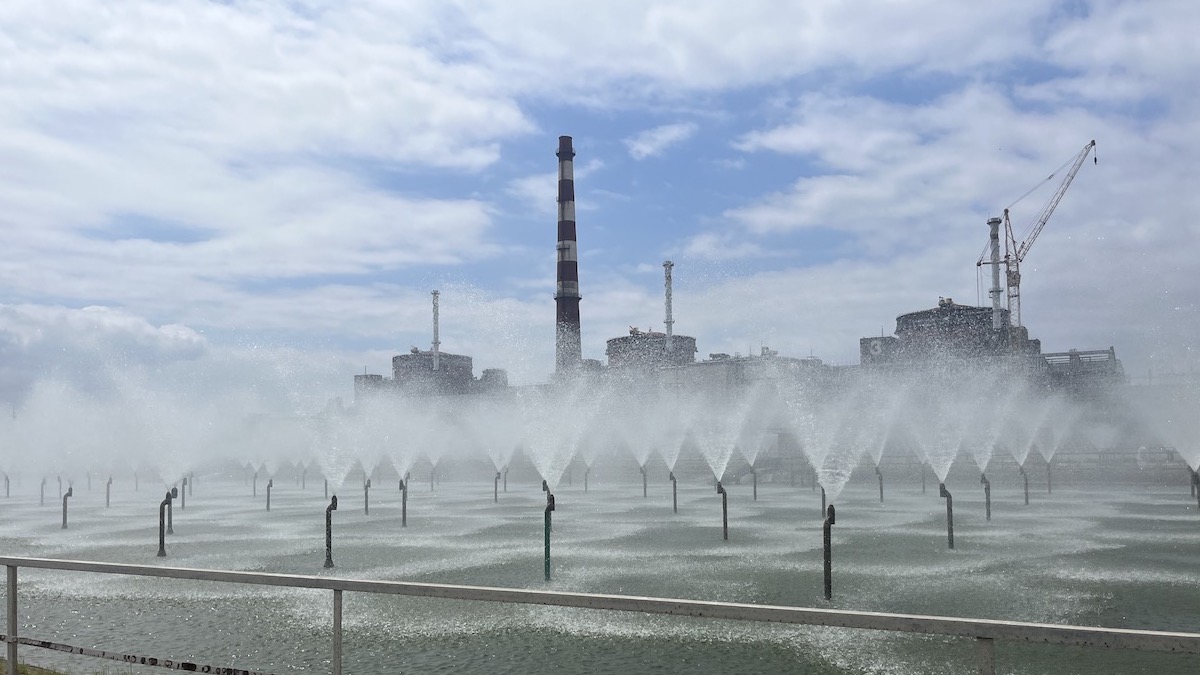
Nuclear energy should not be an “inalienable right” and isn’t
“peaceful”
This excerpt on nuclear power is taken from Reaching Critical Will’s 2023 NPT Briefing Book. The handbook is being released in advance of the first session of the Preparatory Committee for the 2026 Review Conference of the Parties to the Treaty on the Non-Proliferation of Nuclear Weapons (NPT), which will meet from July 31 to August 11 2023 at the Vienna International Centre in Vienna, Austria.
Nuclear weapons are not the only nuclear risk. Nuclear energy also has inherent risks and the capacity to unleash uniquely horrifying forms of devastation upon human bodies, the environment, and our socioeconomic infrastructure.
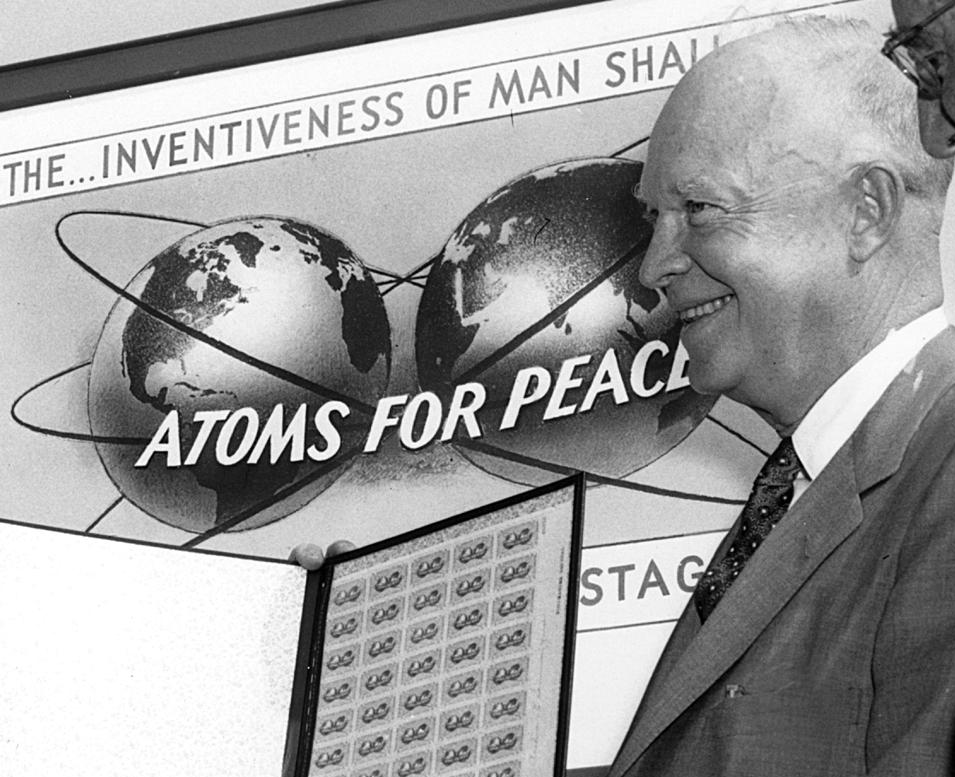
In 1953, just a few years after the United States used two nuclear weapons against Japan, US President Eisenhower launched his Atoms for Peace program at the United Nations.
It resulted in the spread of nuclear technology and materials around the world for so-called peaceful uses—energy, medicinal uses, and research. In reality, nuclear technology is anything but peaceful.
Nuclear power is the most expensive and dangerous way to boil water to turn a turbine. It contains the inherent potential for catastrophe. There is no such thing as a safe nuclear reactor. All aspects of the nuclear fuel chain, from mining uranium to storing radioactive waste, are devastating for the earth and all species living upon it. Radiation is long lasting and has inter-generational effects.
Nuclear energy is not a solution to the climate crisis. It not only is not carbon-neutral, but its other environmental impacts and risks of contamination through accidents and attacks pose grave risks to the world’s ecosystems and living beings. As hundreds of civil society groups said to the UN Climate Conference (COP26), nuclear power is “a dangerous distraction from the real movement on the climate policies and actions that we urgently need.”
Yet the nuclear industry and certain governments continue to promote nuclear energy as clean, safe, and reliable. This has everything to do with capitalism and nothing to do with protecting the planet or its people.
For the nuclear power industry, the primary motive for operation is profit. History shows us that increasing profit is often best achieved in ways that are not consistent with designing or operating the relevant equipment for the lowest risk to humanity or the planet.
Profit is less likely to be achieved by honestly exploring alternative sources of energy that might necessitate initial investments, or that might not be eligible for the same government (i.e. taxpayer-funded) subsidies as nuclear is in many countries.
Profit is also less likely to be achieved by designing economically efficient, need-oriented, and environmentally sound sources of energy. Scientists and activists alike have noted that nuclear power, which produces energy “in large, expensive, centralized facilities” is not useful “for solving the energy needs of the vast majority of [the world’s] population, much less so in a way that offers any net environmental gains.”
In the meantime, the spread of nuclear energy around the world since 1953 has enabled the development of nuclear weapons in several countries, and to the proliferation of nuclear materials and technology that are becoming susceptible to terrorist attack or accidents.
The situation at Zaporizhzhia
In 2022, Russian forces seized the Chernobyl and Zaporizhzhia nuclear power facilities in Ukraine and there has been armed conflict at the Zaporizhzhia plant, risking a radioactive catastrophe.
There are a number of dangers posed by fighting around a nuclear power station; in addition to power outages, the cooling tanks or reactors themselves could be damaged, leading to leaks of radiation or even explosions.
Many governments from around the world condemned the Russian occupation of these facilities and called for a cessation of fighting at the Zaporizhzhia plant.

The International Atomic Energy Agency (IAEA) called for a “nuclear safety and security protection zone” around the Zaporizhzhia nuclear power plant, in order to “prevent a nuclear accident arising from physical damage caused by military means.” The IAEA Board of Governors adopted a resolution calling on Russian forces to withdraw from the plant.
The 2022 NPT Review Conference spent a significant amount of time discussing the situation at the Zaporizhzhia facility. The final text of the outcome document, which was not adopted, expressed grave concern with the military activities conducted near or at Zaporizhzhia and called on states to support the IAEA’s efforts to secure the site.
Without explicitly mentioning Zaporizhzhia, the document also noted that “attacks or threats of attack on nuclear facilities devoted to peaceful purposes have dangerous political, economic, human health, and environmental, implications and raise serious concerns regarding the application of international law, which could warrant appropriate action in accordance with the provisions of the Charter of the United Nations.”
None of these paragraphs mentioned Russia as responsible for the current situation in Ukraine, as had been suggested by several states during the Review Conference. However, the Russian delegation blocked the adoption of the outcome document over amendments it wanted to make to five paragraphs.
Civil society was not permitted to attend the final negotiations of the draft document, but from open meetings it was clear that Russia wanted Ukraine to be named as the perpetrator of the attacks on Zaporizhzhia.
As of June 2023, the situation at Zaporizhzhia remained “extremely fragile,” according to the IAEA Director General. He warned that the destruction of the Kakhovka Hydroelectric Power Station dam posed a threat to the operation of Zaporizhzhia, as the necessary water level for cooling the reactors could be lost; however after an inspection he indicated measures were being taken to stabilize the situation.
Abolishing all nuclear materials and technologies
Within the NPT context, nuclear energy is upheld by most states as an “inalienable right”. This means that most states laud its perceived benefits and promote its expansion, regardless of the risks to humanity, the environment, and proliferation.
However, since 1945, many scientists, activists, and government officials have pointed out that nuclear material, technology, and facilities are dangerous whether they are in weapons form or for “peaceful uses”.
Eliminating all nuclear materials and technology, whatever its designated purpose, is the only way to ensure that it is does not result in catastrophe, by accident or design. A few states parties recognize these inherent risks and have chosen not to pursue or to phase out nuclear power as part of their energy mixes. The more states parties that follow this path, the better for us all.
Recommendations
- Delegations should raise concerns with the health, environmental, safety, and security impacts of nuclear power, including in the context of climate change. While the NPT indicates states can use nuclear power, this does not mean it’s in best interest of humanity or the planet.
- Delegations should support the 25 May 2011 declaration by the governments of Austria, Greece, Ireland, Latvia, Liechtenstein, Luxembourg, Malta, and Portugal, in which they argued that nuclear power is not compatible with the concept of sustainable development and called for energy conservation and a switch to renewable sources of energy worldwide.
- States should also support the February 2011 call from a group of Hibakusha for phasing out all sources of radiation—from uranium mining, nuclear reactors, nuclear accidents, nuclear weapons development and testing, and nuclear waste—and for investment in renewable, clean energy for a sustainable future.
- States should commit to working for a sustainable future by reducing the use of energy, investing in renewable and non-carbon emitting sources of energy, phase-out nuclear energy, and not further develop harmful, radioactive technologies.
- Delegations should call on all states that currently use nuclear energy to abide by all nuclear safety and nuclear security instruments and norms and to end the dangerous transshipment of radioactive waste and nuclear materials.
- Delegations should condemn armed conflict and military activities at or near nuclear power facilities and abide by and indicate support for the IAEA General Conference decision on the “Prohibition of armed attack or threat of armed attack against nuclear installations, during operation or under construction” (GC(53)/ DEC/13).
- States must not engage in armed conflict and military activities at or near nuclear power facilities. Russia should end its war against and occupation of Ukraine, along with the withdrawal of its armed forces from the Zaporizhzhia nuclear power plant and other related sites and cease military activities at or near nuclear facilities.
Reaching Critical Will is the disarmament programme of the Women’s International League for Peace and Freedom (WILPF), the oldest women’s peace organization in the world.
Headline photo of the Zaporizhzhia nuclear power plant in June 2023 during the IAEA visit by Photo Credit: Fredrik Dahl / IAEA Imagebank.
The opinions expressed in articles by outside contributors and published on the Beyond Nuclear International website, are their own, and do not necessarily reflect the views or positions of Beyond Nuclear. However, we try to offer a broad variety of viewpoints and perspectives as part of our mission “to educate and activate the public about the connections between nuclear power and nuclear weapons and the need to abandon both to safeguard our future”.
 Beyond Nuclear International
Pingback: It really IS a climate emergency – but here is nuclear news, anyway « nuclear-news
Pingback: It really IS a climate emergency – but here is nuclear news, anyway « Antinuclear
Pingback: Nuclear power: An inherent potential for catastrophe « nuclear-news