 Beyond Nuclear International
Canada’s little-known role in atomic bombings on display
By Anton Wagner
The Hiroshima Nagasaki Day Coalition launched a “Canada and the Atom Bomb” photo exhibition inside Toronto City Hall on August 2. The exhibition of 100 photographs reveals the Canadian government’s participation in the American Manhattan Project that developed the atom bombs that destroyed Hiroshima and Nagasaki in August 1945.
The exhibition can be viewed in its entirety online at the Toronto Metropolitan University website.
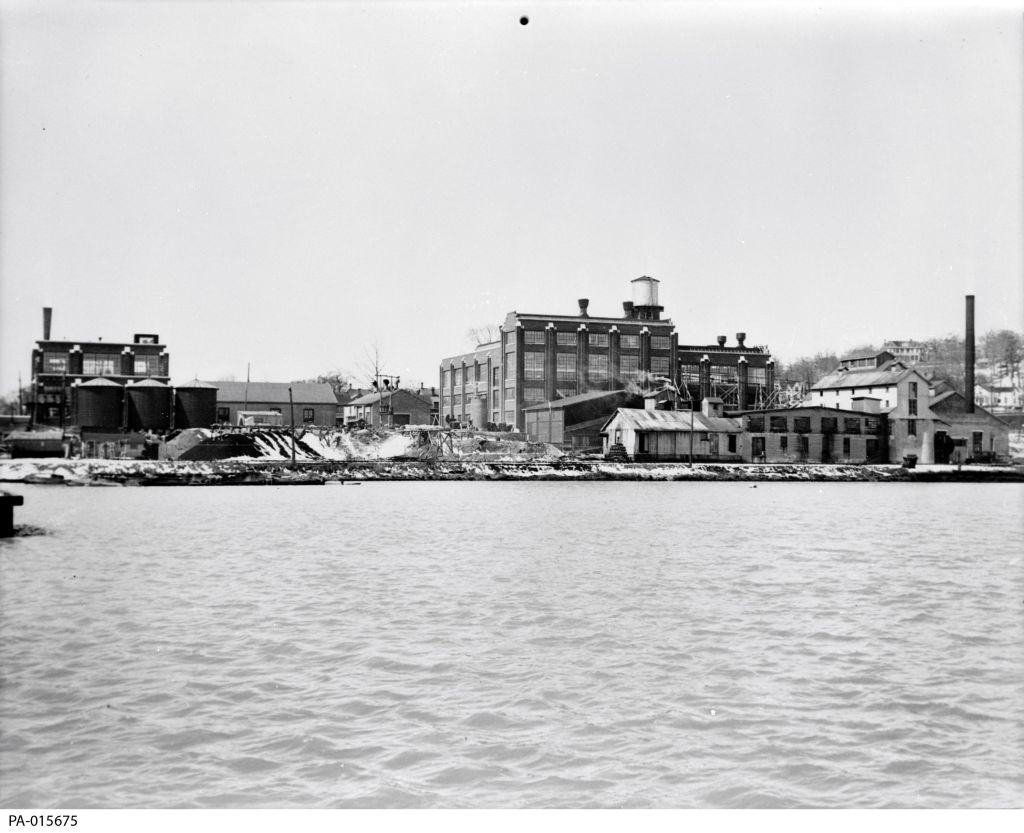
It documents how the Eldorado Mining and Refining Company extracted uranium ore at Great Bear Lake in the Northwest Territories in the late 1930s and shipped the ore to its refinery in Port Hope, Ontario, for sale to the Americans.
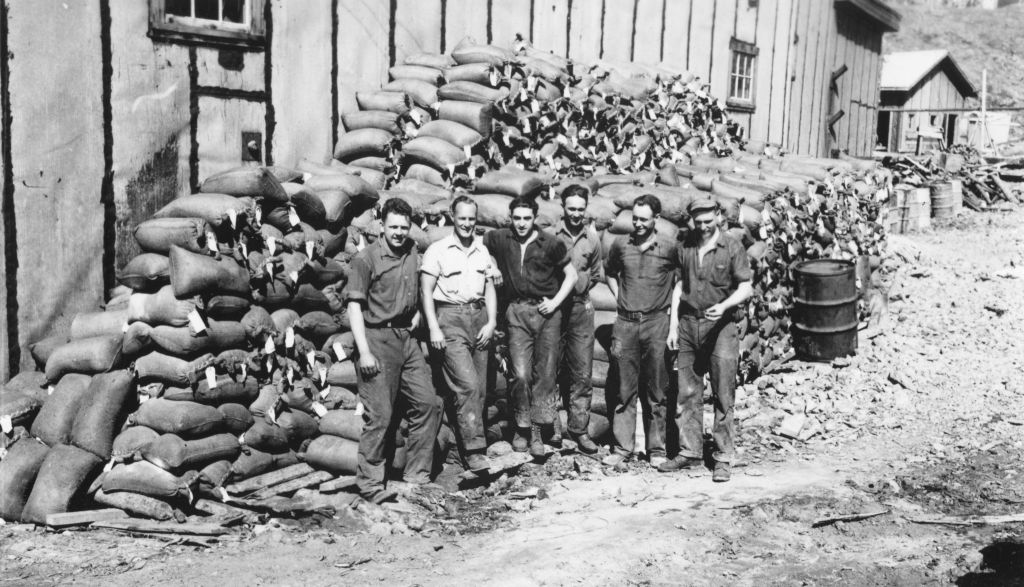
Images by the Montreal photographer Robert Del Tredici focus on the Dene hunters and trappers at Great Bear Lake who were hired by Eldorado to carry the sacks of radioactive ore on their backs for loading onto barges that transported the ore to Port Hope. Many of them subsequently died of cancer.
Before his death in 1940, the Dene spiritual leader Louis Ayah had prophesied that such an illness would befall the Dene because of white men mining on Dene territory. Ayah also prophesied a nuclear holocaust that would end human civilization.
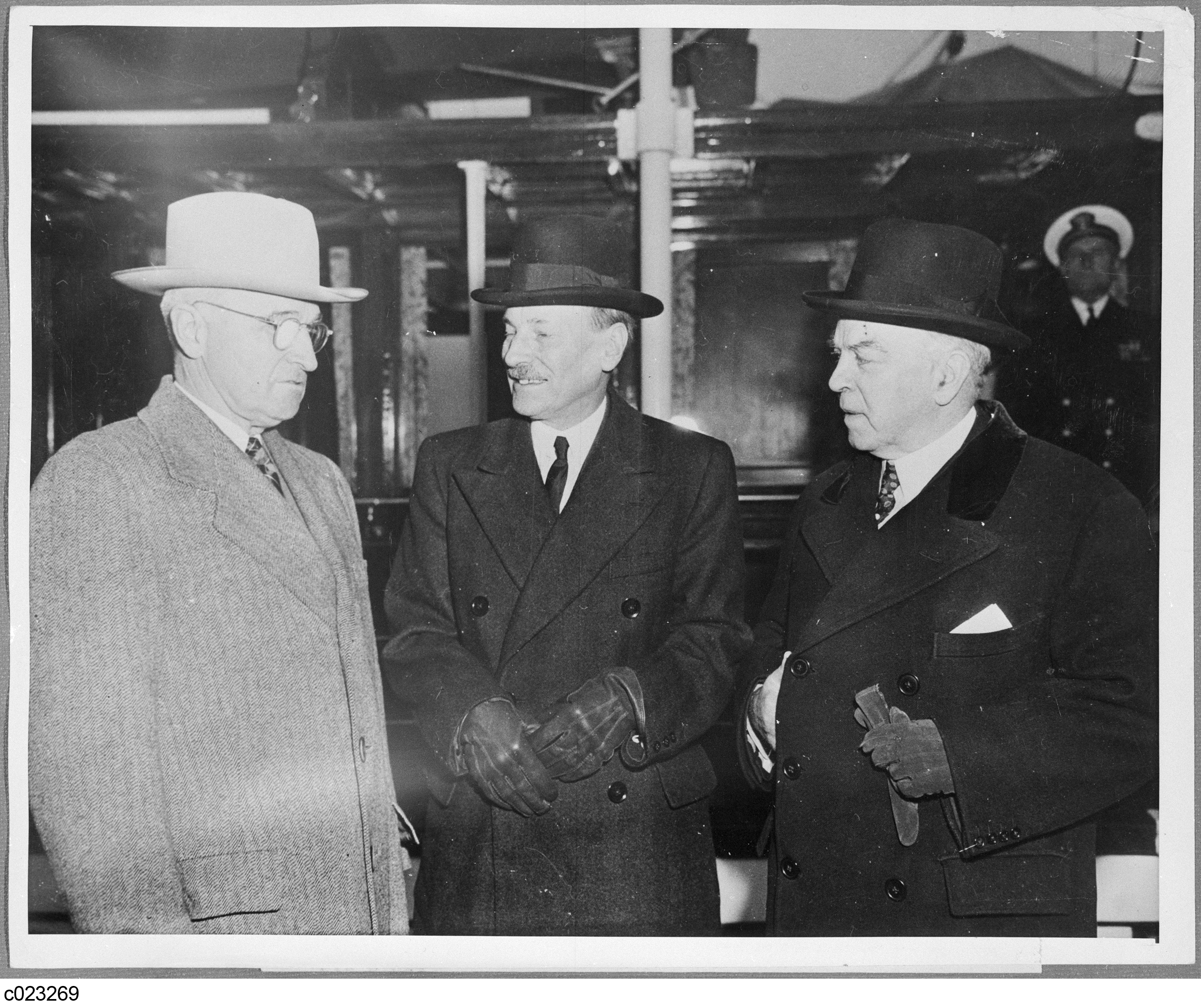
Prime Minister Mackenzie King hosted President Roosevelt and Prime Minister Winston Churchill in Quebec City in 1943 where they agreed to have Canada participate in the production of the atom bomb.
The exhibition highlights this participation by the Canadian government, scientists, industry, and nuclear research laboratories. Posters from the Hiroshima Peace Museum show the death and destruction in the two bombed cities. The exhibition includes five images by Yoshito Matsushige, the only photographer who took pictures in Hiroshima the day the atom bomb exploded overhead.
“Canada and the Atom Bomb” concludes with photographs showing the efforts by peace activists to persuade Toronto City Council to participate in the world-wide movement to abolish nuclear weapons. In 2017, City Council reaffirmed Toronto as a Nuclear Weapons-Free Zone and called on Prime Minister Justin Trudeau to have Canada ratify the UN Treaty on the Prohibition of Nuclear Weapons.
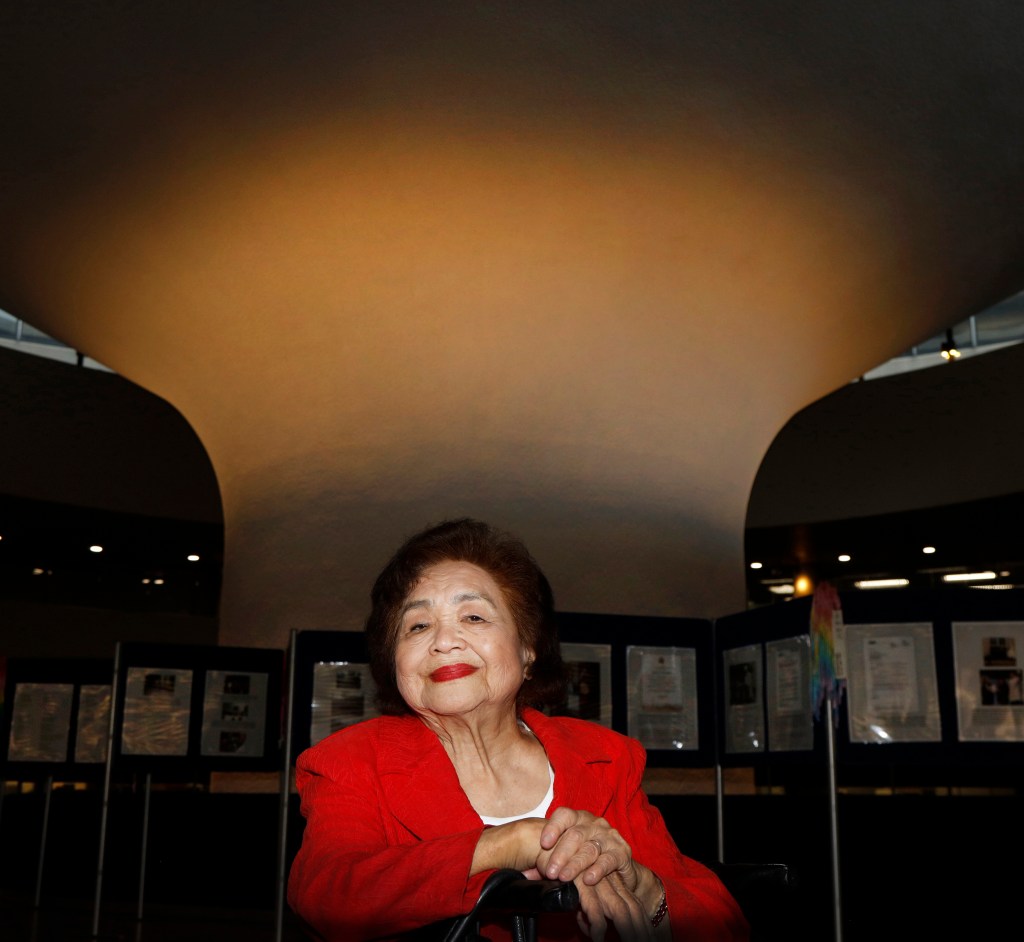
Setsuko Thurlow accepted the Nobel Peace Prize on behalf of the International Campaign to Abolish Nuclear Weapons in Oslo, Norway, in December 2017. A Hiroshima survivor, Thurlow, now 92, attended the opening of the “Canada and the Atom Bomb” exhibition on August 2. She will also speak at the annual August 6 commemoration at the Toronto City Hall Peace Garden to urge that Canada sign the Treaty on the Prohibition of Nuclear Weapons.
Anton Wagner is with the Hiroshima Nagasaki Day Coalition.
Headline poster created for the Coalition by Amber Balloi.
The opinions expressed in articles by outside contributors and published on the Beyond Nuclear International website, are their own, and do not necessarily reflect the views or positions of Beyond Nuclear. However, we try to offer a broad variety of viewpoints and perspectives as part of our mission “to educate and activate the public about the connections between nuclear power and nuclear weapons and the need to abandon both to safeguard our future”.
 Beyond Nuclear International
Pingback: Remembering Hiroshima and Nagasaki – Nuke weapons for Japan? « nuclear-news
Pingback: The pictures worth a thousand words « nuclear-news
Pingback: This week: The other side of news on nuclear and related issues « Antinuclear
Pingback: This week: The other side of news on nuclear and related issues « nuclear-news