 Beyond Nuclear International
Trades unions should oppose nuclear power as there would be far more jobs in renewables and related industries, argue activists
UK union leaders Mike Clancy of Prospect and Gary Smith of GMB recently appealed to British prime minister Sir Keir Starmer to commit to finalising financial arrangements for the Sizewell C nuclear project in order to ‘help the UK meet its net-zero targets, deliver sustainable energy, and strengthen the economy’.
In response, the activist group Together Against Sizewell C (TASC) has written to the unions’ general secretaries setting out why they need to think again regarding their support for Sizewell C.
What follows is the text of their letter, edited for context and clarity, which also debunks the myths that new nuclear power plants will provide long-term sustainable jobs for union workers. (Note: UK spellings in the original have been retained.)
We write in response to your recent appeals to Sir Keir Starmer to commit to finalising financial arrangements for the Sizewell C nuclear project in order to ‘help the UK meet its net-zero targets, deliver sustainable energy, and strengthen the economy.’
In the first instance, we refer you to two important documents. The first, written by Professors Andrew Blowers, OBE, a social scientist of impeccable pedigree and lecturer at the Open University, and Steve Thomas, Emeritus Professor of Energy Policy at the University of Greenwich, is entitled: It is time to expose the Great British Nuclear Fantasy once and for all.
The second document we are sending you — an open letter to the Labour Party on energy policy — submitted in June 2024 before the election, was written by members of this organisation, which has been fighting Sizewell C for more than a decade.
The truth is that the government nuclear energy policy which is most brazenly and shamelessly represented by Sizewell C is unattainable and a recipe for financial and environmental calamity. Keir Starmer, an apparent subscriber to the ‘duty of candour’, will, at some stage, be required to agree. It is noticeable that in all public statements since the election of the Labour administration, ‘nuclear’ is a word which has been studiously avoided. We don’t believe that’s coincidental.
The final investment decision (FID) for Sizewell C has been delayed because it is a manifestly bad investment option for UK plc and the private investors who have demonstrated their agreement with that view by shunning appeals to invest. Why should the public purse come to the rescue for a venture that was supposed to be ’subsidy-free’, which is already predicted to be at least three times the original cost and years overdue in completion?
There will be no seamless transition of workers and supply chains from Hinkley because the sites and conditions are entirely different in timing and need. Whatever way the Sizewell C employment issue is regarded, each of the 900 long-term jobs created will have cost several tens of millions of pounds to create. That is a very bad investment in itself.
Nuclear power is nothing if not hugely capital, not labour, intensive. It costs billions, the plants are always late and over budget, and it doesn’t do what it says on the tin in terms of climate change and security (it relies upon uranium from abroad and Sizewell C is a French design with a French developer – nothing home-grown about it).
Nuclear power creates long-lived and hugely troublesome waste streams and produces few permanent jobs and therefore should be shunned rather than embraced by trades unions.
‘Secure, clean power’ is something that nuclear energy cannot deliver: the UK has no indigenous deposits of uranium: the refuelling ‘outage’ of Sizewell B which is about to take place will use uranium from Russia and it is well documented that global uranium production – which is largely from Russian influenced countries – has probably reached its peak.
To argue that nuclear power is ‘clean’ is risible in that exposure to any of the waste generated by the nuclear process is dangerous. There is no safe exposure level and a small proportion of it — high-level waste, particularly spent nuclear fuel of which there will be tens of thousands of tonnes should the three-fold increase in nuclear-generated electricity ever become a reality — is lethal to humans and the environment for tens of thousands of years.
Labelling nuclear power as ‘clean’ denies these facts as well and ignores the life cycle of uranium which, from mining to deep geological disposal of the spent fuel and other waste, generates a significant carbon footprint along with a cocktail of other pollutants.
Moreover, due to the long gestation time for a plant to actually produce ‘low carbon’ electricity, the entire economy will be at zero carbon — by law — by the time any significant contribution to greenhouse gas reduction can be provided by the nuclear component of our energy policy.
The documents we are sending you will flesh out these arguments but there is another aspect of Sizewell C that we invite you to Suffolk to see: our environment, which largely comprises a coastal area of outstanding natural beauty (a designated National Landscape/AONB). It is already under threat from several un-coordinated and haphazard energy projects, from accelerating coastal erosion, sea rise level and storm surges. It is also being assaulted on a daily basis by an EDF/SZC Ltd- developer that is out of control.
The development consent order was recommended for refusal by the Planning Inspectors, due to EDF not having secured a guaranteed supply of potable water essential for its 60 years of operation (a situation that still exits) meaning the environmental impact of the supply could not be assessed.
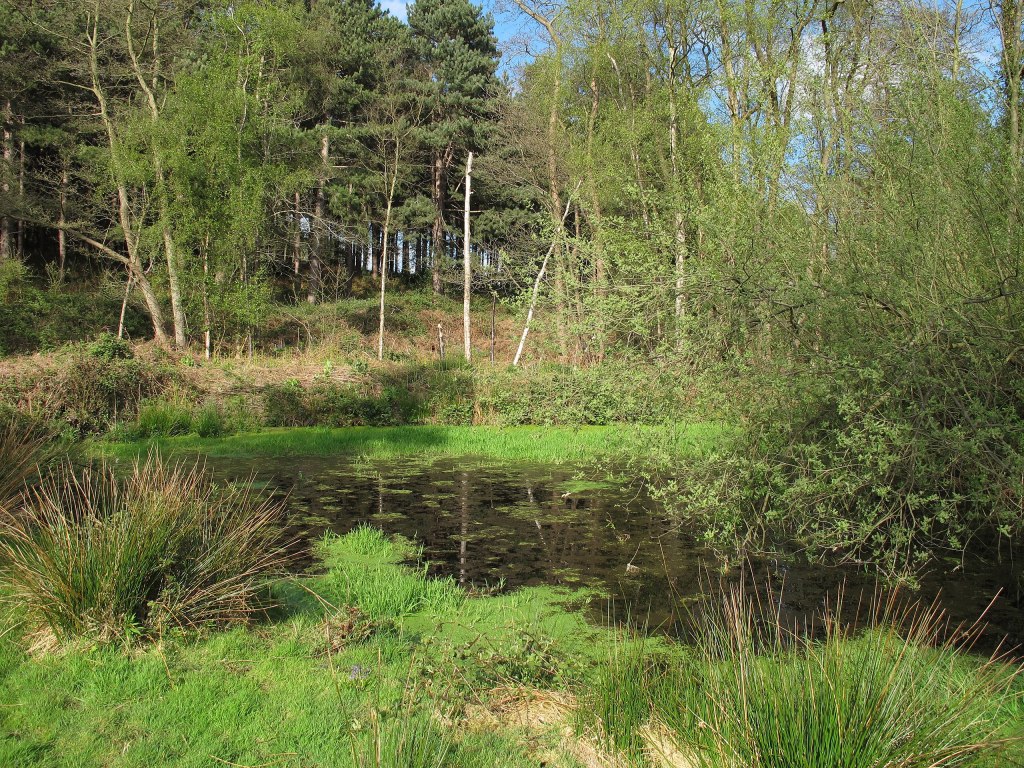
However, this was overturned by the then Secretary of State, Kwasi Kwarteng, who approved a DCO that allows the developer to remove trees, hedges, vegetation and entire forests seemingly at will, in some cases without an Environmental Impact Assessment.
Accommodation for the thousands of workers expected to arrive within months is simply not available; our transport infrastructure, in such a rural environment, is not designed for HGV traffic on the scale predicted. The infrastructure of the area, already stretched by decades of austerity, will be shown to be incapable of supporting such a doubling of the local population.
Sizewell C will not, in any way, be the salvation of East Suffolk nor UK plc. We are quite simply being swamped by a development which is a Boris Johnson vanity project, one that is unnecessary to the national energy requirements and that will fail to do all the things you and your trades union colleagues have been told to believe it can do.
Trades union support for nuclear power is in itself disappointing when an energy policy based on a similar investment programme to that identified for nuclear could be invested in renewables and storage technology, energy conservation projects, microtechnology, decentralisation, and retrofitting thermal insulation. This can be coupled to the creation of many more job opportunities for today’s young people in industries that do not have the stigma of being linked to the nuclear weapons industry and the mass destruction that implies.
If we need anything right now in the UK, we need Starmer’s duty of candour to be levelled at the nuclear industry and for the trades union movement, of which we are mainly supportive, to help us show the way to a nuclear-free world.
Learn more at Together Against Sizewell C (TASC) and Stop Sizewell C.
Headline photo of GMB at a trades union rally by Rustyrobot97/Wikimedia Commons.
The opinions expressed in articles by outside contributors and published on the Beyond Nuclear International website, are their own, and do not necessarily reflect the views or positions of Beyond Nuclear. However, we try to offer a broad variety of viewpoints and perspectives as part of our mission “to educate and activate the public about the connections between nuclear power and nuclear weapons and the need to abandon both to safeguard our future”.
 Beyond Nuclear International
Pingback: “Jobs Jobs Jobs!” screams the nuclear lobby - The Australian Independent Media Network
Pingback: Jobs Jobs Jobs ! -screams the nuclear lobby « nuclear-news
Pingback: New nukes not a plus for unions « nuclear-news