 Beyond Nuclear International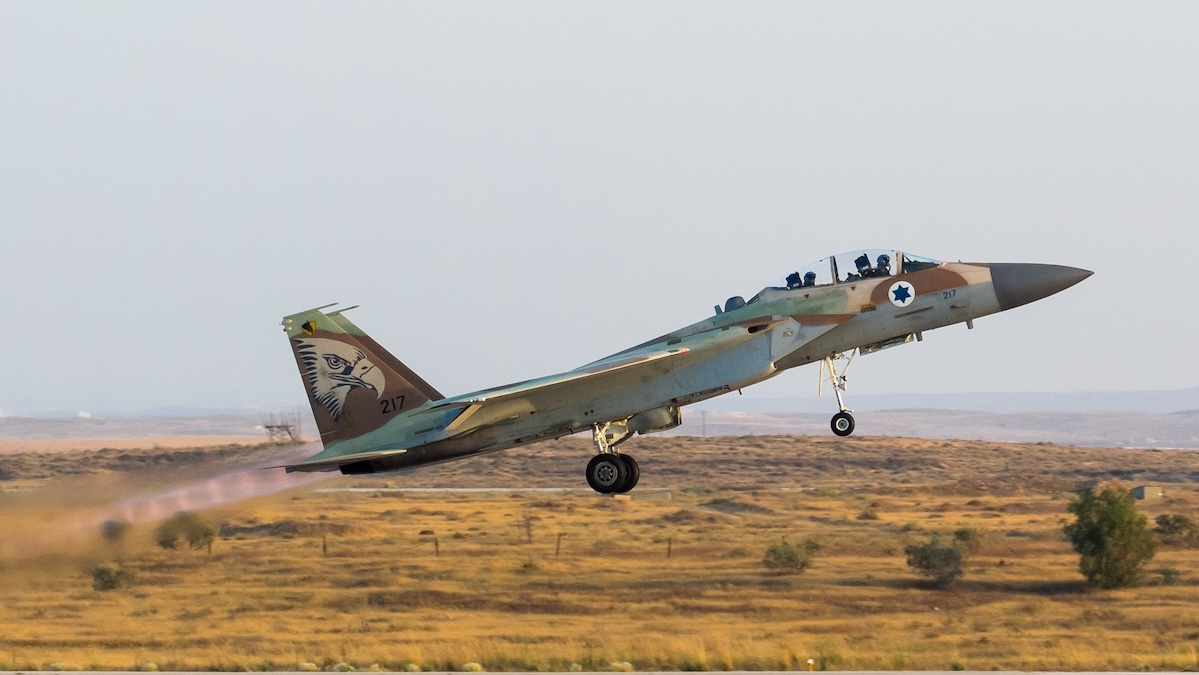
A new report from ICAN looks at the reality and implications of Israel’s nuclear weapons arsenal
Introduction
Israel is one of nine countries that possesses nuclear weapons, with an estimated arsenal of 90 nuclear weapons, which it can launch by missiles and aircraft, and possibly by sea-based missiles.
Despite widespread acknowledgement by experts and former government officials of their existence, Israel and many Western governments maintain a policy of ambiguity about Israeli nuclear weapons. This pretense cannot continue. Nuclear disarmament is an essential component of a lasting peace agreement between Israel and Palestine, and in the region more broadly.
This is because of the risk of use of nuclear weapons and the catastrophic consequences of such use, as well as the proliferation risks posed by Israel’s continued possession of a nuclear arsenal. Despite efforts, states have not yet succeeded in negotiating a weapons of mass destruction free zone in the Middle East. The Treaty on the Prohibition of Nuclear Weapons, adopted in 2017, offers a clear pathway to nuclear disarmament, and Israel and all states should immediately join.
Historical Context
Israel’s nuclear weapons programme dates back to the 1950s, when it started to construct the Negev Nuclear Research Center near Dimona in 1958, following its purchase of necessary equipment to develop nuclear weapons, including a research reactor from France and heavy water from Norway.
Although unclear, it may have assembled its first nuclear weapons in the 1960s. Since then, Israel has adhered to a policy of deliberate ambiguity, refusing to confirm or deny its possession of nuclear weapons.

Current Israeli Prime Minister Benjamin Netanyahu and other officials use variations of the phrase “We won’t be the first to introduce nuclear weapons into the Middle East” in response to questions about Israel’s nuclear arsenal. The United States and other Western governments have adopted Israel’s policy of ambiguity, despite widespread acknowledgement by nuclear experts and even former government officials of the existence of an Israeli nuclear arsenal.
The United States has adopted a policy not to pressure Israel to join the nuclear Non-Proliferation Treaty (NPT) and all U.S. presidents since President Bill Clinton have even reportedly signed a letter indicating that arms control efforts would not target Israel.
Former German officials have likewise acknowledged that they were aware that submarines that they sold to Israel would be equipped with nuclear missiles. This tacit endorsement of a clear case of nuclear proliferation undermines broader nonproliferation and disarmament efforts in the Middle East.
Israel’s Current Nuclear Arsenal
Given the secrecy surrounding the Israeli nuclear arsenal, much is unknown, but experts have provided some estimates about its weapons.
The Federation of American Scientists estimates that Israel possesses 90 nuclear warheads, which are likely stored underground, potentially at Tel Nof, located centrally between Tel Aviv and Jerusalem, and Hatzerim Air Bases.

These warheads can be launched from aircraft and ballistic missiles, likely stored just 27 kilometers from Jerusalem but reportedly with ranges to target cities as far away as Moscow, or possibly from submarines.
Risk of Use
As long as nuclear weapons exist, there is the possibility that they will be used, either by accident or intentionally. Even in spite of the ambiguity around the existence of Israeli nuclear weapons and enforced secrecy that persists to this day, there are examples of close calls, particularly during times of heightened conflict.
Rumours have circulated that Israeli nuclear forces may have been put on alert at the start of the 1973 Yom Kippur War. An interview conducted by noted Israeli nuclear historian Avner Cohen with a key political insider at the time confirmed that Minister of Defence Moshe Dayan asked Prime Minister Golda Meir to authorize a nuclear demonstration. Earlier in June 1967, on the eve of the Six-Day War, a small team was tasked with planning a nuclear demonstration.
Despite its policy of ambiguity, some Israeli officials have even made explicit threats to use nuclear weapons, such as Israeli Heritage Minister Amichai Eliayhu who in November 2023 claimed that dropping a nuclear bomb in Gaza was “an option,” or Revital Gotliv, an Israeli parliamentarian who called for Israel to use “doomsday weapons” in social media posts in October 2023.
Consequences of Use
Any use of nuclear weapons would have catastrophic humanitarian and environmental consequences. This is particularly true in a densely populated area such as Israel and Palestine.
The harm caused by an intentional, accidental or “demonstration” detonation of a nuclear warhead in the region would be unimaginable. If even just one 100-kiloton nuclear weapon were detonated over a city, hundreds of thousands would die immediately and hundreds of thousands to millions more people would be seriously injured.
A fireball would extend out 380 meters in every direction from the detonation point. Within 1.1 kilometers from the detonation point, there would be a fatal dose of ionising radiation. Within 3.26 kilometers there would be blast damage, collapsing most residential buildings and causing local fires, within 4.38 kilometers, people would suer third degree burns on all exposed skin and within 9.18 kilometers, glass windows would shatter.
Proliferation Risk
Israel’s possession of nuclear weapons, and U.S. and many Western governments’ tacit public acceptance, poses a clear proliferation risk and may have emboldened other governments in the region to consider nuclear development in the past.
The history of the nuclear programme of Israel, which developed its nuclear arsenal thanks to an $80 million purchase of necessary material from France, and then in turn helped South Africa to develop nuclear weapons, is a clear example of nuclear proliferation.
Israel is one of a handful of countries that have not joined the Treaty on the Non-Proliferation of Nuclear Weapons (NPT). While the United States and Western governments have called on other non-parties to join, they have not called on Israel to do so. Support for Israeli nuclear disarmament would be a clear bolster to the non-proliferation regime. Thus, Israel should accede to the NPT.
At the same time, Israel should engage with the process to establish a zone free of nuclear weapons and other weapons of mass destruction in the Middle East. This proposal was first made in the 1970s, but it has gained traction since 2019 with the establishment of a negotiating conference at the UN that is scheduled to meet annually until a treaty is achieved. While it enjoys strong support from Arab states and Iran, Israel has so far failed to participate.
The Treaty on the Prohibition of Nuclear Weapons
The Treaty on the Prohibition of Nuclear Weapons is the first international treaty to ban nuclear weapons and nuclear weapons activities, including testing, deployment, maintenance and use. It was adopted by 122 governments in July 2017 at the United Nations.
The TPNW provides two pathways for nuclear-armed states to join, either by disarming first and then joining the treaty and accepting verification of its disarmament or by joining and then cooperating with an agreed plan to disarm within an initial time frame of ten years.

The TPNW thus provides a clear framework under which a state such as Israel could verifiably eliminate its nuclear-weapon programme. It offers the possibility of immediate action in accordance with a legally binding, negotiated plan.
Israel should join the TPNW immediately, and then accede to the NPT as a non-nuclear-weapon state, and all countries in the Middle East should do so too.
Conclusion
Despite the policy of ambiguity around Israeli nuclear weapons, it is clear that Israel’s nuclear arsenal poses a significant risk for humanitarian catastrophe in the Middle East and it should take urgent steps towards nuclear disarmament.
Any use of nuclear weapons would have devastating humanitarian consequences. The TPNW provides a clear and verifiable pathway for the elimination of nuclear weapons that is open for Israel and all other nuclear-armed states to adhere to. All countries must do so as a matter of urgency to avoid even more unthinkable civilian harm.
Eliminating Israel’s nuclear weapons and ensuring that Iran or any other state in the Middle East never acquires them is vital to ensuring the long-term security of all people in the region – including, not least of all, Israelis. Without disarmament, true peace will remain elusive, and the threat of a nuclear conflagration will continue to loom large.
Read the full report complete with footnotes.
Headline photo: Israeli Air Force 69 Squadron F-15I Raam taking off from Hatzerim AFB in 2016, by Oren Rozen/Wikimedia Commons.
The opinions expressed in articles by outside contributors and published on the Beyond Nuclear International website, are their own, and do not necessarily reflect the views or positions of Beyond Nuclear. However, we try to offer a broad variety of viewpoints and perspectives as part of our mission “to educate and activate the public about the connections between nuclear power and nuclear weapons and the need to abandon both to safeguard our future”.


Pingback: Israel Is Not Allowed to Receive Help from the USA, As Well As to Have Unregistered Nuclear Weapons: LAW – NeoPopRealism Journal
Pingback: JFK: The Memo That Might Have Stopped Israel’s War on Iran - Activist Post
Pingback: The Memo That Might Have Stopped Israel’s War on Iran – THE REPORTER ALTERNATIVE NEWS
Pingback: The warning signs of neo-feudalism | daryanblog
Pingback: Las armas nucleares no tan secretas de Israel I | Mandala
Pingback: Week to 23 December – news counteracting the nuclear-military-industrial-media complex « Antinuclear
Pingback: Week to 23 December – news counteracting the nuclear-military-industrial-media complex « nuclear-news
Pingback: Israel’s not-so-secret nuclear weapons « nuclear-news