 Beyond Nuclear International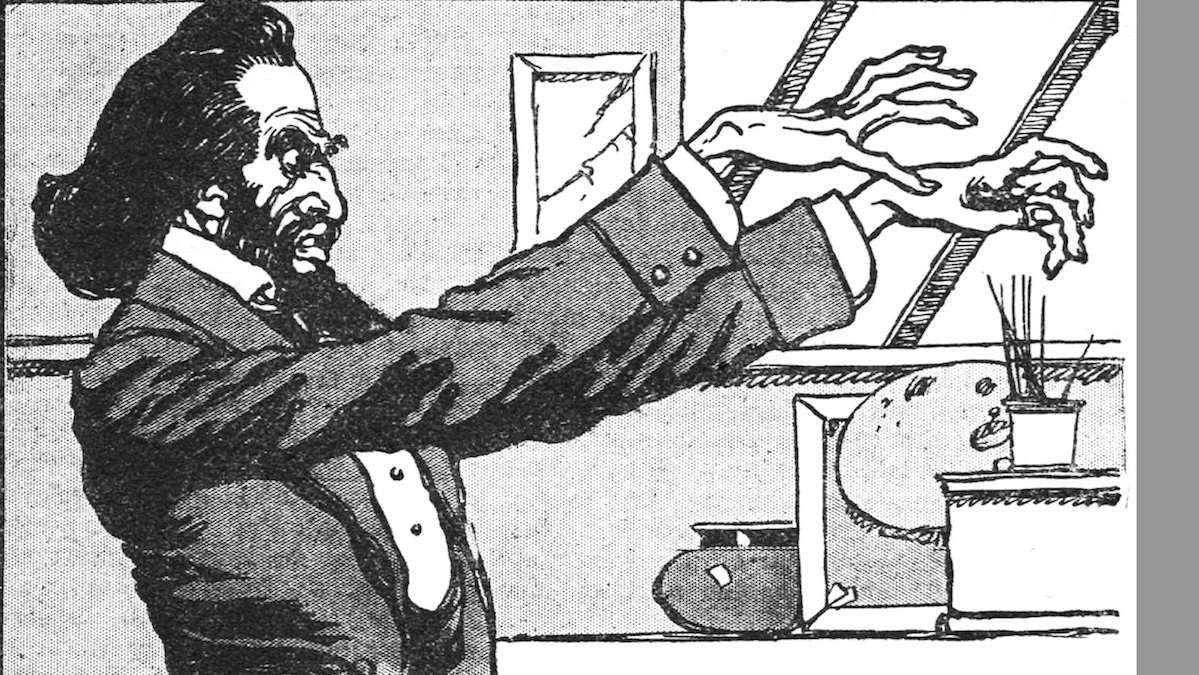
Attempts by the Breakthrough Institute’s Ted Nordaus to derail NRC commissioner candidacies have met with mixed success, writes Linda Pentz Gunter
We’re getting used to the swagger of entitlement and the complacency of corporate nuclear lobbyists on Capitol Hill. They, in turn, have become accustomed to getting their way — usually through the powerful persuasion of big money or saturation propaganda campaigns financed with those large stashes of handy corporate cash.
But when that isn’t enough, then a nice smear campaign should do. One who appears to enjoy such an endeavor is the Breakthrough Institute’s founder, Ted Nordhaus, who has made it his business of late to decide who does and does not get a commissioner seat at the US Nuclear Regulatory Commission. Those who should not, in Nordhaus’s views, are the Democratic candidates or incumbents who have too much of a regard for nuclear safety as a priority.
Safety is a big ticket item for the nuclear power industry. Literally. Maintaining, upgrading and replacing aging parts in these decades-old dinosaurs of the 20th century, many of them running well past their sell-by date, is an expensive undertaking. But a relaxation of — or looking the other way on — some of those pesky safety regulations would be made easier by more compliant NRC commissioners.
Cue Nordhaus, Capitol Hill’s nuclear Svengali.
His most recent target was Matthew Marzano, the candidate for the long vacant fifth seat on the NRC commission. Nordhaus pulled out all the stops to derail Marzano, beginning last September prior to Marzano’s hearing before the Senate Committee on Environment and Public Works.
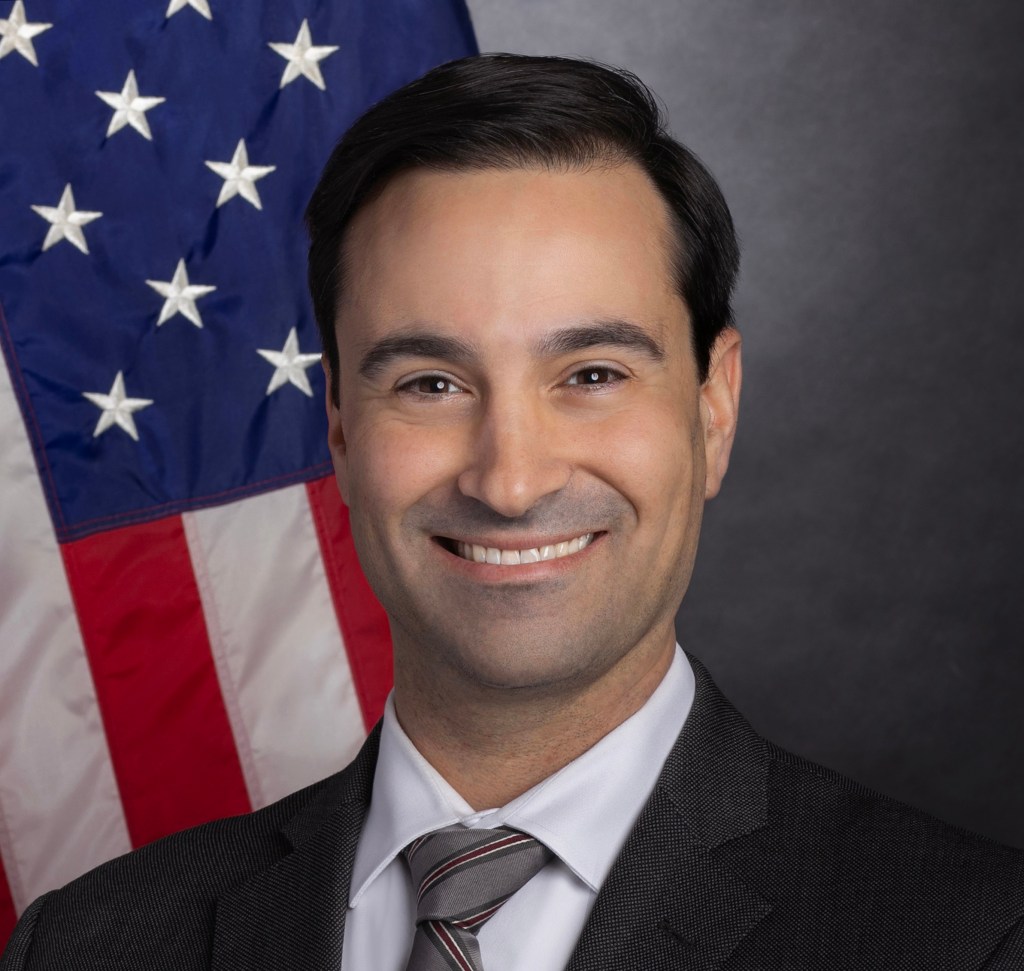
Nordhaus prepared a veritable death warrant in which he claimed, among other things, that Marzano would, if approved, be “the least qualified commissioner ever seated on the Nuclear Regulatory Commission”. Nordhaus also wrote that Marzano, if chosen, “will not be a voice for reform and modernization on the commission.”
Never mind that Marzano, who was then an official at the Idaho National Laboratory, has a pretty solid nuclear background, having worked both on commercial reactors and as an instructor for the Naval Nuclear Propulsion Program at the US Department of Energy. (As a side note, this exemplifies once again the two-way street and inexorable link between the civil and military nuclear sectors.)
“Modernization” is Nordhaus’s absolutely most favorite word. He used it, or a derivation of it, nine times in his public assassination-by-blogpost of Marzano’s qualifications (accusations that were obediently re-quoted by senators during Marzano’s hearing.)
“Modernization” is code of course. What it really means is “weakening” or “emasculation,” because what Nordhaus, the Republicans and far too many Democrats are now intent on doing is to transform the NRC from what is already a lame safety regulator into an even meeker nuclear industry lapdog.
The same hand of influence belonging to Nordhaus and his Breakthrough Institute had earlier been felt when legislation was passed on Capitol Hill designed specifically to weaken the NRC. At that time, the Breakthrough Institute railed on its website that the NRC’s “national progress is hindered by its self-imposed narrowly defined mission, primarily concentrated on nuclear safety, which leads to unwarranted delays in reactor licensing.”
Last June, the Senate voted almost unanimously for a bill introduced by Senator Gary Peters, a Democrat from Michigan —S.870 – A bill to authorize appropriations for the United States Fire Administration and firefighter assistance grant programs, to advance the benefits of nuclear energy, and for other purposes. Ostensibly designed to provide improved benefits and safety conditions for firefighters, it included an entire section on the NRC straight from the Nordhaus playbook.
The bill required the NRC to “update the mission statement of the Commission to include that licensing and regulation of the civilian use of radioactive materials and nuclear energy be conducted in a manner that is efficient and does not unnecessarily limit—
(1) the civilian use of radioactive materials and deployment of nuclear energy; or
(2) the benefits of civilian use of radioactive materials and nuclear energy technology to society.”
Afraid of appearing to throw firefighters under the bus, all but two senators voted for the bill. Predictably, the dissenters were Democrat Ed Markey of Massachusetts and independent Bernie Sanders of Vermont, the only consistent anti-nuclear voices on Capitol Hill.
On the House side, Rashid Tlaib of Michigan, a rare true progressive among Democrats, decried the House version of the bill and voted present in order to support the firefighters’ needs but “in objection to the ridiculous decision to tie the reauthorization of vital firefighting programs for our communities together with poison pills that undermine nuclear safety and were strongly opposed by leading grassroots environmental organizations.”
What the bill’s language meant by “unnecessarily limit” is that the NRC’s regulations must no longer be “too focused on safety”, as now former conservative Democratic senator, Joe Manchin, put it at the time. The NRC, at Nordhaus’s urging and Manchin’s bidding, must be populated by those “who understand that we have to have nuclear energy in the mix.”
At any risk. Current NRC safety regulations inconveniently interfere with fast-tracking new reactors or even extending the licenses of old ones, thus adding to the already high costs. Therefore they must be, well, “modernized.”
Nordhaus must have delighted in the fact, therefore, that Marzano stepped right into the trap during his first senate hearing by emphasizing the importance of safety. “I learned then, as I believe now, that safely managed nuclear energy has an important role to play in the nation’s and the world’s energy mix,” Marzano said. He further stated that “The benefits that nuclear power can bring and the public license that nuclear has currently can only be realized if it is operating safely.”
Shockingly, this did not do Marzano in so Nordhaus, who is White, went for the trifecta, playing the race card, the feminist card and the gaslighting card. All of these would be valid arguments had any of them actually been used sincerely and not for the ulterior agenda that Marzano was simply too pro-safety for Nordhaus’s industry friends’ liking.
“Worse still,” Nordhaus wrote, “in choosing Marzano, [Senator Tom] Carper and [President] Biden passed over a far more qualified and well-vetted Black candidate, Sam McKenzie.”
On X, Nordhaus quoted Brooke Morrison from U.S. Women in Nuclear: “Nominating Marzano, a junior Senate staffer who has worked as a policymaker for just three scant years and has no senior management experience in the industry, is an insult to women in the sector.”
Then he added his own view: “Brooke Morrison has had enough of the gaslighting from Marzano supporters.”
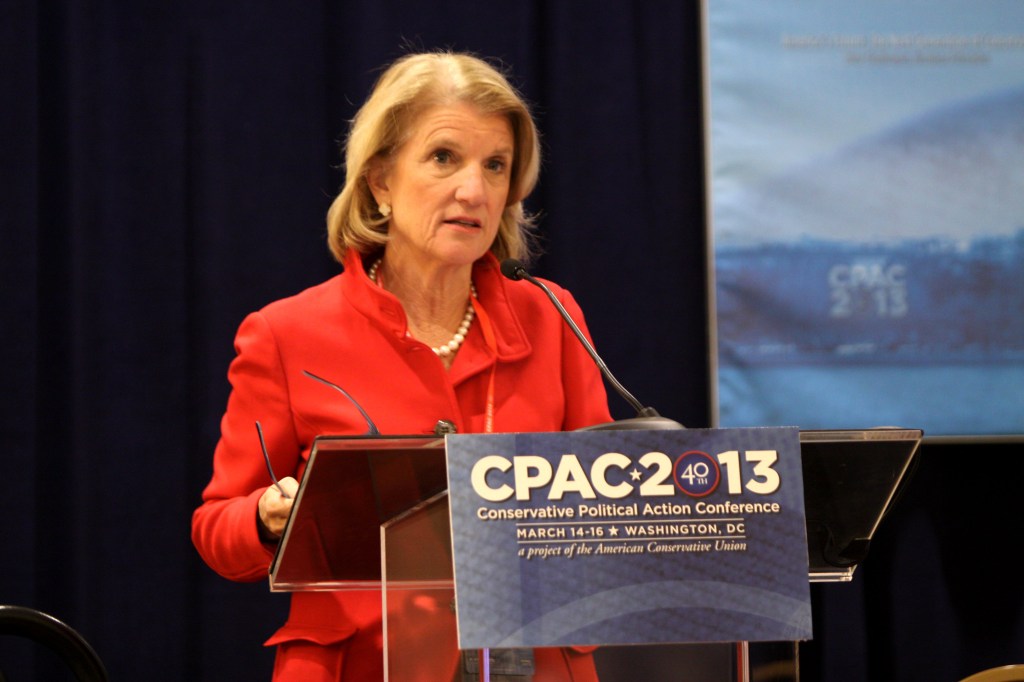
At the end of Marzano’s September hearing, during which Senator Shelley Moore Capito, a Republican from West Virginia with fossil fuels running through her veins, grilled Marzano straight from Nordhaus’s script, there was, inexplicably, no vote. Instead, the decision was kicked down the road until after the election.
That vote came on December 12 when, much to the amazement of many and likely especially Nordhaus, Marzano was voted onto the Commission by 50 votes to 46. Four Republican senators did not vote.
On January 8, Marzano was duly sworn in for a five-year term by NRC Chair Chris Hanson.
Marzano was not Nordhaus’s first quarry, although perhaps his first failure. Not that we harbor any delusions about the lapdog NRC and its giant industry rubber-stamp. But a commissioner who openly cares about safety as a priority is nevertheless a welcome development.
However, former NRC commissioner Jeff Baran, an Obama administration appointee, was not so fortunate when his position came up for renewal last year. Nordhaus quickly unleashed a vitriolic attack. “Baran, along with a small minority of Democratic senators such as Ed Markey and Bernie Sanders, represents the last vestige of the Democratic Party’s obstructionist and anti-nuclear past,” Nordhaus wrote.
Several Democrats along with Senate Republicans duly blocked Baran’s renomination, after which President Biden withdrew Baran as a candidate.
“Obstructionist” is another of Nordhaus’s much-used code words. Real meaning? Pro safety. In decrying Marzano’s candidacy and recalling with glee the undoing of Baran’s, Nordhaus said: “Baran was a consistent obstructionist on the commission, reliably opposing all efforts to seriously reform the agency’s regulatory approach, which has crippled the nuclear sector for a generation.”
What has really crippled the nuclear power sector is its exorbitant costs. But the ruse to undermine the NRC and weaken (“modernize” or “reform”) safety oversight is precisely because it is nuclear power’s immense dangers that cause its costs to sky-rocket.
None of this fazes Nordhaus, however, who insists that new reactors constitute “a new generation of even safer reactors” and that nuclear power has “substantial environmental public health benefits”.
The former assertion is strongly challenged by physicists such as Edwin Lyman at the Union of Concerned Scientists and M.V. Ramana at the University of British Columbia, who happen to understand the science and know that the untested, recycled and long ago rejected design ideas for small modular reactors are replete with radiological risks and serious and unsolved uncertainties around safety.
As for the substantial health benefits of nuclear power, perhaps Mr. Nordhaus would like to say that to the (non-White) faces of Native Americans coping with the deadly legacy of abandoned uranium mines and to the mothers of childhood leukemia sufferers living near nuclear plants, who would beg to differ.
This article is adapted from a piece that first appeared in the February/March 2025 edition of Ralph Nader’s newspaper, Capitol Hill Citizen, available in print only.
Headline image: 1908 rendition of Svengali, the hypnotist. Anonymous/Wikimedia Commons.
Linda Pentz Gunter is the international specialist at Beyond Nuclear and writes for and edits Beyond Nuclear International. Her forthcoming book, Hot Stories. Reflections from a Radioactive World, will be published later this year.
 Beyond Nuclear International
Pingback: Nuclear news this week – not industry handouts « Antinuclear
Pingback: Nuclear news this week – not industry handouts « nuclear-news
Pingback: A nuclear Svengali on Capitol Hill? « nuclear-news