 Beyond Nuclear International
A nuclear electromagnetic pulse from a nuclear detonation could affect billions explains Carlos Umaña in an interview
As a companion piece to Umaña’s article about the April 2025 blackout in Europe and his first fears that nuclear war had begun, we republish this interview from Tendencia in 2019.
In 2017, the International Campaign to Abolish Nuclear Weapons (ICAN) won the Nobel Peace Prize in recognition of its decade-long work to ban the atomic bomb.
ICAN is a global alliance whose goal is to raise awareness among people in all countries to pressure their governments to sign a treaty to ban nuclear weapons. The campaign was launched in 2007 and is now active in more than 60 countries.
Carlos Umaña, from Costa Rica, is a member of the International Physicians for the Prevention of Nuclear War (IPPNW), and a member of the International Campaign to Abolish Nuclear Weapons (ICAN).
What is a nuclear electromagnetic pulse?
A nuclear electromagnetic pulse (EMP) is a brief, intense pulse of radio wave that is produced by a nuclear detonation.
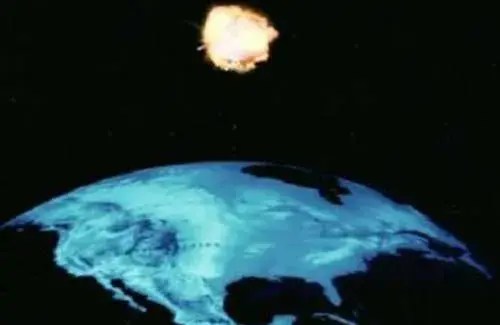
Its radius is much greater than the destruction caused by the heat and shock wave of the nuclear weapon. For example, the pulse from an explosion about 100 km high would cover an area of 4 million km2. An explosion about 350 km high could, for example, cover most of North America, with a voltage of a power that is a million times greater than that of a lightning bolt from a thunderstorm. That is, if the detonation of a nuclear bomb is made from a sufficient height, even if there is no such great physical destruction, it could affect the lives of the inhabitants of an entire country or of several countries.
What would be the consequences of detonating a nuclear bomb from a sufficient height?
It would cause extensive disruption of all electrical equipment. Everything within the radius of the EMP wave would cease to function and would literally go dark.
The EMP energy would be absorbed by a large number of metallic objects, including power cables, telephone lines, railroads and antennas. It would be transmitted to computers and electronic equipment. This would directly affect essential circuits for telecommunications, computer systems, transportation networks, etc. In other words, it would affect practically everything to do with technology.
Why talk about humanitarian consequences, if we are talking about technology, not people?
Recently there has been an impetus for the humanitarian nuclear disarmament movement, where there has been talk about how weapons affect people. There is a lot of talk about the direct effects of destruction by heat, blast wave and radiation, the effects of which last for generations and cause a lot of suffering even today.
Today, this issue has become extremely relevant because civilization depends on technology for so many things, including health systems, and so many people would be affected both directly and indirectly, far beyond the catastrophic damage caused by the direct physical elements.
Nuclear bombs have been detonated before, why hasn’t this happened?
Yes, it has. This is known from the havoc they have wreaked at both Hiroshima and Nagasaki (1945) and the 2056 nuclear tests that have been done since then.
The difference between then and now is that our dependence on technology is virtually absolute. If we think about it, almost every aspect of our lives, especially in the urban environment, is tied to technology, both in terms of the electrical devices that take care of more and more of the details of our daily lives, and the global communication and information network that we depend on to function as a society. We’re talking about things from basic telecommunication, to data in the cloud, to the stock market, to digital maps for international flights, and so on.
All cars and planes would be disabled. Police, ambulances and firefighters could not be called. Food could not be distributed, especially in urban centers, nor water. Imagine entire cities without electricity, lights, transportation and food. It would be the end of civilization itself. Modern life as we know it would simply cease to exist.
To what extent are the threats of this happening real?
While North Korea’s arsenal is much smaller than that of the United States, at times of tension between the two countries, the North Korean threat was to detonate a bomb in the U.S. atmosphere to disable a large part of the country.
Read the original interview in Spanish here.
Headline photo by NASA’s James Webb Space Telescope.
The opinions expressed in articles by outside contributors and published on the Beyond Nuclear International website, are their own, and do not necessarily reflect the views or positions of Beyond Nuclear. However, we try to offer a broad variety of viewpoints and perspectives as part of our mission “to educate and activate the public about the connections between nuclear power and nuclear weapons and the need to abandon both to safeguard our future”.
 Beyond Nuclear International
Pingback: Recent nuclear news – to 14 July « Antinuclear
Pingback: Recent nuclear news – to 14 July « nuclear-news
Pingback: What is an EMP? « nuclear-news