 Beyond Nuclear International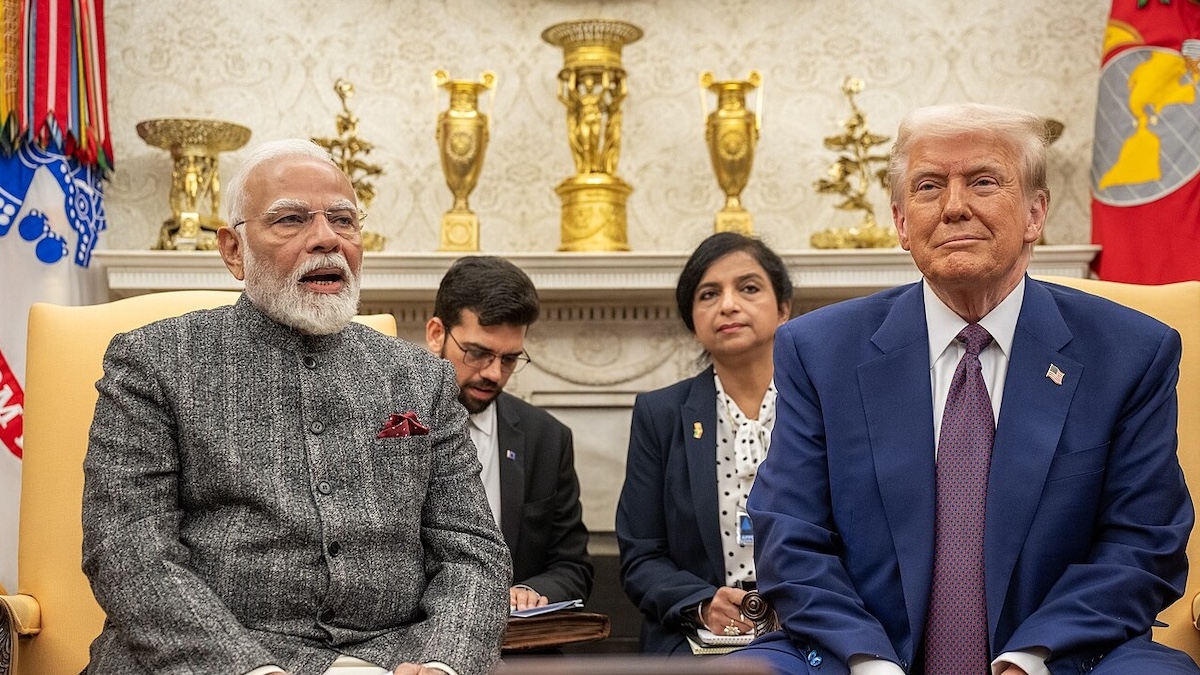
Trump slapped tariffs on India for importing Russian oil, but the US imports even more uranium from Russia and its allies, writes Linda Pentz Gunter
On August 6 we learned that US president Trump would raise tariffs on India to 50 percent. The decision was announced in yet another White House executive order, which was ostensibly about punishing Russia, proclaiming that “the actions and policies of the Government of the Russian Federation continue to pose an unusual and extraordinary threat to the national security and foreign policy of the United States.”
Instead, the punitive measures were directed toward India because, the order says, “the Government of India is currently directly or indirectly importing Russian Federation oil.”
Although Trump had already been on his tariff rampage for quite some time, this was, nevertheless, a somewhat surprising strike at one of the United States’s largest trading partners.
The reason Trump gave for increasing tariffs was that India was still importing 38 percent of its crude oil from Russia and that “they don’t care how many people in Ukraine are being killed by the Russian War Machine”. Worse still, railed Trump, India was selling some of the oil on the open market “for profits”.
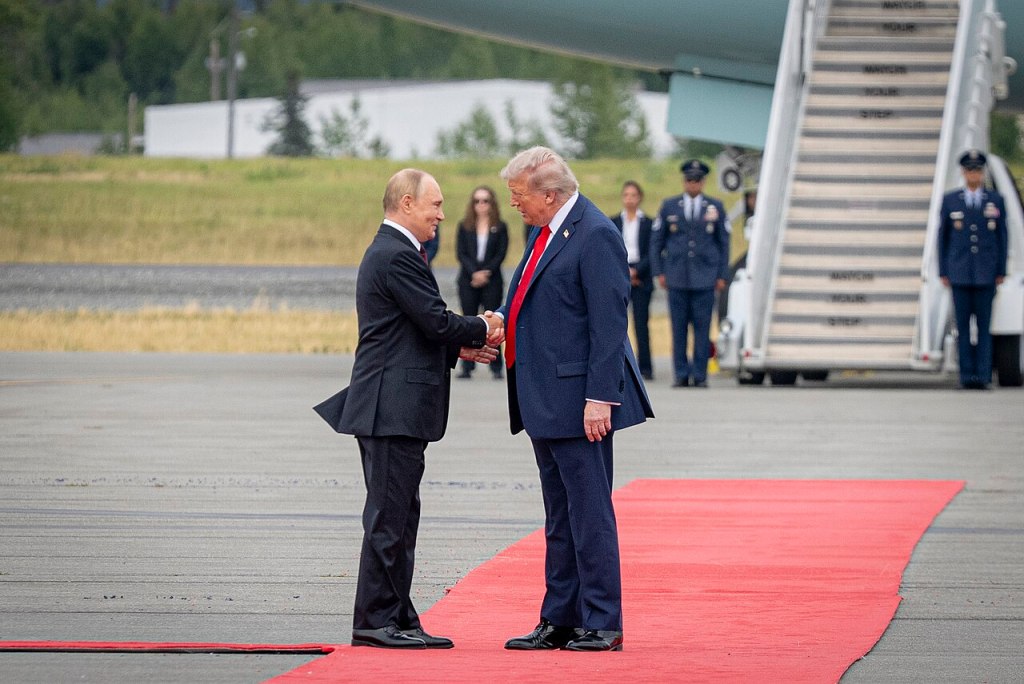
Needless to say, none of this passes the credibility test since successful profiteers are high on the list of people Trump admires and he himself has no interest in the beleaguered people of Ukraine — or anywhere else —including right here at home in the United States. And didn’t he just tell us during their meeting in Alaska that Russian president, Vladimir Putin is his friend? “I’ve always had a fantastic relationship with President Putin, with Vladimir,” Trump said.
So why punish India for its dealings with Russia and not China, for example, a far bigger importer of Russian oil?
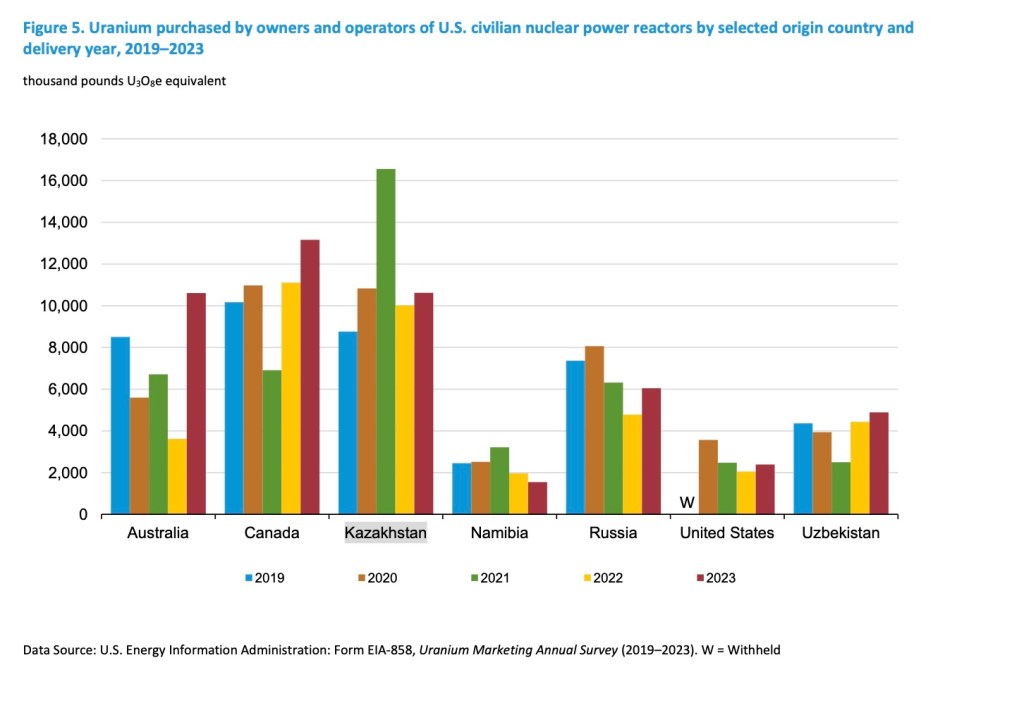
The hypocrisy here is that the United States STILL imports 44% of its uranium concentrate, needed to fuel its domestic nuclear power plants, from Russia (12%), Kazakhstan (22%) and Uzbekistan (10%), the latter two ostensibly independent countries but very much under Russian influence in the energy sector, including the nuclear one.
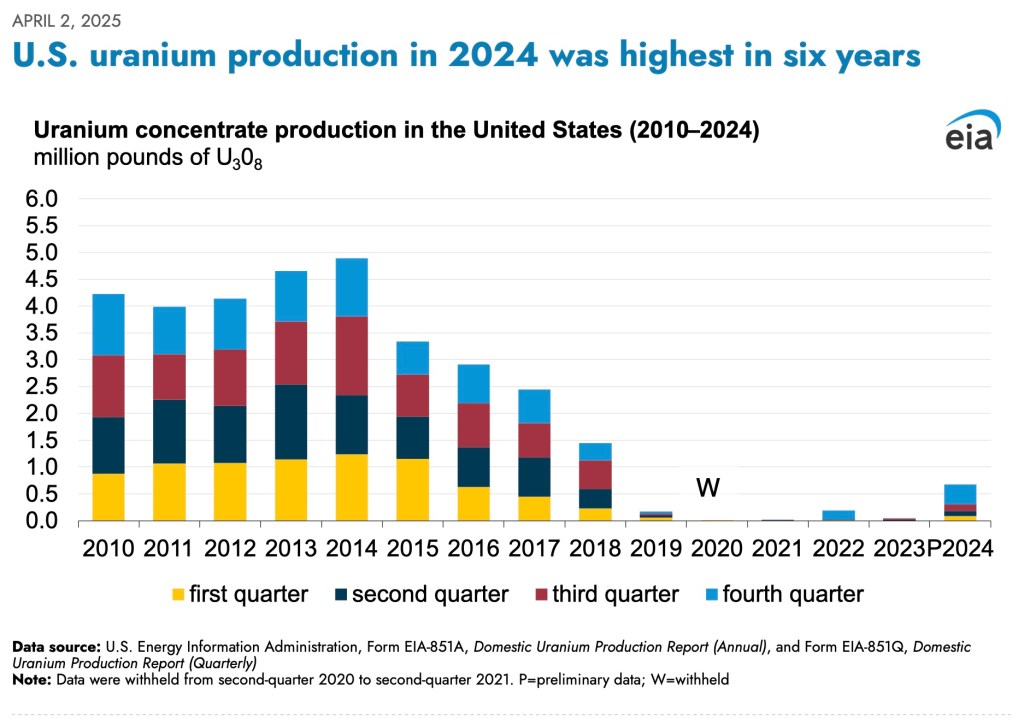
According to 2023 figures from the US Energy Information Administration, imports accounted for 99 percent of the uranium concentrate used in the US to make nuclear fuel. Most of it comes from Australia and Canada in addition to Russia, Kazakhstan and Uzbekistan. A mere 0.05 million pounds of it was produced domestically, with 32 million pounds imported.
A rapid changeover to majority domestic production seems unlikely, given the heavy percentage of foreign purchased uranium, as this and the subsequent US Energy Information Administration graphs show.
The halt on Russian uranium imports was first signaled by a law signed by President Biden in May 2024 that banned the import of low-enriched uranium from Russia, effective August 11, 2024 until it expires in 2040.
However, realizing that the US could not possibly replace the Russian supply overnight, it granted a temporary waiver for Russian uranium imports if no viable alternative sources are available or if it is “in the national interest.”
That waiver is due to end in 2028, by which time the US will supposedly be able to supply all its uranium fuel from domestic or other friendly sources. (Which countries might still be categorized “friendly” by then is anybody’s guess, since India clearly thought it was a friend to Trump.)
Meanwhile, as the US continues to import Russian, or Russian-associated uranium concentrates, another bill is being considered by Congress — Sanctioning Russia Act of 2025 — reportedly supported by both parties that would target any country importing Russian oil and gas with heavy sanctions. The bill was introduced — rather appropriately on April 1st 2025 — by South Carolina Republican, Senator Lindsey Graham and is still waiting for Trump’s approval. Two of its conditions state:
- the President must increase the rate of duty on all goods and services imported from Russia into the United States to at least 500% relative to the value of such goods and services;
- the President must increase the rate of duty on all goods and services imported into the United States from countries that knowingly engage in the exchange of Russian-origin uranium and petroleum products to at least 500% relative to the value of such goods and services;
“If this bill were to pass, it would cause an economic calamity on a scale never before seen in our country,” wrote Senator Rand Paul, a Kentucky Republican, in a May 2025 OpEd published on Responsible Statecraft.
Cutting off the Russian uranium supply will necessitate replacing it somehow, and quickly. This will happen, according to the Trump administration, by virtue of the slew of executive orders the president released on May 23, designed to fast-track everything nuclear, including the production of uranium fuel.
But none of this will happen overnight — and likely not by the 2028 waiver deadline either — given the US’s heavy reliance on imported uranium concentrate.
But even the Trump administration isn’t that confident. In the executive order addressing uranium fuel supply — Deploying Advanced Nuclear Reactor Technologies For National Security — one of the four covering nuclear power that was released on May 23rd, it said: “To the extent feasible, the Secretary of Energy shall implement plans to ensure that a long-term supply of enriched uranium is available for the continued operation of the projects referenced in this first sentence of this subsection, including through the establishment of domestic fuel fabrication and supply chains to reduce reliance on foreign sources of fuel.”
“To the extent feasible?” And if it isn’t? Watch for Trump to find new reasons to allow his friend Vladimir to keep sending him the uranium concentrates and even the fuel he needs to fulfill his nuclear dreams.
Even in May of this year, the Russians were already flagging this when Rosatom Director General Alexey Likhachev noted that the USA continues to buy enriched uranium from Russia and “in the context of the ongoing negotiations between the US and the Russian Federation … we can expand the agenda of this cooperation,” according to World Nuclear News.
India, meanwhile, remains a football for Trump to kick about in his irresponsible geopolitical games, even as he now courts India’s enemy, Pakistan, as his new ally. Like dealing with a playground bully, world leaders must surely now realize that they can be Trump’s friend one week and betrayed the next. Meanwhile, Trump will get his yellowcake. If only he would eat it, too.
Linda Pentz Gunter is the international specialist at Beyond Nuclear and writes for and edits Beyond Nuclear International. Any opinions are her own.
Headline photo: Indian prime minister, Narendra Modi, visits US president, Donald Trump, at the White House on February 13, 2025. (Photo: The White House)
 Beyond Nuclear International