 Beyond Nuclear International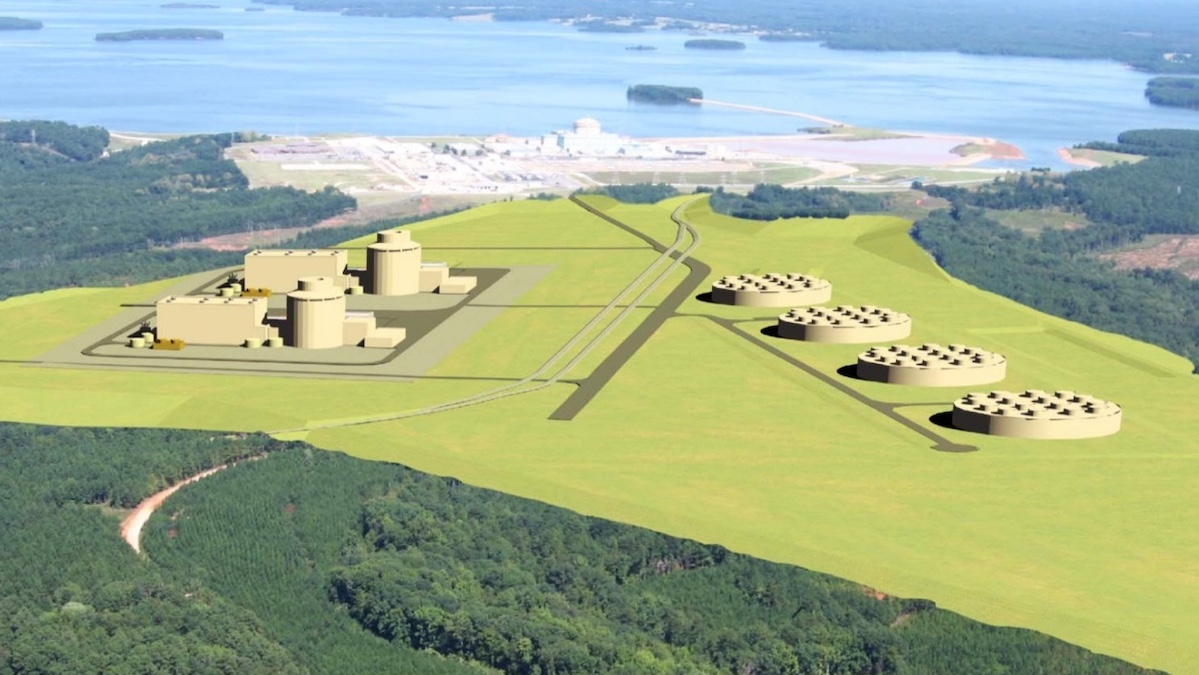
Resuming construction of the abandoned V.C. Summer reactors is rife with challenges, says a new report from Savannah River Site Watch
The proposal to restart the failed nuclear reactor construction project in South Carolina faces a host of unexamined challenges, according to a just-released report. The report, prepared by the nuclear policy expert who led the intervention against the project since its inception in 2008 through its collapse and termination in the face of ratepayer outrage 2017, outlines major stumbling blocks to the revival of the nation’s most shocking failure of a nuclear reactor construction project in the United States in the 21stcentury.
The V.C. Summer project involved the botched attempt by now-defunct South Carolina Electric & Gas (SCE&G) to construct two large Westinghouse AP1000 nuclear reactors 2 – units 2 & 3 – 25 miles north of Columbia, South Carolina. Over $10 billion was wasted on the construction of project.
Its abrupt termination was one of the most impactful and costly nuclear construction-project collapses in U.S. history, which was the death knell for the so-called “nuclear renaissance” in the U.S. Customers were hit hard and are still left holding the bag with nothing in return for a reported $2 billion payment so far, for financing costs, an amount that grows daily. Though far-fetched, project restart is now being discussed.
The report – presenting 14 unanalyzed challenges to the restart idea and prepared by the Columbia-based public-interest, non-profit group Savannah River Site Watch – is titled Economic, Technical and Regulatory Challenges Confound Restart of the Terminated V.C. Summer Nuclear Reactor Construction Project in South Carolina.
The 24-page report was written by Tom Clements, director of SRS Watch, who led interventions before the PSC by the environmental group Friends of The Earth beginning in 2008 and running through the bankruptcy of SCE&G and its takeover by Dominion Energy South Carolina in January 2019.
“As the public was so abused during the V.C Summer construction project, they now deserve a voice in raising concerns about proposals concerning rebirth of the project in which they still have financial ownership and that’s for whom this report speaks” said Clements. “We reveal in the report that Dominion ratepayers are right now paying 5.22% of the bill for the terminated project and are paying, since 2019, an additional $2.8 billion over 20 years. The restart effort could once again saddle customers with additional massive costs if VCSummer 2.0 proceeds.”
The 5.22% monthly rate hidden in the Dominion monthly bill was revealed in a Freedom of Information Act document provided by the S.C. Office of Regulatory Staff to SRS Watch on August 7, 2025. In January 2019, the S.C. Public Service Commission ordered Dominion customers to pay an additional $2.8 billion over the next 20 years for the cost of the bungled project. That monthly fee should be eliminated and consumer investment rebated, especially if restart is pursued, according to SRS Watch.
Themes covered in the “restart challenges” report include:
- Nuclear Advisory Council restart report not a reliable guidepost;
- Nuclear Regulatory Commission license terminated in 2019, hard to regain a new license;
- Reestablishing NRC certification for equipment will be difficult;
- Environmental permits must be secured anew or renewed;
- Unclear how much equipment remains and if it’s to be resold for reuse or just scrap;
- Dominion and Santee Cooper not interested in involvement in restart;
- Westinghouse plans for new AP1000s unclear, rhetoric might not be accurate;
- Cost and schedule of new Westinghouse AP1000s unclear; Last-of-a-Kind (LOAK) reactor?
- Ratepayers in South Carolina could be put on the hook again;
- S.C. Public Service Commission and Dominion ratepayers will be involved, can’t be sidelined;
- Federal rhetoric supporting nuclear power won’t carry the day or overcome big obstacles;
- Reactor restart fails to secure funds or protection from South Carolina legislature;
- Highly radioactive spent fuel at new units a challenge;
- When will the community near V.C. Summer be consulted?
According to Clements, numerous showstoppers exist to project restart. It’s quite telling that the earlier project owners, Dominion Energy, which owned 55% of the project and owns the V.C. Summer site where a single operating reactor is now located, and Santee Cooper, originally owning 45% of the project, have no interest in pursuing project restart.
“No amount of ill-informed restart boosterism by Senator Lindsey Graham, Governor Henry McMaster or Secretary of Energy Chris Wright can overcome a host of economic, technical and political challenges facing the project. I urge politicians to cool down the bluster and unleash some common sense regarding the restart idea and review the challenges,” said Clements.
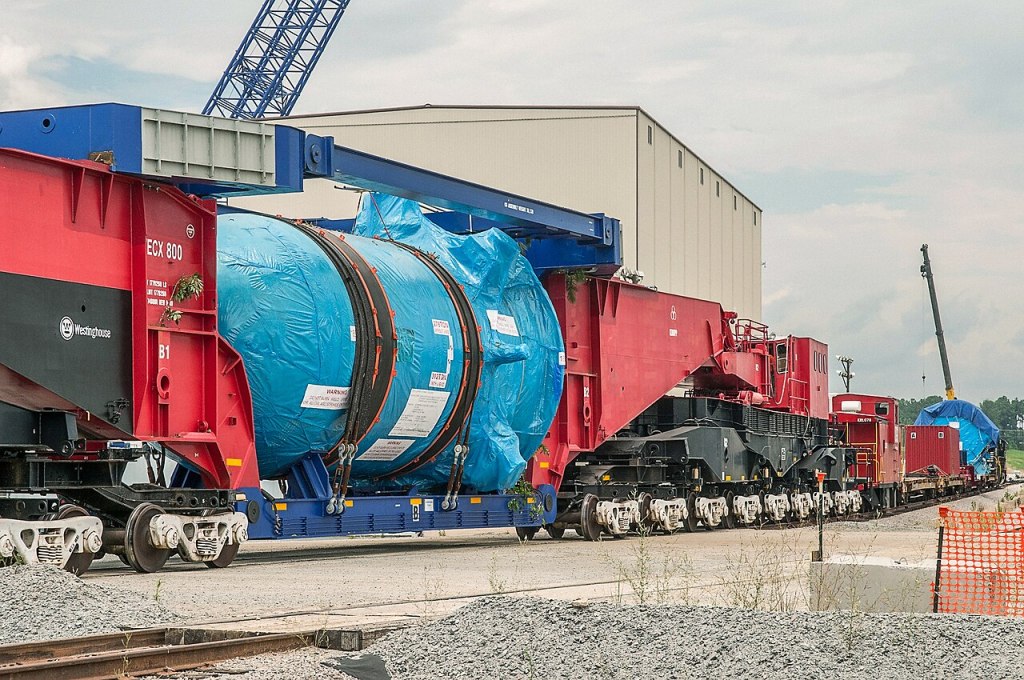
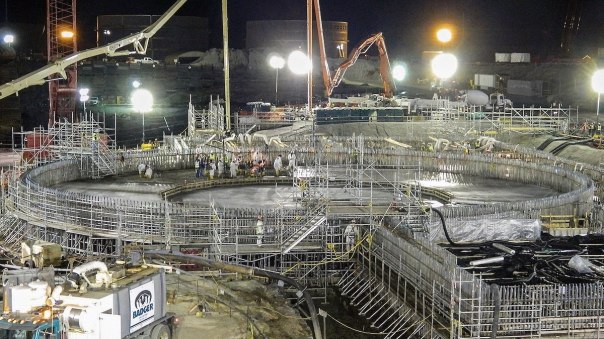
Equipment and components from the canceled projects still sit amongst overgrown vegetation at the reactor site. Major components such as the reactor vessels and steam generators, as well as the unfinished concrete reactor buildings, have been sitting exposed to the weather and degrading in the environment for over eight years.
Now, the South Carolina Public Service Authority, known as Santee Cooper, which took control of the equipment in 2018, has floated the idea to sell off equipment sitting at the site or to actually revive the construction project with the aim to finish one or both of the reactors and place them in service.
After the project’s approval in January 2009 by the South Carolina Public Service Commission, it quickly descended into a calamitous series of cost overruns, schedule delays, design and construction problems, nine rate hikes for customers and false testimony to regulatory bodies about the project’s schedule. Two SCE&G officials and two Westinghouse officials were eventually convicted of felonies after the abrupt termination of the debacle on July 31, 2017.
The idea to restart the project was floated in September 2024 by a state-funded nuclear industry booster organization known as the South Carolina Nuclear Advisory Council. The cursory report by that entity stimulated much discussion by politicians and the media, many of whom were ill informed and not familiar with details of the project’s failure in 2017 nor aware of the hurdles now facing project reactivation or sale of stored equipment.
On January 22, 2025, Santee Cooper issued a “request for proposals” “seeking proposals to acquire and complete, or propose alternatives, for two partially constructed generating units at the V.C. Summer Nuclear Station in Jenkinsville, S.C.” On May 6, 2025, Santee Cooper said it has received responses to the RFP but has not revealed from whom the proposals came nor what their interest in the site is. Short of restart, aging equipment at the site could be sold off.
The well-researched “restart challenges” report is being released now as Santee Cooper is in the midst of reviewing any restart or equipment-sales proposals that were submitted. Both Santee Cooper and bidding entities must take into consideration the due diligence that SRS Watch is now conducting on behalf of the public, according to Clements. It has earlier been reported that Santee Cooper would make a decision on equipment sale in August 2025 but that date has likely drifted.
“We aim to stimulate a much more informed dialogue about problems facing V.C. Summer project restart and encourage politicians, the media and bidding entities to consider the challenges we have outlined and respond to them,” said Clements. “Continued silence by project boosters about the challenges that exist will not garner goodwill by a public that was badly burned in the first go-round by construction problems and massive cost overruns that utility executives attempted to fob off on ratepayers.”
Read the full report. And read more from Savannah River Site Watch.
Headline photo shows an artist’s rendition for the two proposed AP1000 reactors at V.C. Summer that never fully materialized. (Image: NRC/Wikimedia Commons)
The opinions expressed in articles by outside contributors and published on the Beyond Nuclear International website, are their own, and do not necessarily reflect the views or positions of Beyond Nuclear. However, we try to offer a broad variety of viewpoints and perspectives as part of our mission “to educate and activate the public about the connections between nuclear power and nuclear weapons and the need to abandon both to safeguard our future”.
 Beyond Nuclear International
Pingback: The non-corporate nuclear news – week to 8 September « nuclear-news
Pingback: South Carolina’s dormant nuclear volcanoes « nuclear-news
Pingback: The non-corporate nuclear news – week to 8 September « Antinuclear