 Beyond Nuclear International
Nuclear is Not the Solution is a fluid read that makes a convincing case against continued and further use of nuclear power in an age of climate crisis, writes Linda Pentz Gunter
A couple of months ago, Ralph Nader sent around a recommended list of books to read as we wile away those idle days of summer — haha if only! It was a suitably grim line-up, given the times we are living in.
More homework, I remember thinking with dread, looking at the already expanding row of “the end is nigh” books on my shelves about nobody’s favorite subject but ours —all things nuclear.
So I confess I haven’t yet read Nuclear War: A scenario (although Paul Gunter has, so I count that as checked off — why do we both need to invite nightmares?) I never quite finished Daniel Ellsberg’s The Doomsday Machine, confessions of a nuclear war planner, either, brilliant though it is. But I will. I AM reading Timmon Wallis’s excellent new book, Nuclear Abolition. A scenario, and that review is now in the queue.
A few of the other waiting books are “tomes” that threaten to be a “trudge”, the worst aspect of obligatory reading. Worthy yes, important yes, but hard work nevertheless.
An exception to this was Kate Brown’s 2019 book, Manual For Survival, a Chernobyl Guide to the Future that, despite its subject matter — or maybe because of it — read like a thriller, a non-fiction page-turner that felt more like an addictive novel. The book is a tome, but decidedly not a trudge.
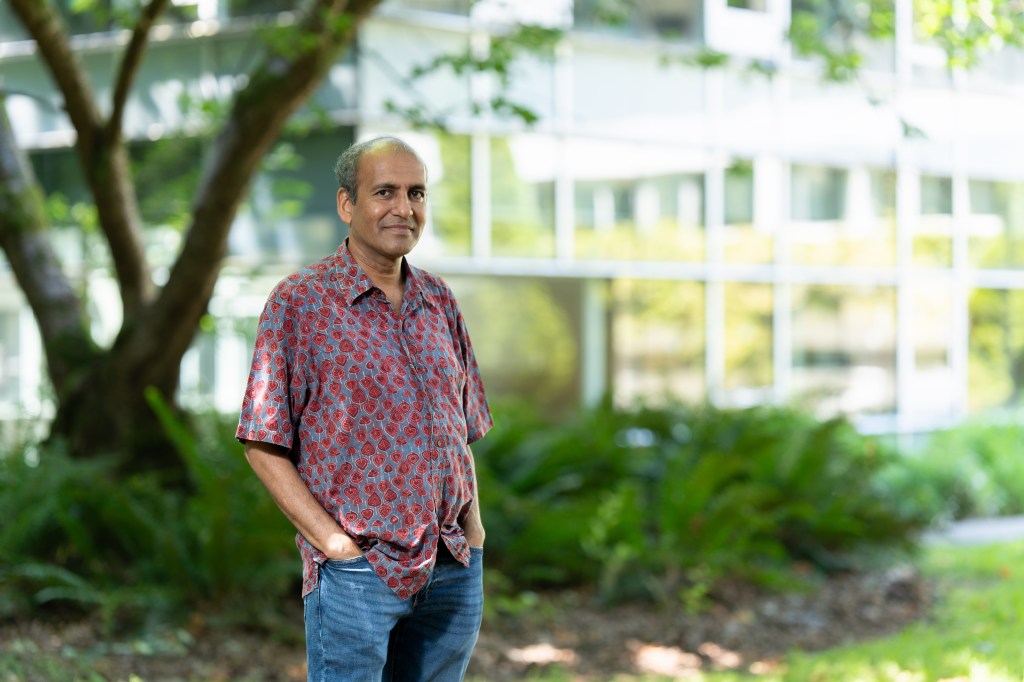
Neither tome nor trudge is M.V. Ramana’s new book, Nuclear Is Not The Solution, The Folly of Atomic Power in the Age of Climate Change. I must confess that I read Ramana’s book some time ago — in other words, immediately upon receipt — because I knew it was going to be a riveting read as well as an essential primer.
Then I got enmeshed in completing my own book — No To Nuclear. Why Nuclear Power Destroys Lives, Derails Climate Progress and Provokes War (to be published by Pluto Press next March and for which Ramana provided some invaluable feedback). Consequently, this review is inexcusably late.
I could stop here and just say “Read This Book!” But it’s important to say why it’s essential reading.
One of the challenges of our subject area is its complexity. We struggle to reduce it to a soundbite. We must, perforce, explain. And in so explaining, we risk losing an audience waiting for a simple answer to the question: “Why not nuclear power?”
Now, that challenge has been made doubly difficult by having to further explain, “why not small modular reactors?”
M.V. Ramana answers these questions and more in his comprehensive yet concise volume, covering not only the illusory new reactors themselves but the propaganda around them, the insane costs, interminable timelines, the jobs delusion, false sense of prestige, persistent waste problems and, of course, the ties to nuclear weapons.
In a stroke of brilliant originality, Ramana finds the perfect analogy to describe the folly of small modular reactors, by quoting, of all people, the legendary British football manager, Brian Clough.
“We had a good team on paper. Unfortunately, the game was played on grass.”
“On paper” is exactly where small modular reactors remain.
But beyond giving us a clear and coherent understanding of the inner workings of the nuclear power industry and the futile machines they worship, Ramana most importantly addresses the political system that allows them to flourish.
“Even though I have used the common term “subsidies,” a more appropriate term might be ‘corporate welfare’,” Ramana writes of the vast amounts of taxpayer money that have been directed toward often failed nuclear power projects, and continue to be. Citing an example, he writes:
“Just about any company working on new nuclear reactor designs, whether it is Transatomic or NuScale, has received large amounts of taxpayer money. A paper published in Environmental Research Letters in 2017 calculated that between 1998 and 2015, companies and institutions working on “advanced nuclear” reactors received about $2 billion in US government funding.
“All for nothing. Not one of the projects that received any part of the $2 billion saw the light of day.”

It’s a welfare state for corporations that they are intent on seeing persist. Even as they push the false narrative of progress in advancing their new reactors in the name of climate change, it is change itself that they fear the most. And it is this status quo that is as comfortable for the politicians as it is for the corporations who they too often serve and that they will do all in their power to preserve. And, unfortunately for the rest of us, under the present system, power is precisely what they hold.
As Ramana concludes:
“Nuclear energy is being promoted by powerful elites in governments and businesses precisely because it comes with the promise, even if it will be ultimately a false promise, that the economic system can continue more or less along the same path while avoiding large-scale climate change.”
Hence it is capitalism we must confront, says Ramana, not just the pros and cons of nuclear power and renewable energy (and yes there are “cons” about renewables that Ramana deliberately declares. We have left it too late for entirely harmless solutions to our ever worsening climate crisis.)
We will not reverse the attachment the political and corporate elites hold to nuclear power simply by arguing our way to the truth or, as Ramana puts it, remedying the situation through “a mere cataloging of the problems of nuclear power or positing renewables as the alternative.”
It’s the system that will need changing, as well.
“Therefore, over and above its many undesirable impacts, one further reason to resist a nuclear expansion is to limit the power of these elites and their wealth,” Ramana writes in the conclusion of his book.
“An energy transition can serve as a lever to constrain the power of capital, which is essential if we are to transcend the present expansionary system and avoid being overwhelmed by the multiple ecological crises confronting us today.”
You don’t have to be an economist or a scientist or a socialist or any other kind of ‘ist’ to understand or appreciate Ramana’s book. You just have to be a human being who cares about the future of our planet and all who dwell on it. After reading Nuclear Is Not The Answer, you might find yourself caring all the more.
Linda Pentz Gunter is the international specialist at Beyond Nuclear and writes for and edits Beyond Nuclear International. Any opinions are her own.
You can order the book from Verso Books.
Headline photo: Justin Man, University of British Columbia.
 Beyond Nuclear International
Pingback: The non-corporate nuclear news – 8 -20th September « Antinuclear
Pingback: The non-corporate nuclear news – 8 -20th September « nuclear-news
Pingback: Read this book! « nuclear-news