 Beyond Nuclear International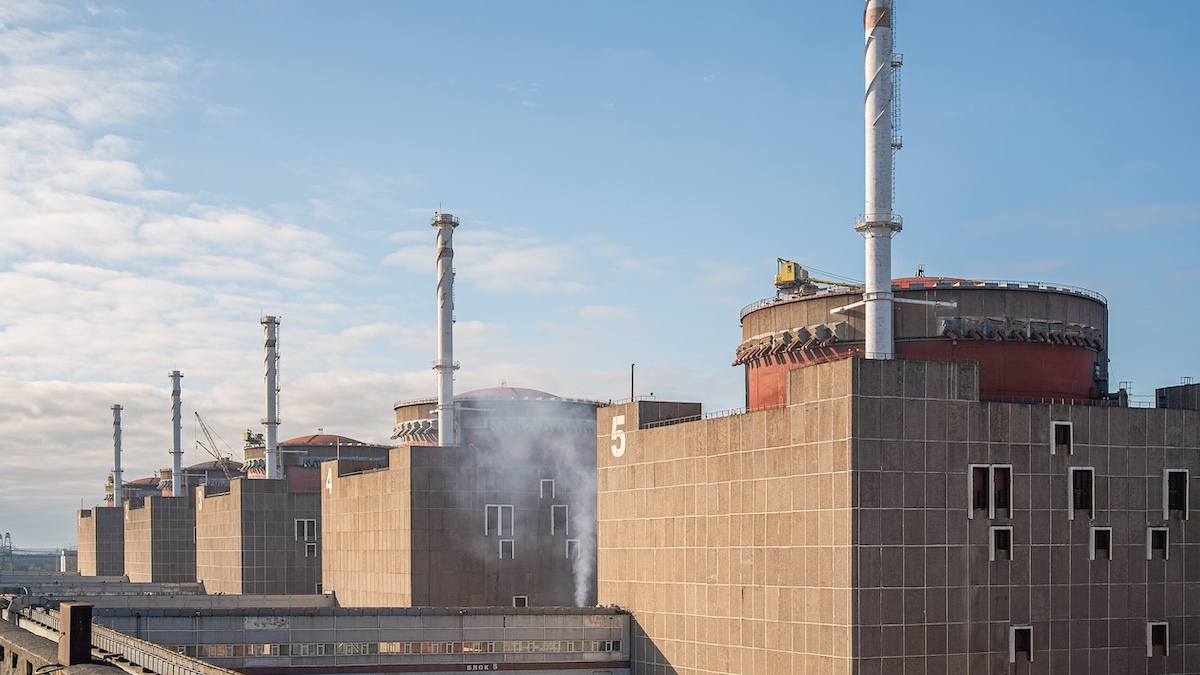
With offsite power cut, peril returns to the Zaporizhzhia nuclear power plant in war-torn Ukraine, writes Linda Pentz Gunter
We have been here before, nine times. External power provided by the grid has been lost, backup diesel generators have been called into duty, and Ukraine and the rest of the world has held its collective breath, hoping we are not about to witness another major nuclear disaster.
This is once again the situation at the six-reactor Zaporizhzhia nuclear power plant (ZNPP) in southeast Ukraine, where for the tenth time external power has been lost. By September 30, that blackout had lasted seven days, the longest such stretch since the plant was first occupied by Russian forces on March 4, 2022, ten days after Russia invaded Ukraine and provoked a war that shows no sign of ending anytime soon.
Alarm is especially high at the Zaporizhzhia site given its size — the largest nuclear power plant in Europe — and enormous radioactive waste inventory of more than 2,000 metric tons. The plant has been embroiled in some of the worst of the fighting and has already suffered previous damage.
Meanwhile, Ukraine’s other nine reactors at three other sites are by no means immune to the dangers of being caught up in an indefinite war zone. In late September, a drone detonated just 875 yards from the perimeter of the South Ukraine three-reactor nuclear power plant. Monitors from the International Atomic Energy Agency (IAEA) said they observed at least 22 drones close to the facility.
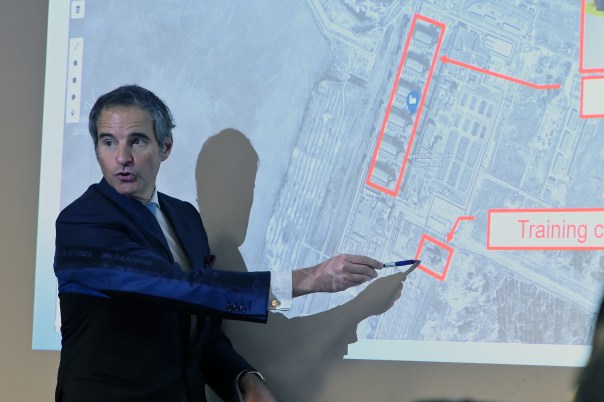
“Once again, drones are flying far too close to nuclear power plants, putting nuclear safety at risk,” wrote the IAEA’s director general, Rafael Grossi in a September 25 statement after the drone incident. “Fortunately, last night’s incident did not result in any damage to the South Ukraine Nuclear Power Plant itself. Next time we may not be so lucky.” The IAEA nevertheless continues ardently to promote the use and expansion of nuclear power around the world.
Currently, all six reactors at Zaporizhzhia are in cold shutdown, which means less cooling is needed, but they are by no means out of danger. However, it is unclear how many members of the trained Ukrainian plant staff remain to operate the facility. According to an alarming new investigative report, Seizing Power, prepared by Truth Hounds and supported by Greenpeace Ukraine, numerous personnel have been abducted from the plant, interned and even tortured.
Cold shutdown means that fissioning in the reactors has stopped and the temperature of the reactor cores is below 200 F with the coolant system at atmospheric pressure. But this does not mean that further cooling is no longer required.
The fuel inside the reactors remains hot and requires a steady flow of cooling water which is why power is still needed on the site. Failure to achieve this would mean the fuel rods would heat up the water in the core, causing it to boil away, exposing the rods. This could then lead to fires, which in turn could cause hydrogen explosions of the kind we saw at the Fukushima Daiichi nuclear plant in March 2011. A meltdown is also still possible, although the time it would take to reach such a critical juncture is longer when the reactors are not operating.
The fuel pools, where much of the irradiated fuel is stored, also require continued cooling, although less so than the reactors, and risk the same outcome if cooling stops— a boiling away of the water exposing the rods and leading to a potential fuel pool fire.
The offsite power was being provided by the one still functioning power line into the site. Without it, workers have had to deploy backup diesel generators. There are reportedly 18 of these on site, with seven currently in use. But they cannot provide power indefinitely.
Accessing cooling water has also become more of a challenge. The Kakhovka Dam was destroyed in June 2023 leading to the depletion of the Kakhovka Reservoir, the vital water source for the Zaporizhzhia plant. Indeed, according Seizing Power, “the license to operate the ZNPP was premised on the availability of the Kakhovka Reservoir to supply water to the ZNPP and, in the event of an emergency, to function as a vital heat sink.” Instead, operators have been drilling for groundwater wells on-site in order to keep cooling water flowing into the reactors and the pools.
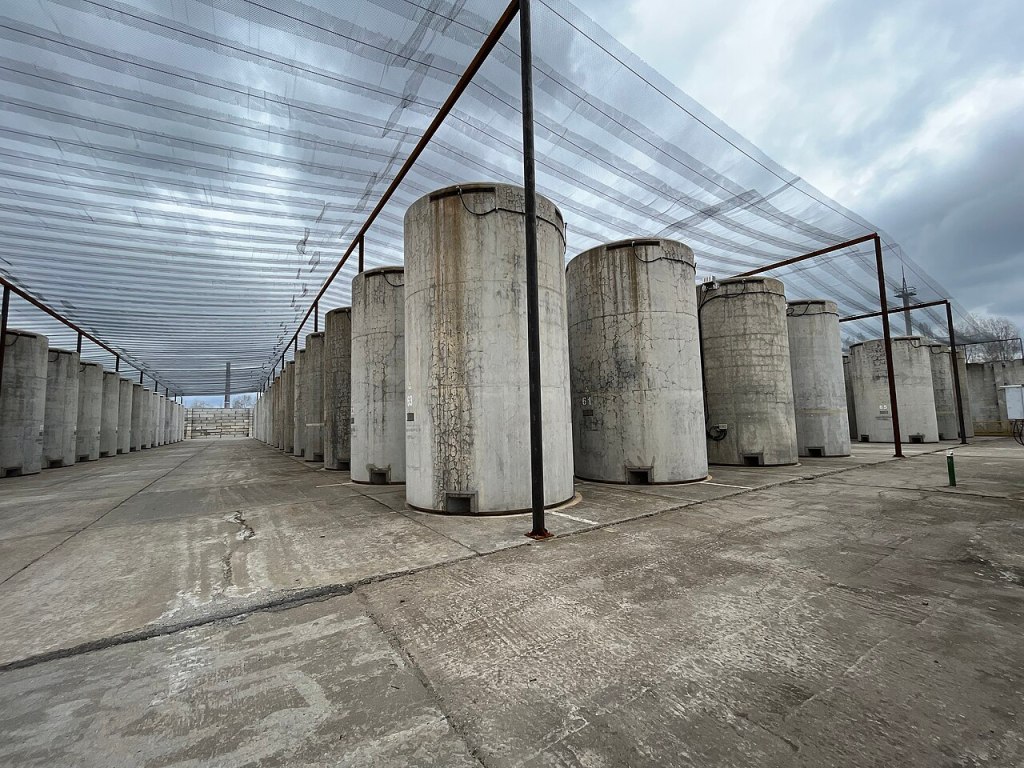
Of the 2,000 tons of radioactive waste stored on the Zaporizhzhia site, 855 tons are in the fuel pools and the rest in waste fuel casks. There are 200 different radioactive isotopes that could be released in the event of a disaster, an eventuality that could lead to both serious and fatal health consequences for those exposed, as well as longterm contamination of the environment and natural resources.
Such a release would also have a devastating impact on Ukraine’s economy, given the country’s role as a major agricultural exporter. Known as the “breadbasket of Europe,” Ukraine’s agricultural products account for close to 60 percent of all exports, predominantly grains.
And yet, despite the on-going war, “Ukraine’s agricultural exports reached $24.5 billion in 2024, accounting for 59% of the country’s total exports,” according to January 2025 figures from the Ukrainian Agriculture Ministry.
It is a loss Ukraine cannot afford but we have of course seen this very outcome once before, after the April 26, 1986 Chornobyl explosion and meltdown in Ukraine that left lands in much of the former Soviet Union and parts of Europe permanently radioactively contaminated.
Operating a nuclear power plant safely, even in shutdown mode, can be jeopardized by multiple external factors, but how the workforce functions is also key. Both the Three Mile Island and Chornobyl nuclear disasters were the result of human error. When people are working under duress and especially extreme fear, mistakes become more likely.
That makes the revelations in Seizing Power all the more shocking. Researchers compiled their evidence through firsthand accounts from the residents of Enerhodar, the city where the plant is located and which was also captured on March 4, 2022. After resistance to the occupation failed, the report said, “Repression and violence quickly became systematic, targeting territorial defense volunteers, pro-Ukrainian activists, and ZNPP staff who refused to collaborate, among others.”
At least seven detention centers were established, said the report, where at least 226 Enerhodar residents and ZNPP employees were held captive, “subjected to physical and psychological torture to extract information, force confessions, punish dissent, intimidate, and coerce collaboration. Russian forces deprived detainees of food, water, and medical care, contrary to the provisions of international law. Torture, including beatings, electrocution, sexual violence, mock executions, and threats to family members of detainees, became routine.”
Why would either side gamble with such a lethal liability as the safety of a nuclear power plant, given the potentially drastic outcome whose resulting deadly radioactive plume would know no borders? Russia has accused Ukraine of damaging the power lines near the plant. The Ukrainians have in turn suggested the Russians are using the disabling of the plant as a threat to drive them into submission and cede territory in the east. The Russians have already signaled that they intend to use the plant to supply electricity to Russia once it is safe to restart the reactors.
That the war in Ukraine (and others elsewhere) must end, is stating the obvious. Human suffering around the world is already too great and entirely avoidable. Wars involving nuclear power plants ramp up the risks monumentally. But those dangers are also ever present, given nuclear power is inherently dangerous both on good days and bad.
As we watch ever greater militarization occurring here in the United States, with war declared by the White House on our own cities and “the enemy within”; with the abrupt and unlawful detentions and deportations of workers; and with the reckless determination to keep not only our aging nuclear fleet in operation but also to revive already closed and dangerously decrepit reactors; we, too, are one wrong move away from experiencing a nuclear disaster.
Headline photo of the Zaporizhzhia nuclear power plant before the Russian invasion by Leo211/Wikimedia Commons.
Linda Pentz Gunter is the international specialist at Beyond Nuclear and writes for and edits Beyond Nuclear International. Any opinions are her own.
 Beyond Nuclear International
Pingback: A big week in the non-corporate nuclear news « nuclear-news
Pingback: A big week in the non-corporate nuclear news « Antinuclear
Pingback: Danger déjà vu « nuclear-news