 Beyond Nuclear International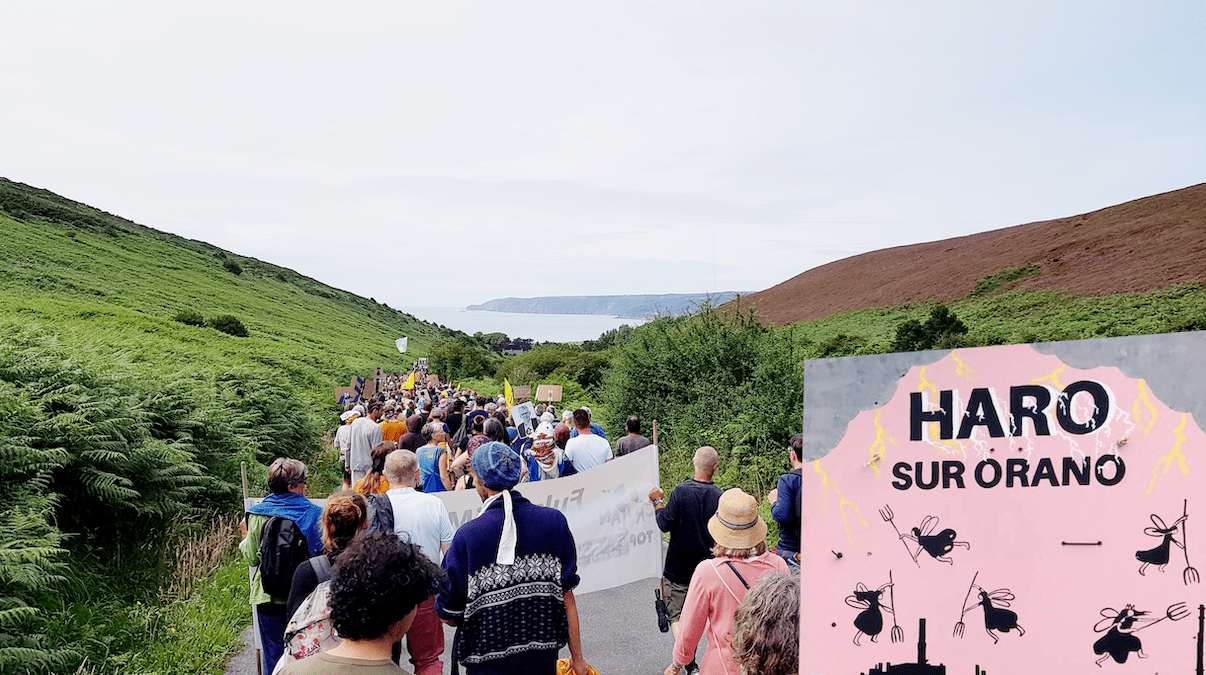
Frogtifa is just catching on in Portland, but French protesters have used street theatre for years. This summer’s anti-nuclear actions were no exception, reports Reseau sortir du nucléaire
Editor’s note: In her forthcoming book — No To Nuclear. Why Nuclear Power Destroys Lives, Derails Climate Progress and Provokes War — to be published by Pluto Press next March, Linda Pentz Gunter describes the creative resistance of French protesters, including the anti-nuclear movement. “The French anti-nuclear movement,” she writes, “has engaged in protests that deliver considerable numbers, abundant creativity — and sometimes a lot of useful tractors as well. France also has a long theatrical tradition, and French anti-nuclear activists have invariably embraced that as well. They understand that street theater is an attention-getter. They also know it makes protesting a lot more fun.” The chapter features the “goat ZAD” mobilized by the Piscine Nucléaire Stop collective. Since then, they have “escalated,” as sortir du nucléaire describes in this article.
From July 18 to 20, 2025, in La Hague, “HARO” made its grand debut: three days of meetings and mobilization around nuclear waste and local communities. Nearly a thousand people from the Cotentin region and elsewhere responded to the call of the Piscine Nucléaire Stop collective to participate in round tables, workshops, concerts, screenings, hikes, and, of course, the big demonstration by the Fées furieuses (Furious Fairies). The event took place in a festive atmosphere of determination.
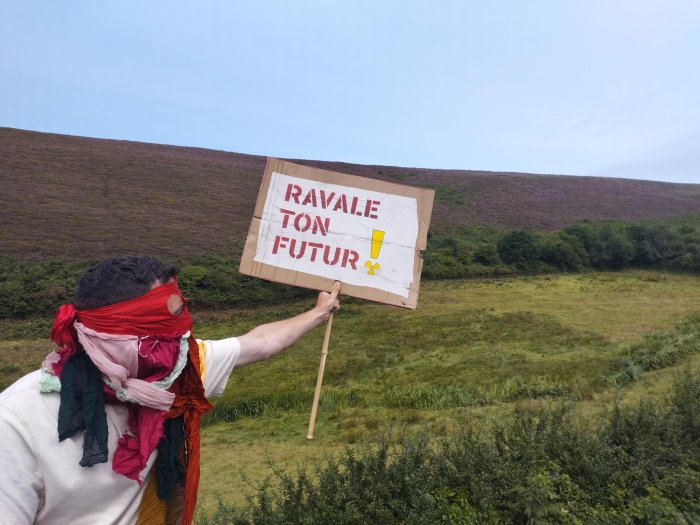
The name of the event set the tone: derived from Norman customary law, the interjection “Haro” was used to demand justice, even in the face of powerful oppressors. In the Cotentin Peninsula, it is Orano [owner of the La Hague reprocessing facility] that is attempting to impose its Aval du Futur mega-project.
The event, located on the La Hague plateau in a field lent by local farmers committed to the anti-nuclear cause, offered a breathtaking view of the Orano plant, when the fog didn’t interfere with the festivities. The typical La Hague weather did not discourage participants who had come from all over France to take part in meetings against waste, nuclear power, and the nuclear chain, with an intersectional approach.
Organized on a consensus basis, the camp benefited from a strong network of activist solidarity with equipment cooperatives in Rennes and Bourges providing numerous structures (marquees, tents, etc.) to shelter the participants. The Schmurtz canteen treated them to vegan meals, as did Les Crêpitantes, who provided crêpes and care, and L’International Boulangère Mobile, who baked bread and cakes throughout the meetings.
“Haro, a cry of anger! Haro, a rallying cry!” This was the slogan for the three days of meetings that brought together activists and collectives committed to the anti-nuclear movement and other environmental and social causes. The event opened in a packed marquee with an initial round table discussion on the myth of reprocessing, bringing together activists, associations, and researchers. The discussion was broadcast live on Radio Haro, set up especially for the occasion!
The packed program then continued throughout the weekend: between round tables on feminist anti-nuclear struggles, discussions on ways of living in contaminated areas, workshops on the legacy of decolonial struggles, the manufacture of radio transceivers, etc., there was something for everyone.
As for the cooperative village [established for the events], it was as varied as the program itself: local and national associations committed to the anti-nuclear cause or installation projects such as Atomic Marney, social struggle associations such as France Palestine Solidarité (Cherbourg branch), citizen laboratories, bookstores, and collectives from other environmental struggles, such as local committees of Soulèvements de la Terre.
The most courageous, who wanted to venture outside the meeting site, sometimes in pouring rain, were able to take part in the Randos Radieuses (Radiant Walks).
The first hike, led by the Association pour le Contrôle de la Radioactivité dans l’Ouest (Association for the Control of Radioactivity in the West), turned hikers into collectors of algae, seawater, and sand in the Anse de Vauville. This citizen laboratory then analyzes these samples in a laboratory to measure radioactivity in the environment, an essential expertise for counterbalancing the power of industry. In the pouring rain, a second hike, led by a local naturalist, introduced hikers to the history of La Hague, its fauna, flora, and famous moors.
In addition to round tables and workshops, the public could attend numerous screenings of films and documentaries critical of nuclear power: on mining, ecofeminist struggles, economics, nuclear testing, or more artistic ones such as Remonter les Rivières by Laura Molton. Live performances were also well represented, with more than fifteen performances by theatre companies, artists, and groups entertaining audiences day and night.
Within this cultural program, the fight against Cigéo [the French nuclear waste entity] was highlighted with the screening of a film recounting ten years of struggle: Vivre et lutter à Bure entre 2015 et 2025 (Living and Fighting in Bure between 2015 and 2025), the documentary Les Bombes atomiques (The Atomic Bombs), which recounts a feminist highlight of the struggle in Bure, and the film Après les Nuages (After the Clouds) by the collective Les Scotcheuses.
The audience was also treated to the comic and acrobatic show HAVL (Haute activité, vie longue), written and performed by Lucas Sebirder, Amarinte Gnou, Gian Elefanthalune, and Tony Malboro.
Finally, as the icing on the cake, participants were able to join the choir formed especially for the occasion and sing in patois to a catchy tune: “Haro! Haro! I tell you, copy our history Haro! Haro! I curse the sins that have been committed”. This poem by Cotis Capel, a local writer and priest, was written at the time of the construction of the La Hague nuclear plant, to which he was opposed, making it highly symbolic.
The highlight of the weekend was a demonstration on Saturday afternoon against Aval du Futur and, more broadly, the ever-increasing nuclearization of the region. In keeping with its offbeat and militant approach, the Piscine Nucléaire Stop collective decided to draw on the local legend of the little fairies and their method of collective self-defense armed with heather and gorse to confront an offense: the paving over of the last remaining primary moors on the La Hague plateau and the accumulation of nuclear waste by Orano.
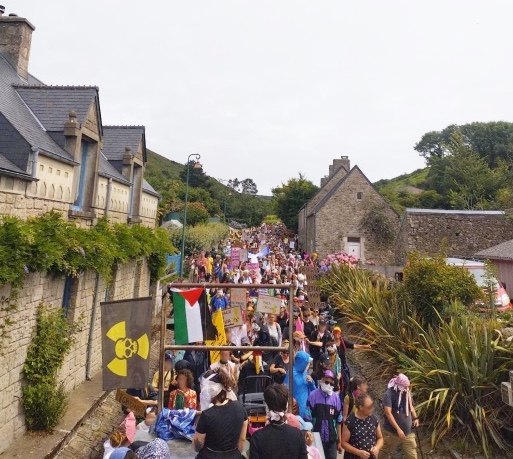
A thousand people gathered to march against Orano’s project. The procession left the camp in sunny weather and headed for the village of Vauville, accompanied by a police presence and a helicopter dispatched for the weekend.
In a family atmosphere, the demonstrators and little fairies danced to the sounds of the Planète Boum Boum collective, chanted slogans concocted for the occasion, and sang to the tune of a summer camp song: “In my beautiful Cotentin, there will be no MOX, no swimming pools either, and no concrete either.”
The links between the struggles in Bure and La Hague were strengthened during this event, culminating in a concert by the Bure-based band Les Free’meuses, during which the audience was moved by their latest cover of Les Demoiselles de Rochefort: “We are twin struggles… “
In various ways throughout the weekend, activists from the east and west reiterated that “we don’t want radioactive waste dumps in La Hague, Bure, or anywhere else!”
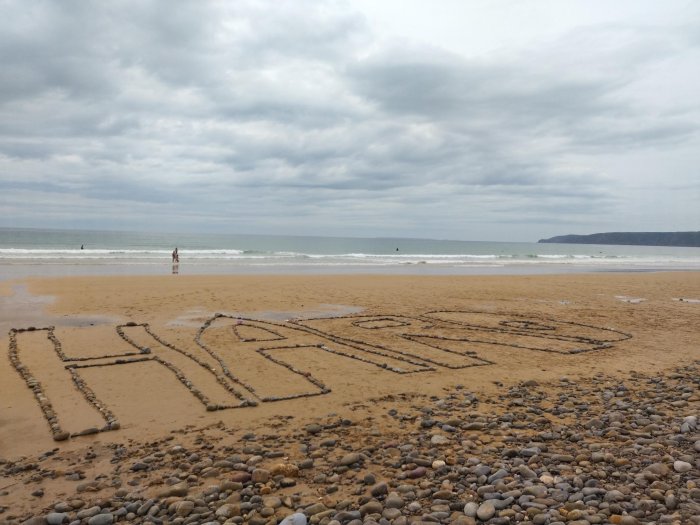
The weekend ended with an evening concert and a final HARO as a cry of convergence of struggles to support social and environmental struggles as well as the struggle of the Palestinian people.
This article was first published in French by the Reseau sortir du nucléaire, a national network of French anti-nuclear organizations.
Headline photo: The Haro protest by Reseau sortir du nucléaire.
The opinions expressed in articles by outside contributors and published on the Beyond Nuclear International website, are their own, and do not necessarily reflect the views or positions of Beyond Nuclear. However, we try to offer a broad variety of viewpoints and perspectives as part of our mission “to educate and activate the public about the connections between nuclear power and nuclear weapons and the need to abandon both to safeguard our future.”
 Beyond Nuclear International
Pingback: Nuclear news – not from the military-industrial-political-media complex « nuclear-news
Pingback: Nuclear news – not from the military-industrial-political-media complex « Antinuclear
Pingback: Furious French fairies challenge nuclear plans. « nuclear-news