 Beyond Nuclear International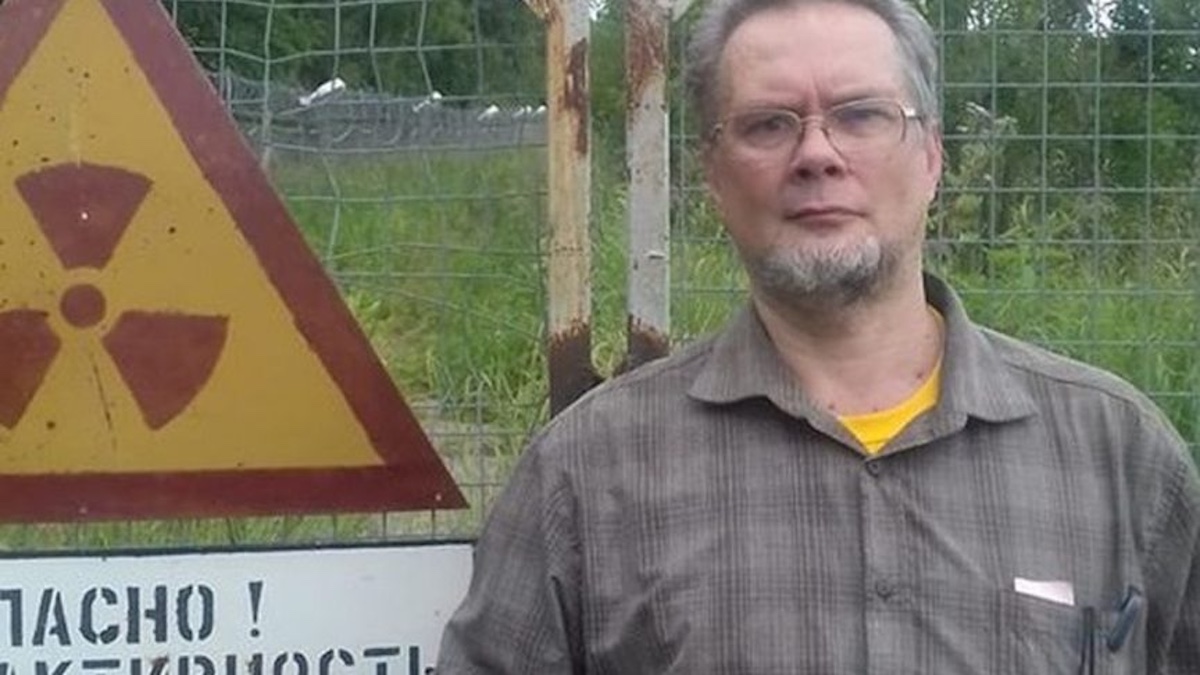
Russian activist Andrey Ozharovskii, who was detained in Mongolia for radiation testing, must be restored full rights, urges Nuclear Transparency Watch
Editor’s note: The letter and call to action below were originally made in August 2025 after Andrey Ozharovskii was first detained and then deported back to Russia from Mongolia. To date, his passport has not been returned. However, his story is also an excellent illustration of the need for independent citizen scientists working in the field to provide the public with accurate and unbiased information about the levels of radiation they may be being exposed to on a daily basis. And of course, it speaks to larger issues of freedom as well.
Nuclear Transparency Watch, including our colleague Jan Haverkamp, has published an open letter regarding the arrest of physicist and environmentalist Andrey Ozharovskii in Mongolia.
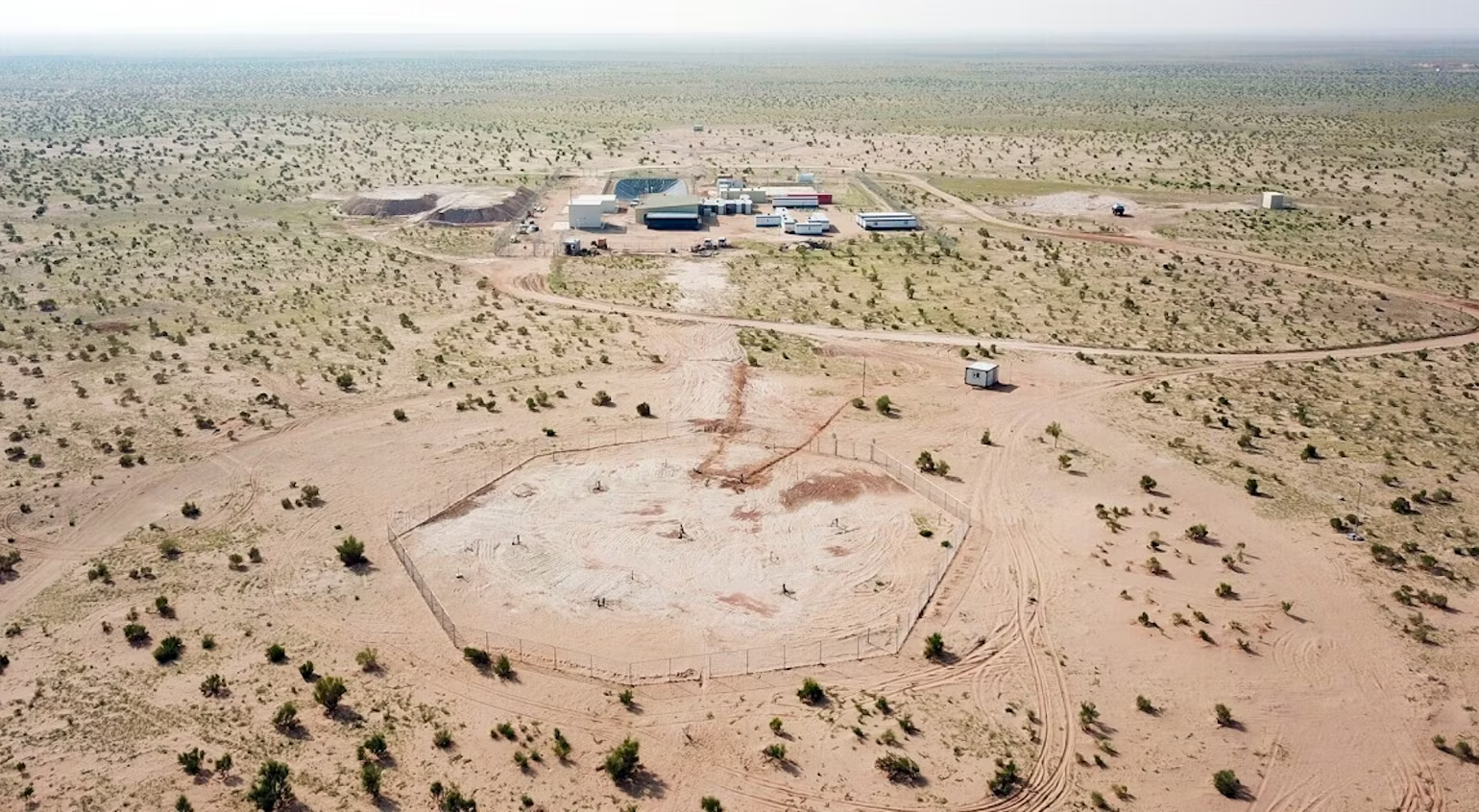
Andrey Ozharovskii was detained by Mongolian authorities while measuring radiation levels with a personal dosimeter near uranium mining sites operated by the French company Orano. Although released, his passport has not been returned, and he faces uncertainty about his freedom of movement.
Ozharovskii’s activities form part of a long-standing European tradition of “citizen science” in the nuclear field: independent experts and local communities taking radiation measurements to help ensure transparency, safety, and accountability. Nuclear Transparency Watch and its members have supported such initiatives across Europe in cooperation with regulators, laboratories, and NGOs.
The principle at stake is simple but crucial: environmental information, including radiation data, must be accessible to the public. This is at the heart of the Aarhus Convention, the international treaty guaranteeing the rights of access to information, public participation in decision-making, and access to justice on environmental matters. Under its Article 3(8), people exercising these rights must not face persecution or harassment.
Mongolia is currently considering accession to the Aarhus Convention. This incident highlights why such commitments matter: ensuring that those who act to protect the public and the environment can do so without fear. At this moment, Andrey Ozharovskii should regain access to his ability to travel freely.
What follows is our letter to Mongolian authorities as well as to Michel Forst, Special Rapporteur on Environmental Defenders under the Aarhus Convention.
We have been informed that the physicist and environmentalist Andrey Ozharkovksy was arrested in Mongolia while using his personal dosimeter to measure radiation related to legacy uranium mining activities and current uranium leaching activities of the French firm Orano. He was told without further explanation he would be deported to his home-country of Russia and released in Ulan Bator, however without receiving back his passport.
Mr. Ozharovskii is a member of Nuclear Transparency Watch, a reliable scientist serving local NGOs and victims of radiation contamination incidents throughout Europe and beyond. Nuclear Transparency Watch is a French registered NGO with wide European membership involved in the implementation of transparency in the nuclear sector, especially the principles of the Aarhus Convention.
Nuclear Transparency Watch kindly asks you to take all necessary steps to secure the safety of Mr. Ozharovskii, enable his freedom of movement by returning his passport, and support him in his efforts to help Mongolia and Mongolians understand potential impacts, risks and safety of uranium mining activities.
Development of nuclear industries, including uranium mining, is not without risks. A transparent and open cooperation between civil society, relevant authorities and involved companies helps reducing those risks, and enables authorities to become in an early stage aware of possible infringements on licensing conditions and potential impacts on the population and environment.
For that reason, Nuclear Transparency Watch has supported so-called citizens science projects all over Europe, in which citizens and NGOs themselves were given access to the necessary equipment to measure radiation. We have cooperated with the SafeCast project, which supports citizens world-wide for this purpose. In France, we are involved with our member organisation ANCCLI in cooperation with the French nuclear regulator ASNR in a citizens radiation measurement project that was started by the former technical support organisation (TSO) IRSN.
Nuclear Transparency Watch also helped bringing this project to the UK. It furthermore supported citizens’ initiatives in the Netherlands, together with the Dutch TSO RIVM. We cooperate intensively with citizen’s laboratories that carry out expert radiation analysis, like CRIIRAD and our member ACRO in France, the ÖkoInstitut and our member Umweltinstitut in Germany, and our member the Österreichisches Ökologieinstitut in Austria.
We therefore can vouch for the fact that Mr. Ozharovskii during his touristic visit to Mongolia did nothing out of the ordinary, but supported local citizens and NGOs to gain knowledge about the safety and risks of uranium mining in your country. Of course, he used a dosimeter to be able to illustrate the theory.
We would strongly recommend using this incident as an opportunity, whereby the Nuclear Energy Committee as nuclear regulator and/or the Ministry of Environment could go with Mr. Ozharovskii to the sites he was measuring to see whether his measurements were indeed accurate.
It is of paramount importance for nuclear safety that citizens can undertake these kind of actions. They are the eyes and ears in the field of independent authorities – even if this sometimes can lead to temporary confrontations, the overall benefit of public participation in observing environmental impacts has been proven beyond doubt. Information about the environment, including information about radiation, should never be confidential to the public that could be impacted. And authorities should take full benefit from measurements and viewpoints from the public to exercise their vital functions. Indeed, this forms the basis of the Aarhus Convention. We are aware that Mongolia is considering to accessing to this important treaty, and are convinced that you will do everything to hold its principles high.
We want to point out to you, that under the Aarhus Convention art. 3(8), “Each Party shall ensure that persons exercising their rights in conformity with the provisions of this Convention shall not be penalized, persecuted or harassed in any way for their involvement.” We are convinced that the activities of Mr. Ozharovskii fall within the rights he normally would have in signatory states of the Convention. If he has broken any rule in Mongolian law, he will not have done so on purpose or with ill intent. Once more: his intentions were to support Mongolia and Mongolian citizens in awareness of radiation safety and risks.
Because we were quite shocked by Mr. Ozharovskii’s initial arrest, we have informed the Special Rapporteur under the Aarhus Convention on Environmental Defenders, Mr. Michel Forst, of this incident. We are convinced that, if necessary with his guidance, Mongolia will find a way to resolve this issue as soon as possible.
We would like to be informed about your steps and results.
Sincerely,
Nadja Železnik (Slovenia) – Chair; Jan Haverkamp (the Netherlands) – Member of the Board; Niels-Henrik Hooge (Denmark) – Member of the Board; Johan Swahn (Sweden) – former Member of the Board; Luke Haywood (Belgium) – Member of the Board, European Environmental Bureau; Albena Simeonova (Bulgaria) – Member of the Board; Malcolm de Butler (France) – Secretariat.
Nuclear Transparency Watch is a European network that promotes a citizen watch on nuclear safety and transparency. Read the letter as originally published. Some syntax changes have been made here as well as tense changes due to the passage of time since the letter was sent in August.
Headline photo of Andrey Ozharovskii courtesy of Nuclear Transparency Watch.
The opinions expressed in articles by outside contributors and published on the Beyond Nuclear International website, are their own, and do not necessarily reflect the views or positions of Beyond Nuclear. However, we try to offer a broad variety of viewpoints and perspectives as part of our mission “to educate and activate the public about the connections between nuclear power and nuclear weapons and the need to abandon both to safeguard our future.”
 Beyond Nuclear International