 Beyond Nuclear International
Ignoring this last nuclear treaty comes at great peril, writes Carol Wolman
A key nuclear treaty, the START (Strategic Arms Reduction Treaty) expires on Feb 4th 2026. This bilateral treaty between the US and Russia caps the number of nuclear weapons each side may legally possess. It also mandates bilateral inspections to ensure the treaty is respected on both sides.
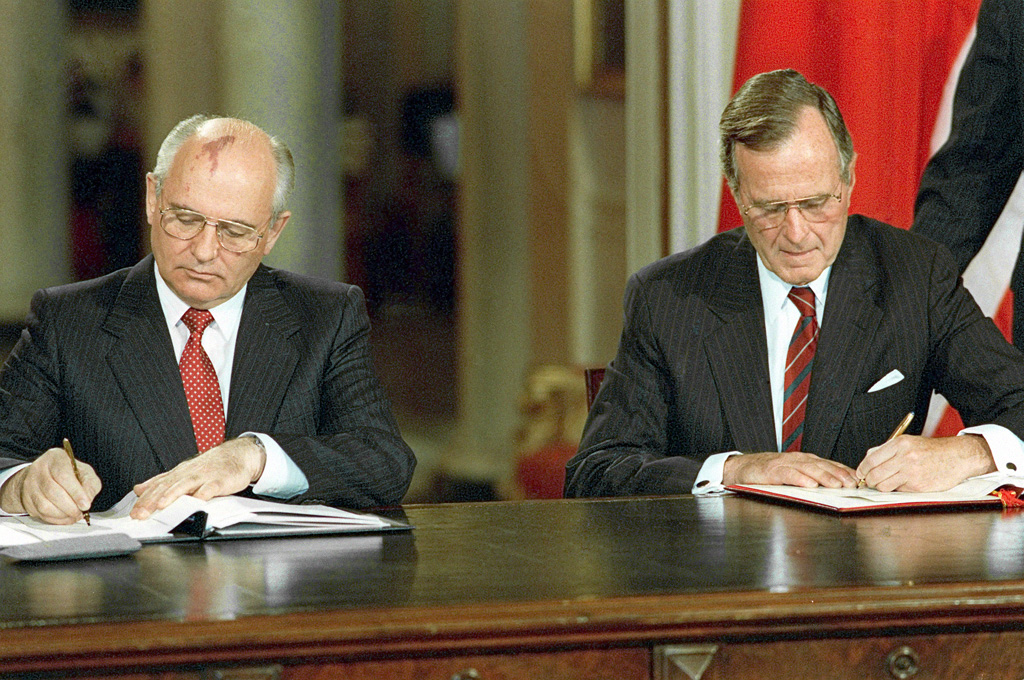
Originally signed in 1991 by then Soviet premier Mikhail Gorbachev and US President H. W. Bush, it successfully reduced the nuclear weapons stockpiles on each side by 80%. This essentially put an end to the nuclear arms race between the US and the Soviet Union, which broke up later that year.
In 2010, a revised New START treaty was negotiated by US President Clinton and Russian President Medvedev. This further reduced stockpiles to about 2000 nuclear warheads apiece. Ratified by both sides in 2011, it had a ten-year term and was renewed for another 5 years in 2021 under President Biden.
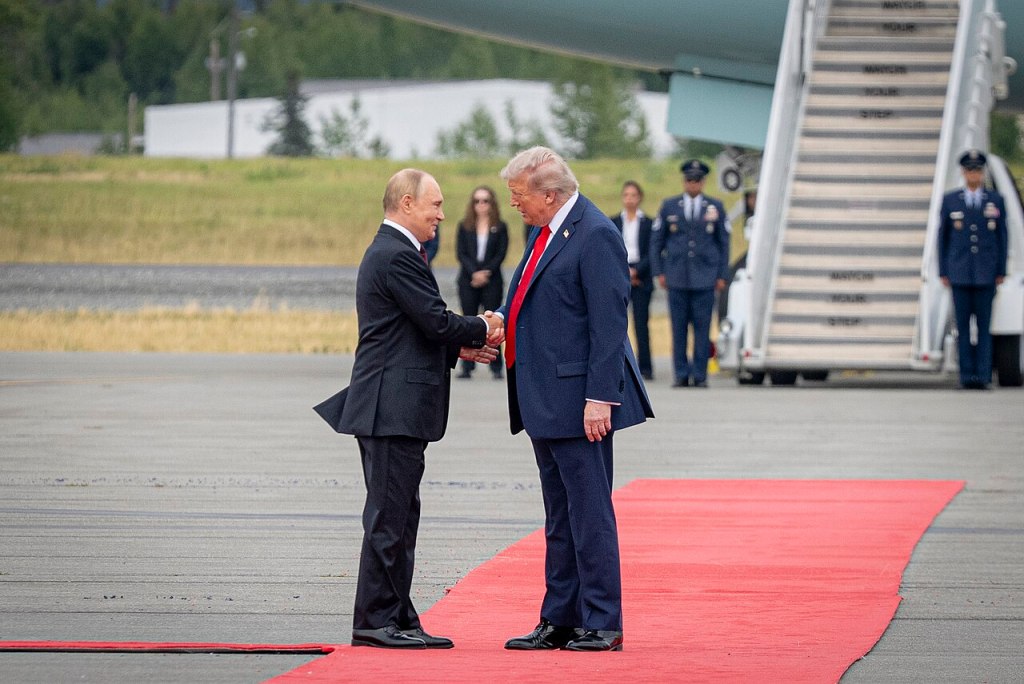
Russia’s President Putin has offered to extend the treaty for another year, if the US reciprocates. President Trump said on January 8, 2026: “If it expires, it expires”. Expiration of New START would remove all constraints on expansion of nuclear stockpiles and delivery systems, as well as abolishing bilateral inspections.
By way of background: the first nuclear weapons were used on August 6th and 9th 1945, when the US dropped atomic bombs on the Japanese cities of Hiroshima and Nagasaki. Over the next 20 years, Russia, England, France and China also developed these weapons of mass destruction.
The Cuban Missile Crisis of 1962 frightened everyone. Soviet leader Nikita Khrushchev placed nuclear armed missiles on the island of Cuba, 90 miles from Florida, and President Kennedy threatened various sorts of retaliation, including nuclear. For 13 days, we didn’t know if we would wake up the next morning.
This alarm set in motion a series of treaties designed to prevent nuclear war. A hotline was installed between the White House and the Kremlin. Atmospheric nuclear testing was banned in 1963 through the Partial Test Ban Treaty. Some underground tests were banned two years later, but it was not until 1996 when all nuclear explosions, including underground, were finally banned through the Comprehensive Test Ban Treaty (CTBT), although it has never come into force. However, Russia officially withdrew its ratification of the CTBT in November 2023.
The key nuclear Nonproliferation Treaty, which entered into force in 1970, was designed to stop the spread of nuclear weapons to countries that did not have them, although four more countries have since joined the “club” — India, Pakistan, North Korea and Israel, none of which are signatures to the treaty (North Korea originally joined the treaty but withdrew once it developed nuclear weapons).
As of 2026, Russia, China and the US are all increasing their nuclear budgets exponentially. Global tensions are rising because of many factors: global warming, natural disasters, increases in the demand for energy, and scarcity of essential resources like water and rare minerals, to name a few. The risk of all-out nuclear war goes up dramatically without New START.
An all-out nuclear war might well be suicidal for humanity; indeed, for most life forms. Scientists tell us that a number of factors would ensure widespread lethality.
With a major nuclear exchange there would be many detonations, killing billions of people. As the fallout spreads, billions more would sicken and die a slower death from radiation poisoning. The soot and smoke would block out sunlight, causing a “nuclear winter”, a fall in temperature that would destroy most food-producing agriculture. The electromagnetic field on which the internet and much of modern technology depends would be disrupted.
All of these effects would multiply each other in unforeseeable ways. Civilizations would collapse. And radiation hangs around for millions of years. It disrupts DNA, so the long-term biological effects, assuming there are still life forms around, would be devastating.
We have lived with nuclear weapons for 80 years, since the A-bombs were dropped on Hiroshima and Nagasaki. Horrendous as those were, they were small compared to the hydrogen bombs, 5-40 times more powerful, which are now routine in nuclear stockpiles. Russia and the US each currently have at least 400 of these mounted on silo-based ICBMs – Inter Continental Ballistic Missiles. Both countries also have hundreds of missiles mounted on submarines ready for immediate deployment. This is known as hair-trigger alert, meaning that they can be launched within one to five minutes of a command, reaching their destination in as little as 30 minutes with no possibility of recall and giving hardly any time for deliberation if an incoming attack is suspected. Submarine missiles can be launched within 15 minutes of an order.
Trump and Putin — long time allies — are now facing off in Ukraine, Venezuela and Greenland. Each leader has significant domestic economic and political problems. Each has the sole authority to push the red button that launches a nuclear attack. If either man is backed into a corner, he could decide to commit suicide and take the rest of us with him.
It’s a scary prospect, and far from unthinkable. Yet almost no attention is being paid to the crucial New START Treaty and its imminent deadline. An AI search showed NO recent articles on the topic from The New York Times, Washington Post, CNN, AP News, The Wall Street Journal, NBC, CBS, orthe Los Angeles Times. Only MSN has covered the topic, by quoting from The Bulletin of the Atomic Scientists.
There are many dire newsworthy events these days, especially the outrageous tactics of ICE in Minneapolis. The threat of fascism in the US is real and growing. Ecological crises are mounting. The international rule of law is under attack. Poverty is increasing around the world, and pandemics are more and more likely.
All of these menaces are gradual and potentially reversible. Nuclear war is neither.
We have been extraordinarily lucky the past 80 years. Many wise people have constructed a framework of international law and treaties that have stabilized the nuclear situation. Even so, there have been 10-15 near-misses, some political like the Cuban missile crisis, some due to technological glitches, some accidental.
Now the treaties are breaking down, greatly heightening the chance of all-out nuclear war. By ignoring the looming New START deadline, we may be committing mass suicide. Is this not worthy of news coverage? Why is there no public outcry demanding extension of the New START treaty?
It may seem too difficult and painful to reverse the damage we have done to our beautiful Earth. To some, a definitive nuclear war might seem preferable to the misery we are facing as climate disasters mount. There are those that subscribe to doomsday interpretations of scriptural prophecies, believing that they will be “raptured”.
Most of us choose life, no matter how unpleasant. As we work for democracy, peace, and ecological sanity, we must not ignore the ever increasing threat of nuclear war. The only way to prevent global suicide is to get rid of nuclear weapons altogether.
A new treaty, the UN Treaty on the Prohibition Nuclear Weapons (TPNW), became international law five years ago. Seventy-four nations have ratified it. Most of them are in the Southern Hemisphere; none of them have nuclear weapons.
There is a resolution in the US House of Representatives, HR 77, which supports the tenets of the TPNW. It currently has 44 cosponsors. Is your Representative one of them?
It will take a concerted effort to get rid of nuclear weapons. The International Campaign to Abolish Nuclear Weapons has many tools for individuals and groups to use. A good start would be to write to periodicals and demand that they run articles about the looming demise of the New START treaty.
Abolishing nuclear weapons begins with paying attention.
Carol Wolman is a board-certified psychiatrist, a longtime campaigner against nuclear power and nuclear weapons and a member of Physicians for Social Responsibility.
Headline photo by ₡ґǘșϯγ Ɗᶏ Ⱪᶅṏⱳդ/Creative Commons.
The opinions expressed in articles by outside contributors and published on the Beyond Nuclear International website, are their own, and do not necessarily reflect the views or positions of Beyond Nuclear. However, we try to offer a broad variety of viewpoints and perspectives as part of our mission “to educate and activate the public about the connections between nuclear power and nuclear weapons and the need to abandon both to safeguard our future.”
 Beyond Nuclear International
Pingback: The non-corporate nuclear news – week to 8th February « nuclear-news
Pingback: The non-corporate nuclear news – week to 8th February « Antinuclear
Pingback: Without START, everything could end « nuclear-news