 Beyond Nuclear International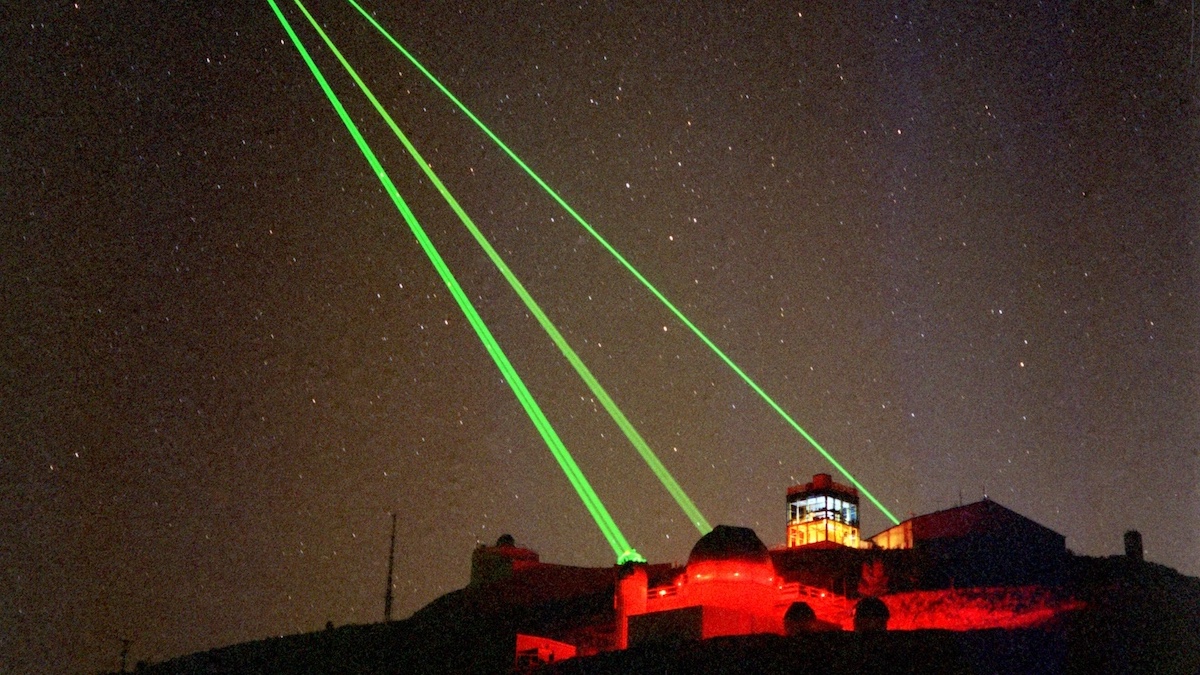
In a domain long guided by restraint, Trump’s space rhetoric is ominous, writes Dr. Ghassan Shahrour
On December 18, 2025, the White House issued an executive order titled “Ensuring American Space Superiority.” Framed as a strategy for exploration, innovation, and national security, it mandates a rapid expansion of U.S. military, commercial, and technological capabilities in outer space. But the very notion of “superiority” should alarm the international community. In a domain long guided by restraint and shared stewardship, this language signals a shift from cooperative security to strategic competition—with profound consequences for global human security.
Space is not an abstract arena for power projection. Satellites sustain modern life: communications, navigation, climate monitoring, disaster response, food security, humanitarian operations, and scientific research all depend on stable space systems. Once these systems are woven into military planning, they become entangled in rivalry. In any crisis, they risk becoming targets, collateral damage, or triggers for escalation. The fallout would not be limited to states in conflict; it would reach civilians everywhere.
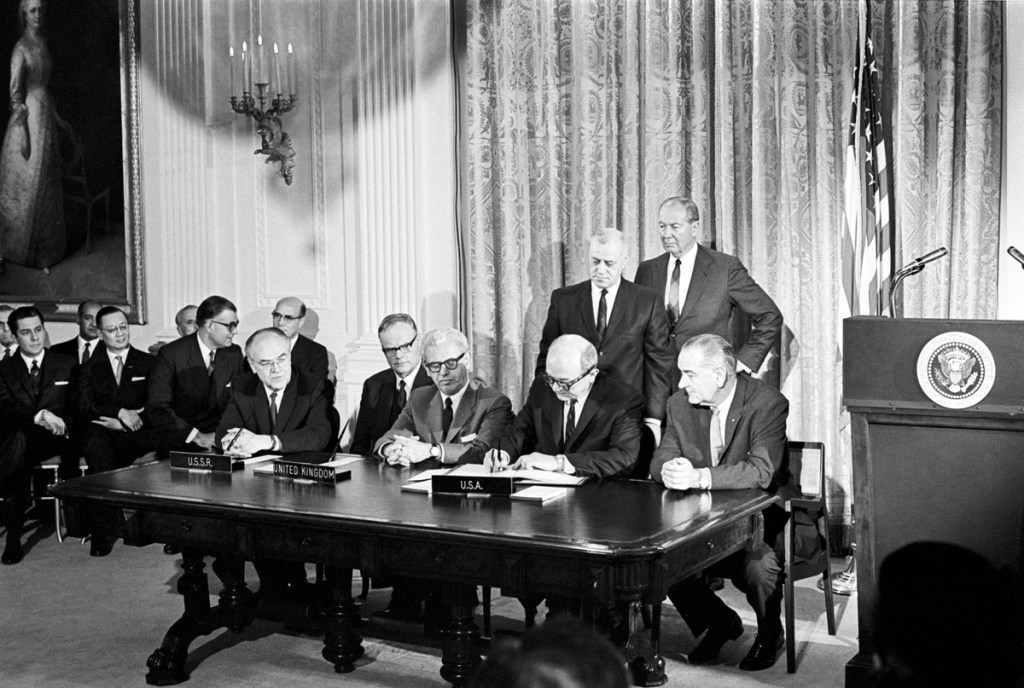
International space law was built precisely to prevent such dangers. The 1967 Outer Space Treaty established space as a global commons, banned nuclear weapons in orbit, and rejected national appropriation of celestial bodies. Its logic is preventive: security in space is preserved through restraint, transparency, and collective responsibility before competition hardens into confrontation. While the new order may not violate the letter of existing treaties, it departs from their spirit by normalizing military preparedness and competitive dominance as the organizing principles of space governance. History is clear: when one state elevates superiority as a strategic goal, others follow—fueling arms racing, mistrust, and shrinking margins for error.
The order’s emphasis on advanced defense architectures and space‑based capabilities also raises serious humanitarian and environmental concerns. Proposals to deploy nuclear power systems in orbit or on the Moon—though not prohibited—introduce risks that cannot be contained. Accidents, launch failures, or debris‑generating incidents would contaminate shared orbital environments and disrupt essential civilian services. In space, there is no meaningful distinction between national and global consequences; harm is inherently collective.
Equally troubling is the question of priorities. Implementing this order will require vast public investment over the coming decade—resources that could strengthen public health systems, advance climate resilience, expand education, or rebuild societies shattered by war and inequality. At a moment defined by overlapping global crises, defining security through technological dominance reflects a narrow and fragile conception of safety—one that privileges power accumulation over human well‑being.

My work in humanitarian disarmament has shown that alternatives exist. Treaties such as the Mine Ban Treaty and the Treaty on the Prohibition of Nuclear Weapons emerged not from idealism, but from evidence: weapons that cause indiscriminate and transboundary harm undermine everyone’s security, including that of their possessors. These agreements were forged through multilateral engagement, scientific expertise, and the lived experiences of affected communities. Their preventive, human‑centered logic is urgently needed in the governance of outer space.
Rather than racing toward dominance, states should recommit to multilateral stewardship. This means strengthening space law, advancing binding norms against weaponization, and subjecting emerging technologies to rigorous humanitarian, environmental, and human‑security assessments. The United Nations—through inclusive, negotiated processes—remains the legitimate forum for this work. Restraint achieved collectively is more durable, and more secure, than superiority pursued competitively.
For decades, space has symbolized humanity’s capacity to imagine a future beyond conflict—a realm where cooperation and shared purpose prevail over rivalry. Allowing it to become another battlefield would mark a failure not of technology, but of vision.
“A nation may seek to dominate space. Only humanity can keep it peaceful”.
Dr. Ghassan Shahrour, Coordinator of Arab Human Security Network, is a medical doctor, prolific writer, and human rights advocate specializing in health, disability, disarmament, and human security. He has contributed to global campaigns for peace, disarmament, and the rights of persons with disabilities.
Headline photo: Starfire Optical Range by Directed Energy Directorate, US Air Force/Wikimedia Commons.
The opinions expressed in articles by outside contributors and published on the Beyond Nuclear International website, are their own, and do not necessarily reflect the views or positions of Beyond Nuclear. However, we try to offer a broad variety of viewpoints and perspectives as part of our mission “to educate and activate the public about the connections between nuclear power and nuclear weapons and the need to abandon both to safeguard our future.”
 Beyond Nuclear International