 Beyond Nuclear International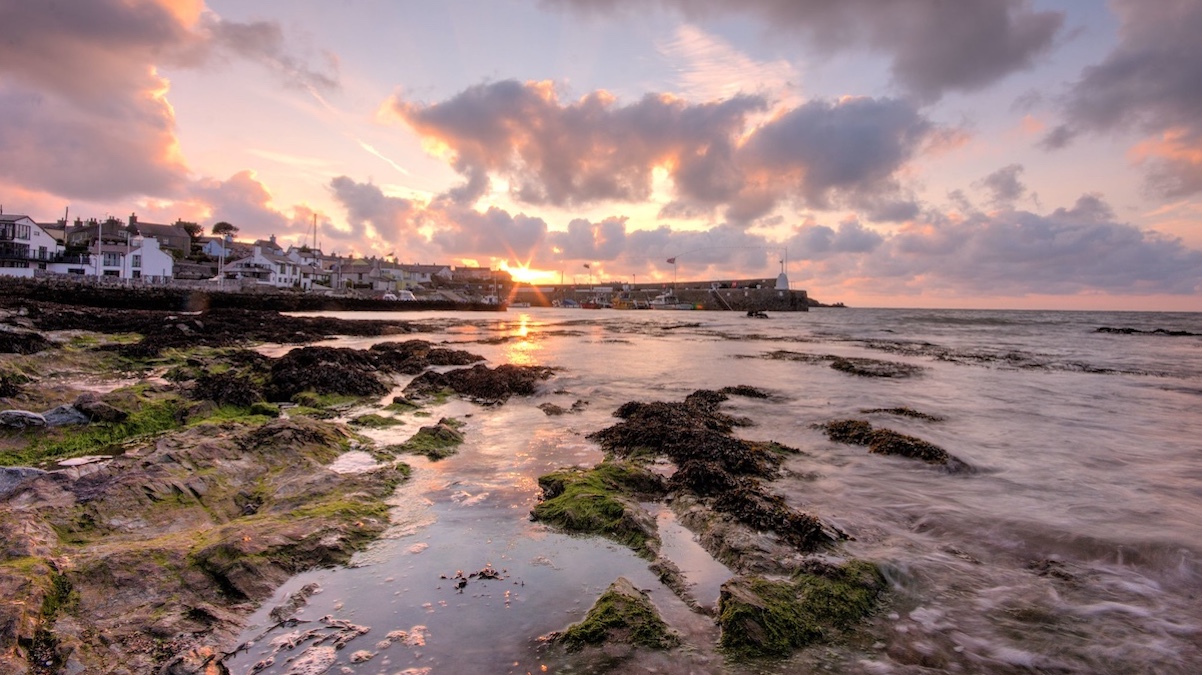
Quintessentially British Rolls-Royce wants to put its new small reactors on Anglesey, but it turns out they’re not small or even particularly British, writes Linda Pentz Gunter
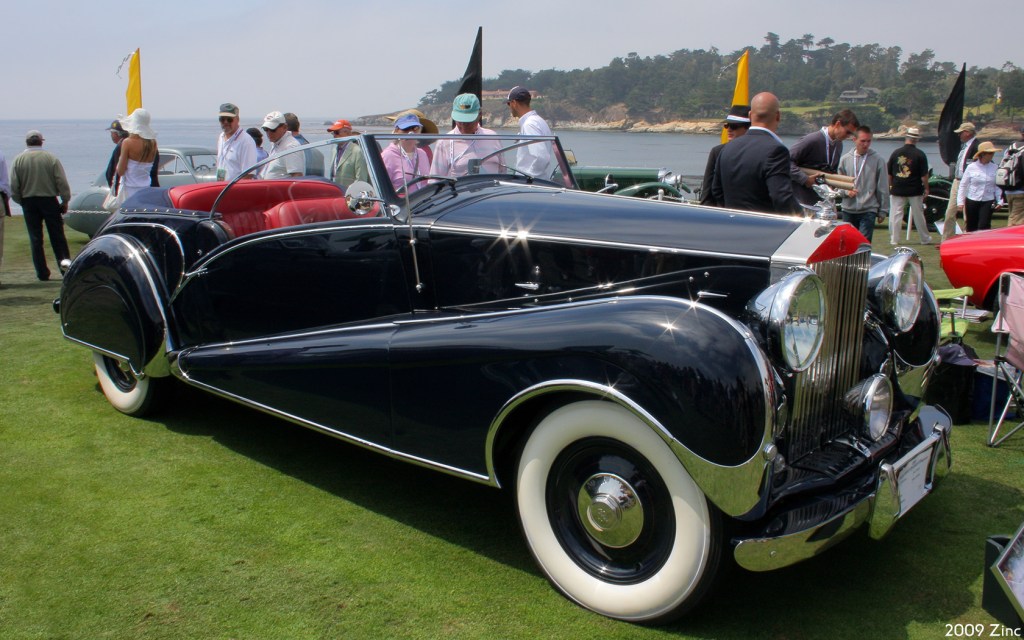
There is something about Rolls-Royce that is quintessentially British. Not necessarily in a good way. The name tends to bring to mind tweedy toffs or rock stars with more money than sense, driving shiny and extravagantly baubled motor cars.
It’s the cars that made the Rolls-Royce name synonymous with luxury and class, specifically upper-class. It’s even entered the lexicon. Something can be called “the Rolls-Royce of….”; fill in the blank.
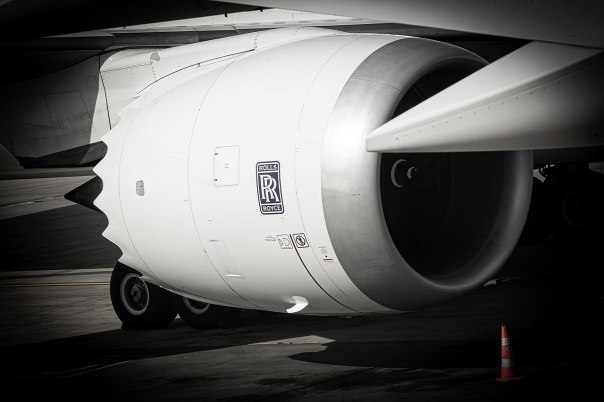
Of course, Rolls-Royce is now much bigger than just a car manufacturer. Frequent fliers will have spotted the company logo on many a jet engine.
Less well known is that Rolls-Royce makes the reactors for nuclear submarines, specifically the British Trident nuclear fleet. The company is set to produce a new propulsion reactor, PWR3, for the Dreadnought-class ballistic deterrent submarine, expected to be operational in the early 2030s, and whose missiles are capable of destroying all life on Earth multiple times over.
More recently, Rolls-Royce has entered the commercial nuclear reactor market, proposing its own small modular reactor (SMR) design — which, at 470 megawatts, isn’t actually very small at all. Many of Britain’s old Magnox reactors, now all permanently closed, were smaller than that. Two of the largest, at Wylfa in Anglesey, were each 490 megawatts.
Ironically, it is to Wylfa that Rolls-Royce is looking to site its first not so small modular reactors. It is planning for three there — with the capacity to extend to eight — and even won a competition conducted by Great British Energy-Nuclear to become the preferred bidder to place SMRs at the Wylfa site, purchased by the government from Hitachi in March 2024 after the Japanese company ditched plans to build two full-size reactors there.
The prize for Rolls-Royce’s winning bid was £2.5 billion in public funding (i.e. taxpayer money) toward the cost of the first three SMRs, not such good news for people who can’t afford to drive Rolls-Royces.
Another £25 million is to be shelled out to two engineering consultancies, WSP and Mott MacDonald, who will advise on environmental assessments, permitting and regulatory compliance.
As Linda Clare Rogers co-deputy leader of the Welsh Green Party, asked in a letter to her Anglesey MP Llinos Medi of Plaid Cymru:
“Why does Rolls-Royce need £25m of our money to spend on advisers and engineers to help it meet environmental and legal requirements, if they are confident what they’re doing is serviceable? As this is public money, will we have a say in proceedings? If not, why not? Other public services involve public engagement.”
That £25 million just happens to be equal to the price tag for the Rolls-Royce La Rose Noire Droptail luxury car, unveiled in August 2023. So why not just sell one of those to pay for the advisors and engineers instead of fleecing British taxpayers?
Appropriately, the multi-billion pound Rolls-Royce triumph (to mix motoring metaphors), was lauded by a Lord — it is unknown if he was wearing tweeds for the occasion — during a debate last July in the House of Lords.
Reading the transcript of what takes place in that Neo-Gothic edifice makes you wonder if you have time traveled back a few centuries. Everyone is addressed as “my lords” even though there are ladies, too, and “my noble friend” and phrases such as “I thank the noble Earl for that question,” and “I thank the noble Viscount.”
It was Labour peer Lord Wilson of Sedgefield — real name Philip — who was beating the drum most loudly for nuclear power in general and Rolls-Royce in particular during that July debate.
This same “noble lord”, as we must perforce address him according to tradition, was also one of the “Famous Five” who helped Tony Blair get selected as a Labour candidate. Later, before he ascended to “The Lord Wilson”, he became an enthusiastic Jeremy Corbyn backstabber when Corbyn was Labour Party leader. So not really all that “noble”.
The lone voice of reason during the Lords nuclear debate came not from a “Lord” but a woman, the Green Party’s Baroness Jones of Moulsecoomb who said: “My Lords, the Minister said that everybody around the House supports nuclear. No, the Green Party does not support nuclear. It is a dinosaur technology and it is really very expensive, when you look at the planetary impact and the cost to the Exchequer. It is going to be a disaster and it will be overtaken by sea-level rises as well. Why do the Government not take some good advice on this instead of believing in nuclear all the time?”
The good Lord Wilson quickly and condescendingly dismissed her ideas as “a bit on the fringe,” then repeatedly referred to new nuclear in Britain as “clean, secure, homegrown energy.”
But just as it is obvious that nuclear power is neither clean nor secure, whether great and British or not, it is most certainly not “homegrown”, either, given that no uranium, the raw material needed to fuel reactors, is mined in the UK.
And, as it turns out, even Rolls-Royce isn’t quite so very British after all.
Rolls-Royce SMR (Small Modular Reactors), the company’s subsidiary focused on future nuclear energy, is not solely owned by the parent group. It has investors including the Qatar Investment Authority, BNF Resources (connected to the French Perrodo family that owns European oil and gas company Perenco), Constellation (a US energy company and part of Exelon), and ČEZ, a Czech company.
Of course, even the Rolls-Royce car division isn’t actually British. It is owned by Germany’s BMW.
In addition to the Perrod family’s investments in oil and gas companies, Constellation owns oil and gas plants in the US. And while the Qatar Investment Authority has said it will not finance new fossil fuel projects, it has not divested from all of its existing oil and gas interests. ČEZ continues to maintain coal plants and is supporting natural gas infrastructure.
This is a quiet reminder about the level of greenwashing that seeks to paint nuclear power as environmentally friendly when many of the companies involved in nuclear power are also still heavily invested in fossil fuels.
The partner Rolls-Royce has chosen to oversee delivery of the Wylfa reactors is the American-based engineering firm Amentum, which has around 6,000 staff in the UK. Small modular reactors are an old concept that has been around for decades and consistently rejected due to poor economies of scale. Yet Amentum’s chief executive officer, John Heller, describes SMRs as a “transformational technology, a critical enabler in strengthening energy security in the UK and continental Europe.”
However, that “energy security” will be delivered largely by Russia, in order to meet the needs of the fast-reactor designs targeted for Britain. These include the Newcleo 200 MWe lead-cooled fast reactor and TerraPower’s sodium-cooled fast reactor, the Natrium, two American companies looking to secure contracts in the UK. Russia is currently the only country that manufactures the High-Assay Low Enriched Uranium fuel needed for those reactor designs.
When star British footballer Marcus Rashford totaled his £700,000 Rolls-Royce in a September 2023 accident, the car was entirely written off. That’s exactly what should happen to the company’s SMR plans before consumers and taxpayers are forced to foot the bill.
Linda Pentz Gunter is the international specialist at Beyond Nuclear and writes for and edits Beyond Nuclear International. She is the author of the book, No to Nuclear: How Nuclear Power Destroys Lives, Derails Climate Progress And Provokes War, published by Pluto Press. Any opinions are her own.
Headline photo of Cemaes Bay, Anglesey, once again threatened with new reactors. (Photo: Huw Williams, Creative Commons CC BY 2.0.)
 Beyond Nuclear International