 Beyond Nuclear International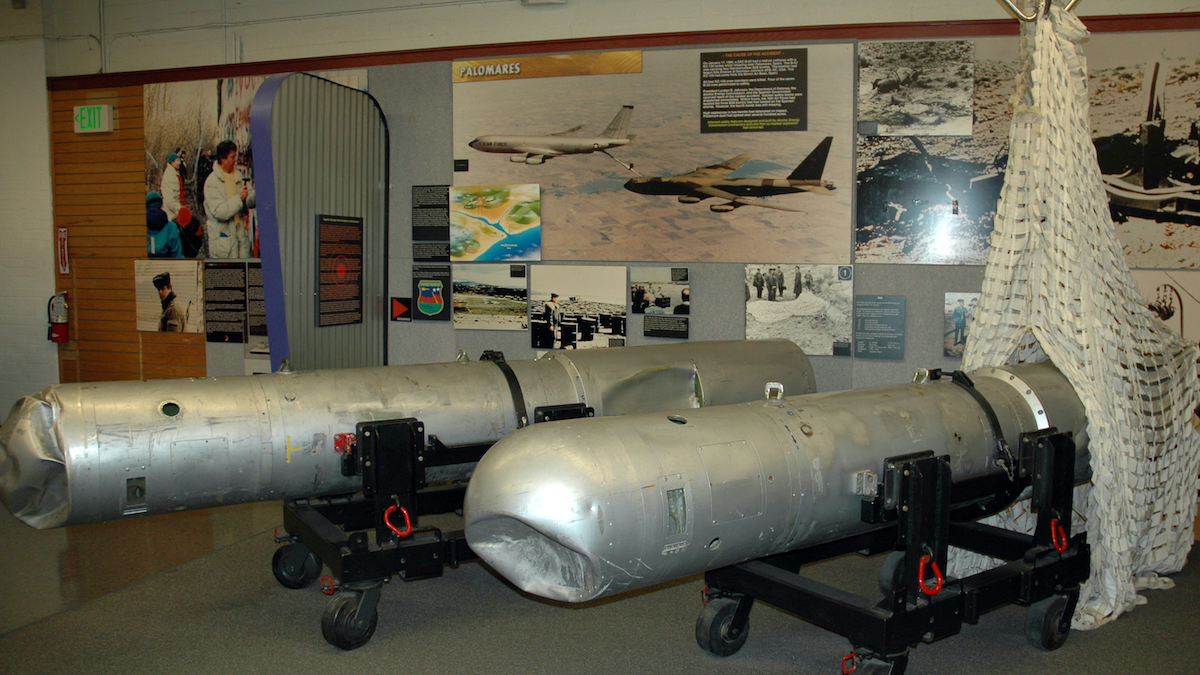
Reflections of an American, sixty years later
Michael Ketterer
Before dawn on January 17, 1966, the six-year-old author was asleep in the Buffalo, New York suburb of North Tonawanda. Simultaneously, two US planes collided over the Iberian Peninsula during a mid-air refueling operation between a B-52 bomber and a KC-135 tanker. The B-52 was completing one of the US Air Force’s Strategic Air Command’s daily armed surveillance routes. In a matter of seconds, three thermonuclear bombs fell to the land, and a fourth fell into water, near Palomares, a village located about two kilometers west of the Mediterranean, in Almeria, Andalucía, Spain.
All of that happened, before I got vertical that day.
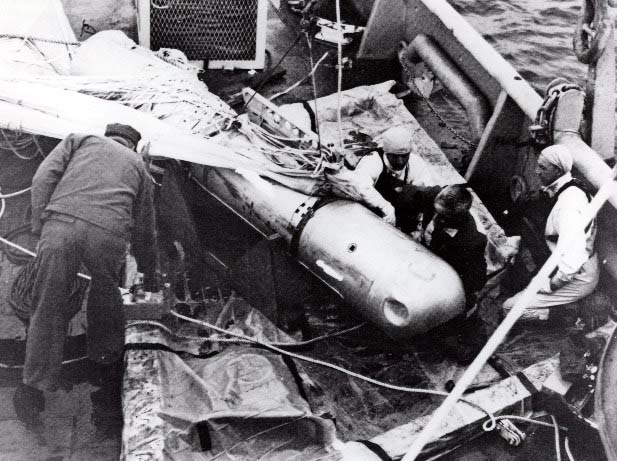
Two bombs were destroyed upon impact, although neither produced a nuclear explosion. Instead, several kg of plutonium (Pu) dusted the tomato fields and residences of Palomares on a windy day. A local resident found another bomb, largely intact with its opened parachute. However, the last bomb was somewhere deep in the Mediterranean, instantly redirecting the Air Force’s top priority into using all resources available on the critical mission: find the lost bomb before the Soviets can do so. The successful recovery became the narrative of Palomares, amplified by the two nations and in the world press. Today, photos of the recovered bomb onboard the USS Petrel are some of the most common internet images of Palomares.
I was just a boy, innocent and ignorant of these stunning events, lying horizontal. Mom got me up; later, I went to kindergarten like every Monday. Perhaps my parents soon heard something on the black and white TV or read something in the Buffalo Evening News. I don’t recall, though I could read in 1966, and definitely I watched enough TV. The ships containing a minor fraction of the Pu left Spain, along with any press attention, before I finished kindergarten. During 1975-1976, I was a neighborhood newspaper carrier for the Buffalo Evening News; reading nearly every edition, I’m pretty certain I never saw mention of Palomares. Buffalo’s weather records show I delivered the tenth anniversary 1976 edition in single-digit Fahrenheit temperatures, but I truly have no recollection of any Palomares stories in that, or any day’s Buffalo-area papers.
The years passed; the Pu stayed, and I didn’t learn anything about Palomares. I completed kindergarten; I finished primary school where I learned Spanish; in high school I focused on chemistry as a future vocation. I passed through my bachelor’s, grad school, and 15 work years as a chemist in industry, US EPA, and at three different universities. I wasn’t any different – I was ignorant and uninformed in those first four decades of my life.
As an academic scientist in the early 2000s, I began studying ultra-trace amounts of environmental plutonium. I learned that Pu from weapons-test fallout is ubiquitous, but highly contaminated sites usually had non-fallout Pu sources, with distinct isotope compositions. For the first time, I read about the 1966 disaster, and its hasty, sloppy cleanup. I thought, the events of Palomares are just unbelievable, but also, an enormous tragedy. Worse, everybody I asked among my family and friends remembered nothing. No one could recall the US casualties, the soil Pu disaster, the fourth bomb, the recovery operation’s heroes, nor the surviving B-52 crew members. All were forgotten, and tossed away. I was educated, but was guilty as well. Why didn’t anyone in early 2000s USA recall? Ignorance, and social amnesia.
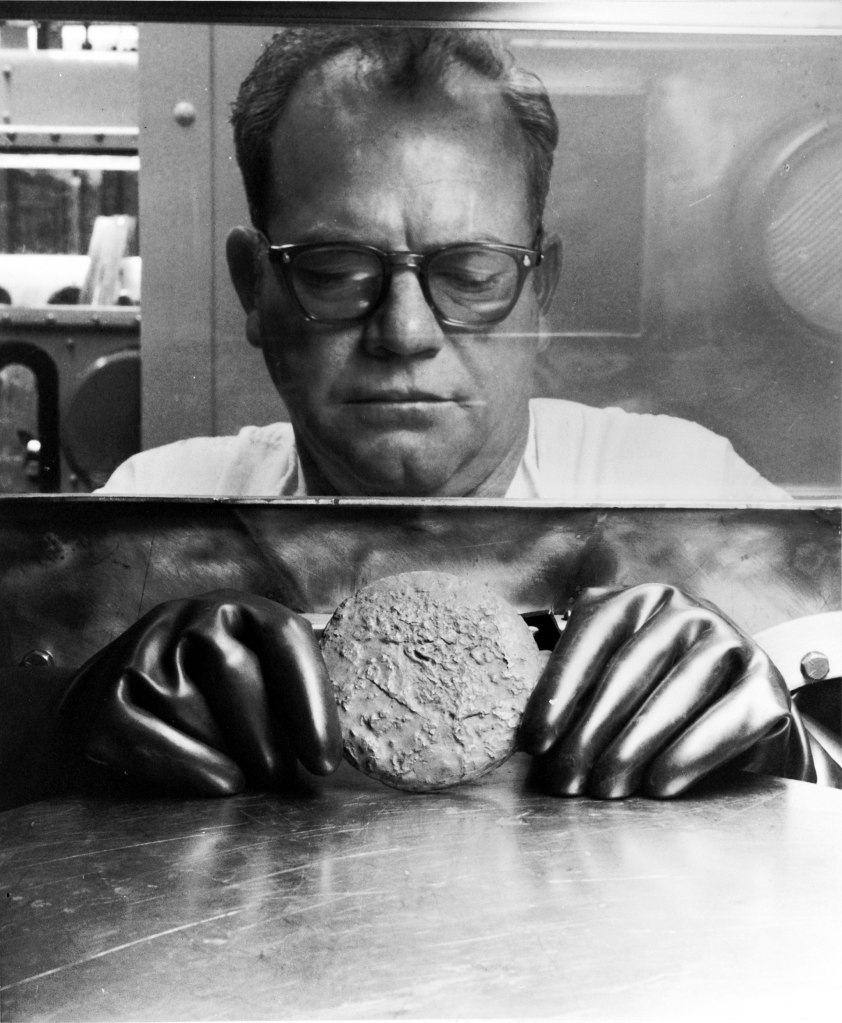
In 2006, forty years after the accident, I completed a research project on an individual bomb particle, recovered from a Palomares soil sample. I was second author on a paper in Journal of Environmental Radioactivity, with collaborators from Finland and Spain; I generated key mass spectrometry data and organized the research team. The work I personally performed at Northern Arizona University showed that the bomb particle contained Pu from a Rocky Flats pit made during the late ’50s or early ’60s. Likely, our paper has been read among Pu specialists. However, if I were not a specialist in Pu studies, never, ever would I have known the slightest thing about Palomares.
This year marks sixty years since that forgotten morning. The USA of 2026 remains ignorant about Palomares, as I was in 1966 — with my eyes shut at that fatal instant. We don’t know anything, when we don’t listen, see, nor confront reality. The Cold War has a price: Palomares’ cleanup was completely inadequate, and undoubtedly exposed thousands of Spanish and American workers to excessive plutonium. The majority of the 1966 release remains in Palomares’ soils in 2026; the population undoubtedly has experienced excessive exposure to Pu, in their own homes.
Writing on the morning of January 17, 2026, my words are simple: 60 years are way too long. I’m not young, I’m an old man with gray hair, many wrinkles, and less patience. I, the boy lying in bed in 1966, wish to atone to Spain today. Because no one else in my country recognizes our responsibility, I should. The USA was responsible in 1966, and still is, in 2026. It’s lies and mythology to say that everything’s fine, the Pu is nothing to worry about, it’s not dangerous, and you instead are the confused idiot.
Palomares is an example of the Cold War’s nuclear mythology. In truth, Palomares is akin to a sandbox full of plutonium, it never was properly cleaned up, and the large majority of the Pu remains in Almerian soils. The Pu shall remain there, with its accompanying mythology, until we write the true history, and demand better from those responsible among both countries.
If the Palomares soil Pu levels were found in San Francisco, California near Hunters Point, the US would be obligated to apply a removal standard of 2.59 picocuries per gram (96 becquerels per kilogram) of Pu-239+240. At Hunters Point, the US Navy decontaminated vessels used in 1950s Pacific Proving Ground tests; the city’s leadership seeks to renovate Hunters Point as part of gentrification. Accordingly, it is necessary to put a conservative cleanup standard in place, protecting public health. A conservative standard of 2.59 pCi/g, or even stricter, should be used at Palomares. Why are San Franciscans better? Are chemical properties of Pu different on different sides of the Atlantic? When one embraces nuclear mythology, one is able to believe in anything one wishes, about Palomares.
In July 2025, the US Congress passed a renewal and expansion of RECA (Radiation Exposure and Compensation Act), which compensates specific cancer victims for causes of fallout, uranium mining, and at specific locations in Missouri, Kentucky, and Tennessee. The newly passed RECA expires in 2028, and has many limitations where RECA’s authors failed to act. Alarming exclusions exist nationwide, such as Pike and Scioto counties in Ohio, the Cotter mill site in Colorado, and the Nolichucky watershed in northeastern Tennessee. Palomares is yet another, very disturbing exclusion. The US must construct the next, improved RECA, evidence based, and covering all locations affected by fallout or related nuclear contamination. Why shouldn’t Palomares be included in the next RECA? The victims surely exist today on both sides of the Atlantic, as do widespread, alarming levels of Pu in Palomares soils, sixty years later.
I made a short visit to Palomares in 2023; as a Pu specialist, I was overwhelmed with sadness, pondering the proximity between Pu and people, and many daily opportunities for internal exposure. In the timeline of the Pu, 60 years is nothing; for societal memory, six decades can erase everything. Do people know details, history, and the risks that remain in 2026, from events that occurred before most were even born? Is information available for residents, tourists or immigrants, about Pu in Palomares soils and dusts?
Outside most former US nuclear sites, there are no signs, information, or visitor centers; that list includes Rocky Flats, the workshop where the Palomares Pu pit was fabricated, which is now public open space. At the first bomb’s impact zone by the Palomares cemetery, the sign on the fence simply says, “restricted area, entry prohibited, violators subject to prosecution”. Why? Nothing is said about the Pu, nor the disaster. The irony is that Palomares is a mirror image of Rocky Flats; the countryside near Palomares, just as the foothills near Rocky Flats both contain forgotten atoms and microscopic particles of Pu, dispersed for all time, by acts of human carelessness.
The surroundings are growing rapidly around both Palomares and Rocky Flats in the 2020s; the newcomers suffer from ignorance, whether near the beaches of Almeria or the high plains outside Rocky Flats. Recently, native Coloradan filmmaker Jeff Gipe produced the documentary, Half Life of Memory, on the themes of ignorance and social amnesia concerning Rocky Flats. Unfortunately, a sequel is needed, about the loss of societal memory surrounding Palomares.
The Palomares tragedy is an example of the price of having forgotten and erased Cold War history. It is never too late, on the other hand, to learn and accept what occurred during the prevailing political climate. Just as at many contaminated locations in the USA, Palomares has no true remedy whatsoever, but there are intelligent, pragmatic responses.
I am only a solitary voice. Unlike 1966 however, I am informed about Palomares; I reject nuclear mythology; I embrace evidence and objective data. A single voice, is something.
The USA is obligated to assist all those affected by the 1966 disaster in both hemispheres. The next RECA must include Palomares, as that represents justice, atonement, and a long-overdue apology to our neighbors in Spain.
Michael E. Ketterer is Professor Emeritus, Chemistry and Biochemistry at Northern Arizona University.
Headline photo: Palomares recovered bomb casings/NAM—Palomares-bombs/Marshall Astor/Wikimedia Commons.
The opinions expressed in articles by outside contributors and published on the Beyond Nuclear International website, are their own, and do not necessarily reflect the views or positions of Beyond Nuclear. However, we try to offer a broad variety of viewpoints and perspectives as part of our mission “to educate and activate the public about the connections between nuclear power and nuclear weapons and the need to abandon both to safeguard our future”.
 Beyond Nuclear International