 Beyond Nuclear International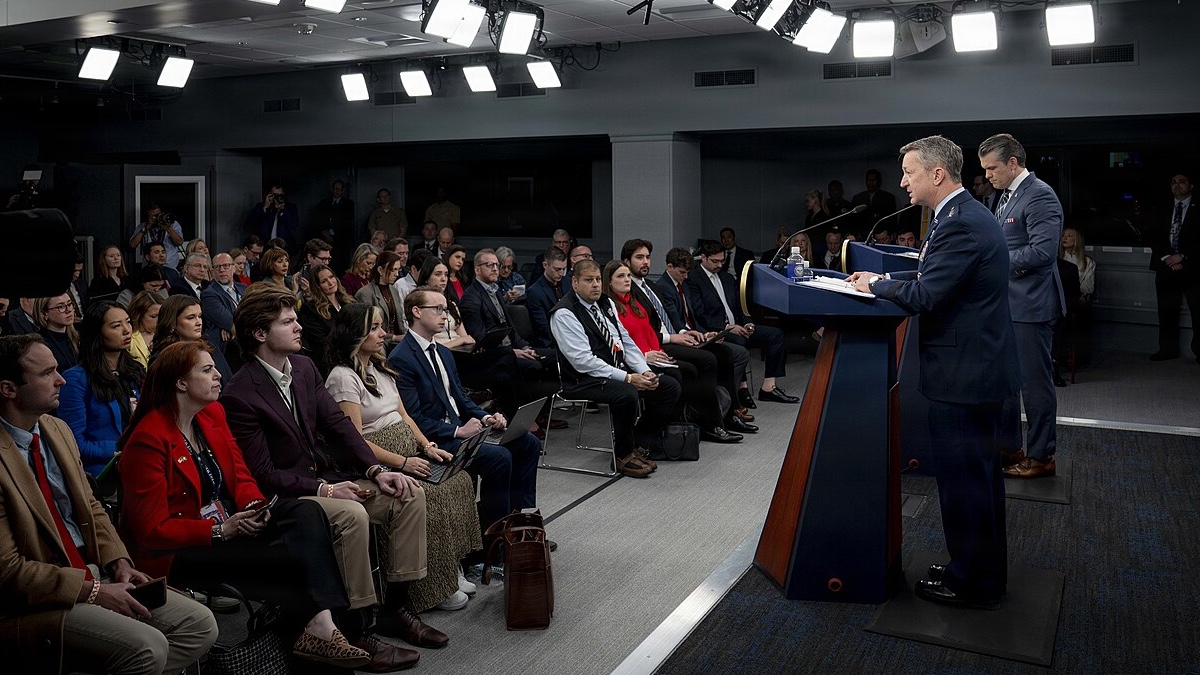
Iran’s civil nuclear program provided a smokescreen for the real US/Israeli agenda for war, writes Linda Pentz Gunter
Watching Iran’s civilian infrastructure and countless of its civilians being mercilessly attacked by the US and Israel, followed by US President Donald Trump’s chilling threat that “a whole civilization will die tonight”, left no doubt that the motives behind this needless war had nothing whatever to do with Iran’s nuclear program.
Iran’s capacity to develop nuclear weapons from its civil program, which Trump had already bragged was “obliterated” by the US/Israel bombing raids on all of Iran’s key nuclear facilities last June , was provided as justification for the current war by the White House.
But it’s a patently false premise, as was most unequivocally confirmed by Jeffrey Sterling, a former CIA officer on the Iran desk. At a riveting legal symposium last week, organized by Ralph Nader and his team and looking at all the ways President Trump could, should and indeed must be impeached, Sterling vowed that “it’s been decades of the US interfering with Iran” and that the Iran task force at the CIA was set up “as an ongoing operation not for peace in Iran but regime change in Iran.”

The search for a justification for war has been ongoing, according to Sterling, “for 47 years since the 1979, the Iran revolution,” and, above all, it has been a “drive for revenge,” Sterling said, after the US was kicked out of Iran and its puppet, the Shah, deposed.
Sterling was the CIA case officer on Operation Merlin during the Clinton Administration, a plot designed to frame Iran by providing it with a false nuclear weapon component. Sterling found himself quickly wondering “is this actually something designed to stop Iran from gaining nuclear weapons or is it something designed to continue the rhetoric, to justify the rhetoric, to essentially plant evidence?”(Sterling is now well known as the CIA whistleblower who revealed the scheme to the New York Times.)
There was consensus throughout last week’s symposium that Iran’s nuclear ambitions did not constitute the real reason for the current war. If not regime change, which seems likely, it was certainly a grab for control of resources, as is so often the case. But, even if the June bombing raids on Iran’s nuclear facilities did indeed do lasting damage, another nuclear threat remains in the form of Iran’s civil nuclear power plant at Bushehr.
There is a ceasefire in place — tenuous at best and almost certainly designed to squeeze concessions from Iran — that has at least for now spared any harm from befalling Bushehr. However, missiles have already landed perilously close to the plant four times, according to Iranian authorities, and the danger is by no means over. If destroyed in an attack — or even should the war cause an extended loss of external power — Bushehr could become the next Chornobyl, the source of a region-wide radiological catastrophe of monumental proportions.
The 1,000 megawatt Russian built VVER reactor at Bushehr sits on the Iranian coast. It is the same design as the reactors in Ukraine where alarm has already been raised by the International Atomic Energy Agency (IAEA) and other international authorities, should any of those reactors be struck or seriously damaged by Russian missiles as the war in Ukraine continues to drag on.
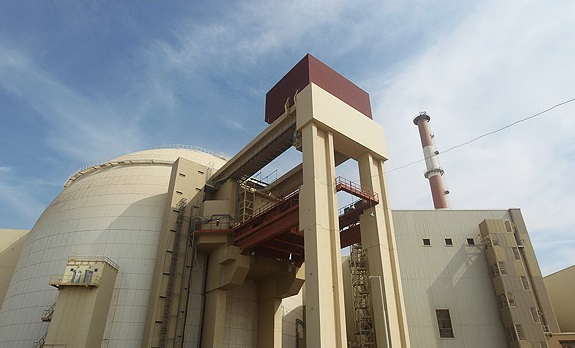
But there has been significantly less international alarm about the similar risks at Bushehr, a disturbing trend as the US president dispenses with all the norms and protocols of war. One can only conclude that this media silence, at least in the western English language press, is based on who is doing the attacking.
Hitting the Bushehr civil nuclear power plant would constitute a war crime — in keeping with the murder of Iranian schoolgirls and all other attacks on civilian targets — because the Geneva Convention specifically defines a war crime to include hitting facilities that, if damaged or destroyed, would result in extensive loss of civilian life. A commercial nuclear power plant certainly falls into this category. Indeed, Russia has already started evacuating some of its personnel from the facility.
The particular dangers at Bushehr stem from the highly radioactive uranium fuel inside the reactor and stored in cooling pools and on-site casks. Any extended loss of power caused by an attack or a direct hit could see the fuel overheat and ignite, potentially leading to explosions. The resulting radiological releases would result in long-lasting radioactive fallout affecting vast areas in Iran, neighboring countries and beyond, contaminating agricultural land as well as sea water, an essential drinking water source for a region that relies on desalination.
Nuclear meltdowns deposit radioactive contamination where the wind blows, coming down during rainfall as fallout. The 1986 Chernobyl nuclear power disaster resulted in a 1,000 square mile exclusion zone, still too radiologically contaminated for human habitation even today.
Japan experienced a triple meltdown in March 2011, when three of the four Fuskushima Daiichi reactors exploded. The long gestation period for some diseases caused by persistent exposure to radiation, means that the true health outcomes from that disaster, whether fatalities or debilitating diseases, will not be known for many years.
Meanwhile, the IAEA’s director general, Rafael Grossi, has called for restraint in Iran, citing the “Seven Indispensable Pillars” he created to try to discourage attacks on nuclear power plants. But the IAEA’s alarm is disingenuous at best. In addition to being a UN nuclear watchdog, the IAEA promotes the use and expansion of nuclear power around the world. This means the agency must shoulder at least some of the responsibility for the extreme danger presented by a potential attack on Bushehr.
Similarly, Grossi’s cries of alarm about the dangers faced by Ukraine’s nuclear power plants embroiled in a war, ring hollow when you consider the IAEA’s happy endorsement of new reactors planned for that country.
Further, Grossi’s “seven pillars” make an assumption we can now recognize as entirely unreliable — that the world leaders expected to abide by these protocols are consistently sane and rational. This is clearly undermined by the genocidal calls made by Trump and Israeli leader Benjamin Netanyahu’s clear imperialist and expansionist agenda in the region (and existing genocidal actions in Gaza and the West Bank). This leaves Grossi clinging to his pillars like a barrelman aloft the mast of a storm-tossed ship about to hit the rocks, his cries of alarm drowned out by the mayhem around him.
Finally, what exposes the lie about an imminent Iranian bomb most definitively is that there was a perfectly good protocol in place to avoid such an outcome in the first place. This was the Joint Comprehensive Plan of Action that ensured Iran stayed within the boundaries of a civil nuclear program by undergoing highly stringent inspection and verification programs to ensure it did. Even at the time of the June 2025 bombings of Iran’s nuclear sites, US intelligence and the IAEA were both insisting that Iran was not on the path to a nuclear weapon.
But all of this evidence can never silence a compulsive liar. “Do not be surprised if he comes back to trying to find justification or presenting justification that Iran was imminently developing nuclear weapons,” Sterling said of Trump during the Nader symposium. “Don’t trust any of it. Do not trust any of it.”
Linda Pentz Gunter is the Executive Director of Beyond Nuclear and writes for and edits Beyond Nuclear International. She is the author of the book, No To Nuclear. Why Nuclear Power Destroys Lives, Derails Climate Progress And Provokes War, published by Pluto Press. Any opinions are her own.
Headline photo: Secretary of War Pete Hegseth and Chairman of the Joint Chiefs of Staff Gen. Dan Caine hold a press conference at the Pentagon about Epic Fury, March 19, 2026. (Photo: D. Applebaum/Wikimedia Commons.)
 Beyond Nuclear International