 Beyond Nuclear International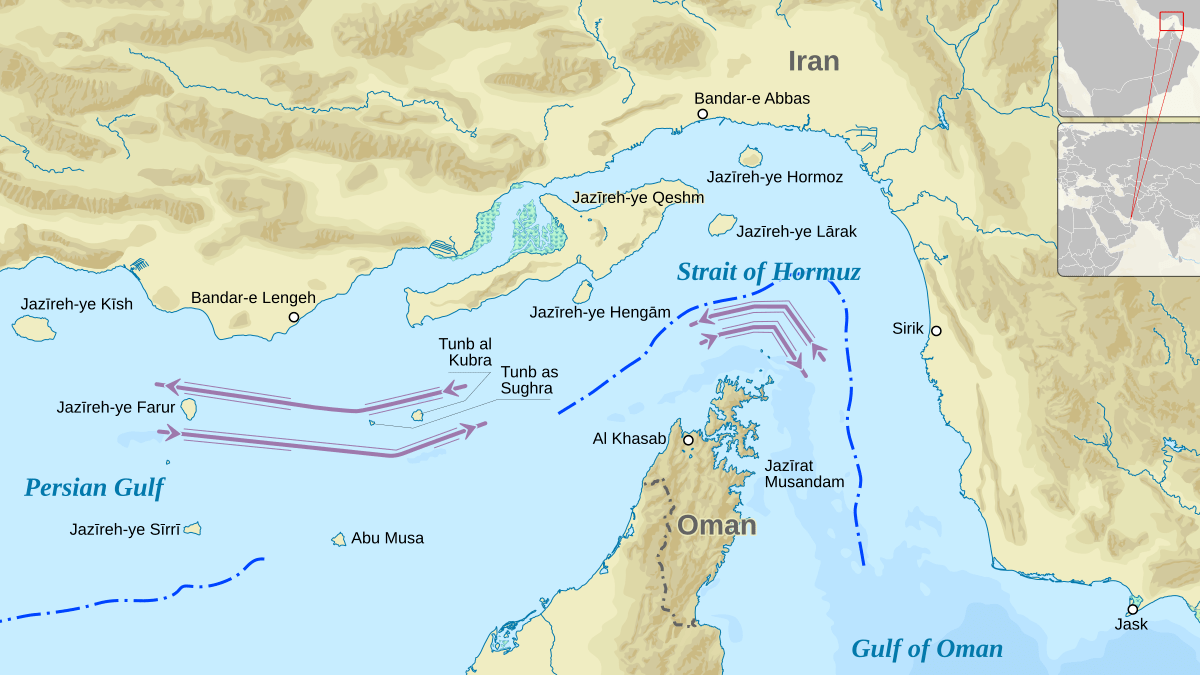
With arms control agreements weakened and diplomatic safeguards fading, nuclear-armed conflicts are no longer an abstract possibility, warns Paul Saoke
The ongoing confrontation involving the United States, Israel, and Iran has created a moment of extraordinary danger for the international system. Public debate has largely focused on conventional escalation, missile strikes, drone warfare, and air campaigns. Yet beneath these visible dynamics lies a far more consequential risk: the steady erosion of the global nuclear restraint regime.
In today’s geopolitical environment, where arms control agreements have weakened and diplomatic safeguards are fading, nuclear escalation is no longer an abstract or distant possibility. It is becoming structurally conceivable.
Recent developments across the Middle East, including intensified exchanges and tensions around strategic chokepoints such as the Strait of Hormuz, illustrate how rapidly regional conflicts can acquire global significance. Military actions intended to degrade capabilities are increasingly entangled with broader strategic calculations, extending the scope and stakes of confrontation.
One immediate concern is the status of Iran’s enriched uranium stockpile. Estimates suggest that Iran retains significant quantities of highly enriched uranium, potentially sufficient for weaponization if further processed. Reports that external actors are considering operations to secure or neutralize these materials underscore a dangerous reality: when nuclear assets exist within active conflict zones, the margin for miscalculation narrows dramatically.
If a state perceives that its nuclear capabilities or infrastructure are at imminent risk of destruction, the incentive to escalate pre-emptively increases. In such environments, actions intended as defensive or preventive can be interpreted as existential threats, triggering unpredictable responses.
Yet the immediate battlefield risks are only part of the problem. The deeper concern lies in the erosion of the international arms control architecture that has historically constrained nuclear competition.
For decades, global nuclear stability depended on a network of agreements that limited arsenals, enhanced transparency, and reduced uncertainty between rival powers. Today, many of these frameworks are weakening or have collapsed altogether. The deterioration of arms control arrangements between major nuclear powers, including the United States and Russia, threatens to remove the remaining constraints on the world’s largest nuclear arsenals.
This breakdown has direct implications for the Middle East. In the absence of clear frameworks, states increasingly plan for worst-case scenarios. Nuclear modernization accelerates. Strategic distrust deepens. Channels for managing escalation become fragile or disappear entirely.
In the absence of clear frameworks, states increasingly plan for worst-case scenarios. Nuclear modernization accelerates. Strategic distrust deepens.
Equally concerning is the collapse of diplomatic mechanisms designed to prevent nuclear proliferation. The unraveling of the Joint Comprehensive Plan of Action removed a key constraint on Iran’s nuclear program. In its absence, military pressure has intensified, but so too has Iran’s perceived need for strategic deterrence.
This reveals a fundamental paradox: efforts to eliminate nuclear threats through force can inadvertently strengthen the incentive to acquire them.
The risk is not limited to deliberate nuclear war. It lies in miscalculation.
Wars involving nuclear-adjacent infrastructure introduce unique escalation dynamics. A strike on a nuclear facility may be intended as a tactical operation, but it can be interpreted as an attempt to eliminate a state’s long-term deterrent capability. Under such conditions, responses may escalate beyond initial intentions.
At the same time, the normalization of military solutions to nuclear disputes is becoming more pronounced. Pre-emptive strikes, once viewed as extreme measures, are increasingly framed as legitimate tools of non-proliferation. Yet such actions carry significant long-term risks, potentially accelerating proliferation rather than preventing it.
Political rhetoric has also shifted. Language emphasizing “all options on the table” has become routine, reflecting a broader change in how nuclear risk is conceptualized. Nuclear weapons are no longer confined to the realm of last-resort deterrence; they are increasingly embedded within strategic thinking about escalation, coercion, and dominance.
This shift is reinforced by broader trends. Nuclear modernization programs are expanding across major powers, including the China and others. Arms control treaties that once symbolized cooperation are giving way to competition. The institutional foundations of nuclear restraint are weakening at precisely the moment when they are most needed.
The danger, therefore, is cumulative.
It is not that a nuclear weapon will necessarily be used in the current conflict. Rather, it is that repeated crises without effective diplomatic resolution normalize brinkmanship. Each episode reinforces the perception that escalation can be managed and that nuclear thresholds remain stable.
History cautions against such assumptions. The Cuban Missile Crisis demonstrated how quickly miscalculation can bring nuclear powers to the edge of catastrophe. Today, the institutions that helped manage such risks are weaker, and the geopolitical environment is more fragmented.
What makes the present moment particularly dangerous is the convergence of three trends: regional conflicts involving nuclear-capable actors; the erosion of arms control frameworks; and the weakening of diplomatic mechanisms for managing escalation.
Individually, each of these factors increases risk. Together, they create a system in which nuclear catastrophe becomes more conceivable than at any point in recent decades. The lesson is clear.
Military escalation cannot resolve nuclear disputes. Long-term stability depends on rebuilding the architecture of restraint: renewing arms control agreements, strengthening verification mechanisms, and restoring sustained diplomatic engagement between rival powers.
Without such efforts, the world risks returning to a strategic environment in which nuclear weapons are central instruments of geopolitical competition.
The tragedy of nuclear weapons lies not only in their destructive power, but in the illusion of control they create.
The tragedy of nuclear weapons lies not only in their destructive power, but in the illusion of control they create. States may believe they can manage escalation, dominate conflict, or contain risk through superior capability. History repeatedly demonstrates that such confidence can be dangerously misplaced.
Today, the world stands at a similar moment. The greatest danger is not only the conflict unfolding in the Middle East. It is the quiet dismantling of the safeguards that once made nuclear catastrophe less likely.
If those safeguards are not rebuilt, the world may discover too late that it has been sleepwalking toward the unthinkable.
Paul Saoke, IPPNW Kenya, is the author of Africa’s Atomic Odyssey: A Continent’s Encounter with Nuclear Power.
Headline image of the Strait of Hormuz by Goran_tek-en/Wikimedia Commons.
The opinions expressed in articles by outside contributors and published on the Beyond Nuclear International website, are their own, and do not necessarily reflect the views or positions of Beyond Nuclear. However, we try to offer a broad variety of viewpoints and perspectives as part of our mission “to educate and activate the public about the connections between nuclear power and nuclear weapons and the need to abandon both to safeguard our future”.
 Beyond Nuclear International
Pingback: The non-corporate nuclear news – week to 10 May « Antinuclear
Pingback: Rapid escalation « nuclear-news
Pingback: Rapid escalation | Beyond Nuclear International | Transition Studies