 Beyond Nuclear International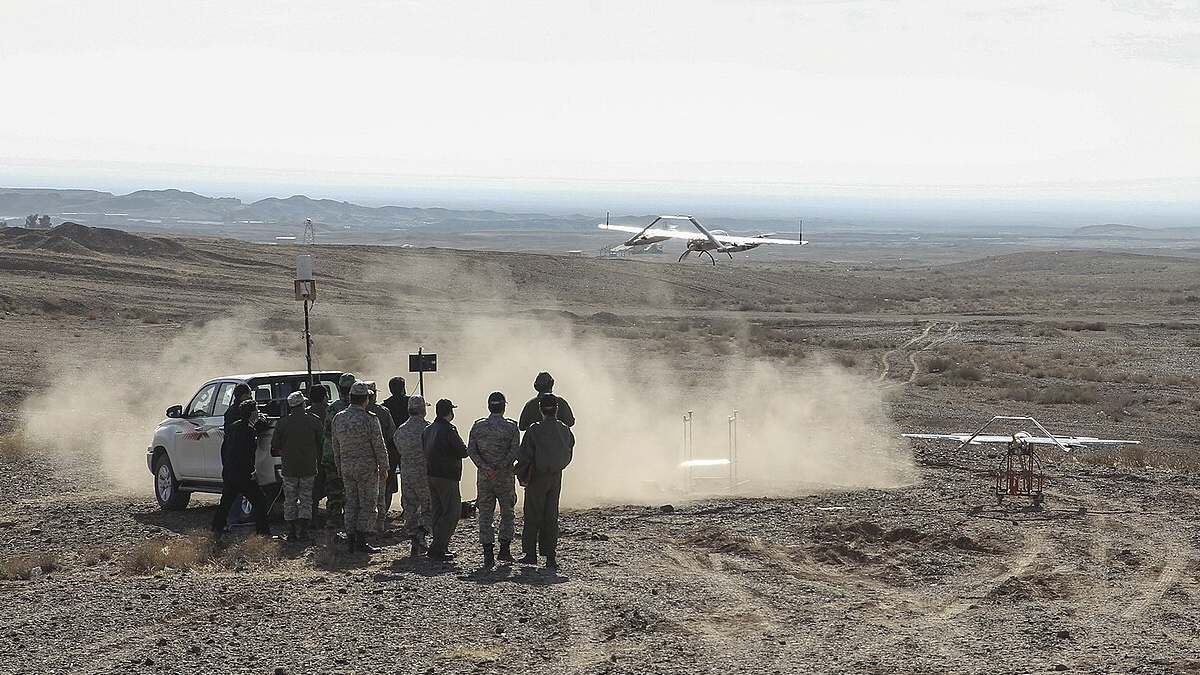
Nuclear power plants are already a liability in war zones. They also represent an open invitation for attack by armed drones, writes Linda Pentz Gunter
Drones are everywhere these days but not as ubiquitous as we once feared. Didn’t Amazon once threaten that all of its at-home deliveries would one day be made by drone? They are delivering some packages using drones — apparently dropping them from a height of 10 feet so the drones don’t collide with passersby — which is great if you ordered bed sheets, not so great for that new set of champagne flutes.
But where the drone industry has really taken off is in the business of warfare. On battlefields and beyond, drones are now routine. They are used to fire precision-guided munitions but also for targeted assassinations, and, whether deliberately or not, to hit nuclear power plants.
This, in particular, raises some extremely serious alarms, because today we have countries that have nuclear power programs that have also found themselves either directly or indirectly embroiled in wars.
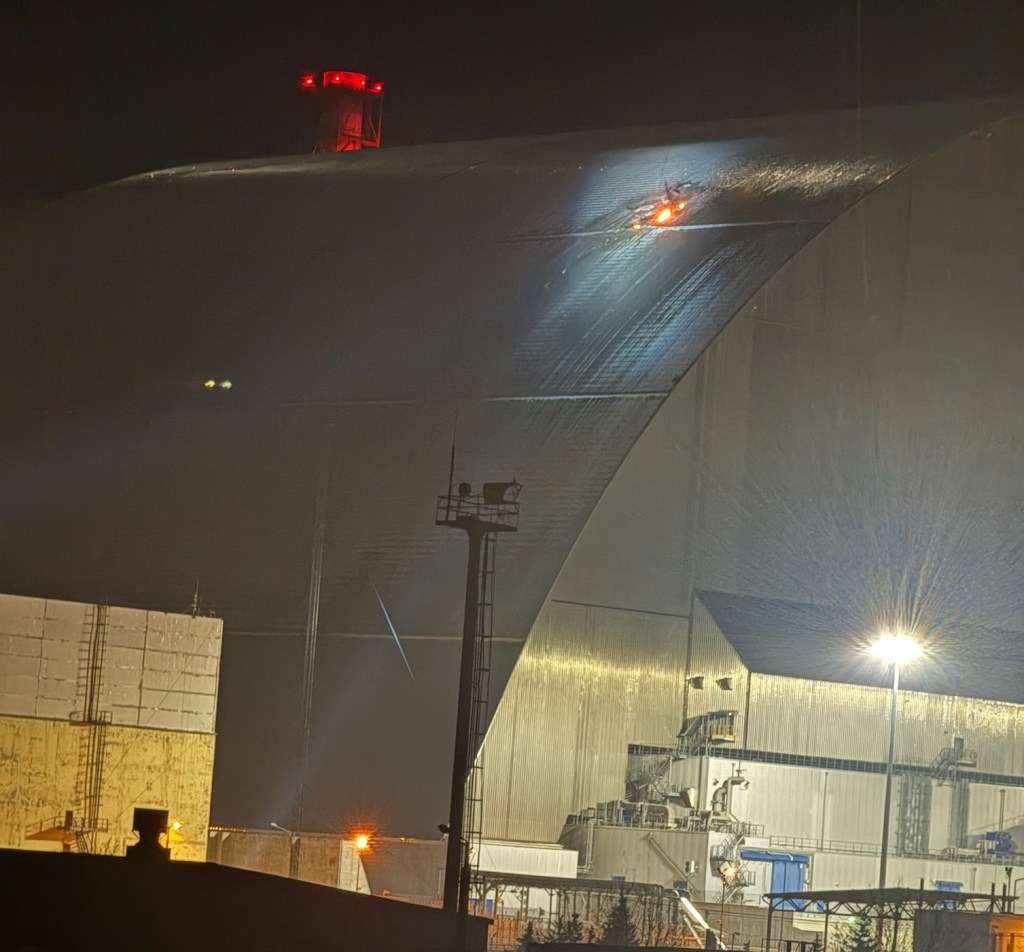
The most headline-grabbing incident so far was when, on 14 February 2025, a Russian drone hit what is known as the New Safe Confinement structure at the Chernobyl Nuclear Power Plant in Ukraine. The Confinement is the $2.7 billion dollar dome that was erected over the old sarcophagus originally built to contain the radiation still leaking from the destroyed Unit 4 that exploded and melted down in 1986.
The 2025 attack resulted in damage likely to cost around $582 million to repair.
At first, fears that radiation might be escaping as a result of the hole the drone blew in the dome’s roof were dismissed. But that situation could change dramatically given concerns that the old sarcophagus could collapse at any moment.
”That would be catastrophic because there’s four tonnes of dust, highly radioactive dust, fuel pellets, enormous amounts of radioactivity inside the sarcophagus,” Shaun Burnie of Greenpeace Ukraine told Agence France Presse in an interview.
Since Russia’s invasion of Ukraine began more than four years ago, there have been ongoing concerns about the 15 reactors there caught up in the war. Six in particular, at the Zaporizhzhia nuclear power plant in the country’s worst hit southeast, have been the subject of the greatest alarm, with drone attacks and missiles landing on and damaging site buildings. Fortunately, there has been no direct hit on any of the reactors so far. But how long can such luck hold out?
The assaults at or near Zaporizhzhia caused the notoriously hypocritical wringing of hands from the International Atomic Energy Agency, stuck in between recognizing the dire risks of reactors in a war zone and its mandate to promote nuclear power all around the world. “Playing with fire”, IAEA general secretary, Rafael Grossi, has called the conflict around Zaporizhzhia, while claiming, incredibly, that nuclear power is not the problem, war is the problem.
In August 2025 a Ukrainian drone attack on the Kursk nuclear power plant inside Russia caused a massive fire and damaged an auxiliary transformer.
And then, just last week, a drone strike sparked a fire at an electrical generator just beyond the inner perimeter of the Barakah Nuclear Energy Plant in the United Arab Emirates. Again, mercifully, none of the four reactors at the site received a direct hit, although one unit was obliged to go to backup power from diesel generators.
So far, no one has claimed responsibility but the UAE is naturally pointing fingers at Iran, backed by evidence that the attack emanated from inside Iraq and therefore was likely the work of Iran-backed Shiite militias there.
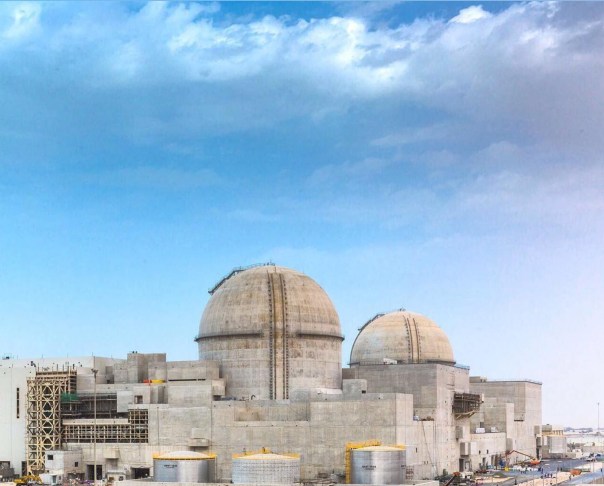
Grossi called the Barakah hit in the UAE of “grave concern” and once again, like a helpless school teacher in front of an unruly class, warned that military activity around nuclear facilities is “unacceptable”.
The involvement of Tehran, officially or not, comes after powerful attacks by the US and Israel last June and again in February against all of Iran’s nuclear fuel manufacturing installations but sparing, so far, its Bushehr commercial nuclear reactor.
We have also just seen Russia and Belarus carrying out a practice deployment run with their tactical nuclear weapons, just one day after Ukraine successfully fired drones into the heart of Moscow. Belarusian authorities insist this was pure coincidence and that the drills were pre-scheduled and routine. But why practice deploying nuclear weapons if deterrence theory insists such weapons are too dangerous ever to use?
Ukraine’s defense minister, Mykhailo Federov, who has no military background, is now proclaiming the exciting future that is autonomous drones, a grim prospect given the propensity for loss of control when it comes to drones already on the battlefield. Federov and his enthusiastic backers are all too thrilled to describe autonomous weapons as “the new nuclear weapons”. He insists that “Countries that posses them will be protected.”
And so the myth continues. The more lethal — and now potentially rogue — weapons we have, the safer we will all be.
The message all of this sends is that civil nuclear power plants can become unexpectedly caught up in war zones, and can also represent inviting targets for attack, leading to potentially catastrophic results. Let’s remember, the UAE isn’t officially at war with anyone. Both Ukraine and Iran are on the receiving end of uninvited invasions.
We need drones out of our skies. We need wars not to be fought near nuclear power plants. We also need wars not to be fought at all, nuclear power plants to be shut down, and nuclear weapons, AI driven or otherwise, to be abolished.
Linda Pentz Gunter is the Executive Director of Beyond Nuclear and writes for and edits Beyond Nuclear International. She is the author of the book, No To Nuclear. Why Nuclear Power Destroys Lives, Derails Climate Progress And Provokes War, published by Pluto Press. Any opinions are her own.
Headline photo: This is a file from the snn.ir website, which states in its footer, “کلیه حقوق مادی و معنوی این سایت محفوظ و متعلق به خبرگزاری دانشجو میباشد واستفاده از آن با ذکر منبع بلامانع است.” (All material and intellectual rights of this site belong to Student News Agency and its use is unhindered/unrestricted by mentioning the source).


Pingback: Nuclear-related news – not the corporate versions « Antinuclear
Pingback: Deadly drone dangers « nuclear-news