 Beyond Nuclear International
Every last wish should read like this
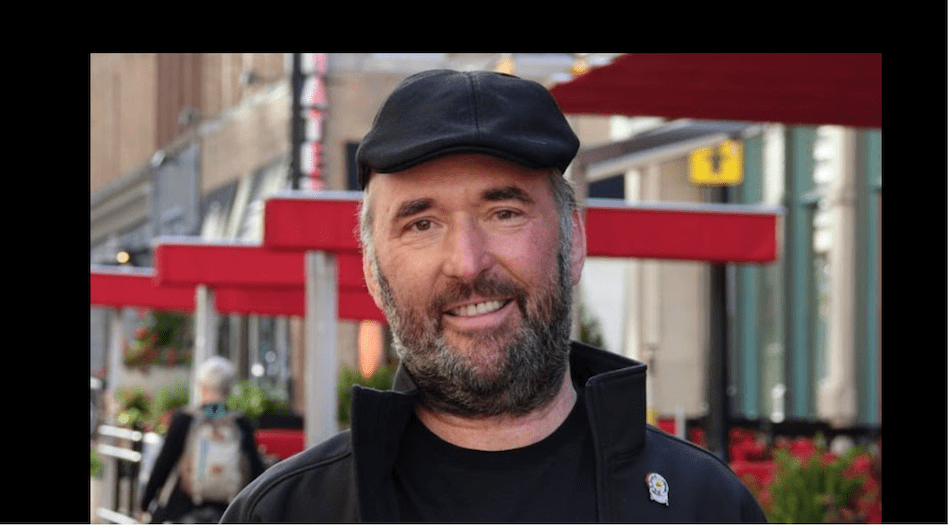
On the day he died, Canadian anti-nuclear politician’s last letter offered hope
Paul Dewar’s farewell letter appeared on his Facebook page on February 6, 2019, the day he died. Dewar, 56 and a Canadian Member of Parliament, and an activist for youth and disarmament, passed away about a year after being diagnosed with Stage 4 glioblastoma, an aggressive form of brain cancer.
By Paul Dewar
Dear Friends,
The time has come for me to say goodbye. While I have left this place physically, I have some final words I’d like to share.
I want to say thank you. My whole life was filled with the kindness of the people of Ottawa, but never did I feel the true depth and generosity of your love more than this past year. You were a constant source of comfort and solidarity for me and my family. I am so grateful for all that you have done.
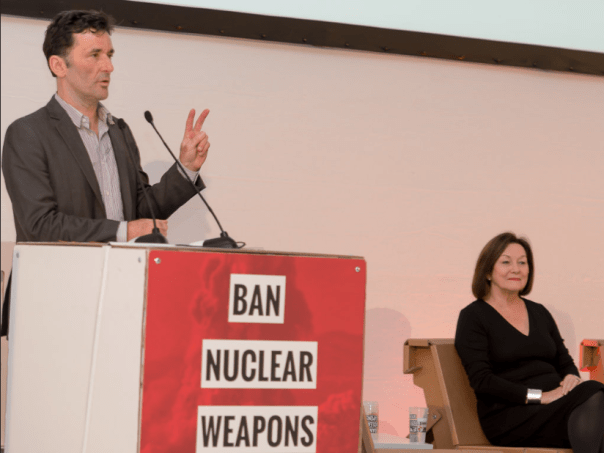
Paul Dewar speaking at the 2014 ICAN Vienna Civil Society Forum. (Photo: ICAN)
I told you that I thought my illness was a gift and I genuinely meant that. In this time in between, I got to see the wonder of the world around us. This reinforced my belief that inherent in our community is a desire to embrace each other with kindness and compassion.
Does the nuclear industry have a back door into its regulator?
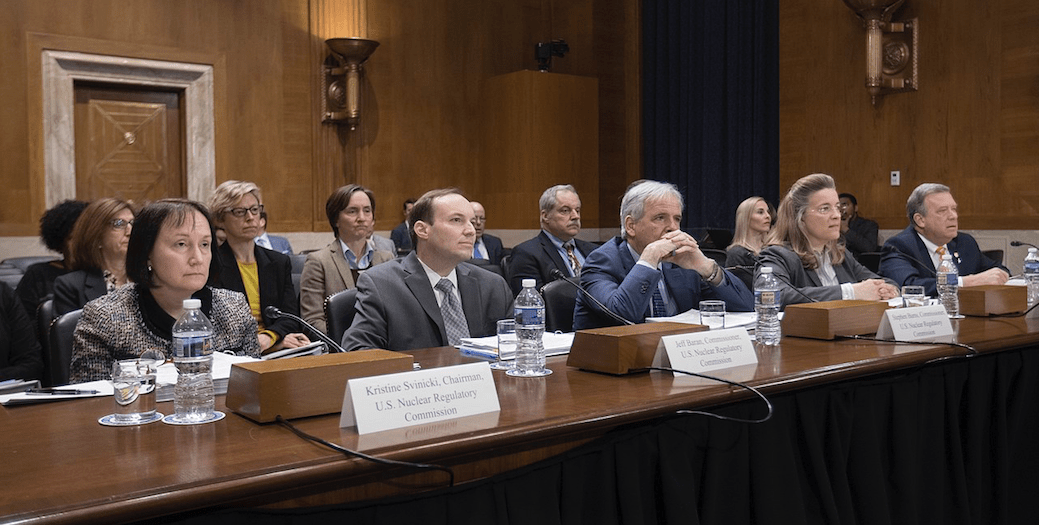
This may be a rhetorical question
By Linda Pentz Gunter
When driving in Italy, my Italian friends inform me, a stop sign is just a “suggestion.” The speed limit is there as advice but is not mandatory.
Needless to say, this cavalier attitude to the law results in plenty of crashes. Alarmingly, the U.S. Nuclear Regulatory Commission (NRC) holds this same attitude towards enforcement of its own safety regulations. Compliance is increasingly ”voluntary”, and safety inspections are instead suggested “self-assessments”. Indeed, our research shows that the NRC has become allergic to any conjugation of the verb “require”, and has actually deleted it from its own rules designed to manage the next nuclear accident, and from regulations for the operation of aging nuclear power plants seeking to extend their licenses.
In December 2017, the Pacific Northwest National Laboratory (PNNL) released a report which it posted on its website, and that of the Office of Science and Technical Information (OSTI) — a division within the Department of Energy. The abstract was posted to the International Atomic Energy Agency (IAEA) website where the links to the PNNL and OSTI report postings are now dead.
In its report, PNNL said that the “autopsy” of a closed nuclear power plant should be “required.” The idea is that when a nuclear power plant is permanently shut down, the decommissioning process provides access to key reactor safety systems, structures and components. With the reactor closed, these parts can — and should — be materially examined to assess the condition and reliability of those same parts in still operating reactors. Indeed, PNNL concluded that such strategic “harvesting” of actual aged samples was a “high priority,” if the government was to continue issuing extensions to reactor operating licenses.
The PNNL report —Criteria and Planning Guidance for Ex-Plant Harvesting to Support Subsequent License Renewal — was then abruptly removed from both the PNNL and OSTI websites. But not before Paul Gunter at Beyond Nuclear had downloaded it.
Why was it removed? Beyond Nuclear learned in our pre-hearing oral argument before the NRC Atomic Safety and Licensing Board on March 27, 2019, that the PNNL report was “just a draft.” NRC counsel, Kayla Gamin, told the court that PNNL posted the report on its website “by mistake.” Presumably the DOE and IAEA made the same error.
A nuclear disaster that hasn’t happened yet
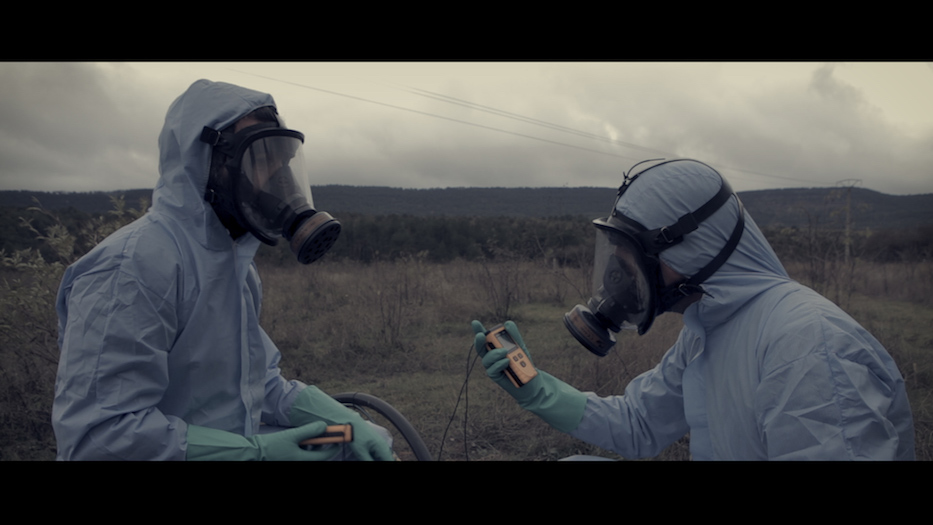
Spanish film, The Leak, dramatizes what might happen when a radioactive waste storage facility goes wrong
By Linda Pentz Gunter
La Fuga Radiactiva (The Leak) is a 30-minute Spanish drama that imagines what would happen if a Centralized Temporary Storage (CTS) facility for high-level radioactive waste (still stalled under immense opposition) in fact opens. And then has a serious accident, leaking radioactive gases across Spain.
In 2010, the Spanish town of Villar de Cañas (Cuenca) was indeed assigned the CTS, slated to house high-level radioactive waste from the seven still operating nuclear power plants in Spain. As the pre-amble to the film explains, a coalition of environmental justice and other groups has so far succeeded in blocking progress on the plant. But what if they should fail? That is the premise of The Leak, directed by Eduardo Soto Pérez and set in 2028.
The story imagines an earthquake combined with torrential rain that has set in motion an accident at the CTS. The narrative touches down briefly on the lives of those who would be involved — local officials, reporters, site workers, government leaders, a doctor with a pregnant wife and bewildered local residents. There is at first skepticism, denial and disbelief that a serious accident might have occurred or could not be safely contained. As the realization of the immensity of the disaster grows, we see just how unprepared the authorities, surrounding communities, and even the nuclear workers are for such an outcome. No one has the “manual” to solve the crisis. Evacuations ensue.
Chernobyl children in a Havana hospital
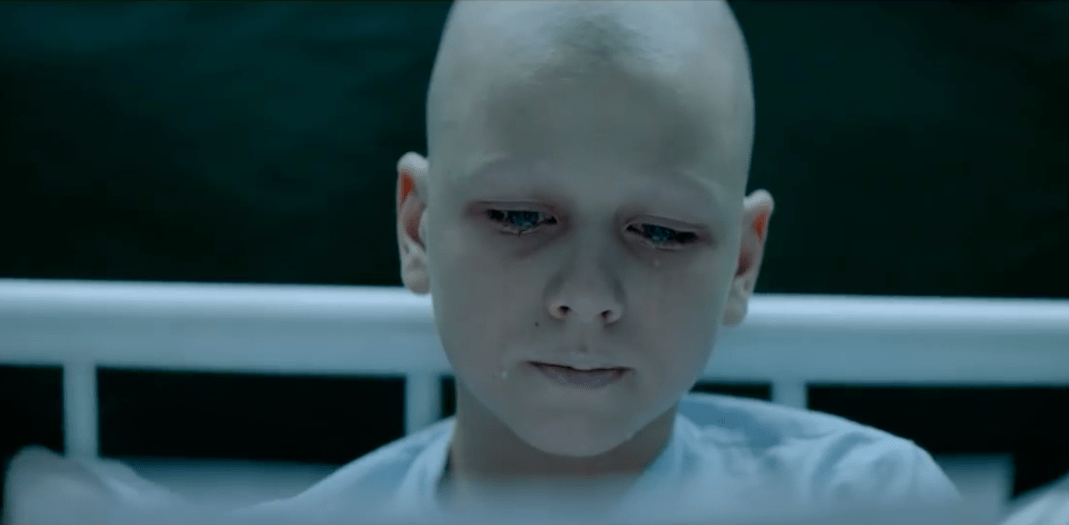
One academic’s emotional journey of awakening is told in the new film, Un Traductor
By Linda Pentz Gunter
Sitting crammed on a transatlantic flight, drinking weak coffee and picking at a lamentable apology for pasta is not where one would expect to find oneself watching a remarkable film about Chernobyl. But that is what happened recently.
Un Traductor (A Translator), released this year, tells the true story of a Cuban professor of Russian literature who, in 1989, abruptly finds his lessons canceled and a note on the university door directing him to the local hospital in Havana. There, he is told he must serve as a translator. But for whom? “The patients from Chernobyl” replies an emotionless senior nurse. The film is directed by Cuban brothers, Sebastián and Rodrigo Barriuso.
Malin (we never learn his last name until the credits) finds himself serving as interpreter at night on a children’s ward filled with victims from the 1986 Chernobyl nuclear disaster in Ukraine. At first, his only task is to inform parents that their child is fundamentally terminal. Devastated, he immediately wants out and to return to his comfortable home life with his wife and his own young son. “You chose to be a nurse!” he rails at Gladys, the matter-of-fact night nurse with whom he works and who has escaped the juntas of her native Argentina to work in Cuban’s renowned medical field. “I didn’t choose any of this,” he insists.
“These kids didn’t choose either,” she retorts.
Chernobyl: How bad was it?
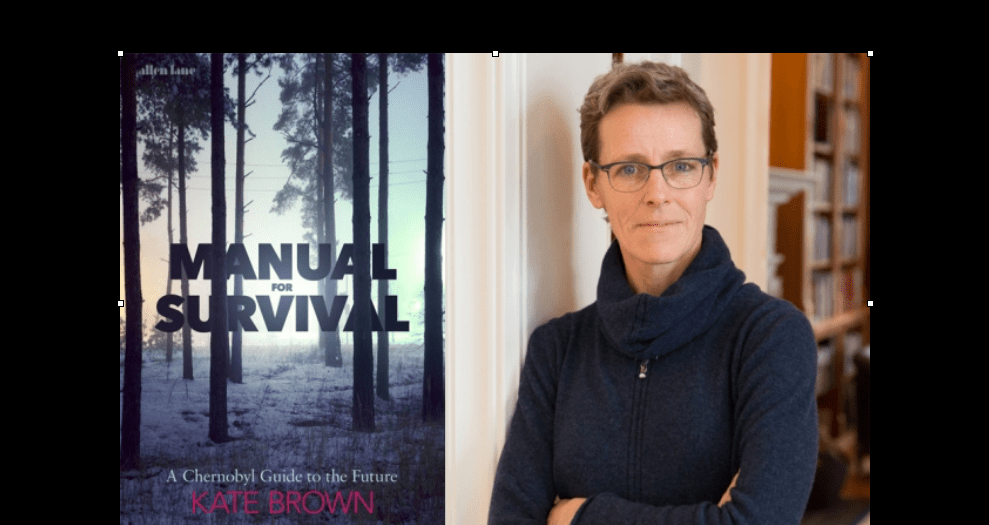
A scholar’s book uncovers new material about the effects of the infamous nuclear meltdown
By Peter Dizikes⎮MIT News Office
Originally published by the MIT News Office.
Not long after midnight on April 26, 1986, the world’s worst nuclear power accident began. Workers were conducting a test at the Chernobyl Nuclear Power Plant in the Ukraine when their operations spun out of control. Unthinkably, the core of the plant’s reactor No. 4 exploded, first blowing off its giant concrete lid, then letting a massive stream of radiation into the air.
Notoriously, the Soviet Union kept news of the disaster quiet for a couple of days. By the time the outside world knew about it, 148 men who had been on the Chernobyl site — firefighters and other workers — were already being treated in the special radiation unit of a Moscow hospital. And that was just one sliver of the population that wound up seeking medical care after Chernobyl.
By the end of the summer of 1986, Moscow hospitals alone had treated about 15,000 people exposed to Chernobyl radiation. The Soviet republics of Ukraine and Belarus combined to treat about 40,000 patients in hospitals due to radiation exposure in the same period of time; in Belarus, about half were children.
And while 120,000 residents were hastily evacuated from the “Zone of Alienation” around Chernobyl, about 600,000 emergency workers eventually went into the area, trying to seal the reactor and make the area safe again. About 31,000 soldiers camped out near the reactor, where radioactivity reached about 1,000 times the normal levels within a week, and contaminated the drinking water.
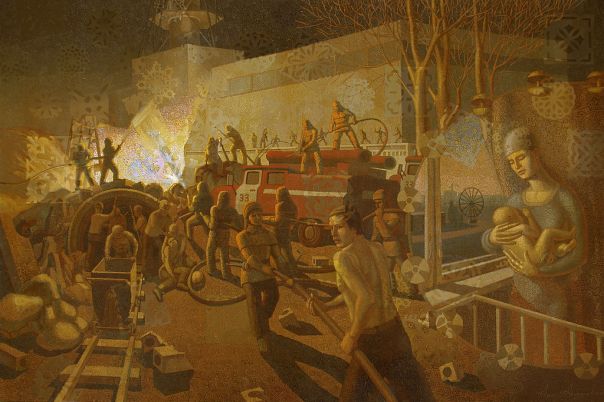
Alexey Akindinov’s picture “Chernobyl. Last day of Pripyat”, oil on canvas. (Image: WikiCommons)
Hard duty in the Chernobyl zone
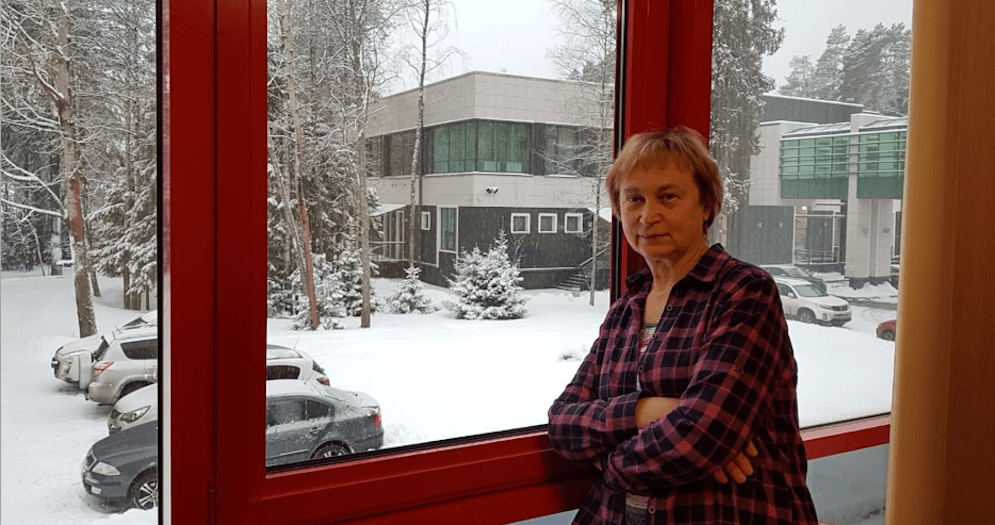
Life as a liquidator after the 1986 nuclear disaster
Cathie Sullivan, a New Mexico activist, worked with Chernobyl liquidator, Natalia Manzurova, during three trips to the former Soviet Union in the early 2000s. Natalia was one of 750,000 Soviet citizens sent to deal with the Chernobyl catastrophe. Natalia is now in her early 60s and has long struggled with multiple health issues. She was treated last year for a brain tumor that was found to be cancerous. A second tumor has since been found and funds were recently raised among activists around the world to help with the costs of this latest treatment. Natalia and Cathie together authored a short book, “Hard Duty, A woman’s experience at Chernobyl” describing Natalia’s harrowing four and a half years as a Chernobyl liquidator. What follows is an excerpt from that book with some minor edits.
By Natalia Manzurova
When I tell people that I was at Chernobyl they often ask if I had to go. My training is in radiation biology and I was born in a city that was part of the secret Soviet nuclear weapons complex, much like Los Alamos, New Mexico, where the first A-bomb was built. People from my city considered it a duty to go to Chernobyl, just as New York City firefighters went to the World Trade Center on 9/11.
Because of the radiation danger to women of child-bearing age, those under 30 did not go, but being 35 in 1987, I began my 4.5 years of work at Chernobyl. Chernobyl depressed me so much when I first arrived that for almost three days I either wept or tried hard not to. We were short-handed and had to work 12 hour shifts. Several workers shared one room in a hostel, each with a bunk where he or she slept during his/her shift period. During the next shift other people slept in the same bunks. Before leaving for a break we put our clothes into plastic bags and stored them.
Alcohol was forbidden and we were checked when we arrived or left the 18 mile exclusion zone around the plant. Liquor soon crossed the fence, however, and became like money. There were no groceries available and meals were served in a large mess hall. Cooks put our food on trays moving on a conveyer belt and the joke was that Chernobyl’s Liquidators and Soviet cattle got their food in the same way.
 Beyond Nuclear International