 Beyond Nuclear International
Suing to stop sea turtle kills
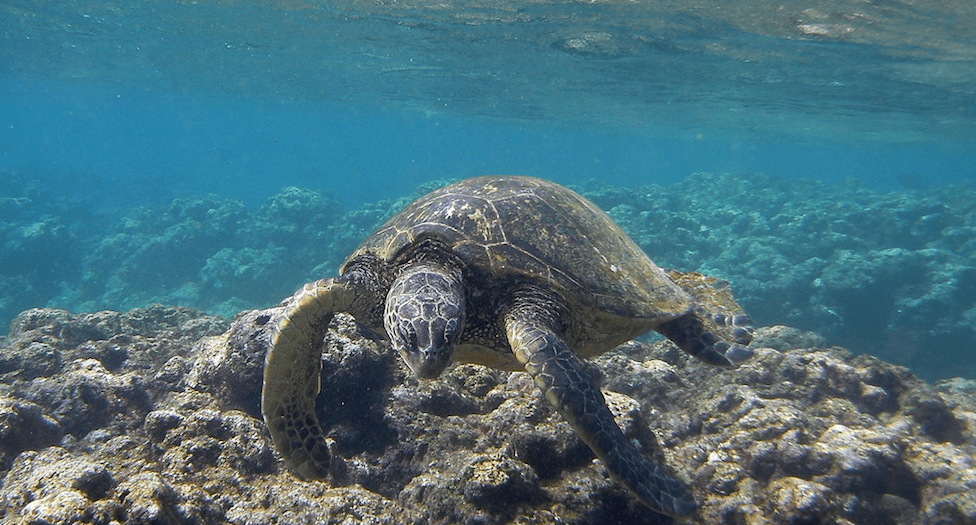
Nuclear power plant continues to take too high a toll on endangered species
By Linda Pentz Gunter and Paul Gunter, with the Turtle Island Restoration Network
On Thursday, May 30, 2019, the Turtle Island Restoration Network and Beyond Nuclear filed a formal notice of their intent to sue the U.S. National Marine Fisheries Service (NMFS), the Nuclear Regulatory Commission (NRC) and Florida Power & Light (FPL) for failing to protect endangered species from illegal intake and harm at the St. Lucie Nuclear Power Plant in Jensen Beach, Florida.
For decades, the reactor site’s cooling water intake system, which draws in nearly three billion gallons of sea water daily, has routinely captured, harmed and killed thousands of marine animals, most notably endangered and threatened species of sea turtle as well as the endangered smalltooth sawfish. But it’s not just countless species of marine wildlife—two scuba divers were sucked through the unprotected cooling intake pipe on separate occasions, one of whom is suing the power plant for being entrained at the plant in 2016.
A video, produced by the authors in 2001, showed how sea turtles — around since the time of the dinosaurs — are being assailed from many quarters, and the compounding and cumulative damage done to them by captures and kills at nuclear power plants.
A rogue regulator worth reading
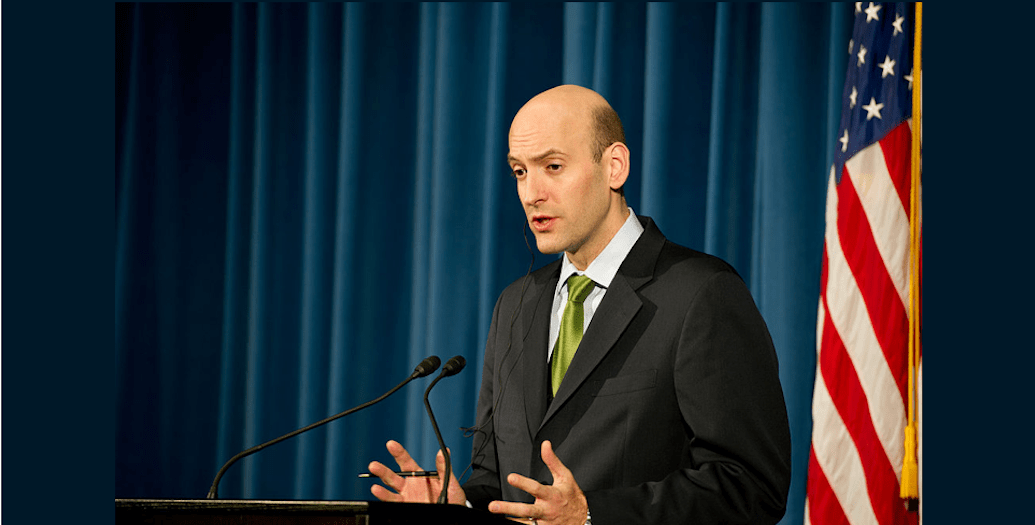
A shocking if predictable look inside a captured nuclear agency
By Libbe HaLevy
“Nuclear power is a failed technology.”
If that unequivocal statement by former Nuclear Regulatory Commission chair Greg Jaczko were the only “confession” he made, it would be powerful enough. But in his recently published book, Confessions of a Rogue Nuclear Regulator, Jaczko rips away the secrecy from the inner workings of the NRC as he experienced it first-hand.
This ultimate nuclear insider provides a clear picture of the failings of the captured nuclear agency, the corrosive day-to-day political battles with other commissioners, and the unfolding terror when Fukushima’s nuclear reactors were first shaken, then swamped – and no one could predict what was going to happen next.
With a lean narrative, a scientist’s spare prose, and a canny sense of how to make complex technical issues understandable, Jaczko paints the picture of what’s wrong with the nuclear industry and the NRC. The result is a narrative both shocking and, for some of us, sadly predictable, as he confirms the worst beliefs and observations held about the agency that’s supposed to regulate the most deadly energy technology on earth.
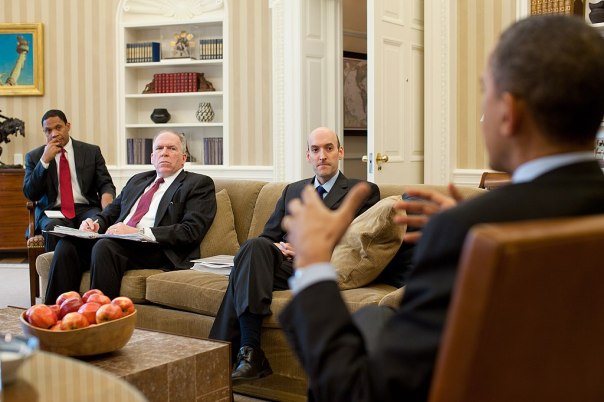
Gregory Jaczko at an Oval Office a meeting in the Obama White House just days after the Fukushima nuclear accident began, along with John Brennan, Assistant to the President for Homeland Security and Counterterrorism; and Rob Nabors, Assistant to the President for Legislative Affairs. (Official White House Photo by Pete Souza)
Paying the price for peace
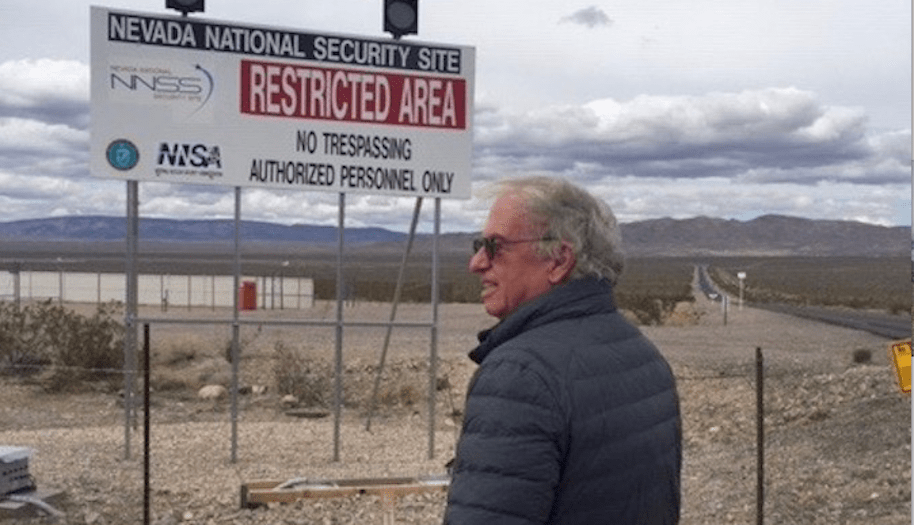
Protesters at drone base and Nevada National Security Site cross the line for peace
By John Amidon
We came for the annual Nevada Desert Experience Sacred Peace Walk. But this year, it is different. This year, eight of us will leave the Walk in belly chains. It is Holy Week, Good Friday, April 19, 2019. We are loaded into a white truck to begin the 50-minute ride from the Nevada Test Site — recently rebranded the Nevada National Security Site (NNSS) — to Pahrump Jail.
Our annual pilgrimage for nuclear abolition and in support of Western Shoshone sovereignty had begun a week earlier in front of the National Atomic Testing Museum in Las Vegas. It ended at NNSS where, in the past, we were mostly apprehended, then released. But today we are being treated with a heavier hand.
We walk because we want to see an end to nuclear weapons, but also because we are deeply concerned that should radioactive waste move to be stored at Yucca Mountain it will never be safe. All of these issues intersect at the Nevada National Security Site, a name designed to obscure its deadly and poisonous work.
The Western Shoshone People are the legal owners of the land we traverse and also of much of the State of Nevada, a sovereign nation under occupation.
(Watch a video about why we walk, below).
The beginning of the end of nuclear weapons
How states stood up to the nuclear bullies and won a ban treaty
By Tony Robinson
At 7pm, on the 6thof June, at the Village East Cinema, in Lower Manhattan, Pressenza International Press Agency, of which I am a co-director, will host the World Premiere of our new documentary on the Treaty to Prohibit Nuclear Weapons. The title, The Beginning of the End of Nuclear Weapons, is a reference to the speech made by Setsuko Thurlow to the assembled throng of dignitaries and International Campaign to Abolish Nuclear weapons (ICAN) campaigners, during her Nobel Laureate Speech in December 2017 when the Peace Prize was awarded to ICAN.
The film charts the story of the development of the atomic bomb through to the negotiations to prohibit nuclear weapons, and is told through the interventions of 14 people whose roles have been key in the fields of activism and diplomacy.
The full horror of the US bombing of Hiroshima is explained in the words of Setsuko herself as she recounts the day the bomb was dropped on her hometown, the subsequent impacts on the Hibakusha, as the survivors are known, and the efforts by the government to censor all information on the subject.
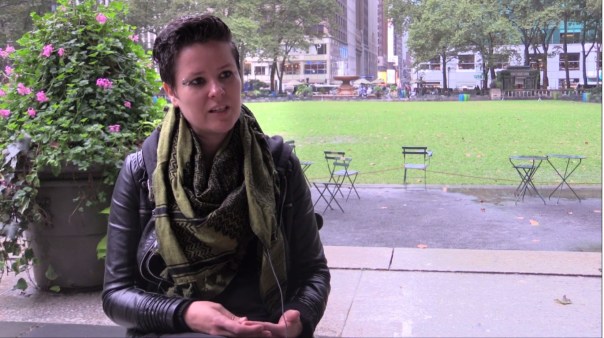
Ray Acheson, of Women’s International League for Peace and Freedom, interviewed in the film.
A brief history of anti-nuclear activism is set out with the help of veteran campaigner, Alice Slater from the Nuclear Age Peace Foundation, together with the great strides taken in the 1980s to eliminate entire classes of weapons and bring down international tensions without actually doing anything to abolish nuclear weapons entirely.
The tiny plant that helped save a desert from uranium mining
South Africa’s Karoo has been spared nuclear desecration — for now
By Stefan Cramer
People all over the Karoo were deeply shocked when they found out way back in 2014 that their backyards had been licensed for uranium exploration.
Farms from places as far as Prince Albert to Murraysburg, from Steytlerville to Merweville, were suddenly earmarked by an unknown Australian mining company called PENINSULA ENERGY.
They reckoned that they were sitting on a world-class deposit of the “nuclear stuff” only a few metres below the dry Karoo surface. Sure, there had been attempts in the last century. However, nothing had come of it except for a few ugly holes around Beaufort West, still polluting the environment until today.
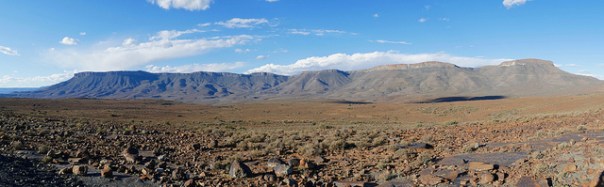
The spectacular Karoo won’t be fracked or mined for uranium. (Photo: Bernard Dupont/Creative Commons/Flickr)
At that time people knew or had heard about fracking. Yes, there were consultations and a public outcry about the oil and gas industry suddenly carving out large chunks of the Karoo. Actually, the entire Karoo was marked for drilling and fracking for natural gas from the shales deeply buried in the Karoo. Some landowners got together to voice their opposition, others signed petitions and attended meetings. But uranium was on nobody’s radar screen.
Yet, the uranium industry was miles ahead. When the news broke, they had basically finished their exploration exercise, had drilled thousands of boreholes, and were already applying for mining licenses all over the place.
But uranium is potentially a much bigger, more imminent and more dangerous prospect: hundreds of farms were marked for open-pit mining, potentially creating large plumes of radioactive dust blowing over the Karoo and contaminating the few groundwater resources that are left here for agriculture.
However, things changed quickly in 2015 when word spread, and people started to realize the impending threat. This was just in time, as the application processes for exploration and mining licenses allowed for public input.
Suddenly, hundreds of submissions flowed to the Department of Mineral Resources, whereas in the past there was a slow trickle of only two or three. More and more, these submissions were high-powered, arguing scientifically and with legal weight and institutional support.
Then one thing happened that nobody expected.
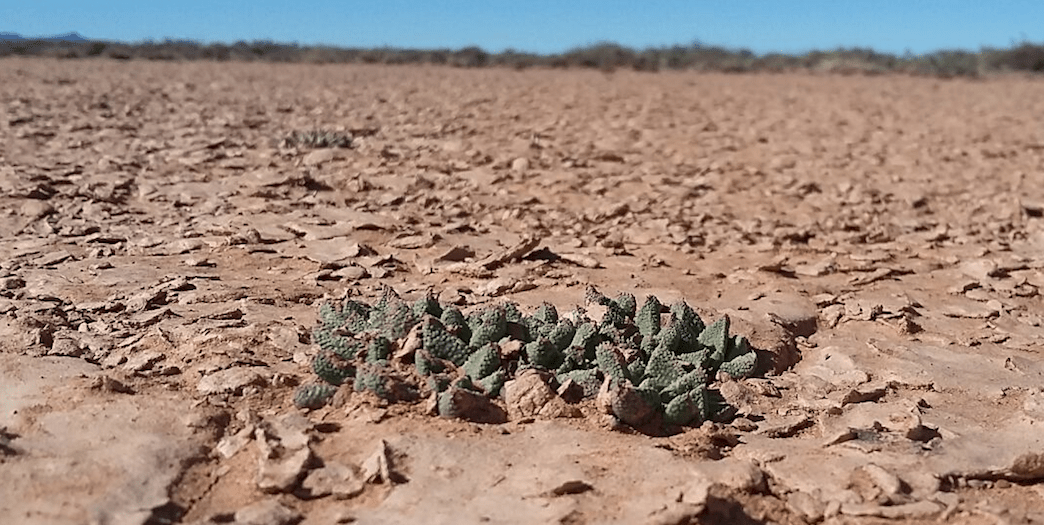
One good morning after a beautiful rain, a farmer’s wife near Aberdeen discovered a tiny little plant in the veld, only a few millimetres high and which she had not seen before.
A quick check by botanical specialists revealed that this was a rare species of Nananthus, a tiny succulent never studied in these areas. The botanical survey of the developers — it turned out — had missed it, including many other endemic plants. The entire environmental impact assessment was delayed, and botanical studies had to be redone.
That bought us enough time to organize a group of some twenty concerned South African scientists to develop a more systematic submission arguing forcefully why uranium mining is not an option for the Karoo. The developers were fuming.
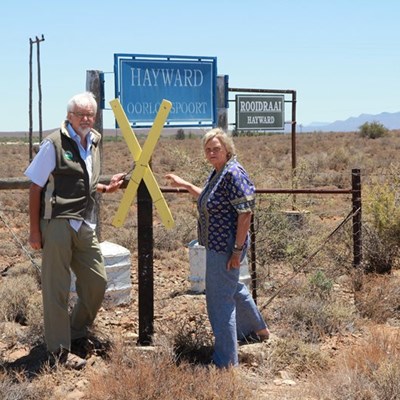
The author (left) and his wife Erika stand by the Yellow X — which indicates the local resistance against uranium mining — placed on a Karoo farm on the road between Aberdeen and Beaufort West.
Meanwhile, things also didn’t go well for the Australian-based company at their main mine in Wyoming in the USA. There, they had chosen the wrong technology and the mine yields were plummeting. Yet, prices for uranium were and are still so depressed, as nobody had built nuclear power stations in the last twenty years and the appetite for more is low after Fukushima.
Technically, the company was broke, if it were not for the deep pockets of their Russian backers. But even Russian oligarchs have no money to waste – and so eventually they pulled the plug on the Karoo adventure, after having burnt more than 10 million US-dollars in legal fees and consultants – and sure some splendid banquets for the politicians involved.
In October 2017 the company finally threw in the towel and announced it would completely and permanently withdraw from the Karoo. Being unable to even sell their share in this project to any bidder, they had to cancel the entire application processes.
They now have to use the proceeds from the sale of the 300,000 hectares of farm lands around the proposed uranium mines in the Karoo for their rehabilitation obligations.
We have to watch out to ensure it is done properly, as the stakes are high, and it will be easy for them to skip the more demanding tasks of rehabilitating the Rest Kuil Mine (near Rietbron) or the Rietkuil pit between Beaufort West and Merweville, if residents are not vigilant.
It is still not clear whether this is a permanent victory for the integrity of the Karoo. While any new contender will have to think twice, after such deep pockets failed, there is another scenario on the horizon.
If the Russian and Chinese manage to build the next generation of nuclear power stations across the world and the price of uranium shoots through the roof again, some desperados may feel inclined to test the Karoo case again. It is therefore imperative to continue the struggle against nuclear power and nuclear weapons, back home in the Karoo and everywhere else.
Dr. Stefan Cramer is science advisor to Southern African Faith Communities Environment Institute.
This article originally appeared on Karoo News and is republished with kind permission of the author.
Headline photo of Little Nananthus courtesy of the author.
A rebel with many causes
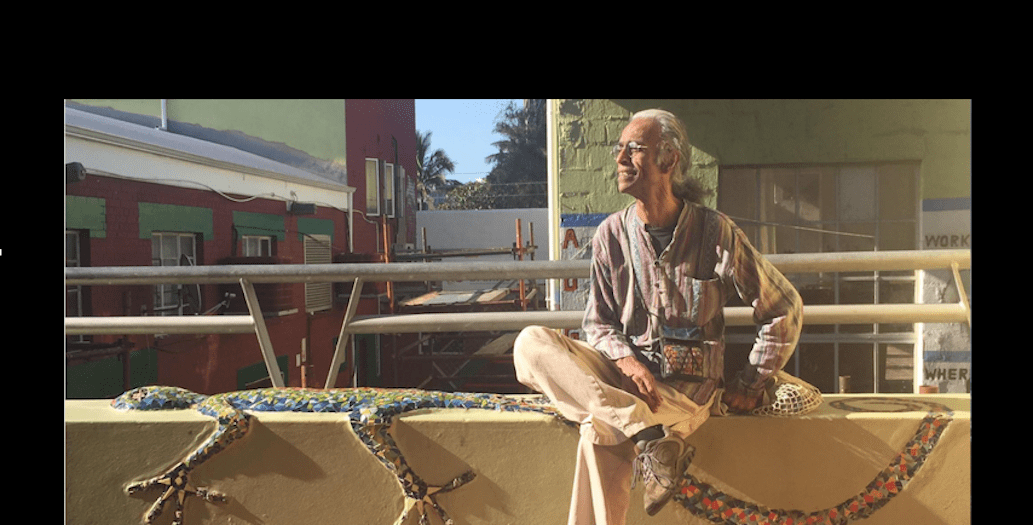
Muna Lakhani’s anti-nuclear work was just one giant component of an enormous activism repertoire
By Linda Pentz Gunter
Is it possible to love someone you’ve never met? Even if Muna Lakhani had never entered my life, I could answer that with a resounding “yes.” When the first photo arrived from our US adoption agency of the tiny baby girl they had selected for us in Vietnam, powerful waves of love engulfed me. I could not imagine a love more fierce. I was not just in love with a photo. Even though I had not yet met her, this was my daughter. Without a doubt.
It was a love that only grew stronger, even through the trauma of the adoption being canceled twice, as our agency, fearing too much corruption in Vietnam to complete the process, advised us to put her back on the shelf like a box of supermarket cereal. They would find us another daughter, in Russia. Absolutely not, we said, fighting through to the end. That’s what love does.
Muna appeared on the scene at about the same time we were working through that drama. Ours was a work connection as the pebble bed reactor had become an imminent threat in South Africa. Muna was with Earthlife Africa. He was based then in Durban. My organization at the time, and others, jumped in to help derail the pebble bed plans.
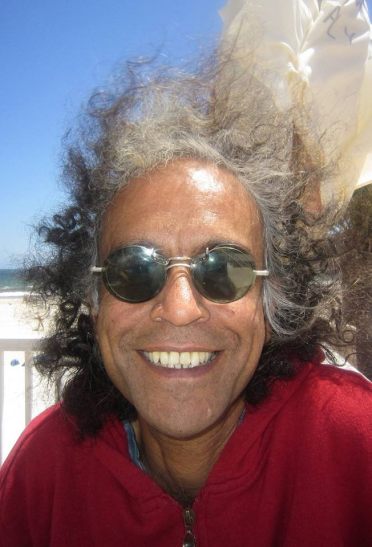
Muna Lakhani. From his Facebook page.
When I first got to know Muna I was entranced by his musical name. As our connection was forged over email, I didn’t know at first if it belonged to a man or a woman. Somehow, building a connection with this warm and effervescent person whose gender I was not sure of was refreshingly without preconceptions. But then Muna, who had leant a near-stranger’s loving empathy to our ongoing adoption ordeal, nominated himself our daughter’s “uncle” as soon as she was home. That, as it turned out, was a typically Muna thing to do. And so I came to love Muna, even though I can’t truly say I knew him.
Muna has died now. If you’ve been following our websites, you have seen a few obituaries lately. Too many. Perhaps it is a factor of getting older, this losing people. But our movement has been dramatically bereft of late.

