 Beyond Nuclear International
“Sharing the warning until my last breath”
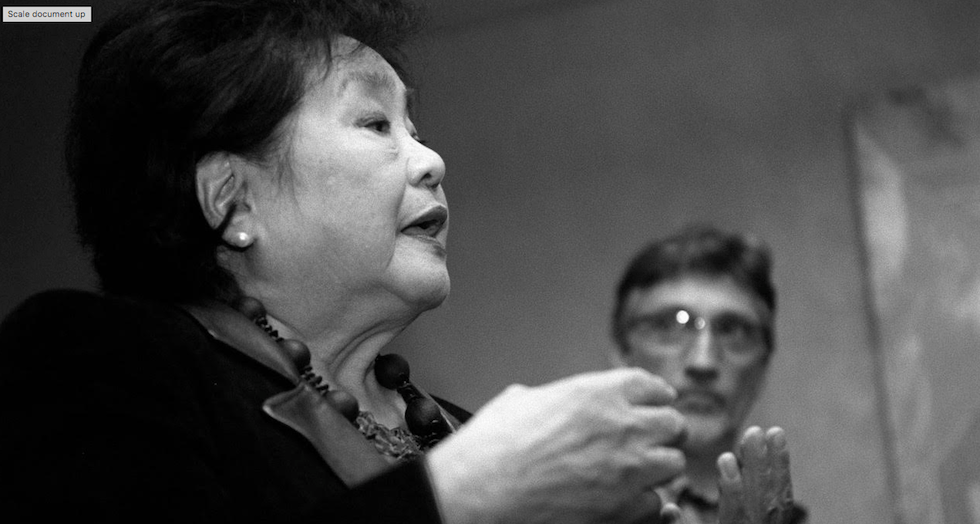
Hiroshima survivor, and Nobel Laureate, Setskuo Thurlow’s first person account of experiencing and surviving the atomic bombing of Hiroshima at 13 is a powerful narrative that never fails to move people to tears. Now it has helped entire nations move to ban nuclear weapons. Here is a version of the account she has delivered many times, as told to Physicians for Global Survival in 2003. (Headline photo by Paule Saviano for Hibakusha Stories.)
By Setsuko Thurlow
As a survivor of the atomic bombing of Hiroshima, I feel a powerful commitment to tell the story of Hiroshima. The survivors are getting old and passing away, leaving a smaller number of us. We feel it is imperative to tell the younger generation of that terrible dawn of the nuclear age. All of us are familiar with the scenes of devastation in New York following the terrorist attacks. But that devastation extended only several blocks. Imagine the devastation of an entire city.
When I sit down to write down my recollections of that time, I have to brace myself to confront my memories of Hiroshima. It is exceedingly painful to do this because I become overwhelmed by my memories of grotesque and massive destruction and death. My message could be painful to you as well, as I intend to be as open and honest as possible in sharing my experience and perceptions.

Setsuko Thurlow gives a hug. ©Janis Lewin.
Hiroshima’s Children

With a gift of art supplies, children who survived the bombings drew visions of joy
Pictures from a Hiroshima Schoolyard is a 52-minute documentary produced by Shizumi Shigeto Manale and written and directed by Bryan Leichhardt.
The film depicts the aftermath of the first atomic bomb through the remarkable drawings and stories of surviving Japanese school children who were part of an extraordinary, compassionate exchange with their American counterparts after the war.
In 1995, a parishioner of the All Souls Church in Washington, D.C., discovered a long-forgotten box containing dozens of colorful drawings made by Japanese children from the Honkawa Elementary School in Hiroshima just two years after their city was destroyed. The surprisingly hopeful drawings were created and sent to the church nearly 50 years earlier in appreciation for much-needed school supplies received as part of the church’s post-war humanitarian efforts.
Moorside nuclear power plan all at sea as storm clouds gather
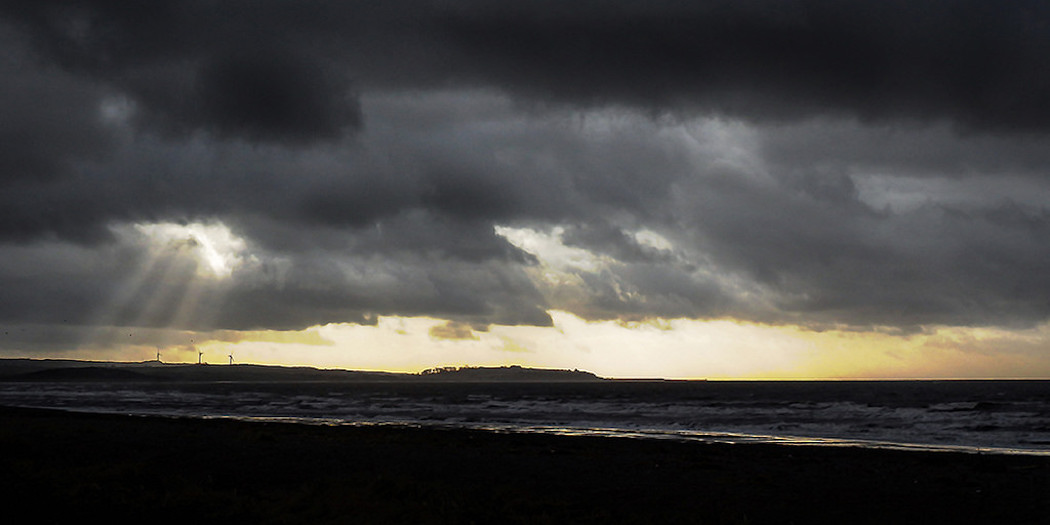
Like most new nuclear stories, this one involves a creek and no paddle
Background: The NuGen Moorside story is the classic fairy tale (not the Disney version) full of darkness and multiple fatalities. Once upon a time, three new Toshiba Westinghouse AP1000 nuclear reactors were planned for Moorside, a site adjacent to the notorious Sellafield reprocessing center on the Cumbria, UK coast. A UK subsidiary, NuGen, was created in November 2010, which originally included Iberdrola, GdF-Suez (later renamed Engie) and Scottish & Southern, all now departed. Toshiba took over Iberdrola’s stake in 2013 and, once other partners had fled, became the sole owner. Then, in March 2017, Westinghouse went bankrupt. By December 2017, South Korea’s KEPCO was the new bidder, hoping to replace the AP1000s with their own, unapproved, APR-1400 reactor design. That relationship is now also in jeopardy.
By Martin Forwood
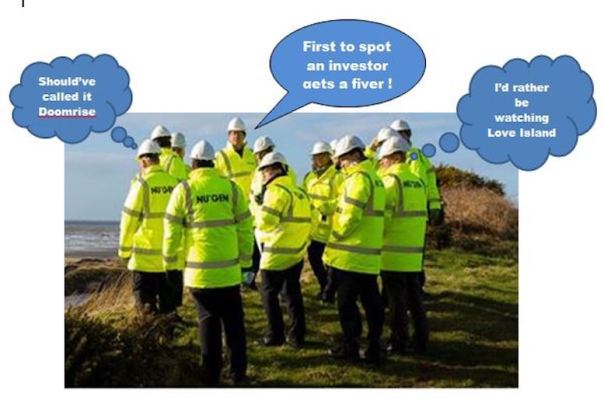
With Toshiba having stripped South Korea’s KEPCO of its ‘preferred-bidder’ status to take over the Moorside new-build project, NuGen’s intrepid Search for Hopeful Investor Team –- shoulders hunched and heads down –- are back once again on lookout duty scanning the seas for any sign of a new investor heading for West Cumbrian shores.
Already discouraged by previous tideline sightings of the washed-up remains of Moorside’s erstwhile investment partners Southern & Scottish Energy (SSE), Spain’s Iberdrola and France’s Engie (formerly GDF Suez), all of whom deserted the Moorside ship to pursue greener pastures, dejected team members had been pinning their hopes on South Korea sailing to the rescue –- a rescue that now appears to have been holed beneath the waterline by Toshiba’s latest announcement. Toshiba reportedly told Kepco on July 25 that it would look to other bidders and study “alternative options,” given the long delay that has failed to see a deal signed between the two companies.
Poisoning more than pigeons in the park
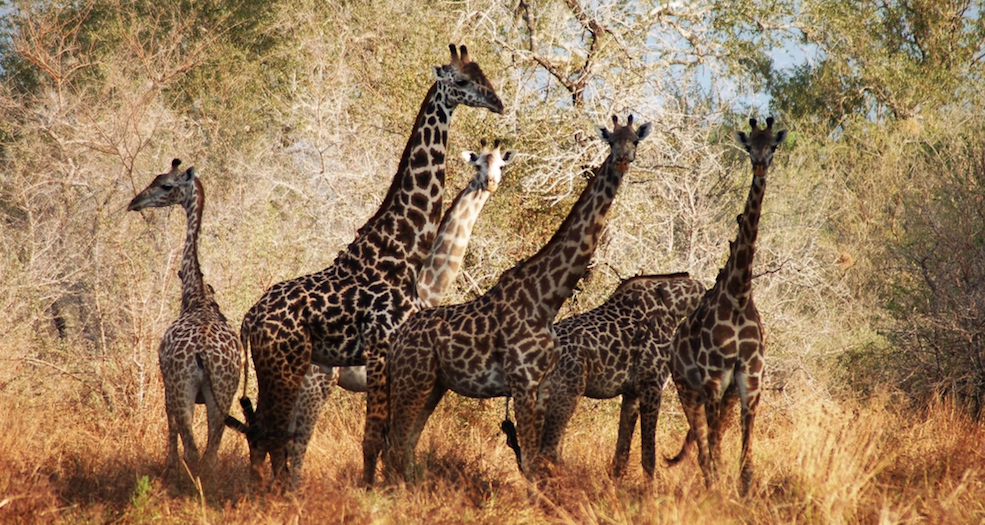
The Selous Game Reserve in Tanzania is under threat of uranium mining
By Linda Pentz Gunter
We still call these parks “game” reserves but the animals there are no longer game. With the exception of poachers and Donald Trump’s sons, (and yes, of course other butcherous egotists), we don’t shoot these animals, we protect them.
But this is not to be the case in Tanzania’s precious Selous Game Reserve. Despite being a World Heritage Site, animals there will be slaughtered en masse, slowly, insidiously, over millennia. We will do it with uranium mines.
Selous is rich with wildlife, including elephants, giraffes, lions and hippos — although the Selous elephants are under siege from poaching, and according to the World Wildlife Fund, could be wiped out by 2022 if poaching continues at current levels.
Inexcusably, it was the World Heritage Committee itself that opened the door to the poisoning of these animals in a park that was supposed to be their sanctuary. In July 2012, it agreed to accept a “minor boundary change” that would allow the development of a major uranium mine — the Mkuju River Uranium Project — a joint Russian-Canadian venture. The change was heavily lobbied for by the Tanzanian government.
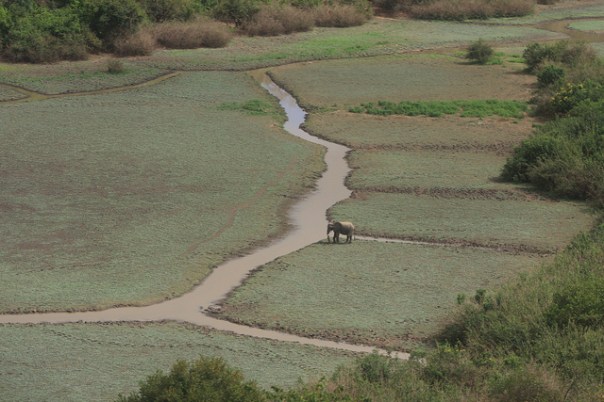
The vast Selous park is home to the biggest population of elephants in Africa.
These Russians aren’t going away
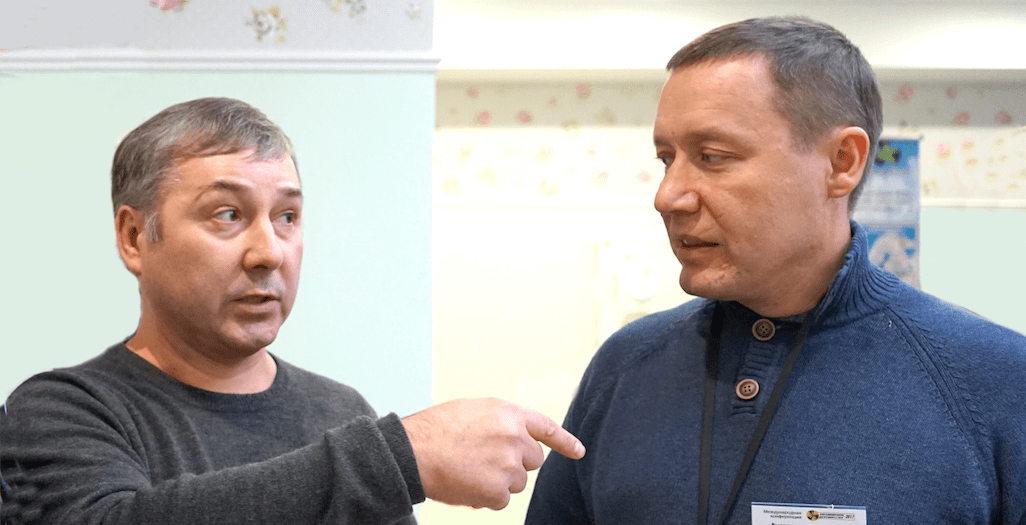
Labeled “extremists” and “foreign agents”, Fedor Maryasov and Andrey Talevlin put country and courage first
By Oleg Bodrov
The first time Fedor Maryasov realized that something might be very wrong in his community was as a teenager. Growing up in the uranium mining city of Zarafshan, Uzbekistan, young Fedor and his friends would swim in artificial ponds holding discharge water from the uranium mines. They fished there too, but they began to notice the fish were disfigured by genetic abnormalities, displaying red spots and growths. Still, the authorities were saying nothing. And the teenage boys, like most people in Zarafshan, knew little about how radiation affects living organisms.
By 1993, Maryasov was studying at the university in Tomsk, Siberia. That year, there was a radiation accident at the Siberian Chemical Combine, operated by the Russian state nuclear corporation Rosatom. The city of 300,000 escaped danger as the radiation release went in a different direction. But rumors began to spread that other populations were not so fortunate and that inhabitants of nearby villages had been evacuated. Maryasov noticed fire trucks at the entrance to his city, washing the wheels of passing vehicles. Something serious had happened. The population began to panic and to buy dosimeters.
It was then that Maryasov realized that radiation was a danger very close to home, with the capacity to affect everyone.
In 2015, Andrey Talevlin, and the environmental movement that he leads — For Nature — were named a “foreign agent” by, ironically, the Russian Ministry of Justice. Why “ironically”? Because genuine justice is what Talevlin has been fighting for throughout his professional career as a lawyer. So while the label clearly represented a danger to Talevlin’s personal safety, it was also a sort of triumph. The dubious recognition meant that Talevlin was having a major impact in his efforts to get justice for populations whose environmental interests were compromised by the import and reprocessing of irradiated nuclear fuel.
Today, Maryasov is a pioneering journalist, Talevlin a campaigning lawyer, and anyone who has seen the fate of those who oppose the regime in Russia, knows just what kind of risks both men take to commit to their conscience.
Does living near a nuclear plant give children cancer?
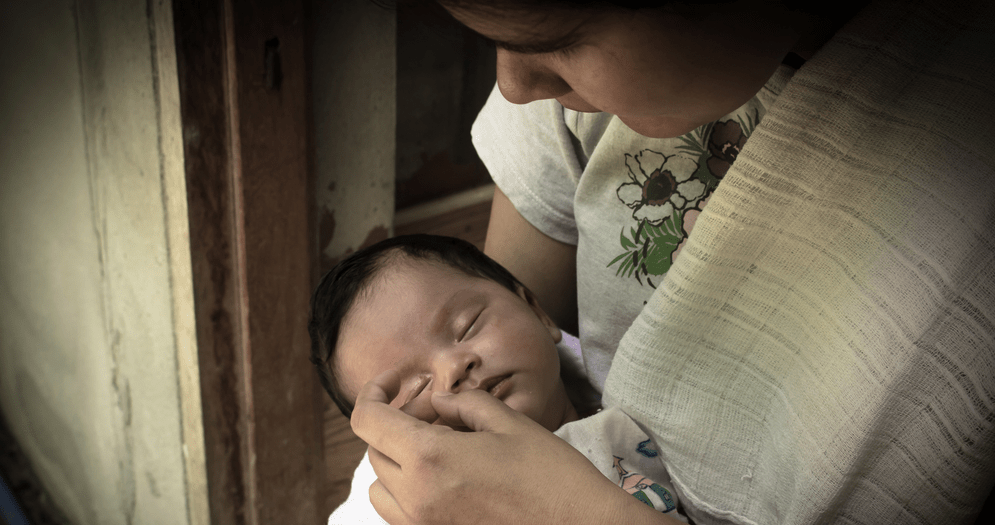
Nuclear regulators don’t want you to know
By Cindy Folkers
More than 60 studies have shown increases of childhood leukemia around nuclear facilities worldwide. Despite this finding, there has never been independent analysis in the US examining connections between childhood cancer and nuclear facilities. The US Nuclear Regulatory Commission (NRC) had tasked the National Academy of Sciences (NAS) to conduct such a study, but then withdrew funding, claiming publicly that it would be too expensive.
In fact, documents obtained through the Freedom of Information Act (FOIA) process reveal that NRC employees had already determined the study would show no impact. Internal emails indicate that staff was presupposing a conclusion for which they had no evidence, demonstrated by statements like “even if you found something that looked like a relationship [between cancer and radiation], you wouldn’t know what to attribute it to,” and “[m]ost people realize that all the evidence shows you’re not going to find anything.” The evidence, however, had not yet been fully collected and examined.
Not protective and unaccountable
While the NRC claims it protects public health, its radiation exposure standards fail to account fully for:
- impacts on the placenta
- impacts on fetal blood forming cells
- impacts on fetal and embryonic organs
- estrogenic impacts
- disproportionate impacts on women
- genetic impacts past the second generation
- cumulative damage of repeated radiation exposure
 Beyond Nuclear International