 Beyond Nuclear International
Conspiracies in the Congo

From the Hiroshima bomb to Israel’s nuclear weapons, the path leads back to Congo’s uranium, writes Linda Pentz Gunter
It involved the Democratic Republic of Congo (DRC); a Belgian mining company; a fictitious Liberian trading company; a German-named ship — the Scheersberg A; a Spanish crew; a German petrochemical official; an Italian paint company; an Israeli freighter; the Greek island of Crete; a Turkish port; and a confession made in Norway.
If this sounds like the plot for an elaborate work of fiction, it was — it formed the basis of Ken Follett’s 1979 thriller, Triple. But it was also all true.
The clandestine operation, which took place in November 1968, smuggled an estimated 200 tonnes of uranium yellowcake out of the DRC, transporting it to Israel. It was orchestrated by Mossad, the Israeli secret intelligence service and came to be known as Operation Plumbat, since the illicit cargo was marked as lead.
The scheme was set in motion when, after the 1967 Arab-Israeli War, France curtailed its weapons supplies to Israel and likely the uranium fuel as well needed for Israel’s Dimona reactor, believed then and still to be at the heart of the country’s nuclear weapons program. The operation concluded with an exchange of ships and cargos on the high seas, the Scheersberg A eventually docking empty in Turkey while the uranium, now aboard an Israeli freighter, made its way to Haifa and eventually to Dimona.

The Plumbat operation was first exposed in April 1977 at a non-proliferation conference in Salzburg, Austria by Paul Leventhal, who went on to found the Nuclear Control Institute in 1981.
Read MoreDismantling the atomic lie

The forgotten faces on the uranium trail
What follows is an edited version of my talk given during the Nuclear Energy Conference 2021 entitled How to dismantle an atomic lie, hosted by Atomstopp from Linz, Austria. The presentation can also be viewed in the YouTube window in this article.
By Linda Pentz Gunter
My favorite piece of fictional writing of all time is the play for voices, Under Milk Wood by the Welsh writer, Dylan Thomas. It opens like this: “To begin at the beginning”.
If you want to put human faces to the story of nuclear power, you have to begin at the beginning. That’s why those who continue to promote nuclear power never begin at the beginning. Because if they do, they meet the faces of the people who are the first witnesses to the fundamentally anti-humanitarian nature of the nuclear age.
When we begin at the beginning, what do we find? We find uranium. We find people. And we find suffering.
When we begin at the beginning, we are on Native American land, First Nations land in Canada, Aboriginal land in Australia. We are in the Congo, now the site of a genocide with six million dead, the fighting mostly over mineral rights. We are walking on the sands of the Sahel with the nomadic Touareg. We are among impoverished families in India, Namibia, and Kazakhstan.
We see black faces and brown faces, almost never white faces — although uranium mining also happened in Europe.
Mostly, we find people who already had little and now have lost so much more. We find people whose ancient beliefs were centered in stewardship of the Earth, whose tales and legends talk of dragons and rainbow serpents and yellow dust underground that must never be disturbed.
And yet, it was they who were forced to disturb the serpent —in Australia, in Africa, in Indian country. As they unearthed uranium — the lethal force that would become the fuel for nuclear weapons and nuclear power — they were being made to destroy the very thing they held sacred. And their lives were about to be destroyed by it, too.
We are seeing a genocide. Because a genocide is not just a massacre. A genocide is also the erasure of a people culturally. It is the destruction of a way of life, often also a language, a belief system.
It was at that moment, when we first dug uranium out of the ground, that nuclear power became a human rights violation. And it never ceases to be one, along the entire length of the uranium fuel chain, from uranium mining to processing, to electricity generation, to waste mismanagement.
Read MoreNuclear summer?
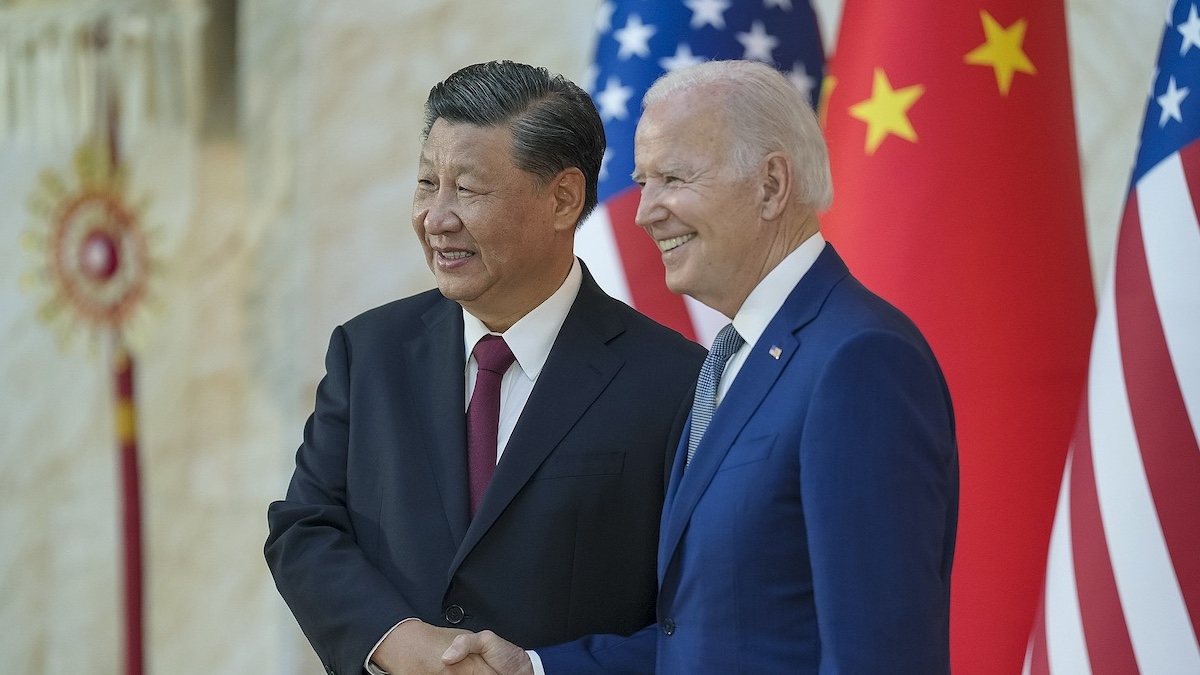
A Climate Cold War Between the US and China won’t solve anything
By G. F. Fuller
In his 2024 State of the Union Address, President Joe Biden told America, “I want competition with China, not conflict.” He went on to say that, by his doing, the U.S. is now “in a stronger position to win the conflict of the 21st century against China.” The U.S. is not at war, but Biden warns of conflict. He is talking, I believe, about climate change, and he is declaring America’s involvement in a New Cold War. His climate policies, governed by a metaphor of competition between the U.S. and China, bode terribly for the world’s future.
The conflict of the 21st century that Biden refers to has already begun, and the president’s conflation of climate policy and foreign policy reflects that. Biden’s Inflation Reduction Act marked the largest climate mitigation investment in American history, but its purpose was to serve as a shield for American workers in a trade war with China. While the bill subsidizes domestic green energy production and manufacturing in order to transition toward sustainability, its stated goal is to “advance America’s economic and foreign policy objectives.”
The U.S. has since moved to build up domestic manufacturing, invest in green technologies, and shelter American workers from Chinese efficiency. Weeks ago, Biden threatened to triple tariffs on Chinese steel and aluminum imports, and his treasury secretary called China’s excess of green energy exports “unacceptable from the U.S. point of view.” In the Climate Cold War, American profit matters more than global prosperity.
Another Cold War will gloss over the inequalities that have existed before and since the last one—and leave the world hotter too.

‘Time is running out’
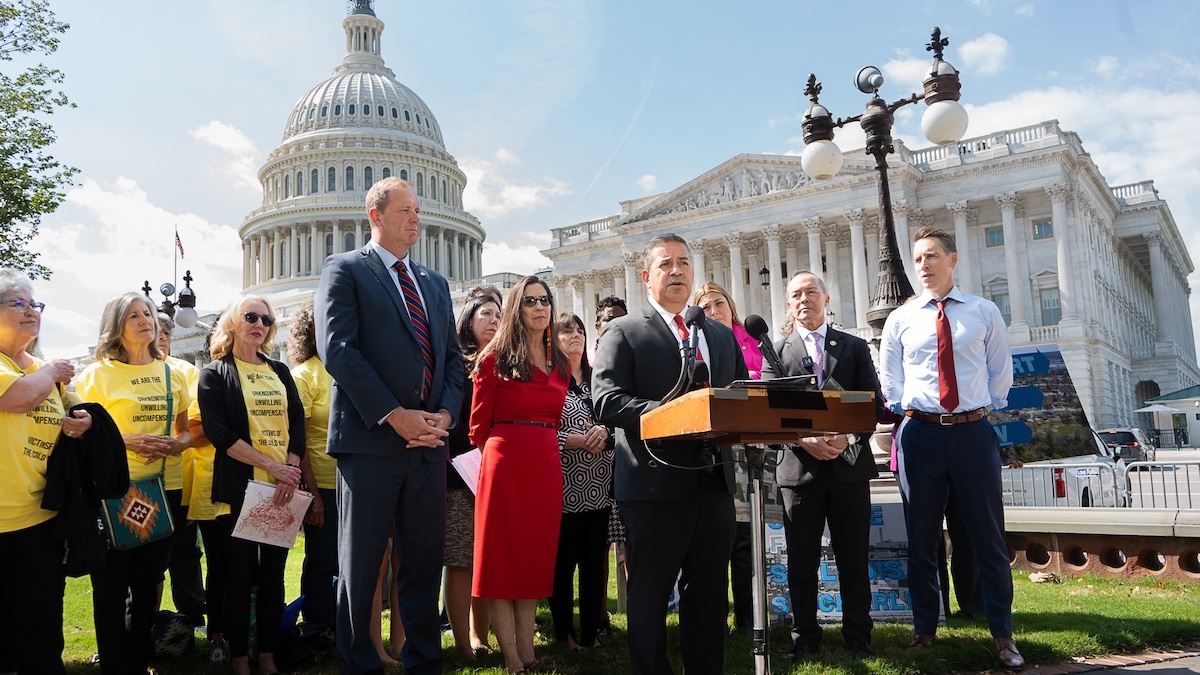
Navajo Nation urges Congress to act on RECA expansion bill
By Shondiin Silversmith, Arizona Mirror
Kathleen Tsosie remembers seeing her dad come home every evening with his clothes covered in dirt. As a little girl, she never questioned why, and she was often more excited to see if he had any leftover food in his lunchbox.
“We used to go through his lunch and eat whatever he didn’t eat,” Tsosie said, recalling when she was around 4 years old. “And he always had cold water that came back from the mountain.”
Tsosie’s father, grandfather, and uncles all worked as uranium miners on the Navajo Nation near Cove, Arizona, from the 1940s to the 1960s. The dirt Tsosie’s father was caked in when he arrived home came from the mines, and the cold water he brought back was from the nearby springs.
Tsosie grew up in Cove, a remote community located at the foothills of the Chuska mountain range in northeastern Arizona. There are 56 abandoned mines located in the Cove area, according to the Environmental Protection Agency.
In the late 1960s, Tsosie said her grandfather started getting sick. She remembers herding sheep with him and how he would often rest under a tree, asking her to push on his chest because it hurt.
Tsosie said she was about 7 years old when her uncles took her grandfather to the hospital. At the time, she didn’t know why he was sick, but later on, she learned he had cancer. Her grandfather died in October 1967.
Over a decade later, Tsosie’s father also started getting sick. She remembers when he came to visit her in Wyoming; she was rubbing his shoulders when she felt a lump. She told him to get it checked out because he complained about how painful it was.
Her father was diagnosed with cancer in 1984 and went through treatments, but died in April 1985.
“When my dad passed away, everybody knew it was from the mine,” Tsosie said. He was just the latest on a long list of Navajo men from her community who worked in the uranium mines and ended up getting sick and passing away.
She recalls how her father used to tell her that, one day, it may happen to him, but she did not want to believe him. Her dad worked in the uranium mines for over 20 years.
Read More“Terrible news”

Russian uranium ban reopens threat of uranium mining escalation in US
By Linda Pentz Gunter
When Russia first invaded Ukraine on February 24, 2022, no one knew how long the fighting would continue and what the outcome might be. Kyiv was expected to fall immediately. It didn’t. More than two years on, the war continues and the rumblings from Russia about nuclear weapons use grow frighteningly louder.
The rush by the United States and its NATO allies at the time of the invasion to help defend — and to some extent arm — Ukraine included a quick decision to sanction Russian fossil fuel imports. On March 8, 2022, just 12 days after the invasion, US president, Joe Biden, signed an Executive Order banning the import of Russian oil, liquefied natural gas, and coal to the United States. Russian uranium was not included.
At the time of the 2022 ban on Russian fossil fuels, many of us in the anti-nuclear movement were agitating for a Russian uranium ban as well. At least 12% of US uranium imports comes from Russia to fuel domestic US reactors. That number rises to close to 50% if you also factor in uranium sourced from Russian satellites Kazakhstan (25%) and Uzbekistan (11%). (Canada is the other major single-source supplier of uranium to the US at 27%.)

On May 13, 2024, President Biden finally signed into law a bipartisan bill — the Prohibiting Russian Uranium Imports Act — banning imports of Russian low-enriched uranium. According to the bill, the ban affects: “Unirradiated low-enriched uranium that is produced in the Russian Federation or by a Russian entity” (read Rosatom operating outside Russia).
When we were pushing for a Russian uranium boycott at the start of the war, it was in the context of highlighting the detriment of nuclear power and fed into our agenda to permanently end the use of this dangerous and discriminatory technology. We asked then why the nuclear sector was getting a pass. Now we have the answer. The bill is a poisoned pill, almost literally.
The bill’s enactment “releases $2.72 billion in appropriated funds to the Department of Energy to invest in domestic uranium enrichment further advancing a secure and resilient global nuclear energy fuel supply consistent with our international obligations,” said the US State Department.
Read MoreRhetoric of resilience
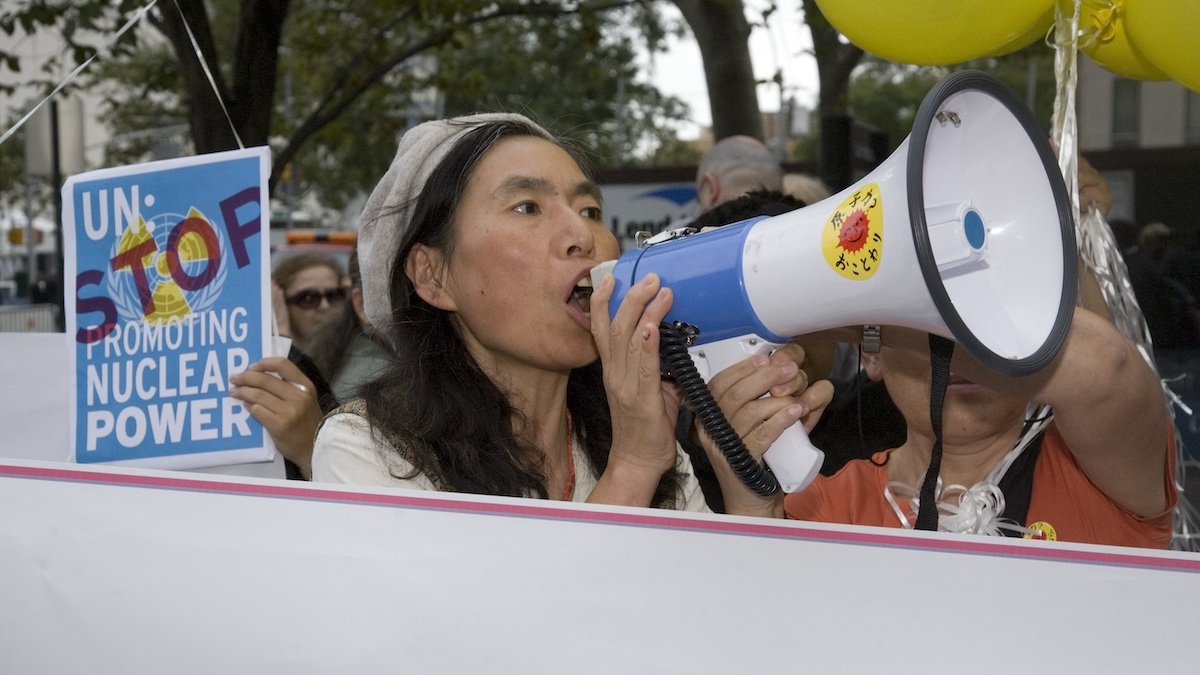
Recovery of the state or recovery of the people?
By Mia Winther-Tamaki
The Japanese people and landscapes still feel the unending impacts of a nuclear catastrophe that occurred a dozen years ago. Thousands of black bags litter the Fukushima exclusion zone enclosing radioactive earth and rubbish with nowhere to go. Japan has begun releasing millions of tons of radioactive wastewater into the sea. The death and destruction of the earthquake and tsunami — a tragedy in itself — was compounded by nuclear calamity.
On March 11, 2011, a powerful undersea earthquake unleashed the deluge that flooded the Fukushima Daiichi Nuclear Power Plant run by Tokyo Electric Power Company (TEPCO), causing the release of deadly nuclear radiation. Invisible and moving uncontrollably, radiation continues to contaminate soil, air, water and lives it has touched. The Japanese government was responsible for not only creating the circumstance of neglect that caused the nuclear meltdown, but also for exacerbating the impacts of nuclear fallout through a delayed and opaque response that downplayed the severity of the catastrophe.
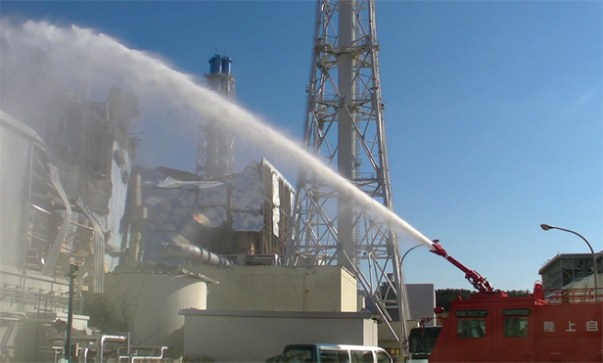
Though the crisis was triggered by natural disasters, the nuclear catastrophe that followed was profoundly man-made. The late geographer Neil Smith describes the “unnaturalness” of disasters like Fukushima’s: “The contours of disaster and the difference between who lives and who dies is to a greater or lesser extent a social calculus.”
Following the nuclear disaster, Japan shifted to a necessary post-disaster survival and recovery strategy that can be characterized by the term “resilience,” defined by the United Nations Office for Disaster Risk Reduction as the ability to “resist, absorb, accommodate to and recover from the effects of a hazard in a timely and efficient manner, including through…preservation and restoration…” However, resilience was invoked and experienced in two distinct forms in the aftermath of Fukushima: recovery of the state and recovery of the people.
Resilience, a term originating from ecology to describe species returning to “equilibrium” after an environmental shock, has become a frequently used buzzword across many disciplines. Urban geographer Tom Slater discusses the way resilience discourse is neatly folded into neoliberal nostrums by evoking the evolutionary “naturalness” of biological processes, framing market-driven agendas as inevitably interlinked with ongoing cycles of adaptive growth.
Read More Beyond Nuclear International