 Beyond Nuclear International
Polish monk could face death penalty

Grzegorz Gawel arrested in Belarus on nuclear espionage charges, reports Nuclear Resister
UPDATE 4/28/2026. FREED! Grzegorz Gaweł has been released and is safely back in Poland.
A 27-year-old Polish Carmelite monk now sits in a Belarusian prison, facing a possible death sentence on suspicion of espionage after reportedly being found with a photocopy of a classified document related to the “Zapad-2025” war games involving the Russian nuclear weapons now stationed in Belarus.
On September 4, 2025, when Grzegorz Gawel was visiting the town of Lepel, north of Minsk, officers of the Belarusian State Security Committee (KGB) followed the monk into a town park and took video as he met an unidentified Belarusian man who handed him a sheaf of papers. Video of Gawel’s arrest minutes later was soon broadcast on state television to support the charge that he sought the sensitive papers on behalf of Polish state intelligence agencies. It was alleged he had “contacted a Belarusian citizen via social media and offered to cooperate with the Polish special services.”

Belarus authorities claimed Gawel enticed the man with coffee and chocolates, and said they had seized cash in multiple different currencies, bank cards, SIM cards, a rosary and “other religious items” from him. The unidentified Belarusian man was also arrested, but his fate is unknown.
Polish authorities denied they use clergy as spies, and called the arrest yet another provocation of a NATO member by Belarus, Russia’s dependent ally and recent host of Russian tactical nuclear weapons. Polish Catholic priests have been arrested in recent years and jailed in Belarus on various political charges.
Read MoreArtificial intelligence will not revive the nuclear industry

On the contrary, we need renewable energy and natural intelligence, writes Stéphane Lhomme
The current boom in artificial intelligence is accompanied by a massive increase in energy and water consumption, and, according to what we are told, this phenomenon is only just beginning and will grow exponentially.
However, far from taking measures to stop or at least slow down this phenomenon, industrial and political leaders are instead competing with announcements and decisions to support it. As a result, various countries, including France, are trying to attract data centers by promising their owners, mainly the famous GAFAM (Google, Amazon, Facebook, Apple, Microsoft), to provide them with cheap and, above all, “green” electricity.
France is offering its nuclear power because, as everyone knows, nuclear power is “clean”… if we are willing to forget the devastation caused by uranium mines, the massive radioactive, chemical, and thermal discharges from power plants into rivers and oceans, radioactive waste, and the occasional contamination of an entire country or continent (during disasters such as Fukushima and Chernobyl).
During the World Nuclear Energy Exhibition (WNE) held in Paris from November 4 to 6, 2025, the vast majority of the media reported the countless announcements about a supposed “return to favor of nuclear power,” which, however, is just as illusory as the “great return of nuclear power” announced in the early 2000s – already accompanied by much fanfare at the time – by the same media outlets and sometimes the same journalists, who are taking advantage of the general amnesia of our “information” societies.
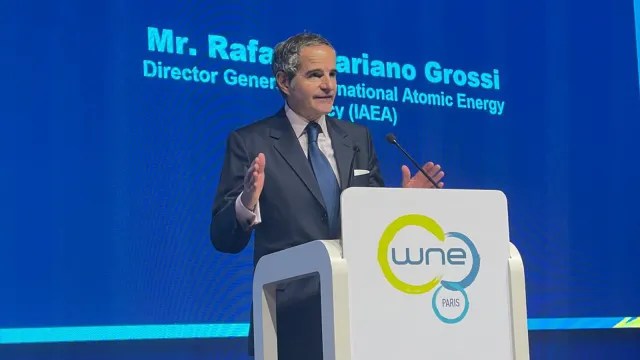
Despite the efforts of the high priestess of nuclear power at the time, Ms. Lauvergeon, revered by most of the media (always the same ones!) before leading her company Areva into bankruptcy (we are still waiting for the investigations that have been ongoing for 15 years to result in a trial), there was no “great comeback.”
Read MoreL’Intelligence artificielle ne va pas relancer l’industrie nucléaire
Au contraire, nous avons besoin d’énergies renouvelables et d’intelligence naturelle, ecrit Stéphane Lhomme
L’essor actuel de l’Intelligence artificielle s’accompagne d’une augmentation massive de la consommation d’énergie et d’eau et, à ce que l’on nous raconte, ce phénomène n’en est qu’à son début et va s’amplifier de façon exponentielle. Or, loin de prendre des mesures pour stopper ou au moins freiner ce phénomène, les dirigeants industriels et politiques rivalisent au contraire d’annonces et de décisions pour l’accompagner.
C’est ainsi que divers pays, dont la France, tentent d’accueillir les “data centers” en promettant à leurs propriétaires, principalement les fameux Gafam (Google, Amazon, Facebook, Apple, Microsoft) de leur fournir une électricité peu chère et surtout “écologique”.
La France propose ainsi son électricité nucléaire car, comme chacun sait, le nucléaire est “propre”… si l’on veut bien oublier les ravages des mines d’uranium, les rejets massifs radioactifs, chimiques et thermiques des centrales dans les rivières et les océans, les déchets radioactifs, et de temps en temps la contamination d’un pays ou d’un continent entier (lors de catastrophes comme Fukushima et Tchernobyl).
A l’occasion du Salon mondial du nucléaire civil (WNE) qui s’est tenu à Paris du 4 au 6 novembre 2025, la grande majorité des médias a relayé les innombrables effets d’annonce sur un prétendu “retour en grâce du nucléaire” qui, pourtant, est tout aussi fantomatique que le “grand retour du nucléaire”annoncé au début des années 2000 (5) – avec déjà à l’époque autant de tambours et trompettes – par les mêmes médias et parfois les même journalistes, qui profitent de l’amnésie générale de nos sociétés de l’ “information”.
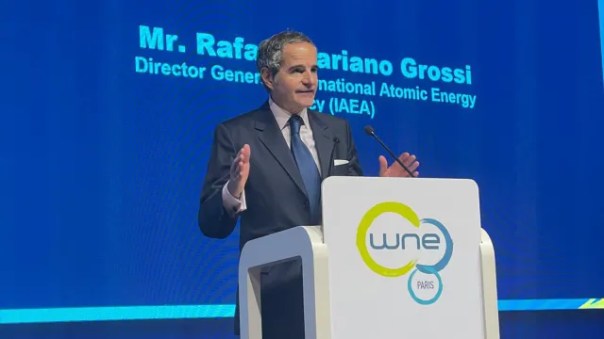
Malgré les efforts de la grande prêtresse atomique de l’époque, Mme Lauvergeon, vénérée par la plupart des médias (toujours les mêmes!) avant de mener son entreprise Areva à la faillite (on attend toujours que les instructions en cours depuis 15 ans aboutissent à un procès ), il n’y eut aucun “grand retour”.
Produisant 17,1% de l’électricité mondiale en 2001, le nucléaire a depuis vu sa part continuellement baisser pour passer sous les 10% en 2020 et sous 9% en 2024 (8,97% exactement). Un véritable effondrement en guise de “retour en grâce”. Mais il faudrait croire que cette fois-ci, portée par les Gafam et leurs carnets de chèques illimités, l’industrie nucléaire va réellement vivre un âge d’or (ou plutôt de plutonium). Regardons donc quelques unes des annonces tonitruantes de ces derniers mois.
Read MoreThe New Nuclear Fever, Debunked
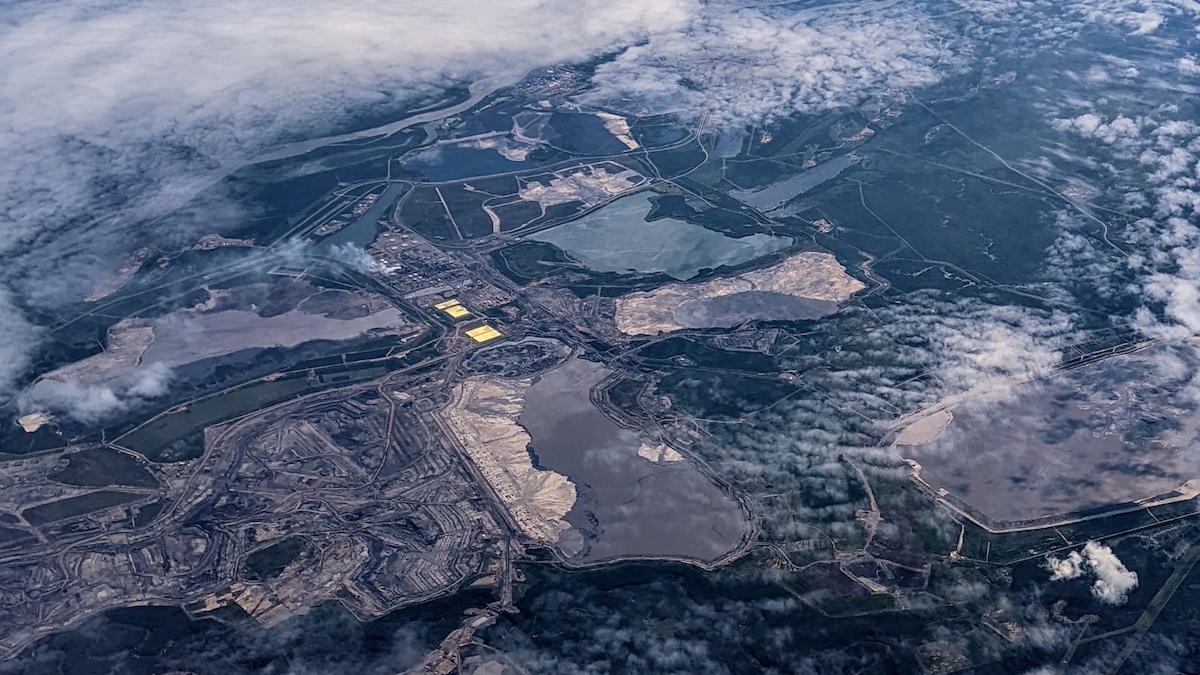
Politicians who push small reactors raise false hopes that splitting atoms can make a real dent in the climate crisis, writes Andrew Nikiforuk in the Tyee
Premier Danielle Smith proposes that nuclear power could be “Alberta’s next energy frontier.” To that end, she recently created a “nuclear engagement survey panel” to figure out how to propel economic growth in her province.
According to Smith, nuclear generators will not only help power scores of artificial-intelligence data centres in rural Alberta but also help to double oil production from the oilsands.
The promise of nuclear power “means affordable power, reliable supply and low emissions that strengthen our grid while fuelling growth,” said the premier. “It means new jobs and opportunities for Alberta workers and communities.”
The province is specifically betting on small modular reactors, or SMRs, because they, as a United Conservative Party release put it, “have the potential to supply heat and power to the oilsands, simultaneously reducing emissions and supporting Alberta’s energy future.”
Smith’s government has already given the oilsands giant Cenovus Energy $7 million to study the matter.
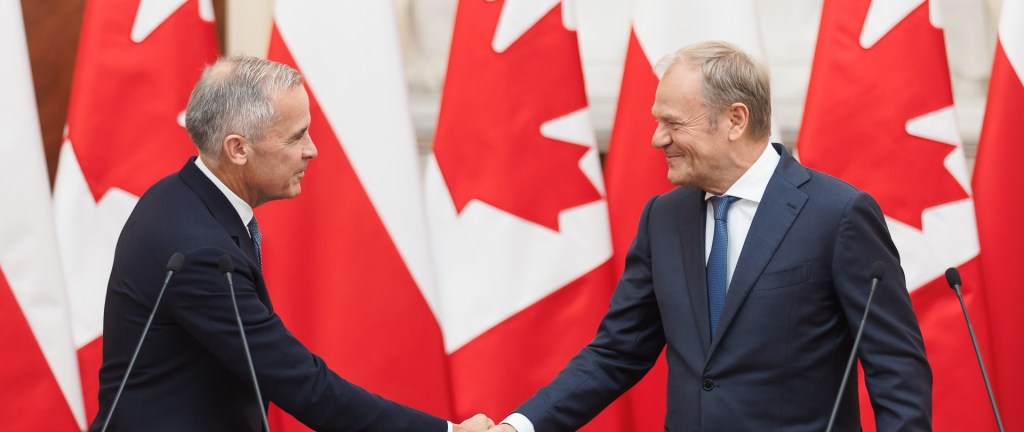
Smith isn’t the only premier with nuclear ambitions. New Brunswick, Saskatchewan and Ontario all think the future lies in splitting atoms. Prime Minister Mark Carney has thrown the weight of the federal government behind Ontario’s Darlington New Nuclear Project. So far the feds have invested nearly $1 billion to advance this experimental small modular reactor.
Read MoreAll the president’s yes-men?

The NRC commission looks poised to rubber-stamp “Cowboy Chernobyl”, write Paul Gunter and Linda Pentz Gunter
Donald Trump loves a yes-man. What we are now waiting to learn is just how many of those yes-men are sitting on the US Nuclear Regulatory Commission (NRC).
The agency was ordered late last year by the then White House and Elon Musk-created US Department of Government Efficiency, to effectively accelerate and “rubber stamp” reactor license approvals in order to fulfill the White House’s reckless directive, contained in four executive orders issued last May, to license new reactors at lighting speed.
On December 1, the NRC proudly announced that its staff had completed their final safety evaluation for the Bill Gates company TerraPower’s small modular reactor design in record time, in keeping with the make haste mandate from the White House. The NRC staff had concluded that “there are no safety aspects that would preclude issuing the construction permit.”

Jeremy Groom, acting director of the NRC’s Office of Nuclear Reactor Regulation, even bragged how the NRC staff “finished our technical work on the Kemmerer review a month ahead of our already accelerated schedule, as we aim to make licensing decisions for new, advanced reactors in no more than 18 months.”
What we are now waiting to find out, likely sometime this month, is whether the five NRC commissioners will indeed grant a construction license to a patently dangerous reactor design (we are using the term “dangerous” here under their own definition since all of us already know that every nuclear reactor design is inherently dangerous and the so-called new ones haven’t changed that reality.)
Who will be calling those shots, however, has now been significantly reshuffled by the Trump administration.
Read MoreNavajo lands at risk
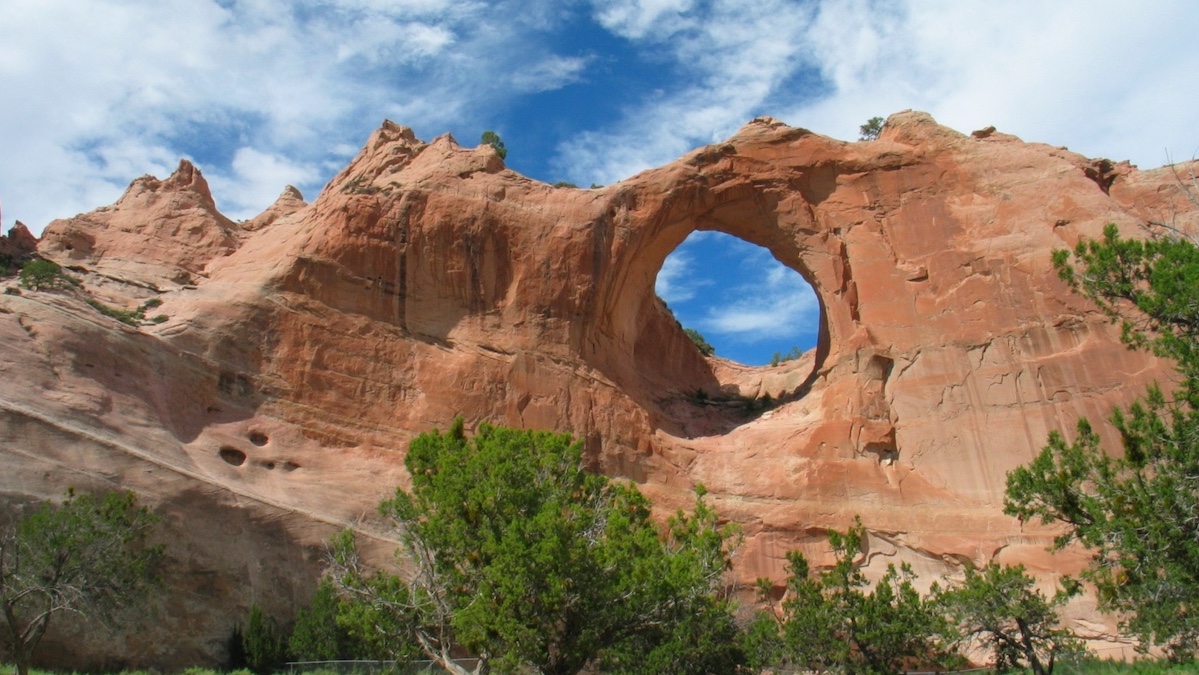
New proposal is extraction not remediation, warns the Navajo group, Dooda Disa
More than 500 abandoned uranium mines (AUMs) contaminate the Navajo Nation, and genuine cleanup is urgently needed. But cleanup must be grounded in strict environmental oversight, transparency, and full community consultation. A proposal now being advanced by Navajo Nation EPA (NNEPA) Executive Director Stephen Etsitty, in partnership with DISA Technologies, is being marketed as AUM remediation when DISA’s High-Pressure Slurry Ablation (HPSA) system does not clean up Navajo land—it extracts uranium for commercial sale while leaving radioactive waste behind.
Etsitty told the Albuquerque Journal he was “really excited” that the process could “accelerate the cleanup” and said “the Navajo Nation is investing roughly $3 million” in a commercial-scale test —all of which is misleading. Even calling HPSA “remediation” is whitewashing, because the technology is strictly a uranium-extraction process.
On January 6, 2025, he introduced Resolution ENAC-12-2025-049 at the Eastern Navajo Agency Council (6) that asks the Navajo Nation to enter into a commercial partnership with DISA in order to apply for DOE critical-minerals grants—an extraction initiative, not a cleanup program. It provides no site information, no environmental safeguards, and no cost details, yet seeks approval for a commercial partnership structured around uranium extraction rather than cleanup.

The Truth About DISA and HPSA
In 2023, the EPA commissioned Tetra Tech to test HPSA on waste from three Navajo AUM sites: Old Church Rock Mine (OCRM), Quivira Church Rock-1, and the Cove Transfer Station (CTS-2). Over two weeks, small batches of contaminated waste were run through a pilot-scale HPSA unit. The system blasts rock with high-pressure water to create slurry, then separates it into a coarse fraction and a fines fraction. The fines—about 17% of the material—contain 80–95% of the uranium and radium that DISA intends to ship to the White Mesa Mill and sell to Energy Fuels. The coarse fraction is waste that remains radioactive and may be left onsite, buried, or sent to a disposal site that does not exist.
Read More
