 Beyond Nuclear International
40 years on we are still asking the wrong questions and getting a lot of wrong answers, writes Linda Pentz Gunter
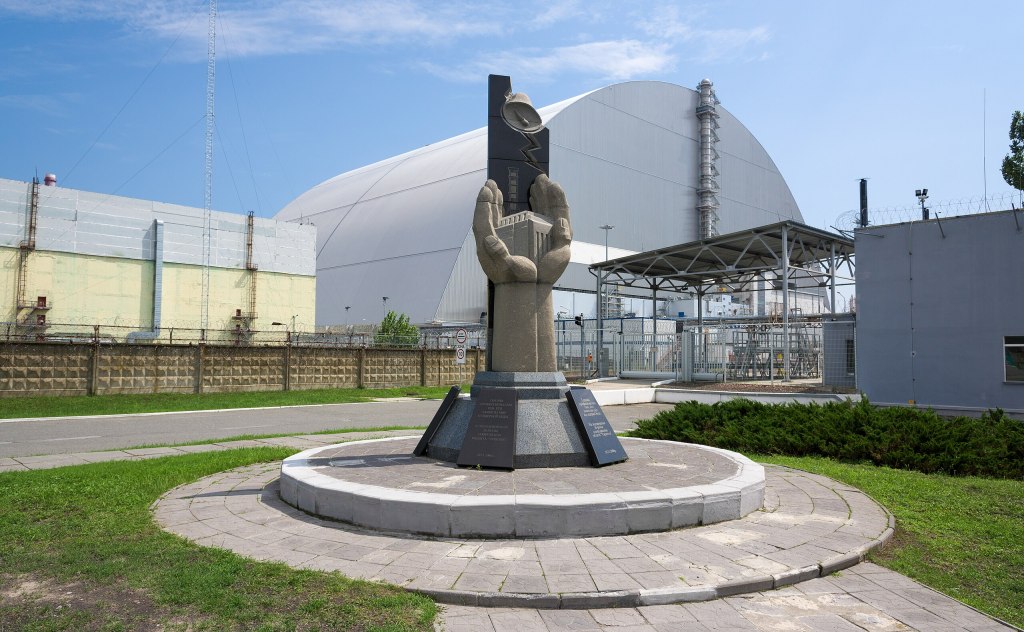
Probably the most heinous crime, other than the avoidable accident itself and its immediate coverup, is the way that the Chornobyl (Ukrainian equivalent spelling) nuclear power disaster in Ukraine, 40 years old this week, has been used to downplay and normalize the long-lasting health impacts caused by that April 26, 1986 explosion.
Still today, the myth is repeated that “no one died” — meaning no one in the public. Instead, we are told over and over that it was only a handful of liquidators, sent in to deal with the immediate crisis, who were killed by the massive release of radiation resulting from the reactor explosion.
And still today, in part because of that myth, now so firmly cemented in the public and media narratives around the Chornobyl disaster, the true health effects of even just routine reactor operation, or the exposures suffered by communities living around active or abandoned uranium mines, or by those working in uranium enrichment or fuel fabrication facilities, are discounted and dismissed.
Worse still, we are now facing a concerted effort by the Trump administration to emasculate already weak radiation protection standards, once again ignoring females who are most vulnerable to harm, and especially pregnant women, babies and children.
Through yet another executive order accelerating nuclear power expansion while sparing the industry the costs it should incur to guarantee safety (an impossibility anyway), the White House wants to abandon the long-held Linear No Threshold (LNT) model.
LNT holds that radiation damage increases with higher exposures, and that harm is posed by all radiation exposure no matter how small. But LNT itself is already unsatisfactory, since health studies continue to indicate that more — not less — protection is needed for non-cancer impacts, and for radionuclides taken internally, than is already provided by applying LNT.
This is what makes the perpetual focus on “who died” when it comes to major nuclear accidents, fundamentally the wrong question. We will likely never know who or how many died as a result of the Chornobyl disaster. Registries and statistics weren’t kept, people moved around, and, as is so often the case, illnesses were ascribed to other causes. Certainty is hard to achieve.
Nevertheless, perhaps one of the most important pieces of research on the health realities of the Chornobyl aftermath was done by historian Kate Brown in her book Manual For Survival. A Chernobyl Guide to the Future. It looks like a “hefty tome”, but it is anything but. Despite being nonfiction, it reads like a page-turning thriller and some of what she uncovers is eye-stretching. And, of course, by saying “uncovers,” we immediately understand that this was indeed a cover-up, first by the then Soviet Union, and then compliantly perpetuated by the United States and other western allies eager to avoid any shocking realization by the general public that nuclear power technology is phenomenally dangerous and human beings are liable to lose control of it, with disastrous results.
This returns us to the question about the protracted harm that can be caused if something goes very badly wrong at a nuclear power plant. And it returns us to dispensing with the wrong question, which is “how many people died?”
That wrong question, a favorite of headline writers and spin doctors, sets us on a perpetual path to dispute. The health figures, especially fatalities, have become the most misrepresented statistic related to the Chornobyl disaster. But focusing only on fatalities also serves to diminish the disaster’s impact. Nuclear power plant accidents often do not kill people instantly and sometimes not at all. It can take years before fatal illnesses triggered by a nuclear accident take hold. This creates a challenge in calculating just who eventually died due to the accident and who suffered non-fatal consequences.
Exposure to ionizing radiation released by a nuclear power plant (and not just from accidents but every day) can cause serious non-fatal illnesses as well. These should not be discounted. Arguably, neither should post-accident psychological trauma. Nuclear power plant accidents can and should be prevented. The only sure way to do so is to close them all down. Otherwise we risk another Chornobyl, or Three Mile Island, or Fukushima.
In our Thunderbird newsletter of 2018, we examined some of the key myths around the impacts of the Chornobyl disaster now 40 years ago. Below, is a synopsis of some of the key points, as they bear repeating and remain perpetually true. The full document can be read here.
What happened?
On April 26, 1986, Unit 4 at the Chornobyl nuclear power plant exploded. That explosion and the resulting fire, lofted huge amounts of radioactivity into the atmosphere. Unit 4 was relatively new, having only been in service for just over two years. The accident occurred during what should have been a routine test to see how the plant would operate if it lost power. The test involved shutting down safety systems but a series of human errors, compounded by design flaws, instead set in motion a catastrophic chain of events.
After shutting down the turbine system that provided the cooling water to the reactor, the water began boiling and workers desperately tried to re-insert control rods to slow down the nuclear reaction. But the rods jammed and control of Unit 4 was irrevocably lost. The explosion and fire — which took five months to put out — dispersed at least 200 times more radioactivity than that produced by the Hiroshima and Nagasaki bombs. The fallout contaminated several million square kilometers of land in the former Soviet Union and in Europe and was also detected in the US.
Soviet authorities were slow to react. The accident was first detected by monitors in Sweden. The nearby city of Pripyat was not evacuated immediately. By the time they did so, radioactivity levels were 60,000 times higher than “normal”.
The financial cost of the accident, while difficult to calculate given the many unknowns, is estimated to be in the region of $700 billion and is expected to keep rising.
The Liquidators
The Chornobyl liquidators were dispatched to the stricken nuclear plant in the immediate aftermath, as well as for at least the subsequent two years, to manage and endeavor to “clean up” the disaster. They included military as well as civilian personnel such as firefighters, nuclear plant workers and other skilled professionals.
While estimates of the number of liquidators varies, the generally accepted figure is around 800,000. However, evaluating their fate has been difficult. Only a small portion of them were subject to medical examinations.
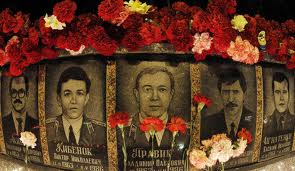
Yet, by 1992 it was estimated that 70,000 liquidators were invalids and 13,000 had died. These estimates rose to 50,000 then to 100,000 deaths among liquidators in 2006. By 2010, Yablokov et al. estimated a death toll of 112,000 to 125,000 liquidators.
Even the Russian authorities admit findings of liquidators aging prematurely, with a higher than average number having developed various forms of cancer, leukemia, somatic and neurological problems, psychiatric illnesses and cataracts.
The UN Office for the Coordination of Humanitarian Affairs found a statistically significant increase of leukemia among Russian liquidators who were in service at Chernobyl in 1986 and 1987.
General populations inside and outside the former Soviet Union
As with the liquidators, tracking the health of general populations exposed to the plume pathway of Chornobyl has been problematic. Within the Soviet Union, people moved away and neither they nor many living in other affected countries were tracked or monitored. While countless numbers may have died from their Chornobyl-related illnesses, equal or even greater numbers may have survived with debilitating or chronic physical as well as mental illnesses caused by the accident.
Establishing exact numbers may never be possible. Media reports often rely on the 2003-2005 Chernobyl Forum report produced by the nuclear promoting International Atomic Energy Agency. The agency ignored its own data that indicated there would be 9,000 future fatal future cancers in Belarus, Russia and Ukraine, claiming there would be no more than 4,000. Both numbers are gross underestimations. The report focused only on the most heavily exposed areas in making its predictions. It ignored the much larger populations in the affected countries as a whole, and in the rest of the world, who have been exposed to lower but chronic levels of radiation from Chornobyl.
In contrast, a comprehensive analysis by the late Soviet scientist, Alexey Yablokov and colleagues, examined more than 5,000 Russian studies. They concluded that almost a million premature deaths would result from Chornobyl. Meanwhile, the TORCH report (The Other Report on Chernobyl), by Dr. Ian Fairlie, predicts between 30,000 and 60,000 excess cancer deaths worldwide due to the accident.

More than half the Chornobyl fallout landed outside of the Ukraine, Belarus and Russia — in Europe, Asia and North America. Fallout from Chornobyl contaminated about 40% of Europe’s surface. Immediately after the accident, thyroid cancer was particularly rampant in Belarus, Ukraine and Russia, where no prophylactic remedy in the form of potassium iodide pills was offered. Consequently, as Baverstock and Williams found in 2006, “by far, the most prominent health consequence of the accident is the increase in thyroid cancer among those exposed as children . . . particularly in children living close to the reactor.”
In contrast, Poland, where potassium iodide was distributed, experienced relatively low rates of thyroid cancers. While thyroid cancer is considered one of the more treatable kinds of cancers, this does not mean it should be viewed as an acceptable consequence of a nuclear power plant accident. Such diseases — especially among children — impact emotional, social, and physical wellbeing. In the former Soviet Union, those operated on bear a scare referred to grimly as the “Chornobyl necklace.”
Dr. Wladimir Wertelecki, a physician and geneticist, has conducted research, particularly focused on Polissia, Ukraine. There he found clear indications of altered child development patterns, or teratogenesis. Wertelecki noted birth defects and other health disturbances among not only those who were adults at the time of the Chornobyl disaster, but their children who were in utero at the time and, most disturbingly, their later offspring.
Important research has also been conducted on psychological effects. Pierre Flor-Henry and others examined some of the psychological disorders resulting from Chornobyl and found a clinical pathology related to radiation exposure. Flor-Henry found that schizophrenia and chronic fatigue syndrome among a high percentage of liquidators were accompanied by organic changes in the brain. This suggested that various neurological and psychological illnesses could be caused by exposure to radiation levels between 0.15 and 0.5 sieverts.
There are of course many other non-cancerous diseases caused by nuclear accidents that release radioactivity. A peak in Down Syndrome cases was observed in newborns born in 1987 in Belarus, one year after the Chornobyl nuclear accident. This phenomenon has been found around other nuclear sites. Abnormally high rates of Down Syndrome were found in the Dundalk, Ireland population possibly tied to the operation of the Sellafield nuclear waste reprocessing plant across the Irish Sea in Cumbria, England.
Read full Thunderbird: Chornobyl: The Facts.
Linda Pentz Gunter is the Executive Director of Beyond Nuclear and writes for and edits Beyond Nuclear International. She is the author of the book, No To Nuclear. Why Nuclear Power Destroys Lives, Derails Climate Progress And Provokes War, published by Pluto Press. Any opinions are her own.
Headline photo: Jorge Lascar/Creative Commons.


Pingback: Remembering Chornobyl | Nuclear Information
Pingback: Remembering Chornobyl at 40; The Harm Continues « Concerned Citizens for Nuclear Safety
Pingback: Remembering Chornobyl – CounterPunch.org – Theothernews
Pingback: Remembering Chornobyl « nuclear-news