 Beyond Nuclear International
The White House plans to distribute plutonium to private industry players developing already risky new reactors, writes Linda Pentz Gunter
In yet another alarming development coming out of the White House, private corporations proposing risky and untested startup reactors are to be given access to plutonium, the trigger component in a nuclear bomb.
A May 27 exposé in the New York Times revealed that the Trump administration is proposing to allow private entities access to Cold War era leftover plutonium in order to convert it into fuel for risky new reactors that have yet to pass any kind of rigorous safety analysis.
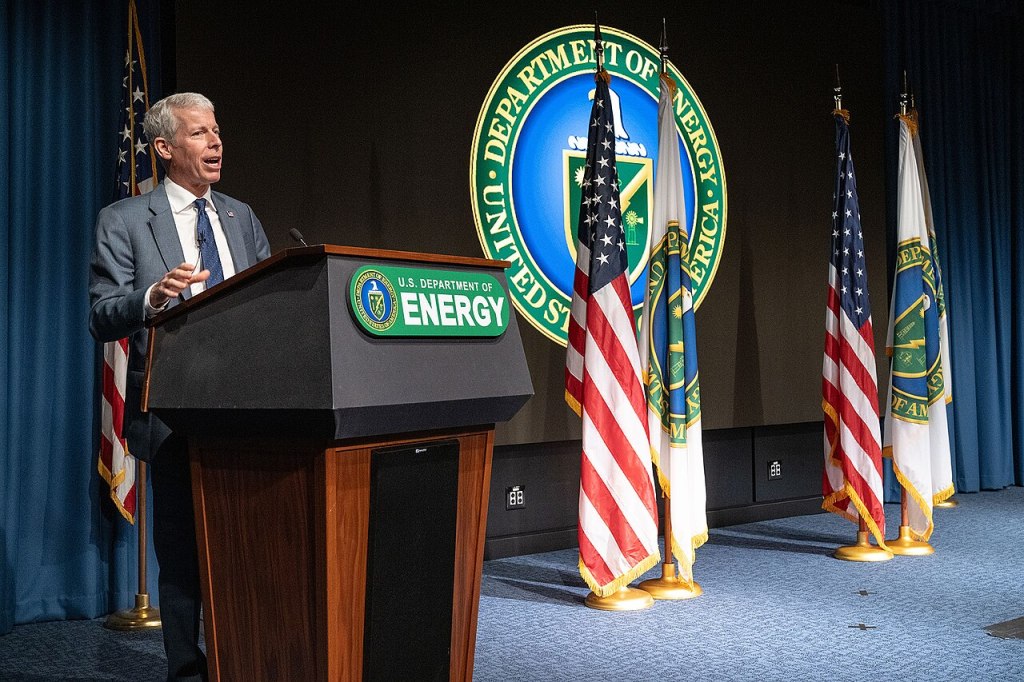
The move marks a dangerous commercialization of plutonium and would treat plutonium like a commodity with value, instead of as a long-lived lethal waste. One of the first companies to benefit is Oklo, on whose board the current Energy secretary, Chris Wright, used to sit and whose stock rose on the announcement.
The other companies involved, according to reporting in the Times, are Standard Nuclear, Exodys Energy, SHINE Technologies and Flibe Energy.
The plutonium would come from a surplus stockpile of dismantled nuclear warheads. Previous efforts to use plutonium as reactor fuel collapsed due to extreme expense and technical challenges.
Part of the impetus comes from the need of some of the new reactor designs to use High Assay Low Enriched Uranium Fuel, known as HALEU and which is predominantly manufactured by Russia. Oklo, and its European partner, Newcleo — a nuclear “innovation”company registered in France — claim they can produce reactor fuel from surplus plutonium faster than waiting for HALEU production plants to get up and running in the United States. This, argues Ed Lyman, a physicist at Union of Concerned Scientists, is simply nonsense.
“The idea that plutonium could actually be used more quickly than uranium fuel is absurd because of the complexity, the attention to safety and security that a plutonium fuel facility would actually require,” Lyman said, speaking during a recent Capitol Hill briefing on the risks and unaffordability of new nuclear projects and hosted by Beyond Nuclear and Nuclear Information and Resource Service.
Given its sole use as the key component of atomic bombs, any use of plutonium, especially in the civil sector, would require extreme security measures. Placing this material in the hands of private multinational corporations not only sets a dangerous precedent but, “raises serious weapons proliferation concerns, makes little economic sense, and may adversely affect the nation’s defense posture,” wrote three Democratic members of Congress — Don Beyer of Virginia, John Garamendi of California and Ed Markey of Massachusetts — in a letter last September to the Department of Energy.
“Taking plutonium, surplus plutonium, and handing it to industry for fuel,” said longtime nuclear nonproliferation policy expert Sharon Squassoni, represents an ominous crossover from the civil into the military nuclear sector. “In terms of the military versus civilian line blurring, why is that so important? Because if it’s not civilian, you don’t need NRC regulation,” she said during remarks alongside Lyman and others during the Hill briefing. In other words, the new startup reactors to be marketed commercially, will be able to sidestep any safety regulations required by the US Nuclear Regulatory Commission.
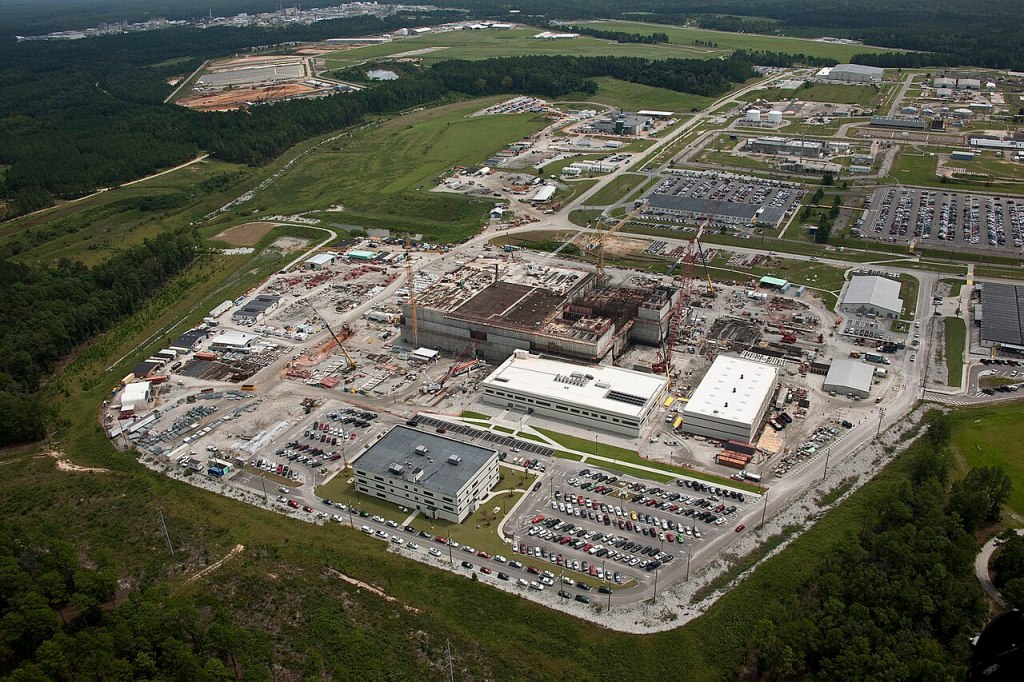
The plan to build a plant to fabricate a fuel blend known as mixed-oxide or MOX at the Savannah River Site in Aiken, SC, using uranium and surplus plutonium, eventually collapsed, partially due to the ever ballooning price tag, which reached $50 billion before the project was abandoned.
Part of the extreme costs were due to the myriad technical challenges and the fact that, unlike in France, where a number of reactors can use a small proportion of MOX fuel, no existing US reactors at the time were designed to do so.
MOX also does not materially reduce the plutonium stockpile significantly, since more plutonium is generated during the fissioning in MOX reactors. That waste fuel cannot again be reprocessed — which separates out the plutonium —or repurposed for fresh MOX fuel.
Reprocessing itself is a highly expensive and polluting procedure, resulting in greater volumes of radioactive waste — much of it released into the environment — even as it reduces the levels of radioactivity within the waste. As a result of reprocessing at the Sellafield site in the UK, the Irish Sea is now considered the most radioactive sea in the world, due to the liquid radioactive discharges from the plant.
The Baltic Sea remains the most heavily contaminated specifically with cesium-137, due to the fallout from the 1986 Chernobyl nuclear disaster. But as the research points out, “While the Baltic Sea was unintentionally contaminated due to global fallout after the accident in the Chernobyl nuclear powerplant in 1986, the Irish sea was intentionally used for low level liquid radioactive waste discharges from the Sellafield nuclear reprocessing facility.”
Because reprocessing is designed to separate out the plutonium from the uranium in irradiated reactor fuel, this has resulted in massive piles of “surplus” plutonium at both the French (almost 115 tonnes) and the UK (140 tonnes) reprocessing sites, the latter of which is now closed.
In addition, health studies around both sites have found leukemia clusters, particularly among children.
Reprocessing, originally carried out at the Savannah River Site, was abolished in the US under the Ford administration over proliferation concerns.
A definitive analysis of the challenges of using surplus plutonium commercially can be found in “Managing Spent Fuel from Nuclear Power Reactors. Experience and Lessons from Around the World”, published by the International Panel on Fissile Materials, and edited by Harold Feiveson, Zia Mian, M.V. Ramana and Frank von Hippel.
Reuters had originally broken the story last August that the Trump administration was preparing to hand out free plutonium to ingenue reactor developers. “Trying to convert this material into reactor fuel is insanity. It would entail trying to repeat the disastrous MOX fuel program and hoping for a different result,” Edwin Lyman, a nuclear physicist at the Union of Concerned Scientists, told Reuters at the time.
More than 20 years ago, the now closed Nuclear Control Institute, for which Lyman used to work, called out the dangers of using plutonium in the commercial sector.
“Converting warhead plutonium into fuel for generating electricity would stimulate commerce in this extremely toxic, weapons-usable material,” the institute said. “Fifteen pounds of plutonium is enough for one atomic bomb. A few specks of it inhaled into the lungs causes cancer. Commerce in many tons of plutonium raises risks of theft by terrorists and outlaw states, and of aggravating the consequences of reactor accidents.”
NCI warned then of what would become the intolerably high costs of making MOX. “The MOX approach would take decades to complete, require billions of taxpayers dollars in subsidies to electrical utility companies, and promote plutonium fuel industries in other countries,” NCI said.
“MOX use, therefore, has a large and powerful constituency that exaggerates the benefits and conceals the dangers of using plutonium as fuel to generate electricity.”
NCI advocated then, as environmentally-, economically- and security-minded organizations do now, that the only course for surplus plutonium is “directly disposing of the plutonium as waste.”
Linda Pentz Gunter is the Executive Director of Beyond Nuclear and writes for and edits Beyond Nuclear International. She is the author of the book, No To Nuclear. Why Nuclear Power Destroys Lives, Derails Climate Progress And Provokes War, published by Pluto Press. Any opinions are her own.
Headline photo of Plutonium pyrophoricity (spontaneously burning in contact with air, causes it to glow like an ember) by Los Alamos National Laboratory/Wikimedia Commons.


Pingback: Roll up, roll up, get your plutonium here! - Nuclear Costs