 Beyond Nuclear International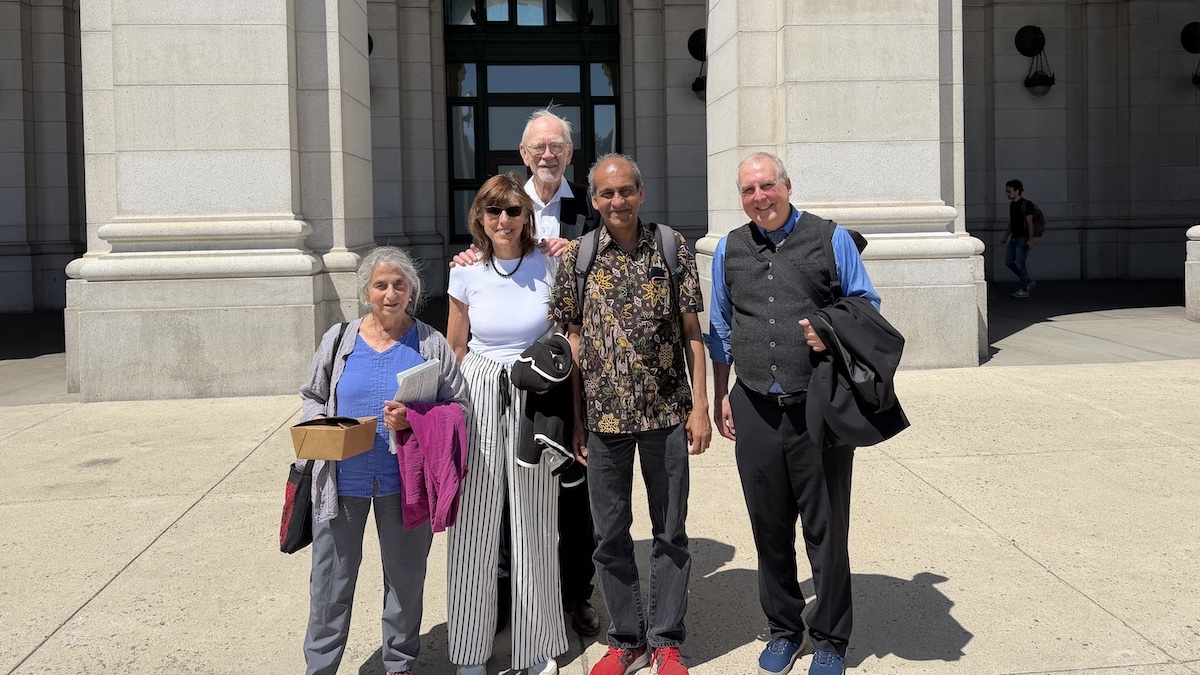
Beyond Nuclear honors an activist who understands that acheiving peace must mean for everyone, writes Linda Pentz Gunter
When Greta Thunberg, still best known as a young Swedish climate activist, made her first voyage with the Freedom Flotilla attempting to reach Gaza with humanitarian aid, a reporter not unsurprisingly asked her what she was doing there.
Ever on point, Thunberg responded: ”We cannot have climate justice without social justice. The reason I am a climate activist is not because I want to protect trees. I’m a climate activist because I care about human, planetary well-being — and those are extremely interlinked.”
For those of us who work on nuclear weapons or nuclear power or both, we, too, understand that this is an issue deeply interlinked to planetary wellbeing. We have to focus on a nuclear-free world, but we also know that this mission is part of a broader one for climate, for peace and for justice, and that we cannot fight the nuclear threat in isolation.
Accordingly, Beyond Nuclear chose as its winner this year of the Dr. Judith H. Johnsrud Unsung Hero Award, someone who understands this fully.
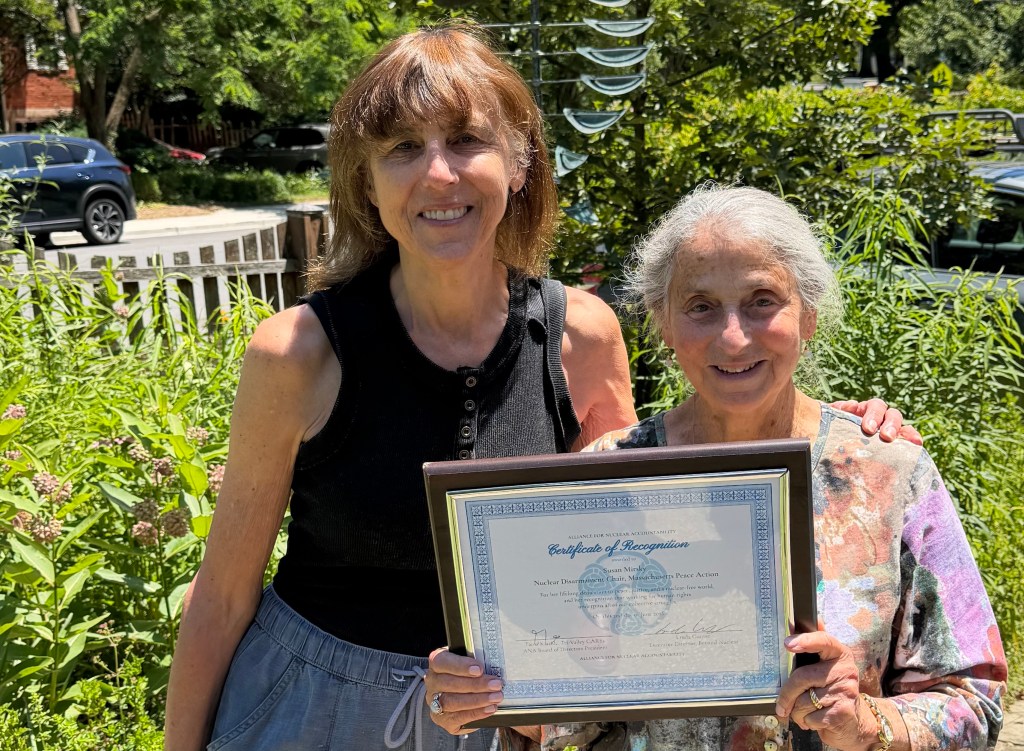
Susan Mirsky has been organizing for peace for a very long time — since high school and, for all we know, before that — when she organized a local Youth Committee on Sane Nuclear Policy in Essex County, New Jersey where she grew up.
Since then, she has gone on to embrace — and work for — a multitude of causes directly or indirectly related to peace, nuclear abolition and justice, all of which, as Thunberg pointed out, are intimately interrelated.
Now living in Massachusetts, Mirsky currently serves as Board Member and Nuclear Disarmament Chair for Massachusetts Peace Action, and as a founding member of Newton Dialogues on Peace and War.
The Johnsrud Award is presented by Beyond Nuclear each year as part of the annual Alliance for Nuclear Accountability awards held in conjunction with ANA’s DC Days of visits to legislative offices on Capitol Hill. The Award is named in memory of former Beyond Nuclear board member and stalwart anti-nuclear activist, Judy Johnsrud.
“Organizing for peace and social justice has been a part of my being,” said Mirsky, now in her early eighties. “Early on I was taught to understand that I was connected to all people everywhere — all beings, all of nature, that if one person was not free, I/we were not free.” This lesson gave her “a sense of individual responsibility and thus agency to make change,” she said.
Mirsky’s is a familiar voice in the anti-nuclear movement, often as the gentle moderator of webinars, or the in-person host of events — including in her own back garden — calling out the reckless expansion of nuclear power; the need to abolish nuclear weapons; demanding an end to the genocide in Gaza and the wars in Ukraine and Iran; seeking justice for Cuba; educating the Haitian diaspora on the threat of nuclear weapons; and helping to create greater understanding about China, among other topics.
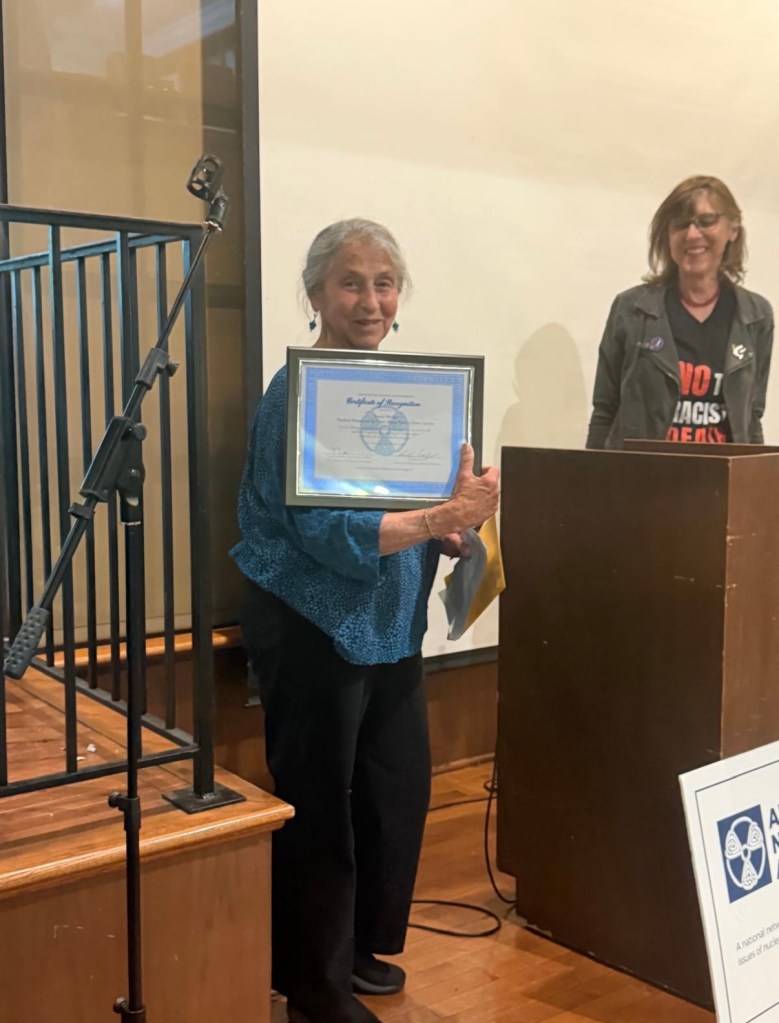
“I have always sought inclusion of other groups and people,” says Mirsky, who believes that “to make change in this society, which is based on corporate and political money, power and greed, we need to articulate what is most important for all people and enable them to take action however big or small to effect change.”
While Mirsky has had a primary focus on peace and nuclear weapons abolition through her work with MAPA, she has always not only understood the connection to nuclear power, but actively engaged in opposition to its continued and expanded use.
Most recently, MAPA has joined the Commonwealth Coalition for the Environment and Safe Energy, a Massachusetts-wide coalition of groups working to stop the state of Massachusetts from passing a bill that would remove long-standing regulatory barriers to new nuclear energy projects. The repeal has the support of the state’s governor, Maura Healey.
Specifically, the bill — “An Act Relative to Energy Affordability, Clean Power, and Economic Competitiveness” — misleadingly termed a “clean energy bill”, repeals a 1982 state law that previously required voter approval and special legislative certification to construct any nuclear power plant or low‐level radioactive waste storage and disposal facilities in Massachusetts.
The 1982 law, passed by referendum, requires a statewide vote to allow for a new nuclear facility and/or storage and disposal facilities, and the legislature to certify findings that include such issues as whether the site, technology, safety and waste disposal options are adequate.
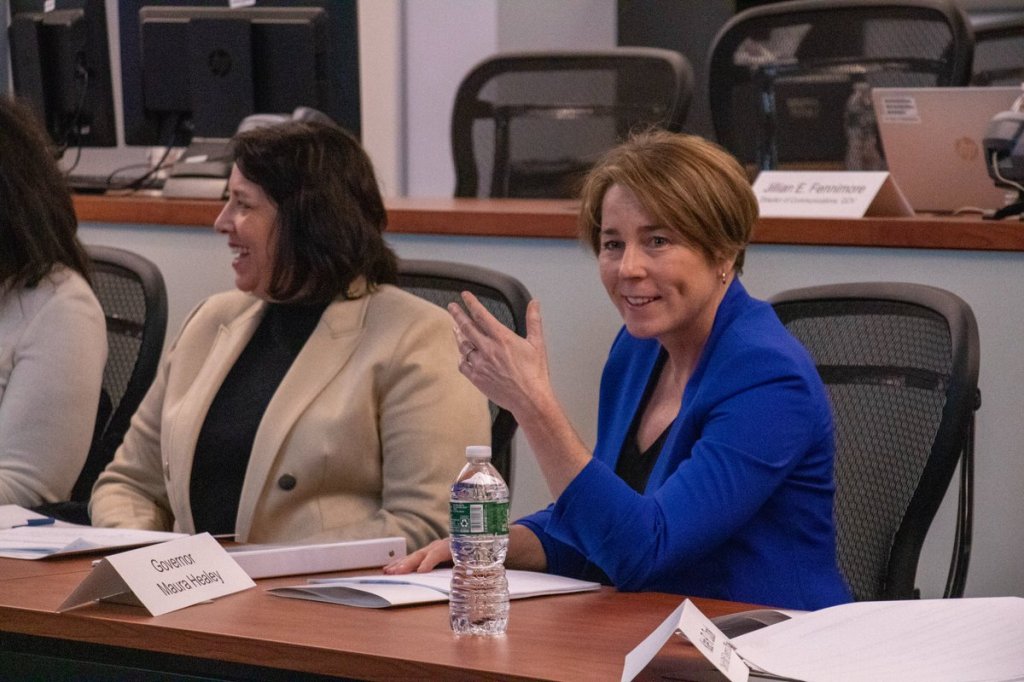
But Healey, a Democrat in name, appears to have little interest in adhering to democracy in action. Healey proposed repealing the 1982 nuclear law on May 13, 2025, but as of early June 2026, the provision remains under legislative consideration, having advanced in the House.
Healey has also signed onto a statement endorsed by five other New England governors, that supports bringing new nuclear power plants and related nuclear projects into their state.
Mirsky has contested the continued use of nuclear power before, and does not restrict her activities to fights within her own state.
As an example, in December 2022, she filed comments opposed to the license extension for the Comanche Peak nuclear power plant in Texas. “I urge you to reject the application by Vistra to extend the operating licenses for the Comanche Peak nuclear power reactors for an additional 20 years,” Mirsky wrote to the US Nuclear Regulatory Commission. “To protect public health, safety, security, and financial health, the reactors should retire as licensed, on or before 2030 and 2033.”
It comes as no surprise to readers here that the NRC, already an industry lapdog and now immeasurably more compromised and constrained under the lawless Trump administration, duly granted license extensions for both reactors at Comanche Peak for another 20 years beyond their original closure date.
At a recent protest and press conference on Boston Common against the heartless attacks on Iranian civilians due to the bombing attacks by the US and Israel, Mirsky set up a memorial of children’s shoes, backpacks, and other belongings to honor young victims of the war.
Massachusetts Democrat, Senator Ed Markey, a longtime ally of both the anti-nuclear power and nuclear disarmament movements, also spoke at the event, which was held two days after President Trump threatened Iran, telling the world “a whole civilization is going to die tonight.”
“That was a threat of annihilation. That was a threat of genocide,” Markey said. “That was the language of a man who is unfit to hold the nuclear codes.”
When asked about the meaning of her shoes and backpack exhibit, Mirsky told reporters, “Parents and grandparents all over the world want their children to grow up in peace, and somehow we have to do something to make that happen and recognize that there are basic rights that all people want and should have, and that war is never the answer. Never.”
Linda Pentz Gunter is the Executive Director of Beyond Nuclear and writes for and edits Beyond Nuclear International. She is the author of the book, No To Nuclear. Why Nuclear Power Destroys Lives, Derails Climate Progress And Provokes War, published by Pluto Press. Any opinions are her own.
Headline photo: Susan Mirsky (far left) joins fellow ANA Award winner, MV Ramana (second from right), along with Linda Pentz Gunter and Paul Gunter of Beyond Nuclear, and Tim Judson of Nuclear Information and Resource Service in the nation’s capital during ANA DC Days.

