 Beyond Nuclear International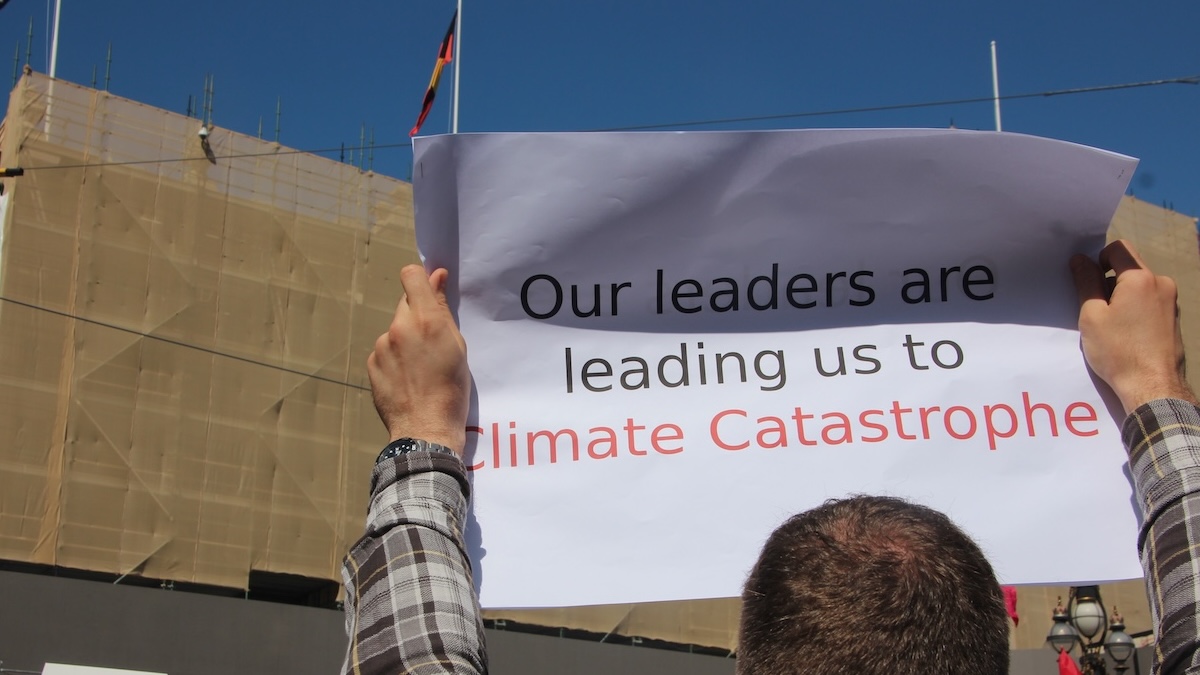
From reviving ‘dead’ reactors to building new ones large and small, an atomic epidemic is running rampant, writes Linda Pentz Gunter
Many of us have been asking ourselves the same question recently. Why does there seem to be a collective taking leave of all senses gripping politicians everywhere when it comes to nuclear power?
And why is the media lapping up the nonsense and hype and repeating the plethora of false promises (to put it politely) being spewed by nuclear companies — new and old?
Here’s an example from Last Energy, a US nuclear startup hoping to build 20 megawatt pressurized water reactors. According to Nation Cymru, who receives Last Energy’s press materials, a statement on the company’s website reads: “We build, own and operate micro modular nuclear power plants.”
No, they don’t. Last Energy has never built, owned or operated any sort of nuclear power plant, micro, modular or otherwise. But claims such as these simply aren’t questioned by politicians and the media. Rather, they are repeated.
Last Energy — brilliant name, as it will be “last”, if it even goes forward at all — was created by Titans of Nuclear podcaster Brent Kugelmass. They have a pilot project underway in Texas for a 5 megawatt version of the four 20MW “micro-reactors” they want to build in a small community in South Wales, where I am speaking this week.

One of my discussants there, Debra Cooper, co-chair of the Bridgend Green Party, made an acute observation about the company in their early public meetings, poorly attended fiascos that have abruptly stopped. It appeared that not only does Last Energy have no experience with nuclear reactors, they are not that familiar with how British electricity works.
“Their PowerPoint Presentation computer indicated that it had low power and the panicked presenters rushed around fiddling with various wires,” Cooper reported of an early public meeting with Last Energy officials in 2025. “Eventually they ascertained that they had not switched on the plug point at the wall.”
The company also exemplified that patronizing approach we are so familiar with of the “benevolent” corporation that will not only deliver jobs but give back to the community. Such is the arrogant ignorance of companies such as these that First Energy spokespeople assured the good people of Llynfi Valley in Wales that they will graciously fund food banks.
“When I pointed out to them that what locals needed was a fair day’s wage for a fair day’s work, without having to rely on food banks, this appeared to surprise them,” Cooper wrote. The proliferation of food banks is a tragic reminder of the scale of poverty and food insecurity across the country, not solved by adding more food banks but by addressing the root cause.
Stateside, we have an atomic epidemic among US governors, Republicans and Democrats alike, who are falling over each other in their eagerness to welcome new nuclear reactors into their states. Mostly, it’s the so-called small modular reactor (SMR), almost all of which are, like Last Energy, lacking a certified design or commercial buyers.
But some are willing to revive the dead — Three Mile Island in Pennsylvania, Duane Arnold in Iowa and Palisades in Michigan — and others are happy to accept the same fate as Georgia and welcome Westinghouse back into the game.
The Trump administration has announced it will sink $17.5 billion of taxpayer money into the formerly bankrupt Westinghouse for 10 new full sized AP1000 reactors. This, it is claimed, is in order to “speed the development of 10 new large nuclear reactors to meet the skyrocketing power demand from massive data centers,” reported the Associated Press.
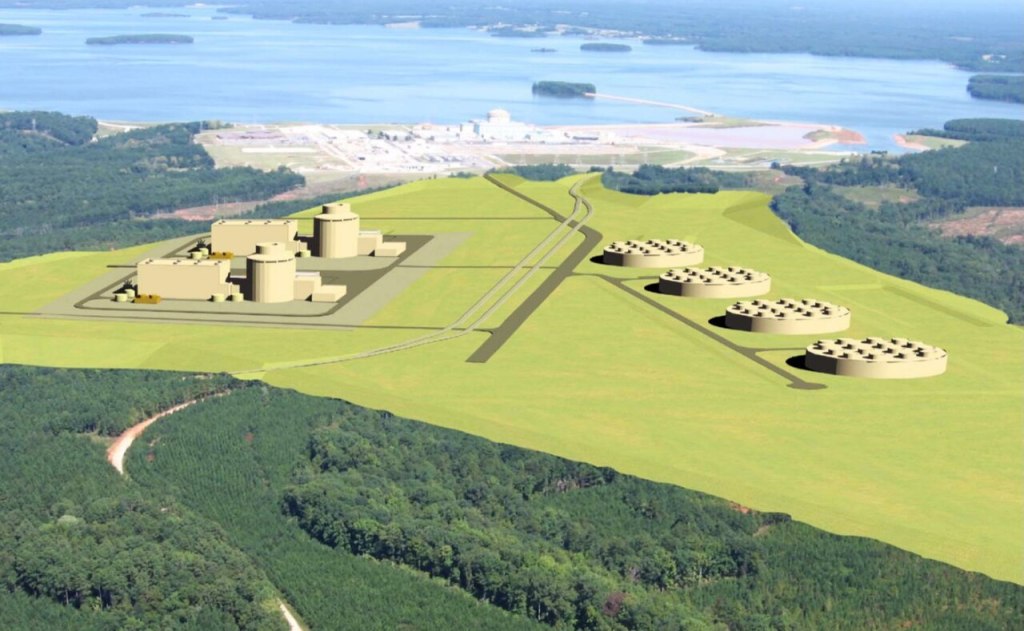
Why pouring money into Westinghouse — now actually wholly owned by two Canadian companies, Brookfield Asset Management and Cameco Corporation — would speed up a process that has already proven to take lamentably long, is nowhere explained.
The only Westinghouse AP1000 project to complete in the US at all, at Vogtle 3 and 4 in Georgia, took 14 years to get here and soared in cost from a predicted $14 billion to at least $35 billion. But these problems were not caused by a lack of money.
The project received $12 billion total in federal loan guarantees, more than 68% of what is now being offered to likely six different utilities to build 10 more AP1000s.
The utilities rumored to be lined up to collect the dough, if not actually deliver the reactors, are Dominion Energy, DTE Energy, Entergy, PSEG (Public Service Enterprise Group) and WEC Energy Group.
Westinghouse’s other two-reactor project, the AP1000s at V.C.Summer, collapsed mid-build, contributing to the company going bankrupt and almost taking down its then Japaneses parent company, Toshiba, with it. Utility executives were convicted of crimes and went to jail. But now there are even efforts to revive this financially catastrophic debacle.
Energy Secretary Chris Wright, himself a former nuclear (and gas) executive, assures us as his nose grows ever longer, that it will all be different this time around with likely “dozens of these built going forward.”
Have small modular reactors been forgotten, given their poor economies of scale and absence of certified designs, upfront factories and commercial interest? Not according to the state governors embracing this expensive fantasy.
SMRs have turned into today’s atomic fad toy — a nuclear Labubu! Everyone wants one — or most likely more than one; some of these reactors are as small as 10 megawatts. One by itself might be able to power a smaller data center but the main thrust is to build hyperscale and AI-focused data center campuses.
This means that SMRs are actually intended to meet a need we don’t need; energy (and water) guzzling AI mega data centers, designed to enrich tech bros and impoverish the rest of us, fiscally, environmentally and morally.
But the nuclear nuttiness is by no means confined to English (or Welsh) speaking countries.
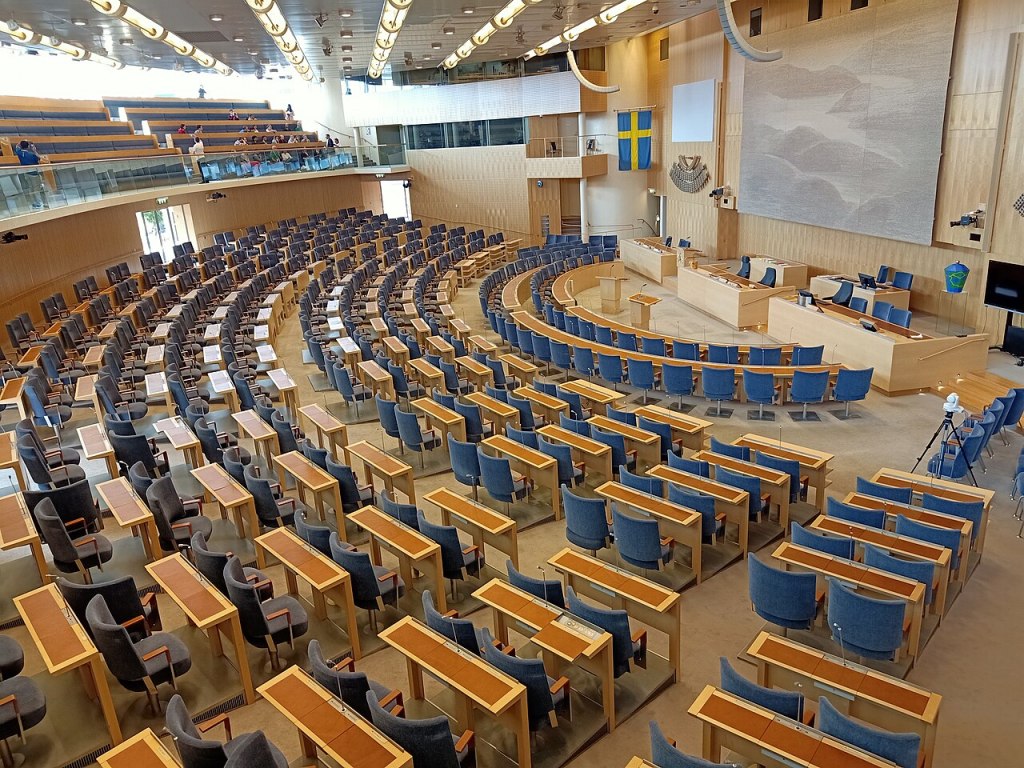
The Swedish parliament, known as the Riksdag, has just voted to reclassify uranium mines as not a nuclear facility. This allows for the radioactivity they release and the waste they create— and mainly leave behind— to be treated like any other mineral.
There was no science behind this thinking, just a deeply undemocratic rationale, as a World Nuclear News article explained: “With uranium mines no longer regulated as nuclear facilities, uranium extraction will no longer require explicit municipal consent.” Sweden had already lifted its uranium mining ban in January 2026. Needless to say, the uranium companies are jubilant.
Just as bad, and arguably madder, the Riksdag also “voted in favor of the government’s proposal to amend Sweden’s environmental code to enable the expansion of nuclear power in more places on the coast,” the WNN article said.
There is a new political phenomenon known as “climate hushing”, but building reactors on coastlines when, due to our failure to address climate change adequately or in time, sea-level rise is an inevitability, is climate criminality.
Linda Pentz Gunter is the founder and executive director of Beyond Nuclear. She is the author of No To Nuclear. Why Nuclear Power Destroys Lives, Derails Climate Progress And Provokes War , published by Pluto Press and also available on Amazon.
Headline photo: John Englart/Wikimedia Commons


Pingback: A mad for nuclear world? « nuclear-news
Pingback: Another week in the non-corporate nuclear news « Antinuclear
Pingback: The new nuclear madness is climate criminality « nuclear-news