 Beyond Nuclear International
Fires and droughts could not spell out more clearly why nuclear power is the worst kind of risk under climate crisis conditions, writes Linda Pentz Gunter
You would think after the last several weeks we just had, the promoters of nuclear power might be tempering their messages a little. Or even reconsidering their position if they haven’t yet drunk too many gallons of the nuclear Kool-Aid.
But what we are seeing instead is a continued and relentless propaganda campaign re-affirming the “milestones” and “breakthroughs” of new nuclear power projects.
For example, Deep Fission, with its plans to try to drop what could eventually be as many as 100 15MW micro reactors down mile-deep boreholes in the tiny community of Parsons, Kansas (population 9,600), crowed about a recent approval from the US Department of Energy.
What the DOE approved was the company’s Nuclear Safety Design Agreement for its Gravity™ Nuclear Reactor. Deep Fission described this as “a major regulatory milestone.”
What it really amounts to is permission to keep on doodling on the napkin, or, put less snarkily, that they may proceed with their reactor design.
Holtec, the New Jersey-based waste and decommissioning company announced late last month that with the US Nuclear Regulatory Commission (NRC) having granted a License Termination Plan for the closed Oyster Creek Generating Station, the company can now move forward with plans to site four of its SMR-300 reactors at the site.
Collectively, this represents a bigger output than the old 650 MW Oyster Creek reactor, but of course SMR owners are claiming that because their reactors are so much smaller, there need be no emergency evacuation zone or other disaster preparedness beyond the property fence line.
Because after all, what kind of disaster could possibly occur?
Evidently, none of these reactor bros touting their scammy crypto-nukes have been watching the news, since they are just carrying on as if Nothing Happened.
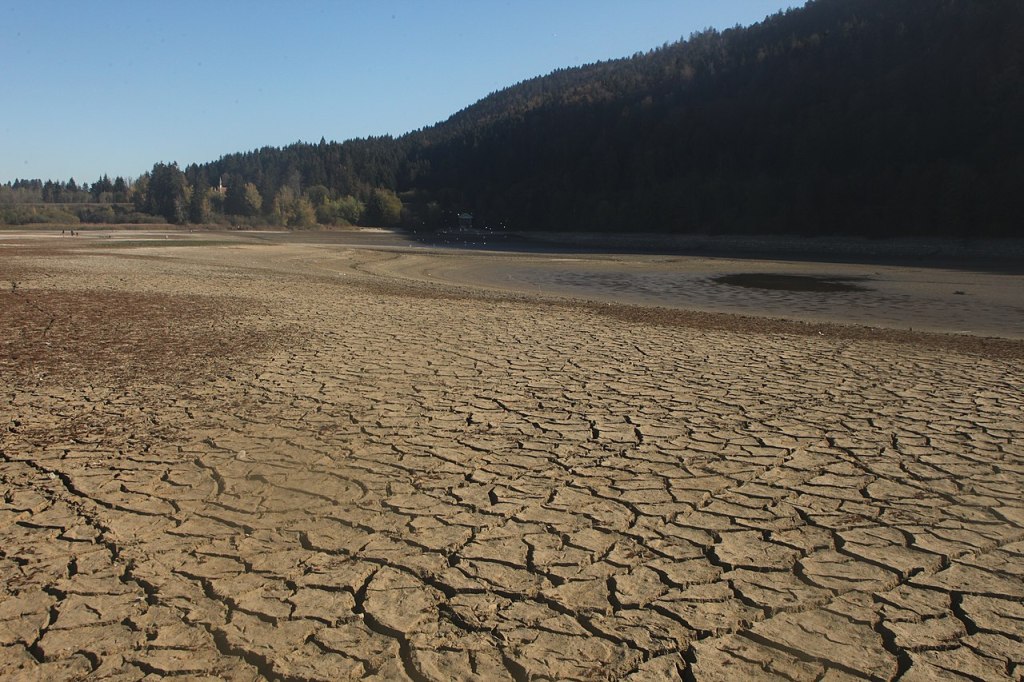
So what didn’t they see? The Romanians dynamiting the Danube river in a desperate attempt to redirect the ever scarcer river water toward their lone Cernavoda nuclear power plant? One reactor there was already closed and now the second one is, as well, as the Danube suffered another drastic drop in water level.
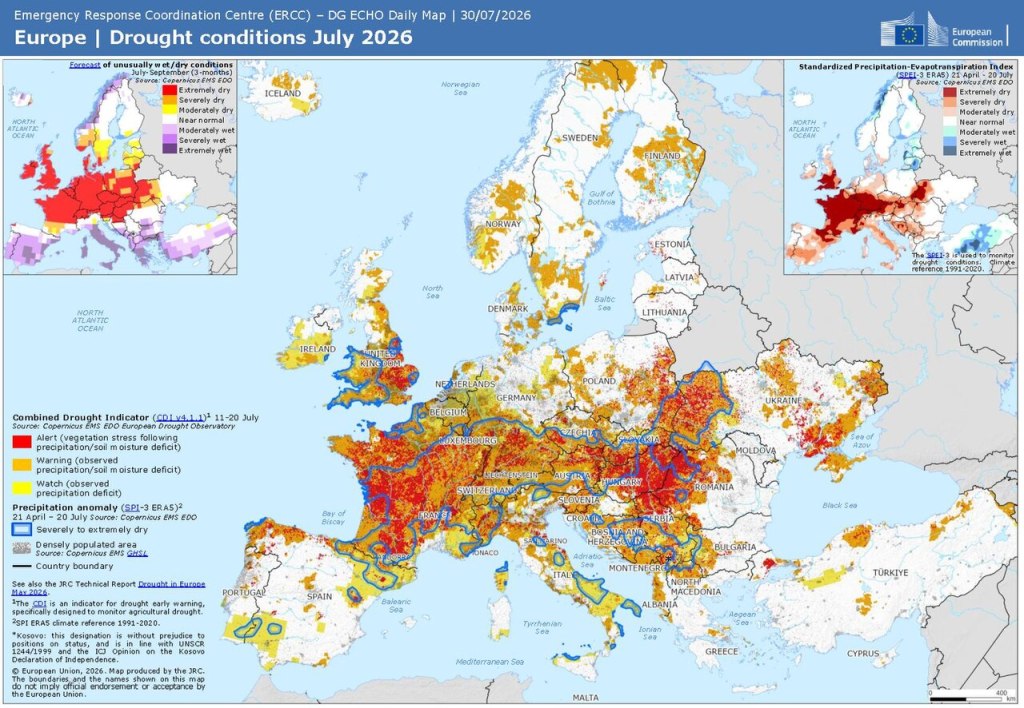
That in turn has affected neighboring Moldova which “relies on Romanian power to cover up to 60% of its own electricity shortages,” according to reporting in The Guardian. The loss of Cernavoda could result in power outages, Moldovan authorities warned.
In Hungary, the Paks nuclear power plant was operating at around 10% of its 2,000 MW capacity at time of writing and the Hungarians, like the Romanians, were starting to sink large barges in what is left of the Danube to try to raise water levels and continue to cool the plant.
Then there was the scorched heathland and billowing smoke that obscured the view of the Sizewell nuclear power plant on the English coast just a few miles away. The raging wildfire close to the still operating Sizewell B reactor was a close call, another stroke of luck with the wind blowing the other way. That day.
The nearby precious Minsmere Nature Reserve hasn’t been so lucky, with the fires causing a massive loss of wildlife and habitat. But plans to proceed with the two French Sizewell C EPR reactors have not been abandoned and the UK government insanely granted Sizewell B a 20-year license extension on top of its existing one that would allow it to operate out to 2055.
The plant actually sits on the beach, never mind the fact that climate crisis-caused drastic sea-level rise is an empirical inevitability. And, apparently, never mind the wildfires either, which, with the United Kingdom now in its fifth scorching heatwave of the summer, are only likely to get larger and more frequent.
Maybe the nuke bros also missed the people fleeing for their lives across Europe while headlines reminded these hapless refugees and others roasting in cities, towns and countryside that their nuclear power plants would not be available to provide the much-needed electricity at a time it was needed most. Instead, people sweltered, and, in some cases, died, from the extreme heat, their villages in some places burned to the ground.
France had to power down and even close many of its reactors due to the extreme heat and then, of course, came the climate change-caused jellyfish swarm at Gravelines, now looking to be an annual event, causing those reactors to close. Jellyfish are a problem because they clog the cooling water intake system.
Meanwhile, parts of the US have been on fire, too, while smoke from Canadian wildfires a few weeks back enveloped a large swath of the Midwest and Northeast in a choking cloud of acrid smoke and falling ash.
So far, and fortunately, there have been no nuclear power plants in the paths of these fires — or some of the catastrophic flooding, including in Texas.
But it really doesn’t stretch the imagination too much to picture a very different scenario.
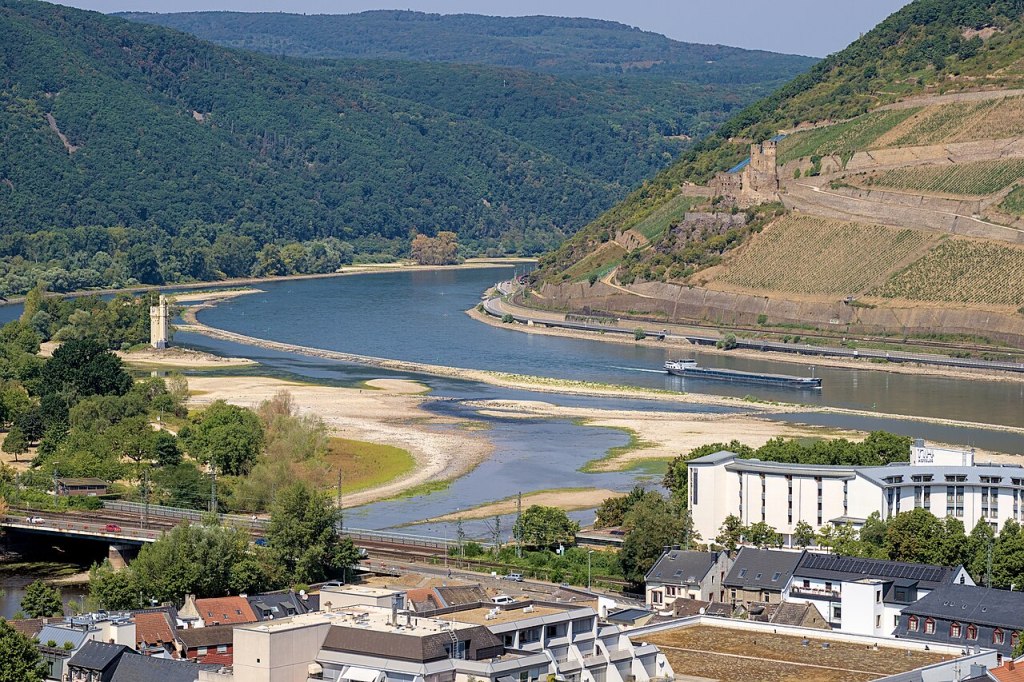
Nuclear power plants can’t operate well — or sometimes at all— in extreme heat or drought because they require water to cool them and that water needs actually to be cool in the first place. And available.
If the water is too hot or too scarce, nuclear power plants have to reduce power or even shut down altogether.
But when they do, it’s not like turning off a car engine. Because of the highly radioactive and thermally hot fuel inside nuclear reactors —and the fuel pools into which the irradiated fuel rods have been offloaded — they still need cooling. If you can’t cool them, they will eventually melt down. So water must continue to be available and so must electricity to get it there and power the plant.
That is why we have argued for years that nuclear power plants are not reliable, especially in extreme weather conditions. Instead, they are a liability. And with ever more violent weather conditions under the climate crisis, those risks are only going to get worse and disaster more likely.
The events on March 11, 2011 in Japan would have been infinitely less catastrophic, and a whole lot less expensive, if they hadn’t involved a triple nuclear meltdown along with the massive earthquake and tsunami. And, as with Sizewell, they would have been infinitely worse radiologically, had the wind been blowing the other way. Despite this, vast areas received radioactive fallout, complicating rescue efforts of those caught in the earthquake and/or the tsunami.
Fire is one of the biggest risks at a nuclear power plant, largely because of the lethal radioactive inventory on the site. “Irradiation produces a variety of fission products and actinides that multiply the radioactivity in the original uranium fuel by more than 100 million times,” according to The World Nuclear Waste Report (see page 27) published in 2019 by the Heinrich Böll Stiftung. All of this waste currently remains at US reactor sites and at most such around the world, absent a safe, long-term storage solution.
If a raging wildfire engulfed a reactor site, the outcome could be catastrophic, rendering vast areas uninhabitable. Another Chernobyl Zone could be born.
If a fire engulfed a solar or wind farm, that would be a nuisance. The panels or turbines would need to be replaced. But no one would be at risk of thyroid cancer or worse, nor would they need to flee, abandoning their homes and land forever.
Linda Pentz Gunter is the Executive Director of Beyond Nuclear and writes for and edits Beyond Nuclear International. She is the author of the book, No To Nuclear. Why Nuclear Power Destroys Lives, Derails Climate Progress And Provokes War, published by Pluto Press. Any opinions are her own.
Headline photo: Wildfires in Trévillach, France, July 4, 2026 by Frenchbluesman/Wikimedia Commons.


Pingback: Heatwave hell - Nuclear Costs
Pingback: Heatwave hell « nuclear-news