 Beyond Nuclear International
As it turns out, loss-makers with no revenue aren’t such a big draw on Wall Street, writes Linda Pentz Gunter
Guess who’s making money from the alleged small modular reactor boom? Or rather, guess, who’s not making a profit? We’ve been calling the SMR schemes “crypto nukes” for a while, because they seemed like the same kind of scam as the crypto currency racket. But, it turns out, the SMR mirage has more in common with the US subprime mortgage scandal.
That debacle, which played out from 2007 to 2010, was immortalized in the excellent 2015 docudrama, The Big Short. It dramatized the true story of financial outsiders who realized that the US housing market was propped up on bad loans doomed to fail. By betting against those loans (the “short” of the title), before the market collapsed, they made themselves small fortunes.
On August 18, the Financial Times ran a headline, “Short sellers reap $2bn profit as modular nuclear reactor stocks tumble.” (The article is behind a paywall, so we’ll paraphrase and quote it instead.)
It revealed how, predicting the “hype cycle” was about to collapse, and the fact that the three SMR companies in question — NuScale Power, Nano Nuclear and Oklo — were “lossmaking and have little or no revenue,” the short sellers pounced, reaping $2.1 billion in profits.

The article, replete with graphs showing plunging loss lines, paints a damning picture of an over-inflated industry with no actual there, there. “A total of $30.3bn has been wiped off their collective market value since their peak in October last year amid growing concerns over the lack of immediate revenue and the long build-out timelines for the technology,” the Financial Times reported.
Beyond the three companies shorted, another of the close to 80 small reactor startup projects, X-energy, also “shed $5.8bn in market value since the surge that followed its initial public offering in April,” Ramsey Hodgson, the FT reporter wrote.
Predictably, the nuclear-promoting Breakthrough Institute tried to spin the whole thing as normal, with its nothing-to-see-here claim that the earlier over-inflation and current collapse of stock prices is “very typical of a company that is in this early, pre-consistent revenue phase,” the institute’s Adam Stein reassured the FT. Just birth pains, not a stillbirth, he appeared to insist.
But other financial experts interviewed for the story took a rather less rosy view. Enthusiasm for SMRs is waning now that it has become clear that most of the reactor startup companies have no revenue — and no reactors — to show for their efforts, and no sign of either on the horizon until at least 2030, an optimistic view to say the least.
Nano Nuclear has generated zero revenue and “posted a $14mn operating loss in the first quarter of the year,” the FT said. NuScale is facing a class action suit for defrauding investors after its plans collapsed. Oklo has yet to secure a regulatory license.
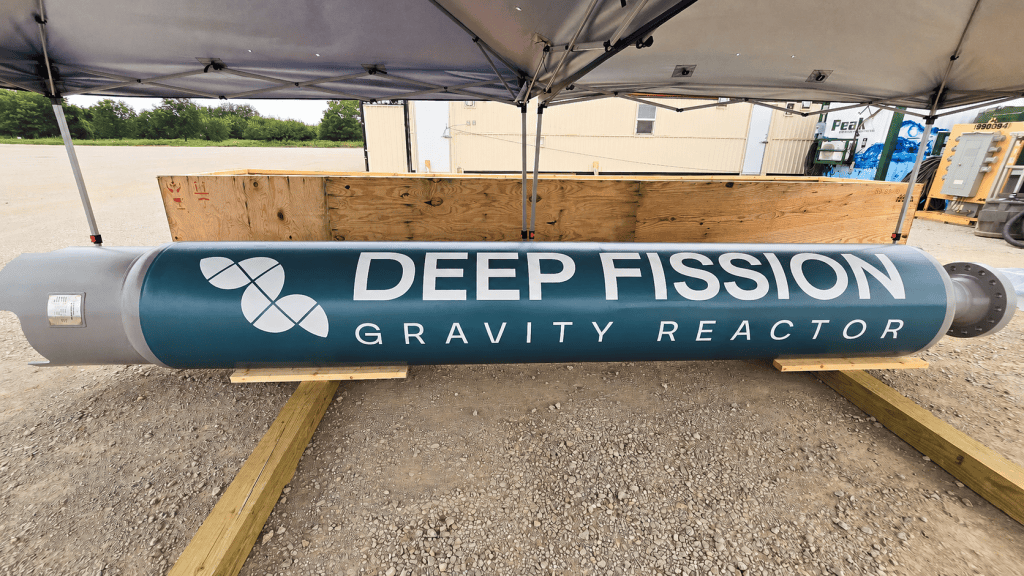
Other startup reactor companies must surely be taking notice of the recent upheaval. Some have already experienced bumpy rides of their own. The Berkeley, CA Deep Fission, which is trying to build “deep borehole” micro reactors and drop them into mile-deep shafts in the tiny town of Parsons, Kansas (population just over 9,000) went public on NASDAQ (under ticker FISN) on June 18, 2026. It was a cautious moment, with Deep Fission backing off its original target share price of $24 to $26, instead pricing its IPO at $16.00 per share.
In the press release announcing its stock offering, Deep Fission provided the caveat that “Certain statements in this press release are “forward-looking statements.” These statements are based on current expectations and involve risks and uncertainties that could cause actual results to differ materially from those expressed or implied.”
Consider yourself duly warned from the not-quite-dead-yet horse’s mouth. Clearly, harboring expectations about these paper plane reactors is probably if not certainly unwise. Four days after Deep Fission went public, Nick Nemeth’s Mispriced Assets blog on Substack ran the headline: “Deep Fission (FISN): A Mile Deep, and Already Underwater.”
As Nemeth pointed out, the reduced price Deep Fission stock “opened at sixteen, closed its first day at $14.56, and hasn’t traded above the offer since. That’s not a stock the market hasn’t found yet. It’s a stock the market looked at and passed on, that got shoved out the door anyway, downsized, to whoever bought the headline instead of the filing.”
Simply Wall Street put four exclamation marks next to Deep Fission’s risk analysis: “Has less than 1 year of cash runway; Makes less than USD$1m in revenue ($0); Earnings are forecast to decline by an average of 28% per year for the next 3 years; Volatile share price over the past 3 months compared to the US market.”
Unless I’m reading this wrong, the second entry, regarding revenue, is the most striking one because Deep Fission’s “less than one million dollars” figure is zero.
Will any of these aspirational ideas actually make it into reality let alone reach the finish line? As we have repeatedly pointed out here at Beyond Nuclear, and as the FT reiterates, “timelines for delivery of the unproven reactors remain uncertain.” Or maybe not so uncertain. They simply won’t arrive at all.
Linda Pentz Gunter is the Executive Director of Beyond Nuclear and writes for and edits Beyond Nuclear International. She is the author of the book, No To Nuclear. Why Nuclear Power Destroys Lives, Derails Climate Progress And Provokes War, published by Pluto Press. Any opinions are her own.
Headline photo by thenails, Creative Commons, CC BY 2.0.

