 Beyond Nuclear International

In its rush to help fast-track new nuclear plants, the regulator is relinquishing its duty to protect public health, writes Cindy Folkers
The Nuclear Regulatory Commission (NRC) is abandoning its duty to protect public and worker health. Using a recent rulemaking proposal — NRC-2025-1140 Reforming and Modernizing the NRC’s Radiation Protection Framework — the NRC would allow nuclear facilities to release larger amounts of radioactive pollution under circumstances which are somewhat random and obscured from public input.
Under the rulemaking proposal, the NRC reframes radiation exposure as a benefit, ignores independent research, and prioritizes industry costs. In doing so, the NRC may be violating the Atomic Energy Act (AEA).
The NRC claims that it is executing mandates given in Executive Order 14300, but that order is based on a flawed assumption that a model of damage stipulating even small radiation exposures can cause harm, is not based in science. But research on workers and the public upholds the model, known as linear-no-threshold (LNT).
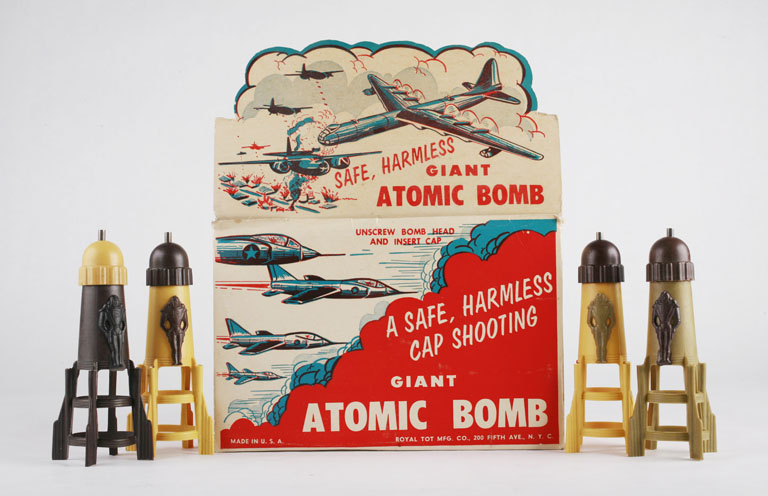
Radiation is dangerous even at low levels. The NRC wants to loosen rules, making it easier for nuclear reactor operators to expose workers and the public to radiation. This benefits the nuclear industry but puts people—especially women, children, and future generations—at greater risk.
What NRC’s proposal would do
In essence, the NRC is proposing a deregulatory framework that favors industry cost savings over health. There is no given or obvious process for people or states to know on a case-by-case basis when this deregulation allowing more radioactive pollution is happening, nor any indication of a clear opportunity to comment and protest its implementation.
More specifically, the NRC is proposing, through this rule, to double allowed radiation exposure to workers, eliminate dose limits to the general public (especially impacting those in rural communities) and allow up to ten times higher releases of radioactive effluent. The principle of ALARA (“As Low As Reasonably Achievable”), which gives incentive to minimize radiation exposure, has been largely abandoned.
It is important to note that the nuclear industry does not now measure public exposures. It instead calculates exposures using questionable assumptions and extremely limited data — a flaw that should be corrected by real-time monitoring and lowering allowable releases, not increasing them.
Radiation exposure as a “benefit”
One of the most troubling points of the proposed rule is that the NRC labels “increased worker and public exposure” and “increased effluent release” as benefits in its draft regulatory analysis. Characterizing increased exposures as “benefits” is misleading and dangerous because increasing radiation exposure will increase disease.
Simultaneously, the NRC has excluded the real costs—cancer treatment, long-term health impacts and multigenerational harm. By treating these as “externalities,” the NRC is ignoring its legal duty.
When asked what the public benefit of this rule would be, the NRC staff claimed, in an August 10 public meeting, that there is “a real strong demand for more energy as more data centers go in place.” NRC chairman Ho Nieh — a Trump nomination — echoed this sentiment in an August 24 interview with The Federal Drive: “the reason we’re taking these regulatory reforms is because there’s an urgent demand for more electricity in the United States due to artificial intelligence, data centers and industrial growth.”
Framing increased exposures as benefits, and excluding the cost of treating radiation induced disease, redoubts to the benefit of industry. Data centers are controversial, but renewable energy could provide electricity to power these faster, more affordably, and without radiation risks. Further, any risk-benefit framing violates the right to health according to the UN Human Rights Commission, which (in the wake of the ongoing Fukushima nuclear catastrophe) has warned that risk-benefit analysis is not compatible with protecting individual health rights.
Past harm
At the same August 10, 2026 public meeting referenced above, the NRC admitted it is incapable of creating regulations that account for cumulative impacts of legacy pollution and historic exposure, ostensibly due to agency jurisdictional issues; yet studies show past exposures (even to naturally occurring background radiation) can cause cancer and fertility issues. The NRC, nevertheless, allows additional exposure on top of these historic exposures to natural background, effectively doubling unavoidable doses.
In addition to health impact from naturally occurring background radiation exposure, past exposures from weapons testing and manufacture, and catastrophic releases from civilian reactors cause compounding harm.
Past nuclear weapons tests left widespread contamination, with remnants of radioactive cesium still present in human bodies, and studies estimate millions of cancer deaths worldwide from these tests.
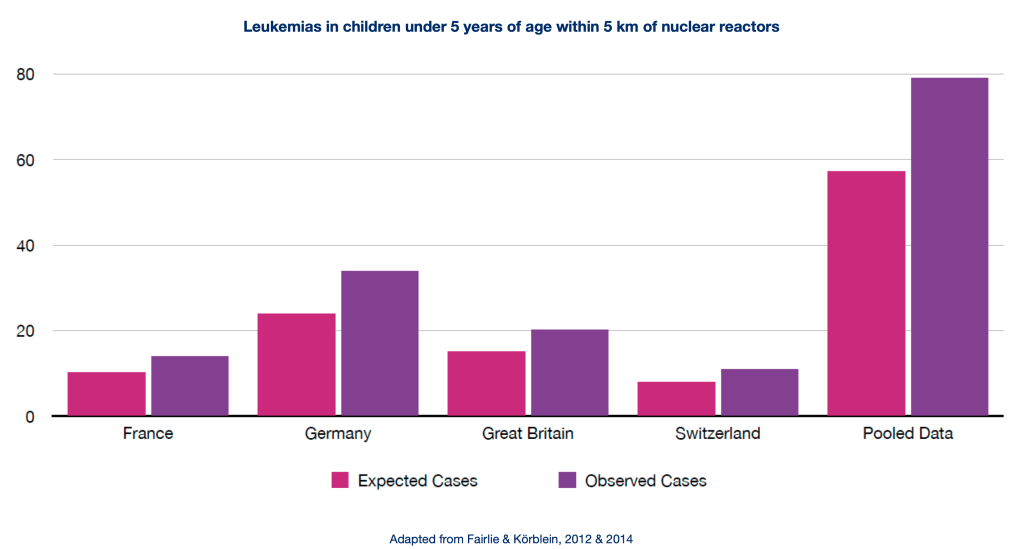
Civilian nuclear reactors, through routine operations and accidents such as Chornobyl and Fukushima, have left long-lasting contamination, with cancer, and genetic damage and birth defects, persisting across generations. Ignoring these legacy exposures is irresponsible since research indicates adding more exposure makes health outcomes worse.
The Environmental Protection Agency (EPA) has made attempts at accounting for compounding damage from other pollutants so asking the NRC to account for compounding damage from radiation is not without precedent, even if imperfect. The NRC should not be allowed to ignore this very important, multigenerational issue.
Current and future harm
The Atomic Energy Act mandates that health protection is a core duty of the NRC. Therefore, the NRC’s weakening of its standards may very well violate the Act because in the NRC’s effort to “reform and modernize” radiation exposure standards, the agency ignores current and past research showing that standards for workers and the public need to be strengthened. Instead, the NRC focuses on what the nuclear industry finds “reasonable” in terms of cost — not what is safe for people — leaving women, children, and other susceptible groups at higher risk.
The US public has reason to be concerned as recent research shows increases in diseases among adult populations around nuclear power reactors. However, this research does not include data on children and does not yet fully address whether radiation exposure is responsible for the disease increases.
Worse yet, the NRC avoids addressing independent research that could further clarify the cancer and non-cancer risks of low-dose radiation, while simultaneously claiming that not enough is known about low dose impacts.
For example, in 2015, the NRC canceled a National Academy of Sciences study on cancer risks near nuclear reactors. This was despite European studies showing increased childhood leukemia near reactors.
Radiation’s impacts extend beyond cancer. Studies looking at the aftermath of the still ongoing March 2011 Fukushima disaster show increased miscarriages, birth defects, with excess perinatal deaths recorded years after the accident began (Körblein, 2003) (Körblein, A. 2004) (Scherb, et al. 2016). Prenatal exposure can reduce IQ and cause behavioral problems. Nordic studies found children exposed to Chornobyl fallout performed worse in school.
Low doses can trigger chronic immune problems, leading to infections, allergies, and autoimmune diseases. Radiation exposure is also linked to heart disease, Parkinson’s, and Alzheimer’s.
These impacts are well-documented, yet the NRC claims it cannot regulate for them because of “uncertainty.” This falsely manufactured gray area deliberately sows doubt about the health impacts caused or triggered by lower radiation exposure; and gives the NRC the excuse to not protect workers and the public better, allowing industry to operate under the protection of doubt regarding radiation’s health impacts at so called “lower” exposures.
Uncertainty, manufactured or not, should lead to stricter standards, not weaker ones.
What an independent regulator should advocate
To address these concerns, we need the following:
- Independent research on women and children, funded through public health agencies such as the National Institute of Environmental Health Science (NIEHS), to examine radiation impacts on pregnancies and vulnerable populations that current worker studies do not adequately cover.
- Independent real-time monitoring of radiation releases, environmental contamination, and biological exposure. Industry self-reporting has been, and continues to be, insufficient.
- Account for non-cancer impacts, since radiation affects pregnancy, fertility, cardiovascular health, and neurological development. We recommend using EPA tools to calculate these costs. We advocate following the EPA’s 2024 draft cumulative impacts framework that emphasizes considering cumulative pollution impacts. The NRC should adopt similar principles to protect communities.
- Inclusion of the real costs of treating radiation-induced cancers, especially childhood cancers such as leukemia and brain tumors.
- Expansion of compensation programs. We must urge Congress to broaden the Radiation Exposure Compensation Act (RECA) and Energy Employees Occupational Illness Compensation Program Act (EEOICPA) programs to cover civilian nuclear radiation exposures, not just military or occupational ones. These compensation programs do not rely on dubious dose reconstruction and the unscientific assumption that doses were too low to cause disease. Instead, compensation worthiness is based on more reliable data such as geographic location, type of disease and other factors.
Universal disapproval
Out of over 2,000 public comments submitted to NRC by the August 31, 2026 deadline, approximately 93% oppose at least some aspects of the proposed NRC rule. The removal of ALARA and attacks on the LNT model ranked as top concerns, according to a private analysis by the Samuel Lawrence Foundation.
Attorneys General of 11 states (Illinois, California, New Mexico, Washington, Colorado, Oregon, Delaware, Maryland, Minnesota, Vermont, and Massachusetts) have written a letter to the NRC asking them to withdraw the rulemaking for a number of reasons, including inadequate environmental review and regulatory analysis, the removal of ALARA, the vagueness of some of the proposed changes, inadequate length of the public comment period, and as yet unknown unintended consequences.
The NRC is set to publish the final rule for this rulemaking on February 25, 2027 as of this writing. This date is subject to change. However, what will not change is the fact that radiation exposure—even at low doses—has proven harmful, especially for susceptible women, children and pregnancy. The NRC should be strengthening exposure standards, not weakening them.
Cindy Folkers is the Radiation and Health Hazard Specialist at Beyond Nuclear.
Headline photo: US Army simulation radiation check/Wikimedia Commons.

