 Beyond Nuclear International
“It’s bad enough that Republicans wanted to gut our environmental laws. It’s unconscionable that Democrats helped them do it.”
By Jake Johnson, Common Dreams
(Beyond Nuclear International editor’s note. The Bipartisan American Affordability and Jobs Act, which sadly turned out to indeed be bipartisan, but has nothing to do with affordability or jobs, will enable the fast-tracking of new reactor permitting while weakening or removing critical environmental safeguards, shortcutting or curtailing Nuclear Regulatory Commission licensing hearings and lending support to fusion, nuclear fuel fabrication and reprocessing. The gutting of the National Environmental Policy Act is a particularly disturbing development. By providing categorical exclusions, the exempting of advanced reactors, microreactors, and power uprates from full environmental reviews, makes false assumptions that new reactor designs will have a minimal environmental impact even though they are unproven and untested, given none yet exist or operate. As such, the passage of BAAJA through the Senate is a devastatingly bad development for work in opposition to nuclear power as well as fossil fuels, for climate and for environmental protections broadly.)
The Republican-controlled US Senate, with the support of more than a dozen Democrats, passed a hotly contested bill that would weaken the Clean Water Act, the Endangered Species Act, and other key environmental laws to accelerate approval and development of energy projects, including climate-wrecking gas pipelines and data centers.
The final vote on the Bipartisan American Affordability and Jobs Act (BAAJA) was 62-33, with nearly every Republican and 15 Democrats supporting passage. The 15 members of the Senate Democratic caucus who voted for the bill were Chris Coons (Del.), John Fetterman (Pa.), Ruben Gallego (Ariz.), Martin Heinrich (NM), John Hickenlooper (Colo.), Angus King (Maine), Amy Klobuchar (Minn.), Gary Peters (Mich.), Jack Reed (RI), Jacky Rosen (Nev.), Brian Schatz (Hawaii), Chuck Schumer (NY), Elissa Slotkin (Mich.), Mark Warner (Va.), and Sheldon Whitehouse (RI).

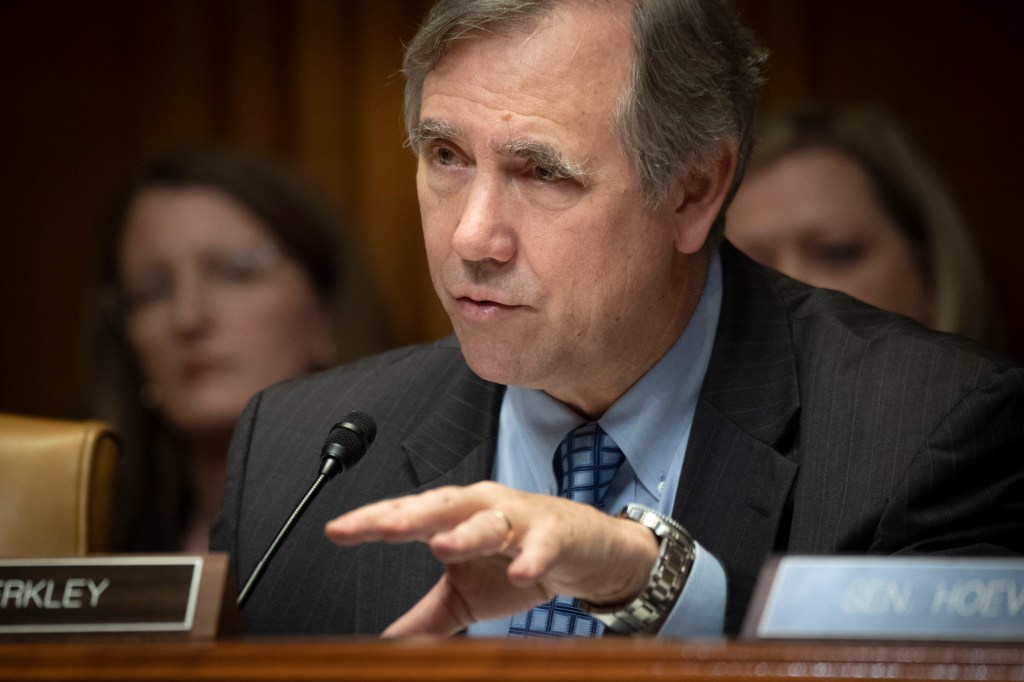
The legislation passed without ever facing a hearing in the Senate, a fact that Sen. Jeff Merkley (D-Ore.)—an outspoken opponent of the bill—called “pretty damn outrageous and offensive.”
If passed by the House and signed into law by President Donald Trump—whose White House has backed the measure—BAAJA would limit the authority of federal courts to block energy projects due to violations of environmental protection laws. The measure would also exempt pipeline expansions from National Environmental Policy Act (NEPA) review, potentially bar future administrations from rolling back previously approved projects, and restrict states’ and tribes’ ability to block projects under the Clean Water Act.
The legislation was endorsed by the American Petroleum Institute, the largest fossil fuel industry lobbying organization in the US. The group applauded Thursday’s vote as “a major breakthrough on historic permitting reforms” and praised the legislation’s lead sponsors, including Whitehouse and Sen. Mike Lee (R-Utah).
Environmental organizations expressed support for some elements of the legislation, such as provisions that would speed up transmission and grid modernization. But the good provisions don’t outweigh the destructive ones, green groups said, arguing the bill’s benefits are heavily tilted toward fossil fuel projects—and would likely be further tilted in that direction by the Big Oil-friendly Trump administration.
“Senators who voted for this bill should be ashamed,” said Erich Pica, president of Friends of the Earth US. “Just weeks after Americans made clear they are tired of politicians putting corporate profits ahead of people, the Senate approved a giant giveaway to Big Tech and polluters. Calling this a bipartisan compromise doesn’t change what it is: a reckless attack on our clean air, clean water, wildlife, public lands, oceans, and communities.”
“It’s bad enough that Republicans wanted to gut our environmental laws,” Pica added. “It’s unconscionable that Democrats helped them do it.”
Some Democrats who supported advancing the bill in previous procedural votes switched their votes to no on final passage, including Sen. Andy Kim (NJ). In a statement posted to social media, Kim said he “voted earlier in the process to allow a debate and amendment process that could improve the bill before final passage.”
“Unfortunately those improvements, which would rein in the worst impulses of the Trump administration, were not made, and the potential consequences for New Jersey are unacceptable,” said Kim.
BAAJA’s opponents called on the House, which will be narrowly controlled by Republicans until January, to reject the legislation.
“This bill identified the wrong problems and has therefore arrived at the wrong solutions,” said David Watkins, director of federal government relations for the Climate and Energy Programs at the Union of Concerned Scientists. “The Clean Water Act isn’t the problem—the fossil fuel industry and their enablers in the Trump administration are responsible for throttling renewable energy deployment across the United States.”
“The Senate’s bill is totally out of step with the message of the midterm elections. Policymakers must move on from the status quo driving high energy bills and record fossil fuel profits,” Watkins added. “The House should reject BAAJA and negotiate a better bill in the new Congress in January, one that protects our environment, includes meaningful input from communities burdened by fossil fuel pollution, and makes cheaper and cleaner renewable energy more accessible to everyone.”
This article first appeared on Common Dreams whose content is in the Creative Commons.
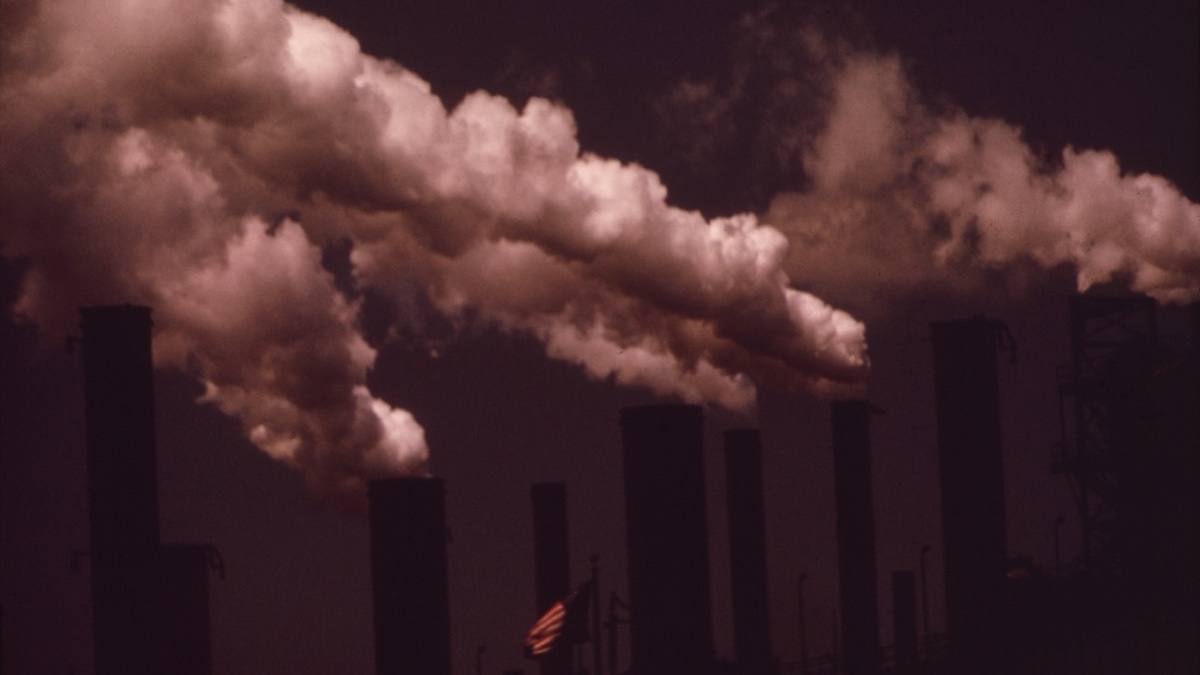
Headline photo of smoking chimneys: National Archives/Wikimedia Commons.
The opinions expressed in articles by outside contributors and published on the Beyond Nuclear International website, are their own, and do not necessarily reflect the views or positions of Beyond Nuclear. However, we try to offer a broad variety of viewpoints and perspectives as part of our mission “to educate the public, government officials and the media about the lethal link between nuclear power and nuclear weapons and the imperative to end the use of nuclear power and fossil fuels if the climate crisis is to be addressed effectively, affordably, safely and in time.”

