 Beyond Nuclear International
A planet worth saving
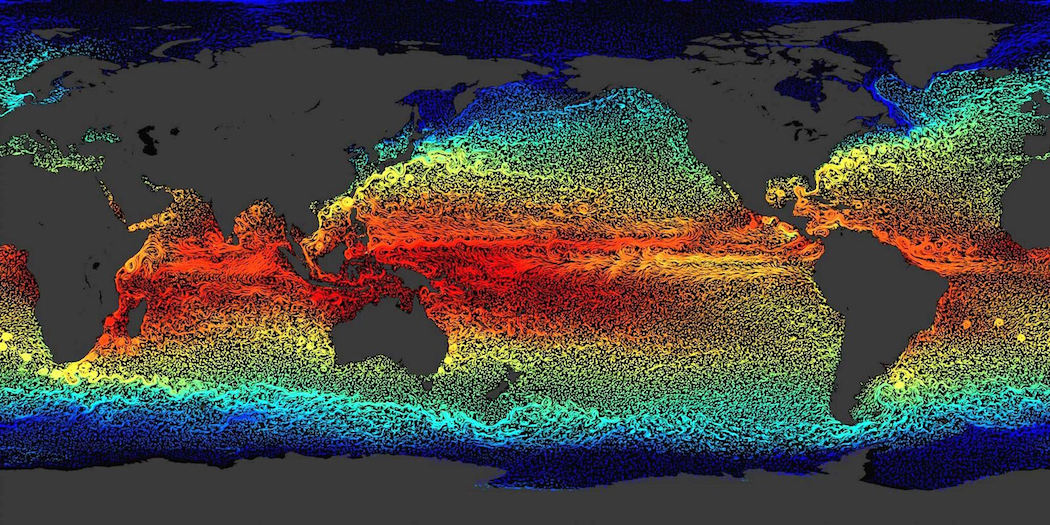
Multi-visual Bella Gaia delivers a perspective on the beauty — and human-caused tragedy — of Planet Earth
By Linda Pentz Gunter
This week, Karl Grossman’s story reminds us that dangerous political leaders like Donald Trump, choose to see space as a venue for warfare. As an antidote, therefore, we also bring you a powerful reminder of why that must never happen.
Several years ago I attended a performance of Bella Gaia. Performance is really the wrong word. Immersion would be closer, transformative experience even better. Bella Gaia is the inspiration of New York violinist Kenji Williams, and his inspiration came in turn from astronauts who went to outer space and experienced the “overview effect,” a quasi-religious epiphany that occurred on seeing planet Earth from afar and in the context of its home within the vast universe.

Violinist, Kenj Williams, creator of Bella Gaia, in performance. (Photo: Christopher Altman/Creative Commons.)
Despite his collaboration with NASA, whose breathtaking images he uses, Williams has not put together just another planetarium show. It is a multi-media experience, combining music, dance, other-worldly vocals and a lesson in just how dangerous and damaging our ever worsening human behavior is becoming for Bella Gaia (Beautiful Earth).
Darth Trump: From Space Force to Star Wars
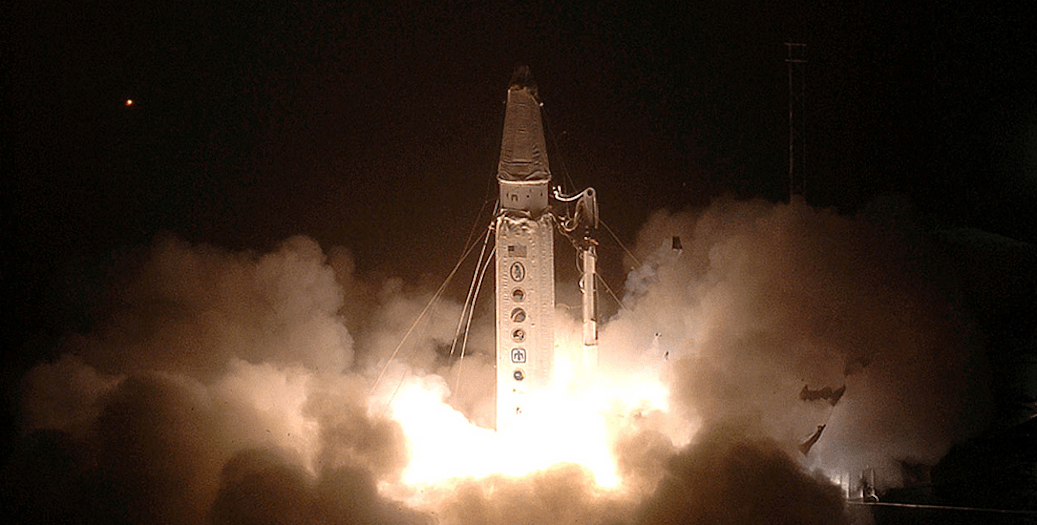
“Provocative and destabilizing and basically insane”
By Karl Grossman
Beginning to fill in his declaration of last year about turning space into a war zone and establishing a U.S. Space Force, President Trump was at the Pentagon on January 17 promoting a plan titled “Missile Defense Review.”
As The New York Times said in its headline on the scheme:: “Plans Evoke 1983 ‘Star Wars’ Program.” Bruce Gagnon, coordinator of the Global Network Against Weapons and Nuclear Power in Space, called it “provocative and destabilizing and basically insane.”
As Trump stated at the Pentagon: “We will recognize that space is a new war-fighting domain with the Space Force leading the way. My upcoming budget will invest in a space-based missile defense layer technology. It’s ultimately going to be a very, very big part of our defense and obviously of our offense.”
The new United States space military plan comes despite the Outer Space Treaty of 1967 that designates space as a global commons to be used for peaceful purposes. The U.S., the United Kingdom and then Soviet Union worked together in assembling the treaty. It has been ratified or signed by 123 nations. The release of the 100-page “Missile Defense Review” follows the Trump announcement, also at the Pentagon, in June, that he is moving to establish a U.S. Space Force as a sixth branch of the U.S. armed forces. He stated then: “It is not enough to merely have an American presence in space, we must have American dominance in space.”
Why preserving the INF Treaty matters
US decision to abandon treaty makes nuclear war more likely
On Saturday, February 2 the United States is expected to formally withdraw from the Intermediate Range Nuclear Forces (INF) treaty. The implications of this are extremely serious. The Basel Peace Office, Mayors for Peace Europe, Mayors for Peace North America, Parliamentarians for Nuclear Non-proliferation and Disarmament and World Future Council explain why it’s important to preserve the treaty.
Mayors, parliamentarians, policy experts and civil society representatives from forty countries – mostly Europe and North America – have sent an open letter, the Basel Appeal for Disarmament and Sustainable Security, to Presidents Putin and Trump and to the leaders of the Russian and US legislatures, calling on them to preserve the Intermediate Range Nuclear Forces (INF) Treaty, prevent a new nuclear arms race in Europe and undertake measures to reduce the risk of a nuclear conflict and support global nuclear disarmament. (Appeal also available in French, German, Russian and Spanish).
The INF Treaty is an historic agreement reached in 1987 between the United States and the Soviet Union to eliminate all of their nuclear and conventional ground-launched ballistic and cruise missiles with ranges of 500 to 5,500 kilometers, and to utilize extensive on-site inspections for verification of the agreement.
Following President Trump’s 20 October, 2018 announcement of his intent to withdraw the United States from the INF Treaty, the State Department has signaled that the US will suspend implementation of the treaty beginning 2 February 2019 and commence the six-month withdrawal process. If the Treaty is dissolved it would further stimulate the current nuclear arms race. In particular, it would open the door for intermediate-range, ground-based nuclear-armed missiles returning to Europe and for US deployment of such missiles in Asia.
Discrimination under the radioactive plume
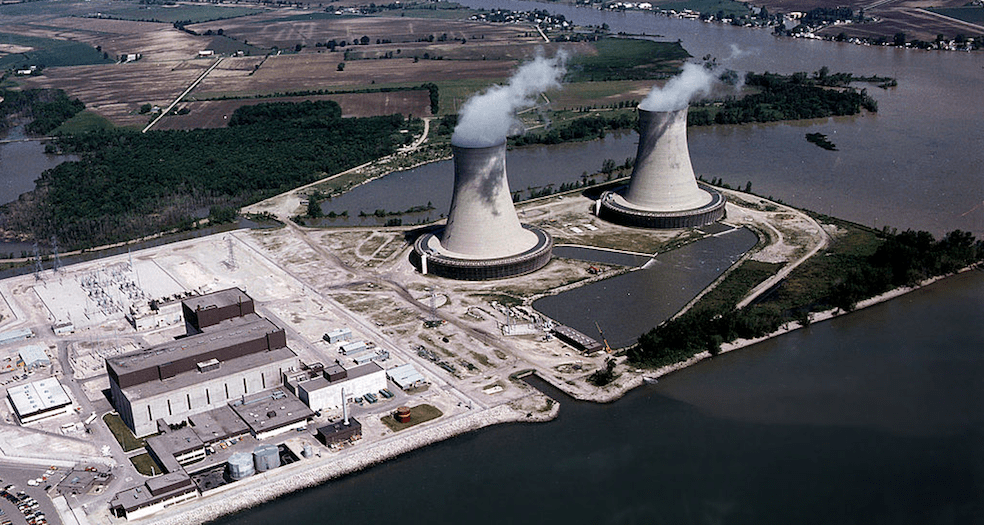
Potassium iodide distributed in Canada is denied Americans
By Keith Gunter
In the wake of the still ongoing March 2011 Fukushima disaster, governments in Europe and Canada began implementing more pro-active radiological disaster plans — including pre-distribution of potassium iodide (KI) in reactor emergency planning zones (EPZs). Potassium iodide is now directly delivered in advance to populations around nuclear plants throughout Europe, including Belgium, Finland, France, Germany, Lithuania, Luxembourg, Netherlands, Romania, Slovakia, Sweden, and Switzerland. However, no such program exists in the United States.
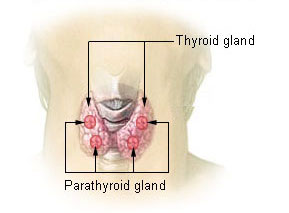
Image: US government
KI is a safe, stable form of iodine and is commonly used to iodize table salt. If ingested in prescribed doses in time when a nuclear accident occurs, it saturates the thyroid and blocks the absorption of radioactive iodine-131. Exposure to iodine-131 has been definitively linked to increased rates of thyroid cancer, most demonstrably after the 1986 Chernobyl nuclear disaster in the former Soviet Ukraine, and the 2011 Fukushima disaster in Japan.
However, KI works only to block absorption by the thyroid of radioactive iodine-131, a rapidly mobile radioactive gas released during a nuclear accident and one of the first hazards to arrive. KI is by no means a “cure” or “preventive” for the biological damage caused by other radioactive gases and longer-lived particulate fallout like radioactive cesium. However, KI is being recognized as an essential adjunct to prompt evacuation or temporary sheltering in place. In particular, infants, young children and pregnant women are identified as the most critical population that would need to receive the KI prophylactic protection.
Dead but still nailed to the perch
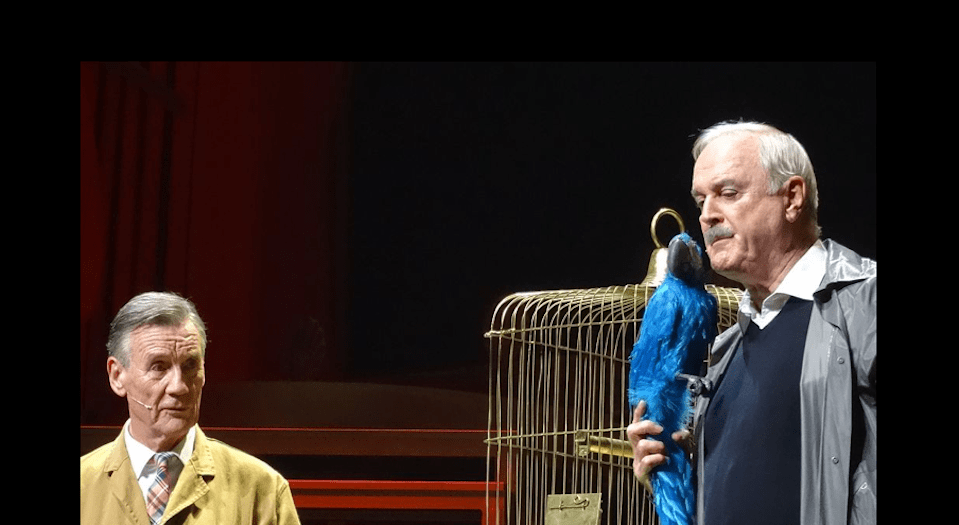
The nuclear power industry refuses to believe it is bereft of life
By Jonathon Porritt
Were it not for blanket Brexit, smothering every other news item, I suspect there would have been a lot more coverage of the recent collapse of Hitachi’s nuclear pretensions here in the UK. And a lot more questioning about what the hell happens next – in terms of UK energy and climate policy.
On January 17, Hitachi announced that it was ‘freezing’ (something of a euphemism for abandoning) its £16bn plan to build a new nuclear power station at Wylfa on Anglesey. It would also be axing its involvement in the Oldbury plant on the River Severn. In so doing, Hitachi acknowledged that it would have to take a £2bn hit on its balance sheet. Despite which, its share price improved significantly.
Following hot on the heels of last year’s decision by Toshiba to axe its involvement in the Moorside nuclear plant near Sellafield, this moment marked the definitive collapse of dreams of a nuclear renaissance first conjured up by Tony Blair back in 2004, pre-Fukushima, and subsequently endorsed (with even greater and more naïve enthusiasm, post-Fukushima) by the Tory/Lib Dem Coalition Government in 2013.
As it happens, I’ve had significant skin in this game throughout that time. First, as Chair of the Sustainable Development Commission, which invested significant resources in seeking to persuade Tony Blair that his 2005 change of heart on nuclear (Labour’s position before then was to keep the nuclear option ‘in the long grass’), was profoundly ill-judged. And then, together with three other former Directors of Friends of the Earth, in 2012 and 2013, warning David Cameron and his pro-nuclear Lib Dem groupies that his plans for six new plants by 2030 had zero prospect of ever being delivered.
(I really do try to avoid ‘told you so’ grandstanding here, but you might be amused to read the text of the actual letters the four of us sent Cameron at that time – accurate in almost every single particular!)
The farming family who held out against Wylfa B

With Welsh nuclear plant “on hold”, 300 years of tradition is saved
By Linda Pentz Gunter
There is a crowd of people at the top of the garden path wondering where to go next. They were led up there by Horizon, a subsidiary of Hitachi, which had dangled the promise of local jobs and an economic boom in front of a low income community eager for new opportunities.
That opportunity was supposed to consist of two new Japanese-built advanced boiling water reactors, known as Wylfa B or, in Welsh, Wylfa Newydd. They would have gone up adjacent to the closed two-reactor Wylfa A site on the north coast of Anglesey in Wales. But on January 17, Hitachi got financial cold feet and “froze” the project.
Of course the whole thing was always a chimera. The “local” jobs were arguably scant. Horizon said it would build housing for a workforce of 4,000, indicating the bulk of workers would come from elsewhere. The price for the electricity Wylfa B would generate was never articulated by the company. The local council gave Horizon permission to begin clearing the proposed site even though the company did not yet have the Development Consent Order necessary for the nuclear plant to proceed.
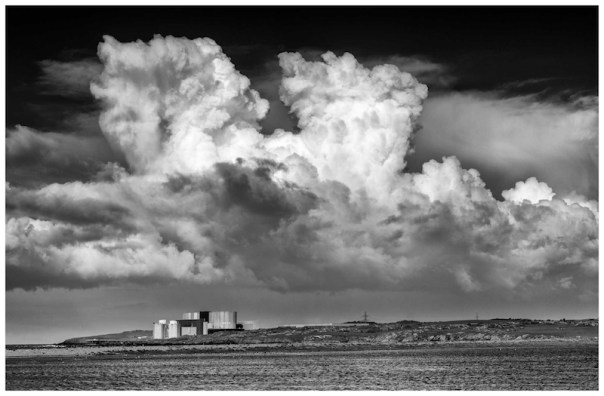
Storm clouds had been gathering over Wylfa for a while, long before the January 17 announcement to freeze the new nuclear project (Photo: Julian Wynne)
 Beyond Nuclear International