 Beyond Nuclear International
‘We were used as guinea pigs – every one of us’

No commendations or medals for America’s atomic vets
By Jennifer LaFleur, Reveal. (Originally published May 27, 2016.)
The USS De Haven sailed from Hawaii’s Pearl Harbor on May 5, 1958, carrying 240 men deep into the Pacific on a secret mission.
Gunner’s mate Wayne Brooks had only a vague idea of their destination. But within a few days, he would experience an explosion so immense and bright that he could see his own bones. He and his crewmates had been assigned to witness Operation Hardtack I, a series of nuclear tests in the Pacific.
The De Haven, a destroyer, was one of dozens of ships assigned to the operation at Enewetak Atoll, Bikini Atoll and Johnston Island. It would be their crews’ initiation into the ranks of hundreds of thousands of service members now known as “atomic veterans.”

Wayne Brooks was a gunner’s mate aboard the USS De Haven when it sailed deep into the Pacific for Operation Hardtack I, a series of nuclear tests in 1958. Over three months, he witnessed 27 of them. (Photo: Courtesy of Wayne Brooks).
What seems like a story long tucked away in history books remains a very real struggle for those veterans still alive, the radiation cleanup crews who followed and their families – many of them sick and lacking not just the federal compensation, but also the recognition they believe they deserve.
There is no commendation or medal for being an atomic vet.
Holding onto optimism in the pursuit of peace

“When we squabble over trivialities, we are nothing more than useful idiots to the power elites.”
By Peter Weish
This is Peter Weish’s acceptance speech on receiving the 2018 Nuclear-Free Future Award in the category of Lifetime Achievement, on October 24 in Salzburg, Austria.
As we all know, it all began with the bomb. After the two atomic weapons of mass destruction were dropped on Hiroshima and Nagasaki, the dictum shifted in the mid-1950s to “Atoms for Peace,” sparking a euphoric faith in the power of the atom. Every self-respecting country set up its own nuclear research centers and embarked on atomic energy projects.
The Austrian Atomic Energy Research Organization was founded in 1956, and in 1960 the first research reactor was built, in Seibersdorf. From 1966 to 1970, I worked at the reactor facility, in the Institute for Radiation Safety, where I noticed, with growing concern, how others were handling radioactive substances incompetently and irresponsibly yet seeking at the same time to promote these substances’ large- scale use. When the reactor’s technical director stated one day in a radio interview, “We hear constant claims that radiation causes cancer. The opposite is true – radiation cures cancer,” I had had enough.

Peter Welsh, second from left, joined fellow 2018 Nuclear-Free Future Award winners, left to right: Linda Walker, Weish, Karipbek Kuyukov, Didier and Paulette Anger. Photo: © Orla Connolly.
Together with my friend Eduard Gruber, a radio chemist, I began developing scientific arguments to counter the pro-nuclear narrative and raise public awareness. It was only much later that I chanced upon a quotation from Jean Jacques Rousseau that neatly summed up my motivation: “I would never presume to educate people if others did not seek to mislead them!” And so it was that in 1969 I published my first critical essay on nuclear energy.
Yes, I glow in the dark!
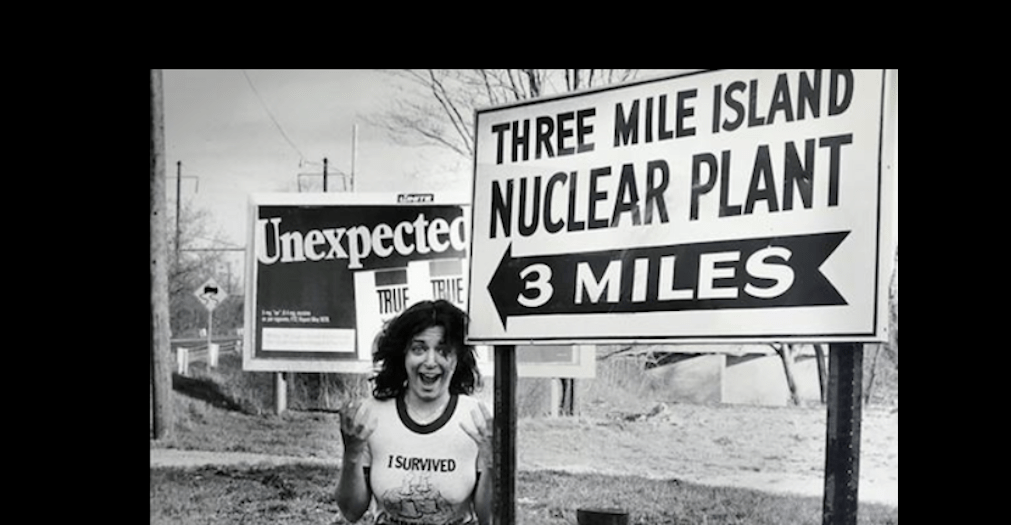
One woman’s odyssey after surviving the Three Mile Island nuclear disaster
By Karl Grossman
Libbe HaLevy has written a brilliant book about the deadly dangers of nuclear power.
It’s titled “Yes, I Glow In The Dark!” with a subtitle, “One Mile From Three Mile Island To Fukushima And Nuclear Hotseat.”
It combines the personal with clear facts about why nuclear power is lethal.
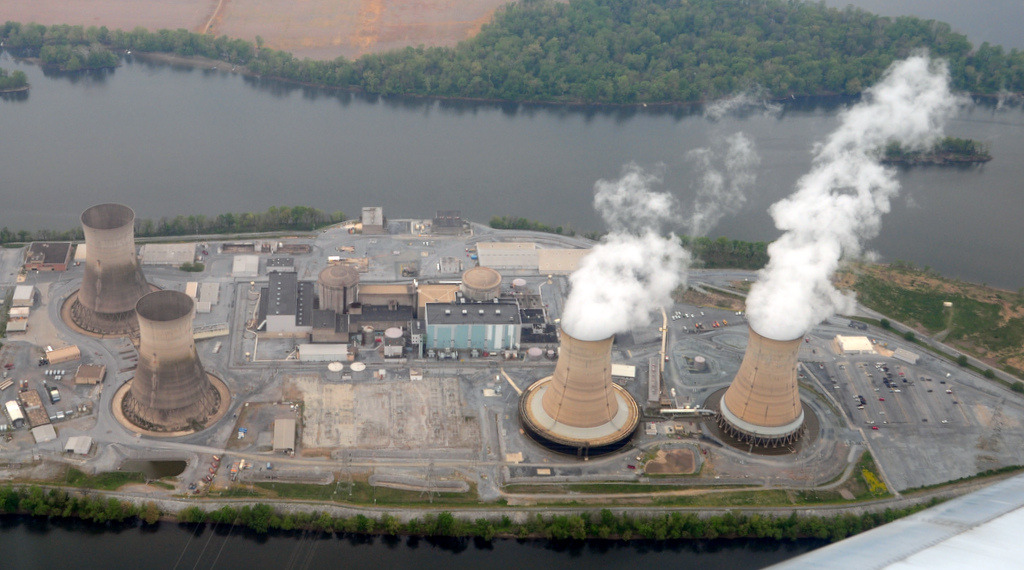
Its title stems from Ms. HaLevy being just a mile from the Three Mile Island nuclear power plant, Unit 2, when it underwent a meltdown.

Libbe HaLevy with Leona Morgan at the 2015 International Uranium Film Festival, Quebec, Canada
“CLOSE ALL YOUR DOORS AND WINDOWS AND STAY AWAY FROM THEM. STAY INSIDE AND DO NOT LEAVE YOUR HOMES UNLESS IT IS ABSOLUTELY NECESSARY,” begins the book’s introduction, referring to what people in the area were told in 1979 when TMI went wild.
“This was not the vacation I had intended,” she relates. “Not a drill, not a false alarm. This was really happening. A nuclear reactor malfunctioning only one mile away…”
“This is the story of what happens when someone who is just a person—no privileged standing in the world, no family fortune, old school ties, corporate or political connections to call upon—finds herself caught next to something that we were told could never happen, a malfunctioning, radiation-leaking, out-of-control nuclear reactor.”
“Whatever it is that speaks to you in what follows,” she tells readers, “may it provide clarity, perspective, and food for thought….”
Nuclear Power Will Not Save Us From Climate Change
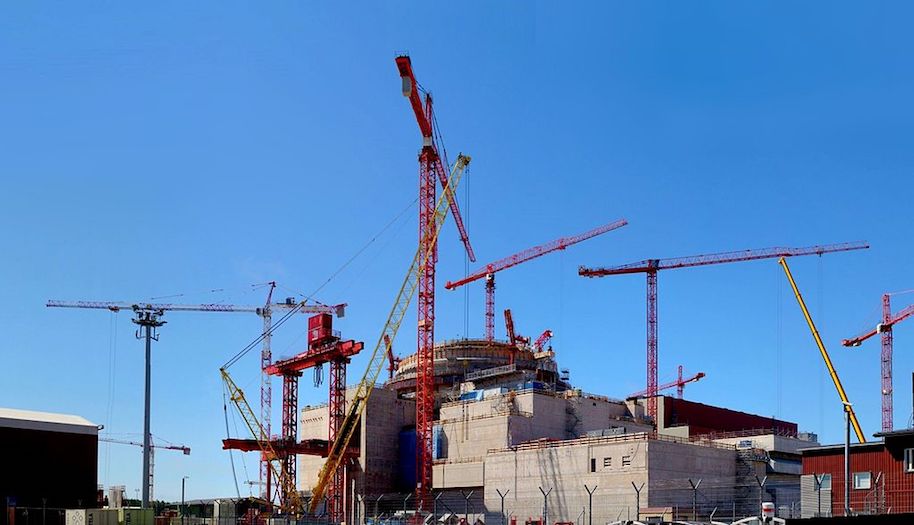
How the IPCC’s solutions for reversing the Earth’s warming encourage business as usual
By M.V. Ramana and Robert Jensen
The Intergovernmental Panel on Climate Change’s special report released in October rightfully elicited much public commentary about global warming and its truly frightening impacts. But in those initial reactions, less attention was paid to the unnerving implications of the report’s suggested solutions, which encourage us to roll the dice on unproven technologies and double down on nuclear power.
Underlying the IPCC report’s claims is the belief that technological solutions can fix the climate problem. Yet these fixes don’t address the root cause of climate change.
Let’s start by facing the frightening facts. The report shows that warming must be held to no more than 1.5°C above preindustrial levels to avoid truly catastrophic consequences. This requires emissions of CO2 to be limited to an amount that, at the current rate, will be breached in 10 to 15 years.

The frightening facts in the IPCC report show that warming must be held to no more than 1.5°C above preindustrial levels to avoid truly catastrophic consequences. (Photo: Liam Moloney for Creative Commons.)
The report outlines four broad pathways to stay within that limit, all of which include large-scale deployment of various technological fixes to climate change. These include not just the sensible pursuit of solar energy and wind power but also of unproven technologies, such as bioenergy with carbon capture and storage, which has not been demonstrated to work at scale.
Appalling safety culture should eliminate nuclear power from subsidies
Union of Concerned Scientists ignores its earlier report by now endorsing “top ranked” nuclear plants for bailouts
By Paul Gunter, Beyond Nuclear
A controversial new report from the Union of Concerned Scientists suggests that closing aging US nuclear plants — and not subsidizing the cost of building new ones — will increase carbon emissions. The assumption is that nuclear plants that close will be replaced by coal or natural gas-fired plants.
An increase in greenhouse gas emissions in the US is of course unacceptable given the accelerating climate change crisis we now face. However, the evidence so far, that closed nuclear plants will largely be replaced by natural gas and coal, is not borne out by the actual evidence.
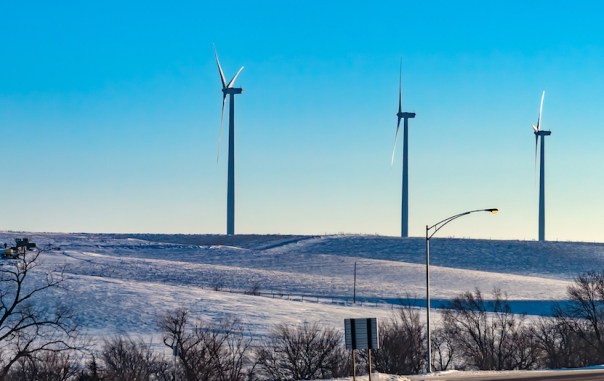
When Nebraska closed its nuclear plant, the state replaced the electricity with new wind power generation. (Photo: Michel Rathwell, Creative Commons/Flickr.)
California, which has only one nuclear power plant still operating at Diablo Canyon, will replace it, and the already shuttered San Onofre reactors, entirely with renewable energy. When Nebraska closed its flooded Ft. Calhoun nuclear plant, it was wind energy, not fossil fuels, that stepped in to fill the new generation void.
No nuclear bailouts for Pennsylvania and Ohio
Carbon reductions can be met with renewables without propping up old nukes
By Maureen Mulligan
As members of Three Mile Island Alert, a watchdog group, we are resolutely opposed to the present attempts by utilities in Pennsylvania and Ohio to secure huge subsidies to keep their aging and financially failing nuclear power plants operational well beyond their “expiration dates”. Such a decision would have national implications. The diversion of billions of dollars into nuclear subsidies would distort markets and state regulatory decisions and result in lower investment in renewable resources and energy efficiency. This in turn would prolong the uneconomic existence of a resource that is not clean energy.
The Union of Concerned Scientists, in its new report, argues that the trajectories of existing renewable energy and efficiency standards are insufficient to prevent a dangerous increase in CO2 emissions, and that a price on carbon could serve to better mitigate carbon emissions as long as nuclear reactors remain operational.
This latter requirement is roundly contradicted by reports over the last several years that show that, even in Pennsylvania, a state with one of the highest greenhouse gas (GHG) emissions rates, GHG reduction goals can be met under the Environmental Protection Agency’s Clean Power Plan targets through planned power plant retirements.

Pennsylvania has plenty of time to develop solar energy under its “Solar Future’s Plan”. (Photo: Pennsylvania Department of Environmental Protection)
Nuclear power is a well-funded, controversial industry that embodies hazards at all points along its fuel cycle. There is no room for both renewable energy development and continued, subsidized operation of nuclear power plants.

