 Beyond Nuclear International
A night not to miss

An evening with heroes of our movement is a moment to savor as we celebrate the 2025 recipients of the Nuclear-Free Future Awards, writes Linda Pentz Gunter
The 2025 Nuclear-Free Future Awards honor the largely unsung heroes of the Nuclear Age who work to end uranium mining and rid the world of nuclear weapons, nuclear power and uranium munitions. At the ceremony to celebrate these achievements there is always a special magic in the room. Without the laureates of the Nuclear-Free Future Awards — and without each other — the world can never become the safe, beautiful and nurturing place it should be for all of us.
The 2025 Nuclear-Free Future Awards will be held on Tuesday, March 4, 2025 at The Great Hall at Cooper Union in New York City (7 E 7th St. NY NY.) A reception at 6pm will be followed by the awards ceremony starting at 7pm. Both events are free admission and open to the public.
The Awards are being held in conjunction with the Third Meeting of States Parties to the Treaty on the Prohibition of Nuclear Weapons March 3-7 at the United Nations. We encourage all those in attendance to take the short subway ride down to Cooper Union for the Awards.
For those of you around the world who cannot be there, the event will be video recorded and available later on YouTube. You can watch the previous awards ceremony in full here or a short 15-minute version here.
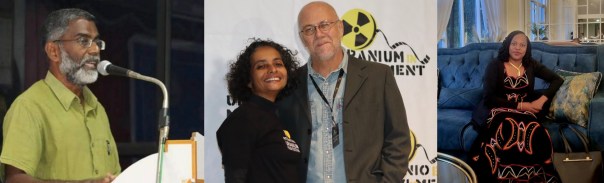
This year we honor individuals from Brazil, Germany, India, Navajo country, the United States and Zimbabwe for their achievements in working for a nuclear-free world. The Award laureates are chosen by an international jury of their peers and are offered in three categories: Resistance, Education and Solution.
The 2025 laureates are: S.P. Udayakumar (India) for Resistance; Márcia Gomes de Oliveira and Norbert Suchanek (Brazil) for Education; and Edwick Madzimure (Zimbabwe) for Solution.
Honorary Lifetime Achievement awards will be given to teacher, author and anti-nuclear activist, Joanna Macy, and posthumously to Native American activist and musician, Klee Benally (headline photo).
Read MoreA responsibility to civic groups
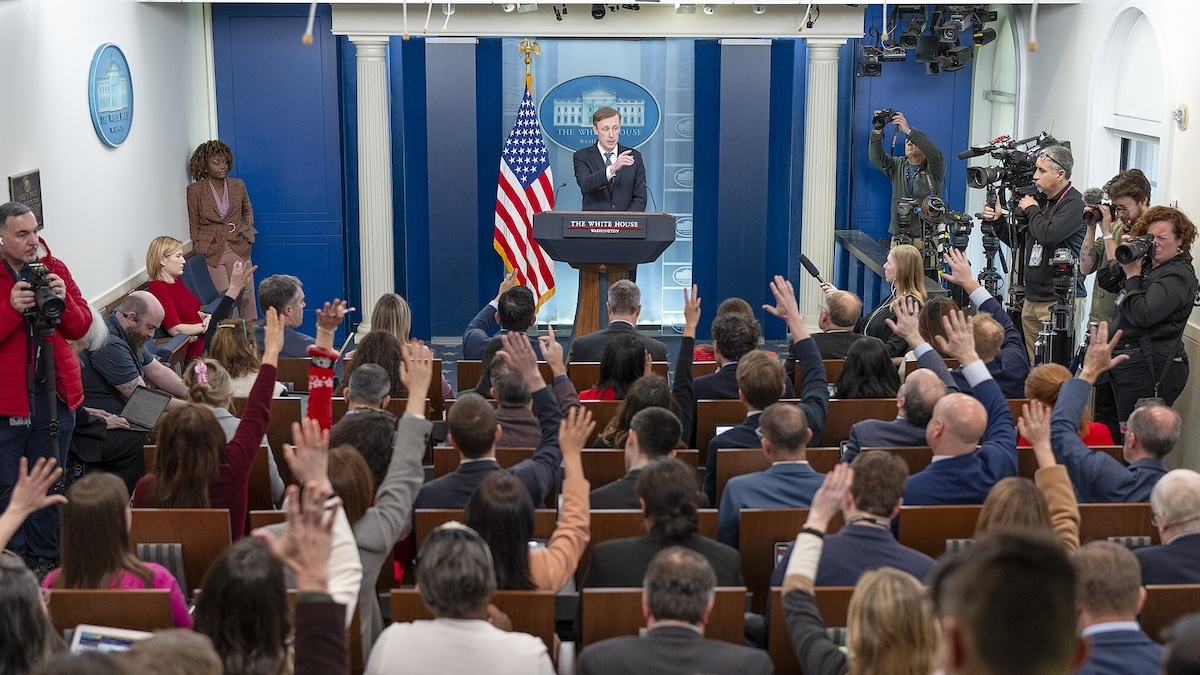
The corporate media needs to step it up in giving voice to grassroots activism, writes Ralph Nader
This article does not specifically address anti-nuclear groups or campaigns but fully reflects the perpetual struggle for coverage we — like legions of other civic groups — encounter in the mainstream press. The corporate media routinely ignores our messages about the futility and danger of all things nuclear, while obediently and unquestioningly parroting the industry propaganda. Consequently, this clarion call from Ralph Nader, himself a tireless anti-nuclear campaigner among many causes, is an important document we felt needed wider reading.
A lawless madman, with cunning political skills, is at large in our White House. After less than five days in office, he has set a record for flamboyantly issued executive orders, many violative of federal statutes and the Constitution.
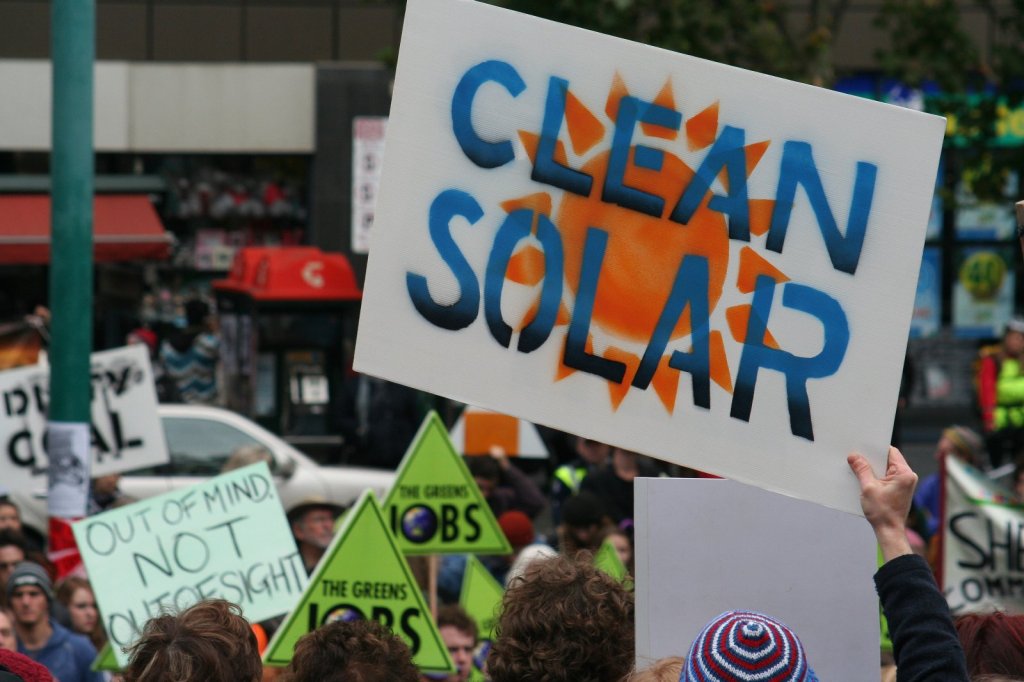
A partial list: he has withdrawn the U.S. from the World Health Organization (e.g., damaging international coordination regarding pandemics), quit the Paris Climate Accords (e.g., nations working together against climate violence), selected corporate ideologues to run regulatory agencies (the purpose of which is to save lives, prevent injuries and stop consumer rip-offs), unleashed ICE to crash schools looking for undocumented kids to take away, threatened the media, readied more tax cuts for the super-rich and big companies, and halted the hiring of I.R.S. staff needed to stop massive tax evasions by the plutocracy.
He has moved to make massive cuts in spending for programs protecting children and the sick (e.g., slashing Medicaid), lifting controls over oil & gas drilling, reducing support for solar and wind energy, and gutting the civil service. Meanwhile he, a convicted felon, is pardoning hundreds of convicted jailed felons who assaulted Capitol Hill police on Jan. 6, 2021, who will now be vengefully on the streets. The terrifying list goes on. (See the Brookings Institution tracking of regulatory changes in the second Trump administration.
Read MoreSole control
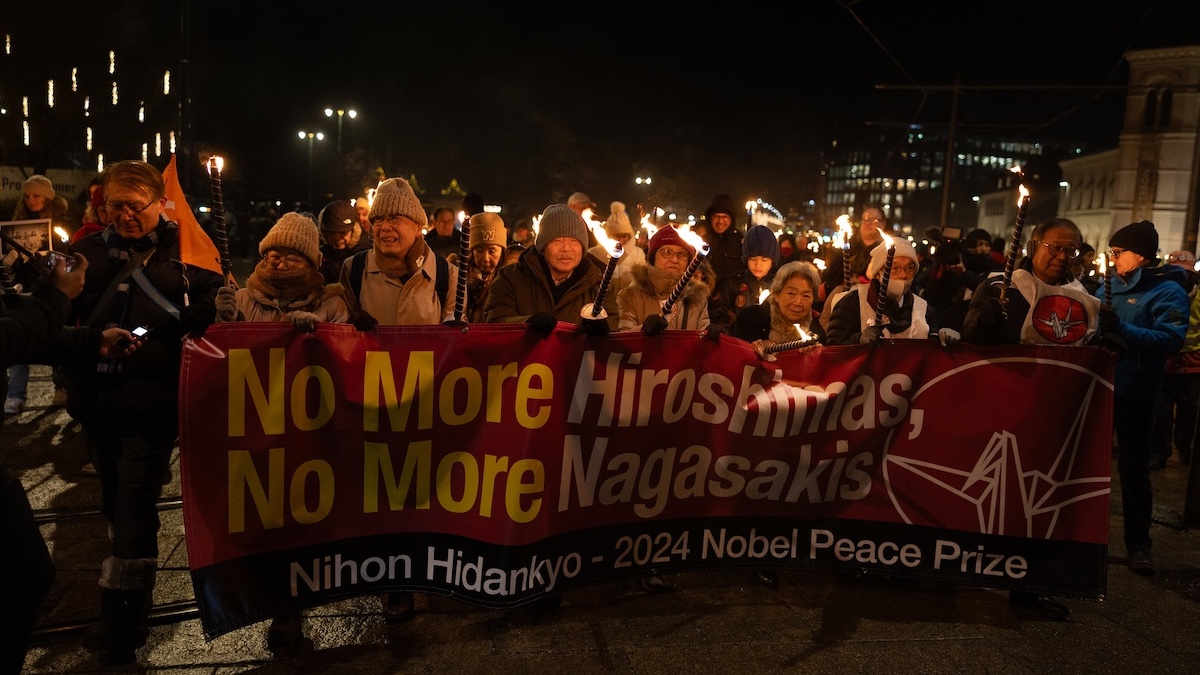
No US president should be allowed to unilaterally authorize a first strike of nuclear weapons, writes Linda Pentz Gunter
President Trump once again has sole authority to make a decision to launch the U.S. nuclear arsenal. He can do so unilaterally, without consulting, getting permission from or even informing his defense secretary or Congress.
We are back on very thin atomic ice.
Not that anyone should ever launch nuclear weapons, whether they are allowed to or not, and no matter who approves it. Under what circumstances would there by any point in doing so? If it’s in retaliation, it’s already too late. If it’s a first strike, our own extinction is 15 minutes away.
But a trigger happy US president, whether literal or metaphorical, does not instill confidence that in a moment of who knows what kind of impulsive petulance, the nuclear button won’t get pushed. Despite Trump’s pronouncements in Davos last month that he wants to work with the leaders of Russia and China to “see if we can denuclearize,” something Trump says he thinks is “very possible,” there is no reason to be confident that a man who lied more than 30,000 times last time he was US president, really means what he says.
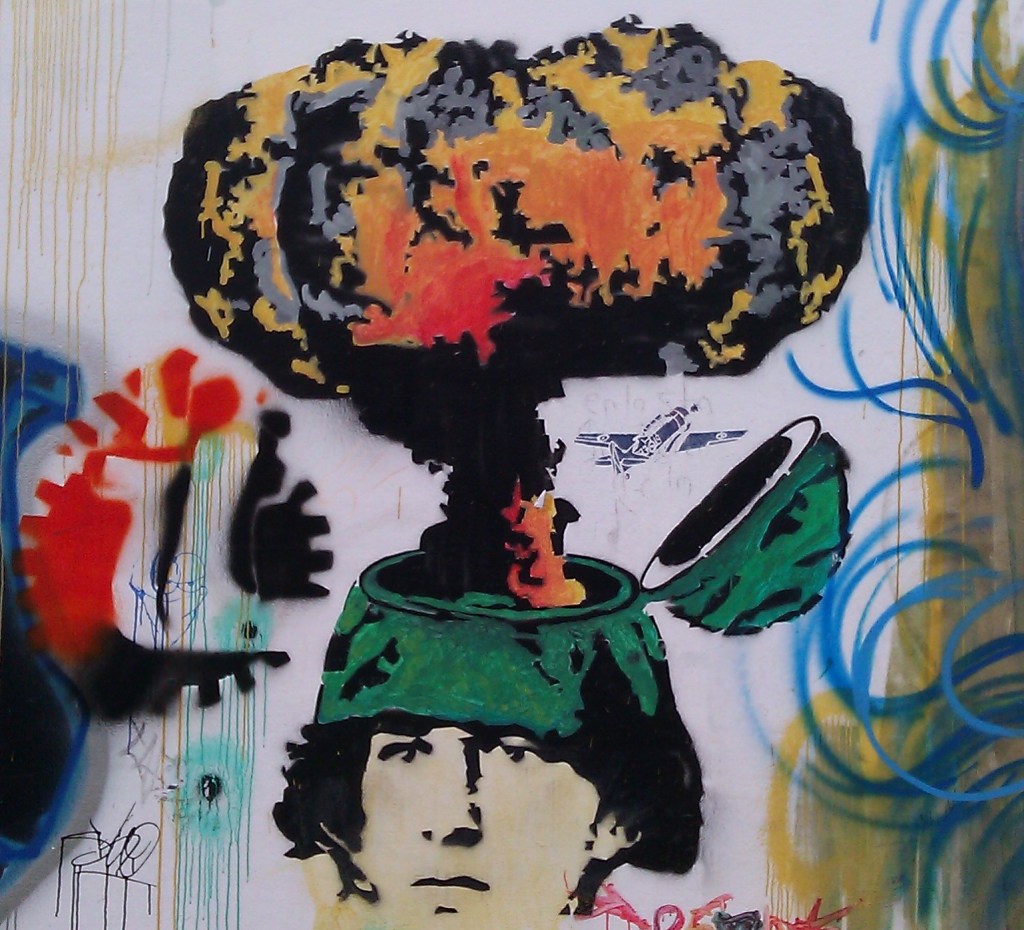
Anticipating that chaos is more likely to be Trump’s preferred modus operandi, Senator Ed Markey of Massachusetts and his fellow Democrat in the House, Ted Lieu of California, wrote to then president Joe Biden last December 12, to urge him to make the change himself and mandate that a president must obtain authorization from Congress before initiating a nuclear first strike. No one individual, including the US president, should be able to start a nuclear war without congressional approval they said. They described current U.S. nuclear launch policy as “terrifying, dangerous, and unconstitutional”.
”As Donald Trump prepares to return to the Oval Office, it is more important than ever to take the power to start a nuclear war out of the hands of a single individual and ensure that Congress’s constitutional role is respected and fulfilled,” wrote Markey and Lieu in their letter to Biden. But Biden did not act.
Read More‘Acres of Clams’

New Documentary Tells Story of the Clamshell Alliance
by Anne Alpert, InDepthNH.org

By Arnie Alpert, Active with the Activists
For two weeks in the spring of 1977, New Hampshire was at the center of national attention. No, it had nothing to do with the first-in-the-nation primary. The matter that grabbed headlines was the arrest of 1415 people who had peacefully taken over the construction site of a proposed nuclear power plant in Seabrook. After being taken away on buses and National Guard trucks and processed at the Portsmouth Armory, the protesters were delivered to four other armories, where, refusing to pay bail, they engaged in a battle of wills with the stubbornly pro-nuclear governor, Meldrim Thomson.
The group behind the protest was a ragtag New England-wide coalition that called itself the Clamshell Alliance, members of which called themselves “Clams.” How it was able to take on a governor and a powerful industry through nonviolent protest, music, and well-deployed humor is the story told in “Acres of Clams,” a new documentary written, produced and narrated by Eric Wolfe.
“You might find this story hard to believe. Hell, I was there, and I hardly believe it myself,” Wolfe says at the outset. He weaves his story from personal memories, archival photos and footage, and a series of oral history videos captured by Steve Thornton at Clamshell reunions held a few decades later.
Wolfe had arrived in New England from his native Kansas just in time for Clamshell’s creation in 1976, accompanied by a crew of hand puppets and a show he had created, “Burnt Toast: Trouble in the Nation’s Breadbasket.” The irreverent puppets, talking trash about nuclear technology, fit right in with the rebellious movement taking shape. Soon, Wolfe would be performing “Burnt Toast” from the back of a horse-drawn covered wagon making its way across southern New Hampshire to the first act of group civil disobedience at Seabrook.
Read MoreWildfire risks high at nuclear plants
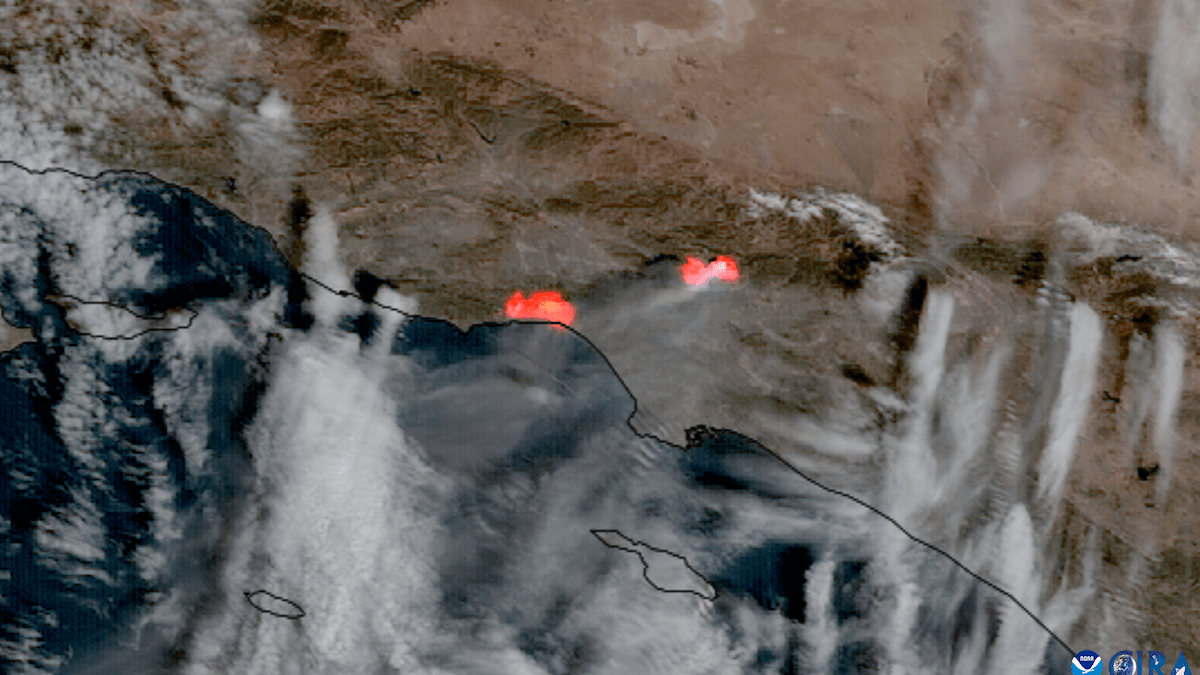
So why won’t the industry and NRC plan for them when extending reactor licenses, asks Paul Gunter
For nuclear power plants, fire is considered a very significant contributor to the overall reactor core damage frequency (CDF), or the risk of a meltdown. Fire at a nuclear power station can be initiated by both external and/or internal events. It can start with the most vulnerable external link to the safe operation of nuclear power plants; the Loss Of Offsite Power (LOOP) from the electric grid. LOOP is considered a serious initiating event to nuclear accident frequency. Because of that risk, US reactors won’t operate without external offsite power from the electric grid.
The still largely uncontained wildfires burning in and around Los Angeles and Ventura Counties in southern California “are sure to rank among America’s most expensive.” The ongoing firestorms have now extended into a fourth period of “extremely critical fire weather” conditions and have burned nearly 63 square miles, an area the size of Washington, D.C. The estimated number is still being tallied for the thousands of homes and structures destroyed, the loss of life, the evacuation of communities indefinitely dislocated and the threats to and impacts on critical infrastructure including electrical power .
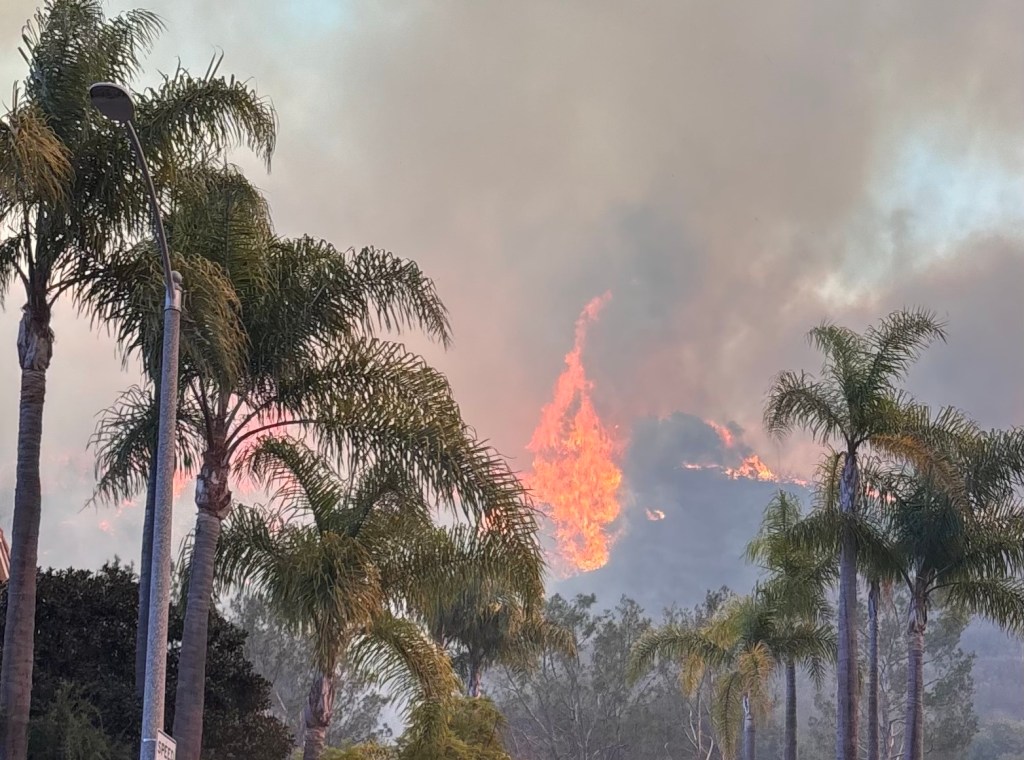
There is no scientific doubt that global warming is primarily caused by the unquenchable burning of fossil fuels, yet politically motivated denial is entrenched in the US Congress. The increased frequency and severity of these wildfires—leading to suburban and even urban firestorms— are but one consequence of a climate crisis along with a range of other global natural disasters including sea level rise, hurricanes, more severe storms generally, extreme precipitation events, floods and droughts. This more broadly adversely impacts natural resources and critical infrastructures to include inherently dangerous nuclear power stations.
At this particular time, it is important to reflect upon the April 2, 2024, report to Congress issued by its investigative arm, the United States Government Accountability Office (GAO), “Nuclear Power Plants: NRC Should Take Actions to Fully Consider the Potential Effects of Climate Change,” (GAO 24-106326).
The GAO warns that the US Nuclear Regulatory Commission (NRC) needs to start taking actions to address the increased risk of severe nuclear power plant accidents attributable to human caused climate change.
Read MoreThe Great British Nuke Off

It’s time to expose the sham plan for new nuclear power, write Andy Blowers and Stephen Thomas in their new report
The following is the introduction and the conclusion from the report, “It is time to expose the Great British Nuclear Fantasy once and for all”. Read the full report.
In April 2022, the then UK Prime Minister, Boris Johnson, set a target of 24GW (equivalent to eight stations like Hinkley Point C) of new nuclear capacity to be completed in Great Britain by 2050. At the heart of the proposal was the creation of a new government owned entity, Great British Nuclear (GBN), with a mission of ‘helping projects through every stage of the development process and developing a resilient pipeline of new builds’ designed to ensure energy security and to meet the UK’s commitment to achieving net zero.
The new Labour Government, elected in July 2024, has been emphatic about the scaling up of renewables, and has confirmed that nuclear power ‘will play an important role in helping the UK achieve energy security and clean power’. While not explicitly committing to the 24GW target, the new Government expressed its belief that a scale expansion of new nuclear projects was a necessary part of the energy mix for the transition to achieving net zero carbon by 2050.
The Government is expected to continue with GBN but in a clearly subordinate role to its new creation, Great British Energy, its vehicle for driving development and investment into projects that will enable the energy transition to achieve net zero by 2050.
There has, so far, been little government recognition of the sheer difficulty of achieving a vast expansion of nuclear energy. As so often in the past, the nuclear programme has barely got off the ground and the flagship project of the new nuclear programme, Sizewell C, had, by October 2024, yet to receive a Final Investment Decision (FID) apparently because of the lack of interested investors.
In an attempt to keep the project from collapsing while it tries to find investors, Government has chosen to invest £8bn in the project, in addition to Electricité de France’s (EDF’s) contribution of about £700m, just to get it to FID, a process budgeted by EDF in 2016 to cost only £458m. Small Modular Reactors in which much hope is vested barely exist beyond the drawing boards and by the time they could be deployed, if all goes to plan, it will be too late for SMRs and Sizewell C to make any significant contribution to achieving ‘Net Zero’.
Read More Beyond Nuclear International