 Beyond Nuclear International
US flies nuclear bombs to Britain
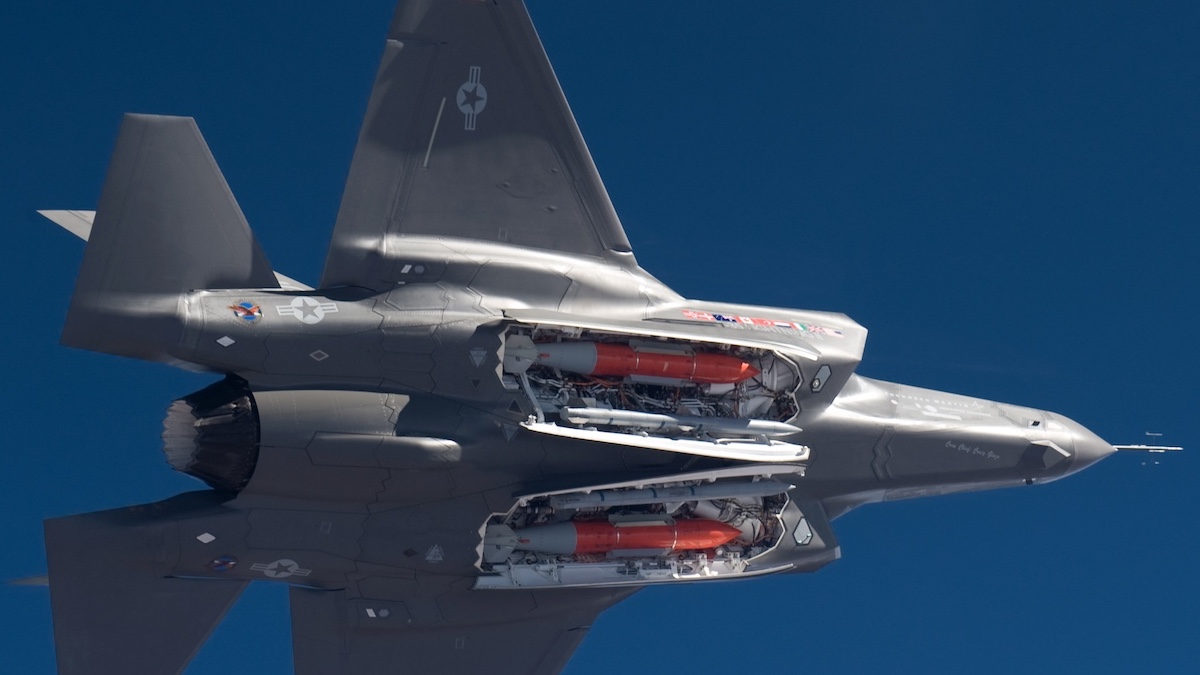
Nukewatch UK reveals how US nuclear gravity bombs were deployed on US soil for the first time in 17 years
By Peter Burt
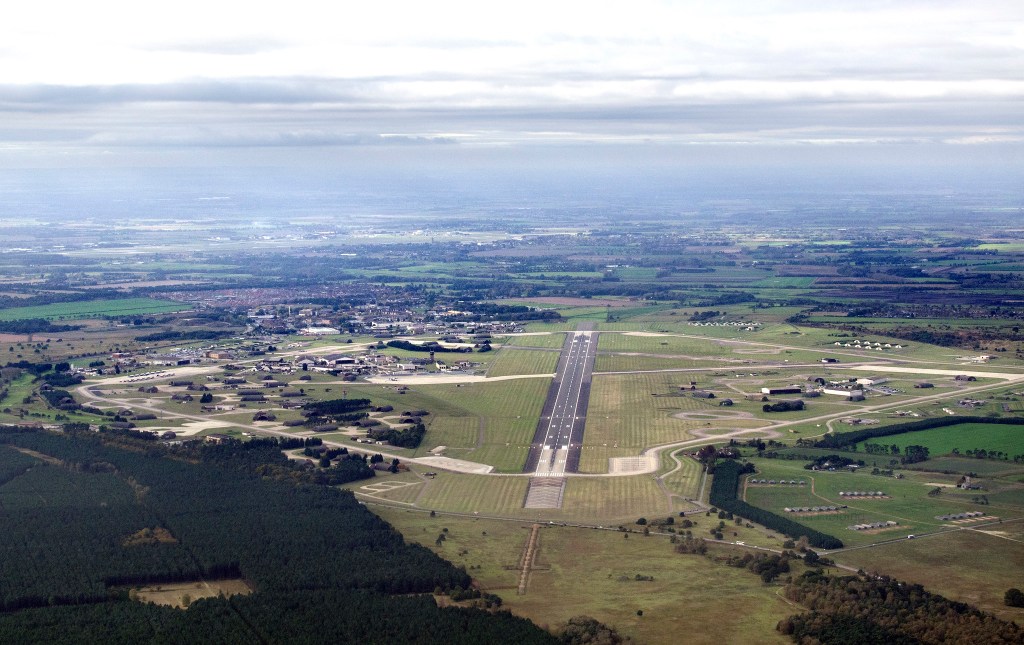
US nuclear bombs were delivered to Lakenheath air base on Thursday 17 July as part of NATO plans to deploy new battlefield nuclear nuclear weapons intended for war-fighting in Europe. The following is an examination of how we know this, with an update also below.
The flight
The arrival of a special flight transporting the bombs was observed by Nukewatch UK, who judge that the evidence publicly available from our observations and flight-tracking data now supports the conclusion that nuclear weapons are based at the Lakenheath US air base in Suffolk. This article explains how the weapons were brought to Lakenheath by the US Air Force and sets out the evidence which indicates they are now stationed at the British base.
Shortly after 7 am local time on Tuesday 15 July a giant C-17 Globemaster transport aircraft, flight number RCH4574 (‘Reach 4574’), assigned to the US Air Force’s 62nd Airlift Wing left Joint Base Lewis–McChord, its home base in Washington state. The 62nd Airlift Wing is an elite, highly trained transport unit which serves as the US Air Force’s Prime Nuclear Airlift Force: the only Air Force section tasked with the role of supporting the US Department of Defence and Department of Energy with their nuclear airlift operations. The aircraft undertaking the flight was a C-17 with the serial number 08-8200, flying on high priority mission with the air force mission number PAM112271196.
The aircraft flew across the continental United States to Kirtland Air Force Base in Albuquerque, New Mexico – the hub of the US Air Force’s nuclear operations, where the largest nuclear weapons storage facility in the world is located: the Kirtland Underground Munitions Maintenance and Storage Complex(KUMMSC). KUMMSC stores a significant portion of the US nuclear arsenal, including gravity bombs and warheads.
At Kirtland the aircraft almost certainly loaded up with a cargo of anything up to 20 newly manufactured B61-12 nuclear weapons – a new, modernised version of the US Air Force’s principal nuclear gravity bomb with greater accuracy than older variants of the weapon. Manufacturing of the B61-12 variant was completed in December 2024 and the weapon is currently being rolled out on deployment. Whilst at Kirtland the aircraft was parked on Pad 5 – the section of the airbase designated for handling hazardous cargoes. Other aircraft at the airport were given a warning not to overfly the aircraft on Pad 5 for a period of over five hours, which ended only once the C-17 had departed.
Read MoreNo more Hiroshimas

Why is our response to atomic horror to arm up and ignore other atrocities, asks Linda Pentz Gunter
This is an opinion piece by staff member, Linda Pentz Gunter. It does not necessarily reflect the position of Beyond Nuclear as an organization.
For 80 years, the Hibakusha (survivors) of the United States atomic bombings of Hiroshima and Nagasaki, have been warning the world — “never again”. Never again should such weapons of terror be used, on civilians or on anyone. Never again should human beings treat other human beings as sacrificial and expendable. Peace is the only way forward, they plead.
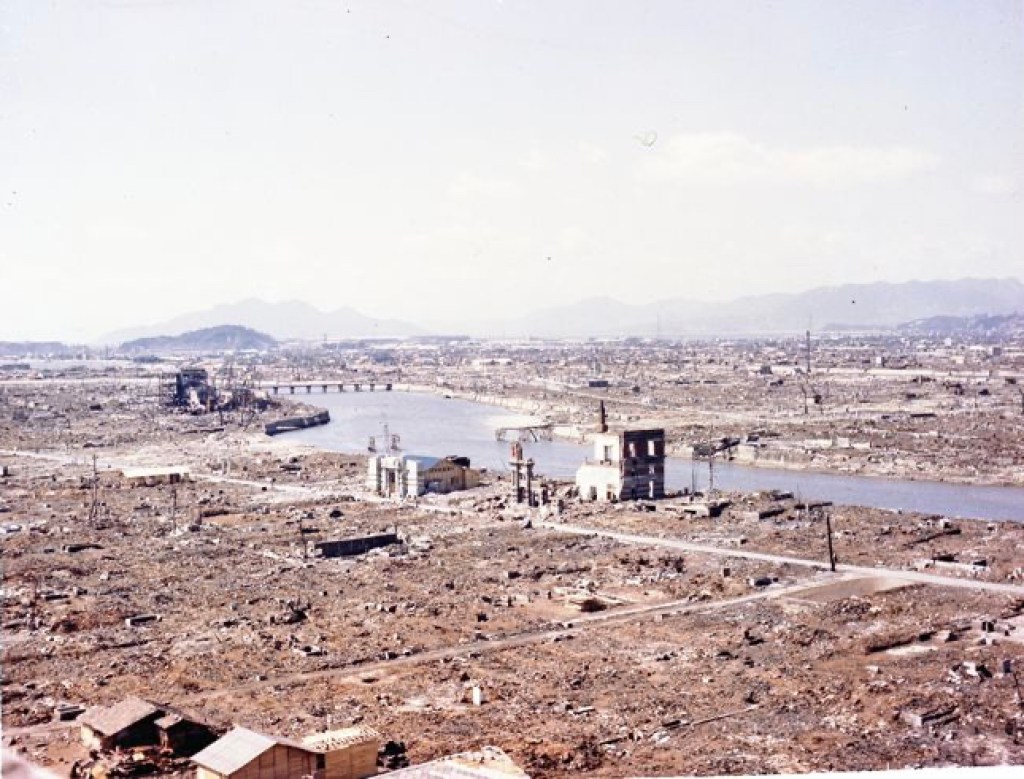
Now it is 80 years since those two terrible days on August 6 and 9, 1945, when the United States chose to end the lives of what would eventually become at least 200,000 people in a callous public relations exercise to prove its might to the Soviet Union. Today, those Hibakusha still alive must surely be asking: “why haven’t you been listening?”
Even though the world has not used nuclear weapons again in war, the nine official nuclear-armed nations went on to “test” their nuclear weapons more than 2,000 times on other innocent communities mostly far away from their own — including in the Pacific, Australia, the Sahara and Kazakhstan — and even, in the case of the US, on its own people in Nevada. The very first atomic victims were of course those downwind of the July 16, 1945 Trinity test in New Mexico that launched the atomic age and the nuclear arms race.
Thanks to luck or grace but certainly not wisdom, we have not yet arrived at the finish line of nuclear annihilation. But we have not won the race to eliminate nuclear weapons, either. Despite international efforts, first with the nuclear Non-Proliferation Treaty (NPT) of 1968 and then the Treaty on the Prohibition of Nuclear Weapons that entered into force in 2021, nuclear weapon nations are arming up, not drawing down.
Read MoreHiroshima’s history lesson
What Can We Learn From the Birth of the Nuclear Era?
By Eric Ross, Common Dreams
In recent months, nuclear weapons have reemerged in global headlines. Nuclear-armed rivals India and Pakistan approached the brink of a full-scale war, a confrontation that could have become an extinction-level event, with the potential to claim up to 2 billion lives worldwide.
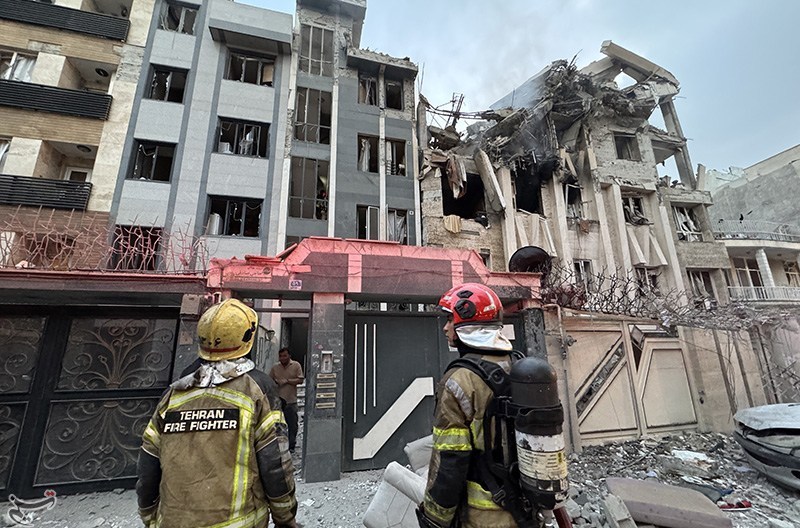
The instability of a global order structured on nuclear apartheid has also come into sharp relief in the context of the recent attacks on Iran by Israel and the United States. That system has entrenched a dangerous double standard, creating perverse incentives for the proliferation of world-destroying weaponry, already possessed by nine countries. Many of those nations use their arsenals to exercise imperial impunity, while non-nuclear states increasingly feel compelled to pursue nuclear weapons in the name of national security and survival.
Meanwhile, the largest nuclear powers show not the slightest signs of responsibility or restraint. The United States, Russia, and China are investing heavily in the “modernization” and expansion of their arsenals, fueling a renewed arms race. And that escalation comes amid growing global instability contributing to a Manichean world of antagonistic armed blocs, reminiscent of the Cold War at its worst.
The nuclear threat endangers not only global peace and security but the very continuity of the human species, not to speak of the simple survival of life on Earth. How, you might wonder, could we ever have arrived at such a precarious situation?
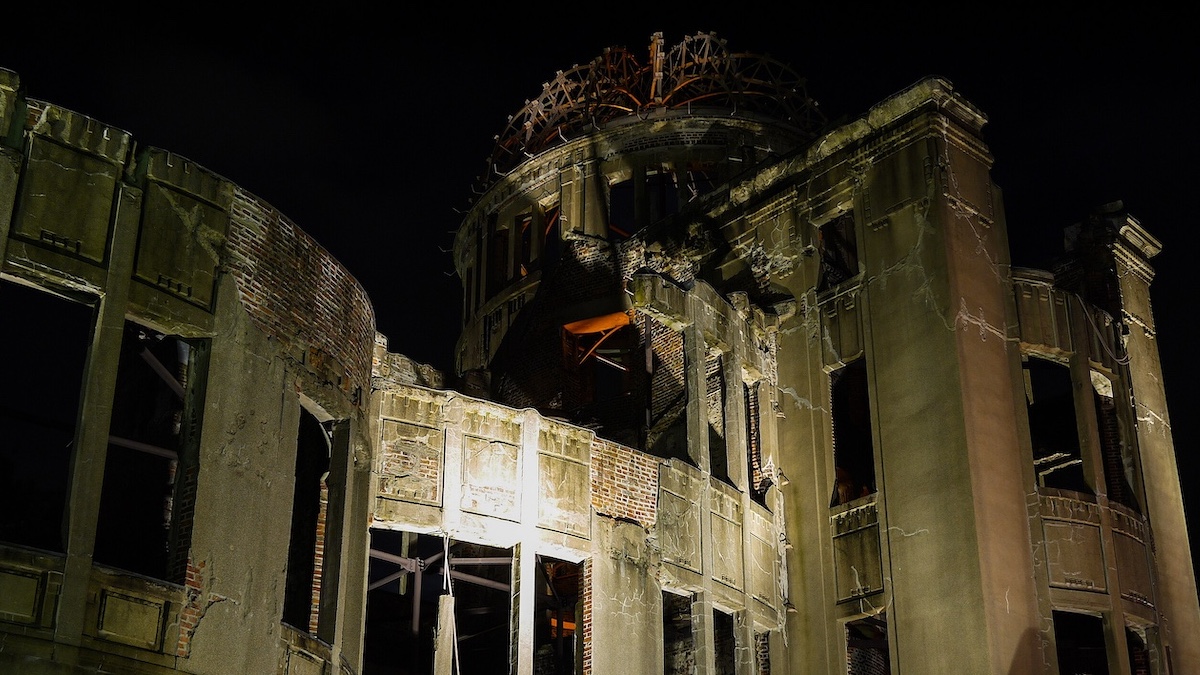
The current crisis coincides with the 80th anniversary of the Trinity Test, the first detonation of an atomic weapon that would soon obliterate the Japanese cities of Hiroshima and Nagasaki and so inaugurate the atomic age. So many years later, it’s worth critically reassessing the decisions that conferred on humanity such a power of self-annihilation. After all, we continue to live with the fallout of the choices made (and not made), including those of the scientists who created the bomb. That history also serves as a reminder that alternative paths were available then and that another world remains possible today.
Read MoreA global call to action

Trades unions and peace groups demand democracy that delivers peace and prosperity for all
A joint statement anchored by the International Trade Union Confederation, Greenpeace International, the International Peace Bureau, the International Campaign to Abolish Nuclear Weapons, Oxfam and 350.org and signed by 17 peace, justice and disarmament groups was released in anticipation of the commemoration of 80 years since atomic bombs were dropped on the Japanese cities of Hiroshima and Nagasaki.
For Democracy that Delivers Peace and Prosperity for All
As we approach the 80th anniversary of the atomic bombings of Hiroshima and Nagasaki, we, the undersigned organisations, call on governments and international institutions to reaffirm their commitment to a world free from nuclear weapons, honouring the demand of the hibakusha and 2024 Nobel Peace laureate Nihon Hidankyo, and to prioritize sustainable development over militarism.
As organisations from the peace, labour, economic justice, and climate movements, we share the belief that collective security can only be ensured through solidarity, by meeting the basic needs of all people.

The Billionaire Coup: An Existential Threat to Democracy, Peace, and Security
Unfortunately, today we face a growing threat to our collective security from the concentration of power and wealth in the hands of an unholy alliance of billionaires and far-right political forces. This billionaire coup against democracy is already capturing governments and subverting multilateral institutions. A small group of the wealthiest individuals and corporations has successfully reshaped policies, economies, and democracies to serve their interests, undermining the common good. This elite’s influence is driving the rise of authoritarian regimes, robbing the people of collective power, accelerating military build-up and climate change, and diverting resources away from human development and peacebuilding.
Read MoreWe’re having a heatwave

And nuclear power can’t cope. Worse still, it’s actually a liability under ever more extreme climate conditions, write Karl Grossman and Harvey Wasserman
At the core of the latest attempted “renaissance” of nuclear power is the Big Lie that atomic reactors are an answer to global warming. In fact, they are significant sources of heat.
There are more than 400 nuclear power plants in the world today that fission atoms at 300 degrees Centigrade, (572 degrees Fahrenheit). More are under construction or proposed. As the International Atomic Energy Agency states, “water-cooled reactors offer heat up to 300 degrees Celsius. These types of reactors include pressurized water reactors (PWRs), boiling-water reactors (BWRs), pressurized heavy-water reactors, and light-water-cooled graphite-moderated reactors (LWGRs).”
Some heat is absorbed in the water—drawn from water bodies—used to cool these nuclear power plants and then returned, still with considerable heat, to rivers or seas.
The heatwave going on in recent weeks in Europe, in combination with this discharge of heated water from nuclear plants, has caused nuclear plants there to shut down.
Consider these headlines from recent days:
“France and Switzerland shut down nuclear power plants amid scorching heatwave,” was the July 3rd headline on Euronews. As the piece explained: “To cool down, nuclear power plants pump water from local rivers or the sea, which they then release back into water bodies at a high temperature. However, Europe’s ongoing heatwave means that the water pumped by nuclear sites is already very hot, impacting the ability of nuclear plants to use it to cool down. On top of this, nuclear sites run the risk of posing a dangerous threat to local biodiversity, by releasing water which is too hot into rivers and seas.”
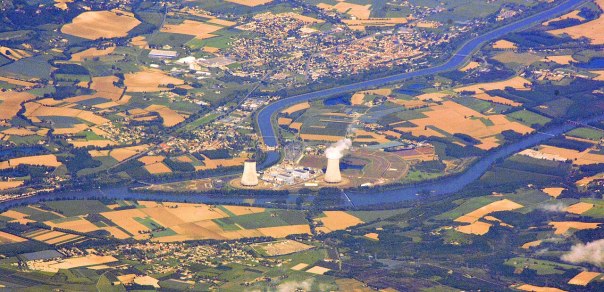
A New York Times article, also dated July 3rd, related how in Europe, “operators shut down one of the two reactors at the Golfech nuclear power plant in southern France after forecasts that the Garonne River, from which it draws water and then discharges it after it is used in the plant as coolant, “could top…82 degrees Fahrenheit.” The Times continued: “The Beznau Nuclear Power Plant in Switzerland, built along the Aare River followed suit, shutting down one of its reactors on Tuesday and the other on Wednesday.”
Read MoreNuclear power is a parasite on AI’s credibility
Global nuclear power in a good year adds only as much net capacity as renewables add every two days
The following is the press release announcing a new essay by Stanford University’s Amory Lovins, Artificial Intelligence Meets Natural Stupidity: Managing the Risks.
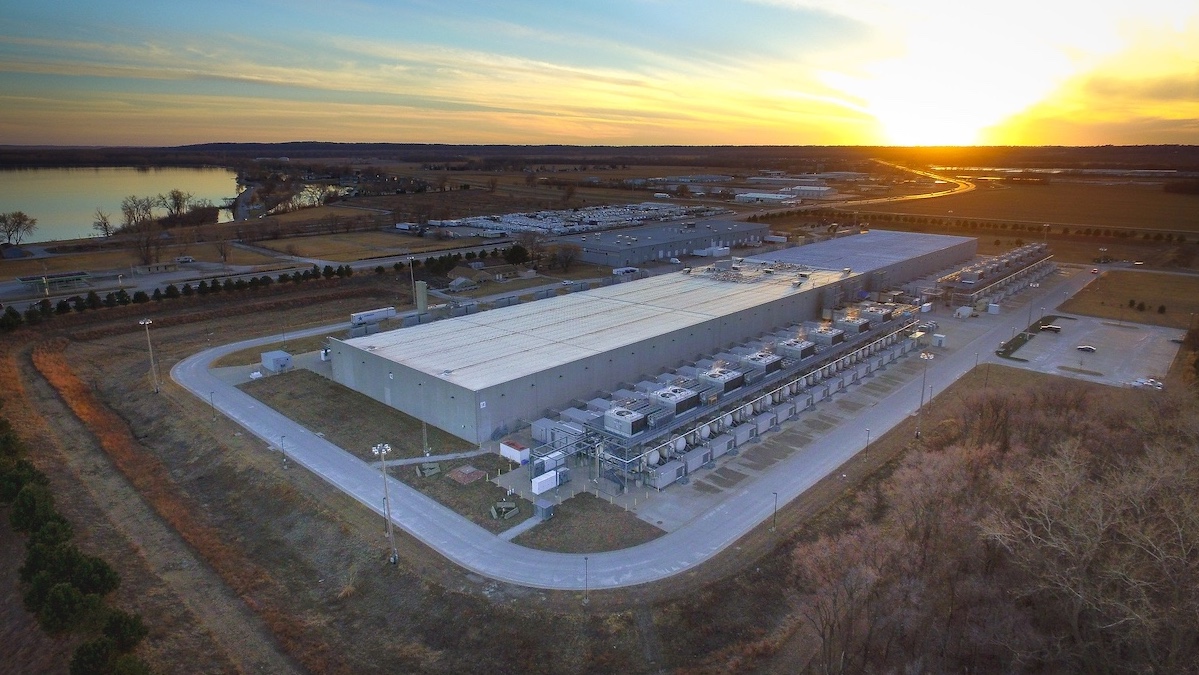
Claims of soaring electricity needs to power ravenous new AI data centers underpin the energy emergency declared for national security. Yet new research synthesized by a prominent energy expert, Amory Lovins, explains how hidden order-of-magnitude uncertainties in AI’s energy needs are risking major speculative losses and energy-market distortions—and he highlights timely remedies.
In fact, US electricity use fell in 2023, and in 2024, it rose only 2%—less than in three other years of the past ten. Forecasts of future electricity use have lately risen, especially in a few hotspots that promote and subsidize new data centers.
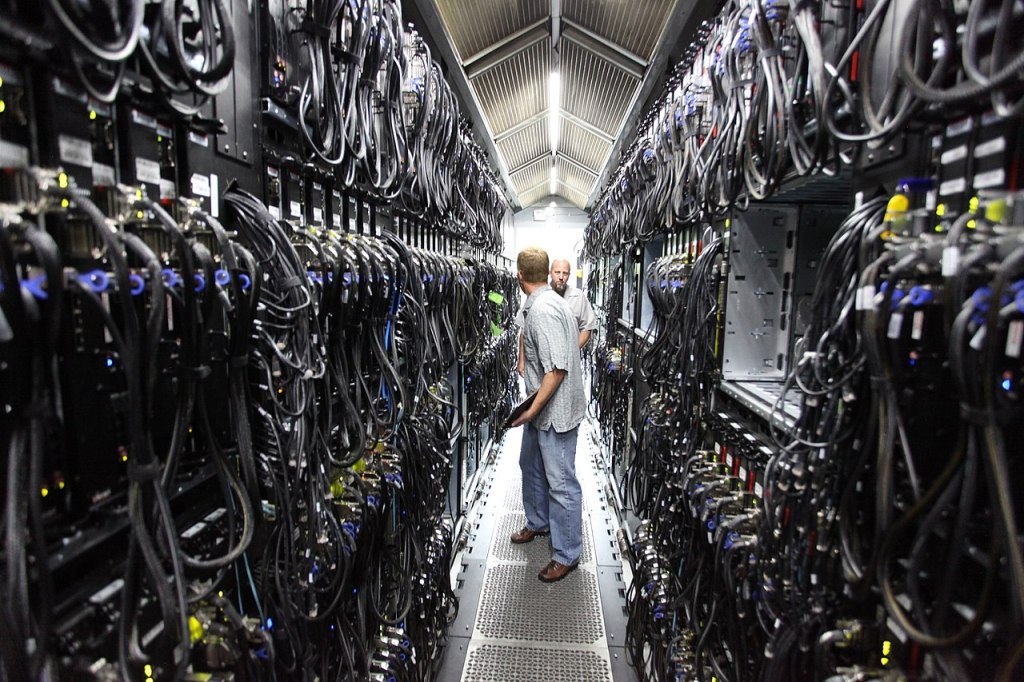
Yet that’s far from a broad trend, and most of the forecast growth is for other or reshored industries, electric vehicles, and electrifying buildings and factories. Data centers used only about 4.5% of US electricity in 2024. Of global electricity growth, the International Energy Agency (IEA) says only 5% in 2024 was for new data centers, rising to 5–10% of growth in 2025–30. Both nationally and globally, most data centers aren’t even made or run for AI; they’re for traditional functions like search engines, e-mail, and e-commerce.
Big Tech firms are indeed investing at least a trillion dollars in new AI data centers. Hundreds are planned, some as power-hungry as a small city. However, only a small fraction of those proposed are likely to be built, and not all those built are certain to thrive. Overforecasting seems endemic, severe, and underrecognized. It’s caused by peculiarities of the current data-center marketplace. But underlying those are many fundamental unknowables—even about the dominant model’s basic validity.
Read More
