 Beyond Nuclear International
‘Acres of Clams’

New Documentary Tells Story of the Clamshell Alliance
by Anne Alpert, InDepthNH.org

By Arnie Alpert, Active with the Activists
For two weeks in the spring of 1977, New Hampshire was at the center of national attention. No, it had nothing to do with the first-in-the-nation primary. The matter that grabbed headlines was the arrest of 1415 people who had peacefully taken over the construction site of a proposed nuclear power plant in Seabrook. After being taken away on buses and National Guard trucks and processed at the Portsmouth Armory, the protesters were delivered to four other armories, where, refusing to pay bail, they engaged in a battle of wills with the stubbornly pro-nuclear governor, Meldrim Thomson.
The group behind the protest was a ragtag New England-wide coalition that called itself the Clamshell Alliance, members of which called themselves “Clams.” How it was able to take on a governor and a powerful industry through nonviolent protest, music, and well-deployed humor is the story told in “Acres of Clams,” a new documentary written, produced and narrated by Eric Wolfe.
“You might find this story hard to believe. Hell, I was there, and I hardly believe it myself,” Wolfe says at the outset. He weaves his story from personal memories, archival photos and footage, and a series of oral history videos captured by Steve Thornton at Clamshell reunions held a few decades later.
Wolfe had arrived in New England from his native Kansas just in time for Clamshell’s creation in 1976, accompanied by a crew of hand puppets and a show he had created, “Burnt Toast: Trouble in the Nation’s Breadbasket.” The irreverent puppets, talking trash about nuclear technology, fit right in with the rebellious movement taking shape. Soon, Wolfe would be performing “Burnt Toast” from the back of a horse-drawn covered wagon making its way across southern New Hampshire to the first act of group civil disobedience at Seabrook.
Read MoreWildfire risks high at nuclear plants

So why won’t the industry and NRC plan for them when extending reactor licenses, asks Paul Gunter
For nuclear power plants, fire is considered a very significant contributor to the overall reactor core damage frequency (CDF), or the risk of a meltdown. Fire at a nuclear power station can be initiated by both external and/or internal events. It can start with the most vulnerable external link to the safe operation of nuclear power plants; the Loss Of Offsite Power (LOOP) from the electric grid. LOOP is considered a serious initiating event to nuclear accident frequency. Because of that risk, US reactors won’t operate without external offsite power from the electric grid.
The still largely uncontained wildfires burning in and around Los Angeles and Ventura Counties in southern California “are sure to rank among America’s most expensive.” The ongoing firestorms have now extended into a fourth period of “extremely critical fire weather” conditions and have burned nearly 63 square miles, an area the size of Washington, D.C. The estimated number is still being tallied for the thousands of homes and structures destroyed, the loss of life, the evacuation of communities indefinitely dislocated and the threats to and impacts on critical infrastructure including electrical power .

There is no scientific doubt that global warming is primarily caused by the unquenchable burning of fossil fuels, yet politically motivated denial is entrenched in the US Congress. The increased frequency and severity of these wildfires—leading to suburban and even urban firestorms— are but one consequence of a climate crisis along with a range of other global natural disasters including sea level rise, hurricanes, more severe storms generally, extreme precipitation events, floods and droughts. This more broadly adversely impacts natural resources and critical infrastructures to include inherently dangerous nuclear power stations.
At this particular time, it is important to reflect upon the April 2, 2024, report to Congress issued by its investigative arm, the United States Government Accountability Office (GAO), “Nuclear Power Plants: NRC Should Take Actions to Fully Consider the Potential Effects of Climate Change,” (GAO 24-106326).
The GAO warns that the US Nuclear Regulatory Commission (NRC) needs to start taking actions to address the increased risk of severe nuclear power plant accidents attributable to human caused climate change.
Read MoreThe Great British Nuke Off

It’s time to expose the sham plan for new nuclear power, write Andy Blowers and Stephen Thomas in their new report
The following is the introduction and the conclusion from the report, “It is time to expose the Great British Nuclear Fantasy once and for all”. Read the full report.
In April 2022, the then UK Prime Minister, Boris Johnson, set a target of 24GW (equivalent to eight stations like Hinkley Point C) of new nuclear capacity to be completed in Great Britain by 2050. At the heart of the proposal was the creation of a new government owned entity, Great British Nuclear (GBN), with a mission of ‘helping projects through every stage of the development process and developing a resilient pipeline of new builds’ designed to ensure energy security and to meet the UK’s commitment to achieving net zero.
The new Labour Government, elected in July 2024, has been emphatic about the scaling up of renewables, and has confirmed that nuclear power ‘will play an important role in helping the UK achieve energy security and clean power’. While not explicitly committing to the 24GW target, the new Government expressed its belief that a scale expansion of new nuclear projects was a necessary part of the energy mix for the transition to achieving net zero carbon by 2050.

The Government is expected to continue with GBN but in a clearly subordinate role to its new creation, Great British Energy, its vehicle for driving development and investment into projects that will enable the energy transition to achieve net zero by 2050.
There has, so far, been little government recognition of the sheer difficulty of achieving a vast expansion of nuclear energy. As so often in the past, the nuclear programme has barely got off the ground and the flagship project of the new nuclear programme, Sizewell C, had, by October 2024, yet to receive a Final Investment Decision (FID) apparently because of the lack of interested investors.
In an attempt to keep the project from collapsing while it tries to find investors, Government has chosen to invest £8bn in the project, in addition to Electricité de France’s (EDF’s) contribution of about £700m, just to get it to FID, a process budgeted by EDF in 2016 to cost only £458m. Small Modular Reactors in which much hope is vested barely exist beyond the drawing boards and by the time they could be deployed, if all goes to plan, it will be too late for SMRs and Sizewell C to make any significant contribution to achieving ‘Net Zero’.
Read MoreA double-edged sword of Damocles
An overlooked Supreme Court case could decide the future of nuclear power, writes Miles Mogulescu
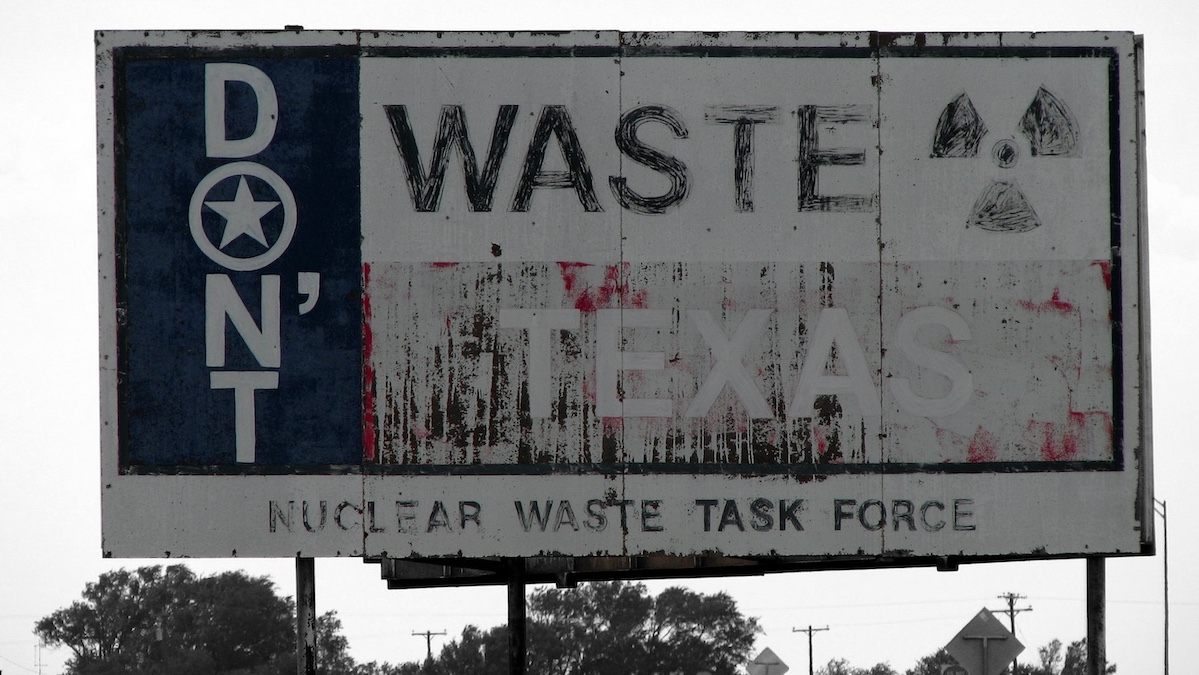
Although barely mentioned in the mainstream media, in granting cert to Interim Storage Partners, LLC v. Texas, a case about the storage of spent radioactive fuel from nuclear power plants, the U.S. Supreme Court may have taken on potentially the most consequential case of its new term.
SCOTUS will decide whether or not to uphold a Fifth Circuit decision that the Nuclear Regulatory Commission (NRC) does not have the legal power to license a private corporation to construct an off-site storage facility to hold deadly radioactive waste from nuclear power plants.
Depending on the legal rationale for SCOTUS’ decision, it could further enhance the power of courts to overturn decisions of regulatory agencies.
The case could determine whether artificial intelligence companies like Microsoft and Google can build a new generation of nuclear power plants to service the voracious hunger of artificial intelligence for electricity. Depending on its rationale, it could also impact the ability of regulatory agencies to function efficiently without being second guessed by courts.
The issues in the case have brought together an unlikely coalition of environmentalists, Texas Republicans, New Mexico Democrats, and the oil and gas industry against an equally unlikely grouping of the Biden administration, the nuclear power industry, and AI tech companies like Microsoft and Google.
The Legal Substance Issues
The environmental and legal issues in the case have a long history. The nuclear power industry has accumulated nearly 100,000 metric tons of radioactive waste that need to be deposited in a place that could be safe for millions of years. Most of the waste is now stored in temporary facilities adjacent to the power plants that create them, but such sites are running out of space and may not be safe long-term. During the 1980s Congress passed and amended the Nuclear Waste Policy Act providing for a permanent waste site and then designating Yucca Mountain, Nevada as the sole site. But plans for the site were abandoned due to environmental and political opposition, leaving no permanent site for disposable nuclear waste.

In response, for the first time the Nuclear Regulatory Commission began to grant licenses for “interim” storage facilities which were off-site (and often hundreds of miles away) from the power plants which generated the waste, claiming authority under the Atomic Energy Act. One such license was for an off-site storage facility in the Permian Basin, Texas. Texas Republican Attorney General Ken Paxton and a private oil and gas company sued, claiming that the federal government lacked the statutory authority to issue a license for interim off-site storage.
Read MoreHigh tide for Holtec

Tritium dumped into Cape Cod Bay will wash back onto community shores, says a new report
Linda Pentz Gunter
Holtec, the company that has purchased a number of permanently closed nuclear reactors in order to decommission them, has encountered yet another obstacle to its “dilution is the solution to pollution” plans.
One of the reactor sites Holtec has taken over is Pilgrim in Plymouth, Massachusetts, on the Cape Cod Bay, which closed permanently in 2019. Holtec’s not-so-little problem there is what do with what started out as at least 1.1 million gallons of radioactively contaminated wastewater stored at the site.
The company first suggested it would simply release the wastewater into Cape Cod Bay, assuring residents and the immediately alarmed fishing community not to worry because (a) the wastewater isn’t dangerous anyway (b) everyone does this all the time at reactor sites and no one has gotten sick so far and (c) it would quickly disperse into the wider ocean. Holtec chose this disposal method for one reason alone: it is the cheapest.
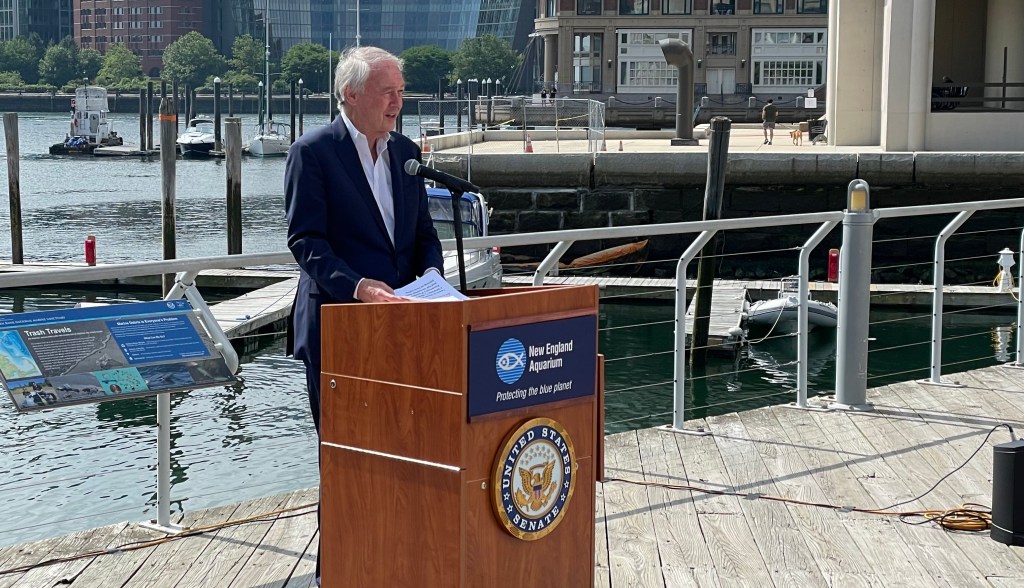
The proposal was vigorously fought by citizens, the state, and powerful Massachusetts Democrat, Senator Ed Markey. The state of Massachusetts effectively banned the discharge option, a decision Holtec is contesting.
That Final Determination to Deny Application to Modify a Massachusetts Permit to Discharge Pollutants to Surface Waters was issued by the Massachusetts Department of Environmental Protection Division of Watershed Management on July 18, 2024. A month later, Holtec launched its appeal to reverse the decision, something that could take months or longer to find its way to court.
Read MoreIsrael’s not-so-secret nuclear weapons

A new report from ICAN looks at the reality and implications of Israel’s nuclear weapons arsenal
Introduction
Israel is one of nine countries that possesses nuclear weapons, with an estimated arsenal of 90 nuclear weapons, which it can launch by missiles and aircraft, and possibly by sea-based missiles.
Despite widespread acknowledgement by experts and former government officials of their existence, Israel and many Western governments maintain a policy of ambiguity about Israeli nuclear weapons. This pretense cannot continue. Nuclear disarmament is an essential component of a lasting peace agreement between Israel and Palestine, and in the region more broadly.
This is because of the risk of use of nuclear weapons and the catastrophic consequences of such use, as well as the proliferation risks posed by Israel’s continued possession of a nuclear arsenal. Despite efforts, states have not yet succeeded in negotiating a weapons of mass destruction free zone in the Middle East. The Treaty on the Prohibition of Nuclear Weapons, adopted in 2017, offers a clear pathway to nuclear disarmament, and Israel and all states should immediately join.
Historical Context
Israel’s nuclear weapons programme dates back to the 1950s, when it started to construct the Negev Nuclear Research Center near Dimona in 1958, following its purchase of necessary equipment to develop nuclear weapons, including a research reactor from France and heavy water from Norway.
Although unclear, it may have assembled its first nuclear weapons in the 1960s. Since then, Israel has adhered to a policy of deliberate ambiguity, refusing to confirm or deny its possession of nuclear weapons.

Current Israeli Prime Minister Benjamin Netanyahu and other officials use variations of the phrase “We won’t be the first to introduce nuclear weapons into the Middle East” in response to questions about Israel’s nuclear arsenal. The United States and other Western governments have adopted Israel’s policy of ambiguity, despite widespread acknowledgement by nuclear experts and even former government officials of the existence of an Israeli nuclear arsenal.
The United States has adopted a policy not to pressure Israel to join the nuclear Non-Proliferation Treaty (NPT) and all U.S. presidents since President Bill Clinton have even reportedly signed a letter indicating that arms control efforts would not target Israel.
Former German officials have likewise acknowledged that they were aware that submarines that they sold to Israel would be equipped with nuclear missiles. This tacit endorsement of a clear case of nuclear proliferation undermines broader nonproliferation and disarmament efforts in the Middle East.
Read More Beyond Nuclear International