 Beyond Nuclear International
Staging change
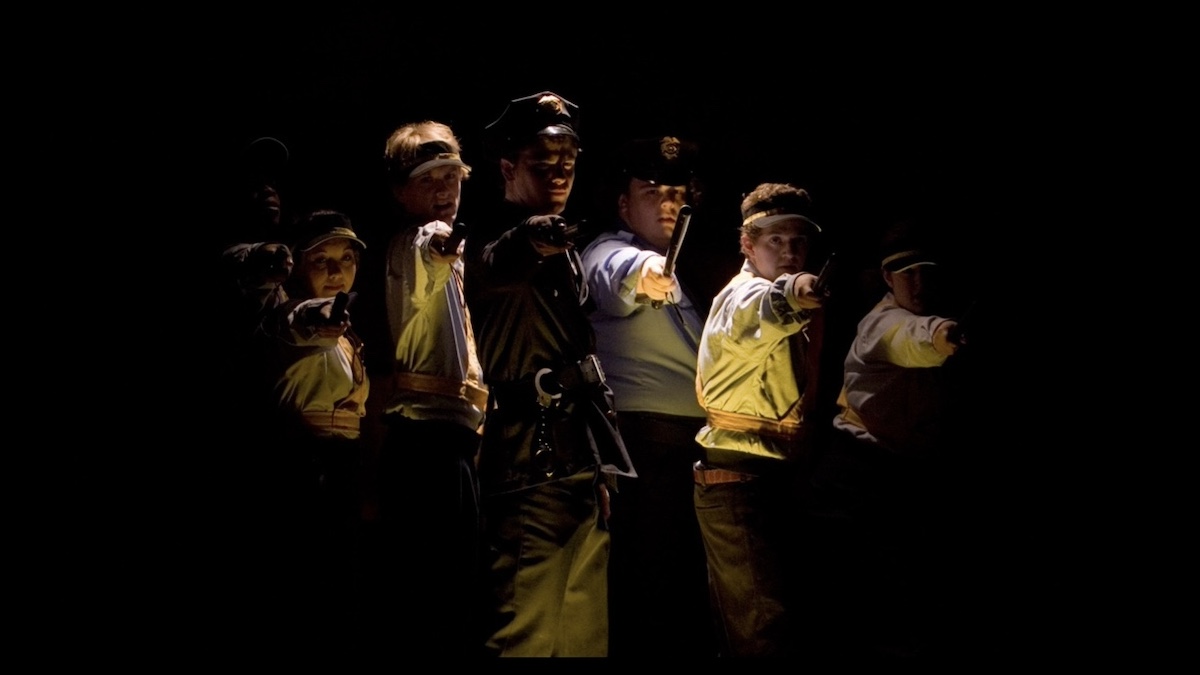
Theater can be effective in delivering important environmental messages, writes Jack Sanitate
Growing up performing in plays and musicals, I’ve been aware of how theater can convey powerful messages by immersing audiences in stories that create empathy and understanding. Through live performances, theater transforms complex issues into relatable experiences, prompting audiences to reflect on social and political themes. This powerful art form can create awareness and a call to action. One critical topic that has been adeptly addressed in contemporary (21st Century) theater is environmental awareness.
Although there has been a notable increase in recent years, environmental issues have been present in theater since at least the early modern period. In Henrik Ibsen’s An Enemy of the People (premiered in 1882-1883), Ibsen addresses the clash between economic interests and public health, as the idealistic character, Dr. Stockmann, naively exposes the contamination of a town’s water supply that feeds its spa and faces backlash from the community and the Mayor, his own brother.
One prime example of twenty-first century environmental drama is The Children by Lucy Kirkwood. It explores environmental justice through the aftermath of a nuclear disaster caused by an earthquake and flooding. The play features three retired nuclear scientists who grapple with the consequences of their past actions. The disaster serves as a metaphor for global environmental crises, emphasizing the need for long-term sustainability, while subtly encouraging moral responsibility toward future generations.
But what particularly interests me (and what I love to perform in) are musicals. Arguably more mainstream than plays are nowadays, musicals keep the audience engaged (and attract an audience to come see the show), by telling a clear story through song and acting. As I think about environmental justice in musicals, a few post-2000s offerings immediately come to mind. Foremost is Urinetown.
Although highly comedic and full of many potty jokes referencing the title, Urinetown is actually a satire commenting on the themes of water scarcity and corporate greed. It depicts a dystopian future where water is strictly rationed and everyone has to pay even to use the bathroom. As a result, it is the poor who suffer under the control of a monopolistic corporation. The musical works so well because behind the silly name and premise that draws in an audience, there is a scary truth. If we proceed along our current path of constant consumption and failure to take care of our bodies of water, or delay in addressing climate change, Urinetown’s dystopian scenes could actually become our reality.
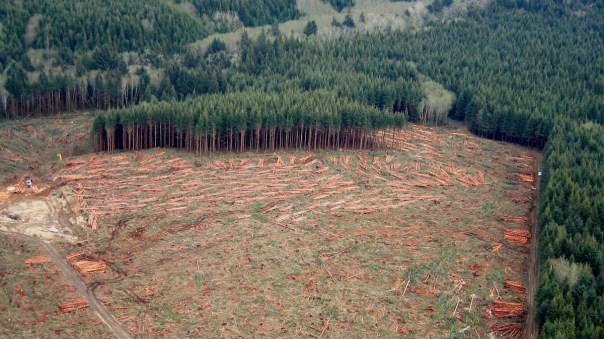
Hurricane Helene sends a warning
A nuclear plant, fortunately closed, was inundated, but we may not get so lucky next time, writes Linda Pentz Gunter
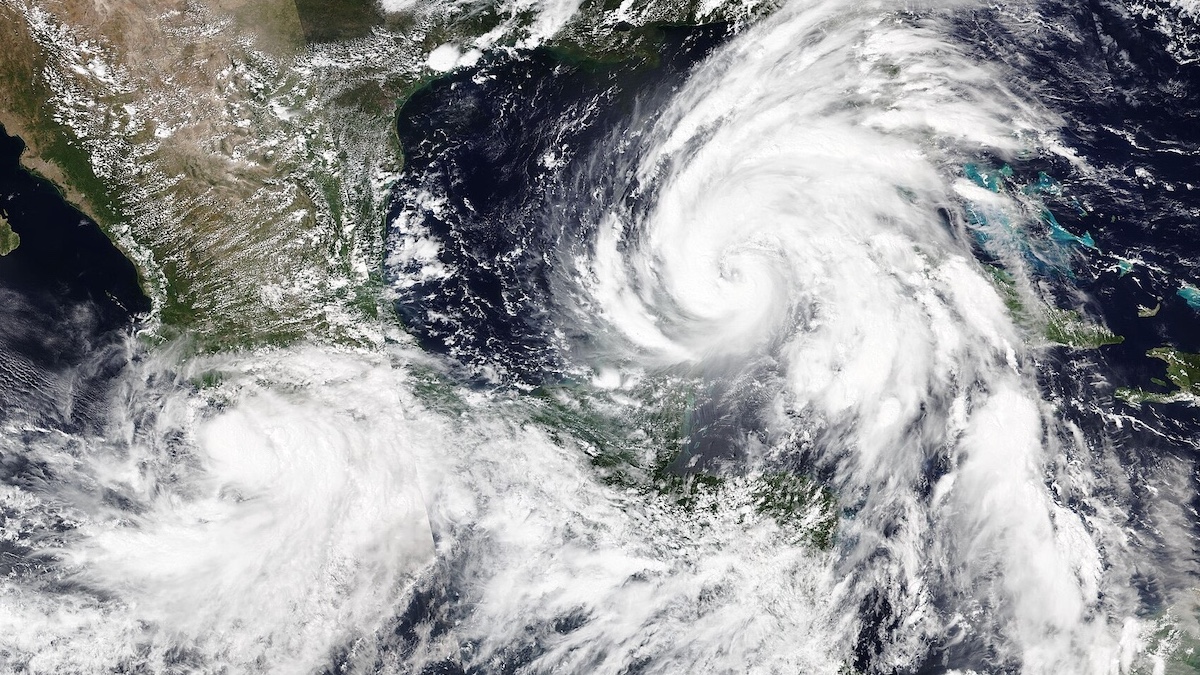
As no one can have failed to notice, our country has been ravaged once again by violent weather extremes, most recently by Hurricane Helene, which left areas in the south submerged and destroyed, and led to a significant number of deaths.
The press has routinely been describing the extreme flooding, especially in places such as North Carolina, as “Biblical. But, as my partner and colleague at Beyond Nuclear Paul Gunter points out, it is nothing of the sort. As should be obvious by now, our ever more frequent climatic disasters are entirely human-caused.
Acts of God, whether you are a believer or not, have absolutely nothing to do with it.
Try telling that to our political leaders. No matter who wins in November, we are looking at drilling (Trump) or fracking (Harris) or possibly both. And, of course, more nuclear power!
The fact that all of these will obviously make the climate crisis far worse far faster does not pass these people by. They know it. But they push both fossil and fissile energy anyway, submitting willingly to the bidding of their corporate paymasters who would rather celebrate near-term greed and gain than leave a livable world to their children and grandchildren.

This means we are led by climate criminals who go not only unpunished, but who are routinely re-elected.
The push for license extensions for our aging reactor fleet is particularly heinous. The lapdog nuclear regulator, the US Nuclear Regulatory Commission, has been exposed by the Government Accountability Office in a damning report as entirely uninterested in how the ravages of the climate crisis might jeopardize the safety of nuclear power plants.
“NRC doesn’t fully consider potential increases in risk from climate change,” wrote the GAO. “For example, NRC mostly uses historical data to identify and assess safety risks, rather than data from future climate projections.”
Instead, the NRC is intent on colluding with the nuclear industry to sell us nuclear power as some sort of answer to the climate crisis.
Apart from the fact that nuclear power is too expensive and too slow, as we have argued here countless times, it is actually a hazard under climate chaos conditions. And we got the perfect demonstration of this from Hurricane Helene.
First of all, because of the extreme radiological risks, some nuclear power plants in the path of the hurricane were shut down as a preemptive precaution including Hatch in Georgia. This makes them completely useless in the wake of the storm’s onslaught when people are desperate for electricity.
Then take the case of the Crystal River nuclear power plant on Florida’s Gulf Coast. Floodwaters swamped the site. Fortunately the plant has been shuttered since 2013 but all of the high-level irradiated radioactive fuel waste is still stored there.
“The whole site was flooded, including buildings, sumps, and lift stations. Industrial Wastewater Pond #5 was observed overflowing to the ground due to the surge,” read a report filed by plant owner, Duke Energy.
Given the present enthusiasm for extending the licenses of the still operating US nuclear reactor fleet — and they are talking about out to 80 or even 100 years for reactors that were never designed or intended to run that long — Crystal River might easily still have been operating.
Under today’s rush to relicense — and even reopen the country’s most dangerously degraded reactors including Palisades in Michigan — it probably would be.
Did nuclear waste escape as a result of the Crystal River nuclear site flood?
“We are still in the process of obtaining access and assessing the damage, but due to the nature of this event we anticipate difficulty with estimating the total discharge amount of wastewater, and impacts are unknown at this time,” wrote Duke in its report.
In other words, we may never know.
The implication of a nuclear plant inundated by a massive storm surge does not have to be imagined. We saw it at the Fukushima Daiichi nuclear plant in Japan on March 11, 2011, when a 50-foot tsunami swept over the inadequate sea wall and knocked out the backup onsite power after the earlier earthquake had already severed the offsite power connection.
Meanwhile, Crystal River owner Duke is the very same company that is trying to secure a license extension for its three Oconee reactors in South Carolina that sit downstream from not one but two dams!
The three reactors are sited 300 feet below the water level in Lake Jocassee behind Jocassee Dam and five feet below the water level in the immediately adjacent Lake Keowee.

What could possibly go wrong? Nothing, argues Duke, for whom the idea of a dam overtopping or breaking, sending a wall of water directly at the plant — effectively an inland tsunami — just isn’t a credible possibility.
Out of our scope, declares the NRC, which contends it cannot include an assessment of likely climate change impacts on Oconee operations within its environmental review for license renewal.
Beyond Nuclear and the South Carolina chapter of the Sierra Club have been fighting this through legal channels and will continue to do so.
After last week, you might expect such a blinkered view of current — never mind future — climatic conditions to change. But it won’t.
Retrofitting an old nuclear plant to adequately protect it against the impacts of a climate crisis never prepared for, costs money.
Gambling with hundreds of thousands of lives by doing nothing and keeping it running, doesn’t.
Until something goes wrong. But then, of course, thanks to the Price-Anderson Act, the hundreds of billions of dollars in costs that could be the consequence of such a risk, will be paid mostly by us, the taxpayers.
Linda Pentz Gunter is the international specialist at Beyond Nuclear and writes for and edits Beyond Nuclear International. Look for her forthcoming book, Hot Stories. Reflections from a Radioactive World.
Headline photo of Hurricane Helene and Tropical Storm John together by NASA.
Nuclear Weapons and the U.S. Presidential Elections
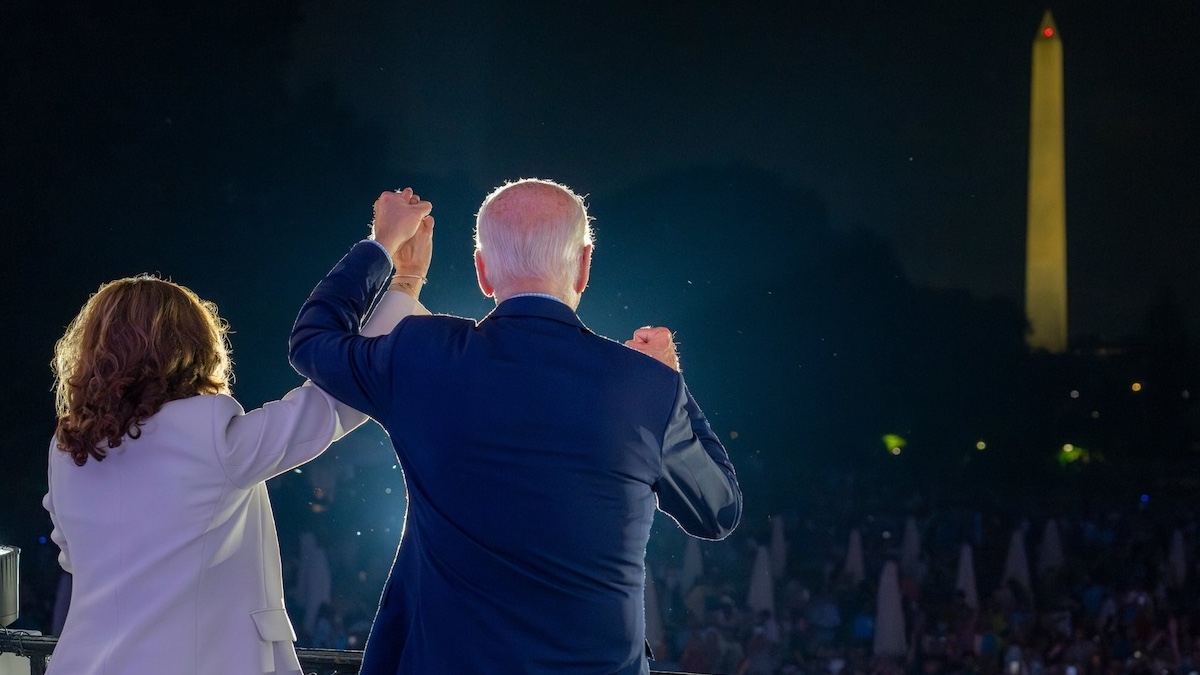
Whoever becomes the next US president, we’ll need to redouble our efforts for nuclear abolition, writes Jackie Cabasso
Nuclear weapons policy is not an issue in the presidential election. In fact, U.S. foreign policy, with the exception of some controversy over ongoing U.S. arms provisions to Israel, is barely an issue. Even though nuclear weapons are in the media more than they have been for many years—due mainly to the Russian government’s nuclear threats, and to some extent, North Korea’s, there is basically no public discussion or political debate about nuclear weapons in the United States.
The political situation in the U.S. is more volatile and uncertain than at any time in my life. Predicting who is going to be elected president in November is impossible. In the short weeks since President Biden withdrew from the campaign and threw his support behind his vice president Kamala Harris, there has been an extraordinary outpouring of enthusiasm for her campaign, especially among young people and people of color, and a massive surge of financial support from a wide range of constituencies. But at this point, the outcome of the presidential election is too close to call.
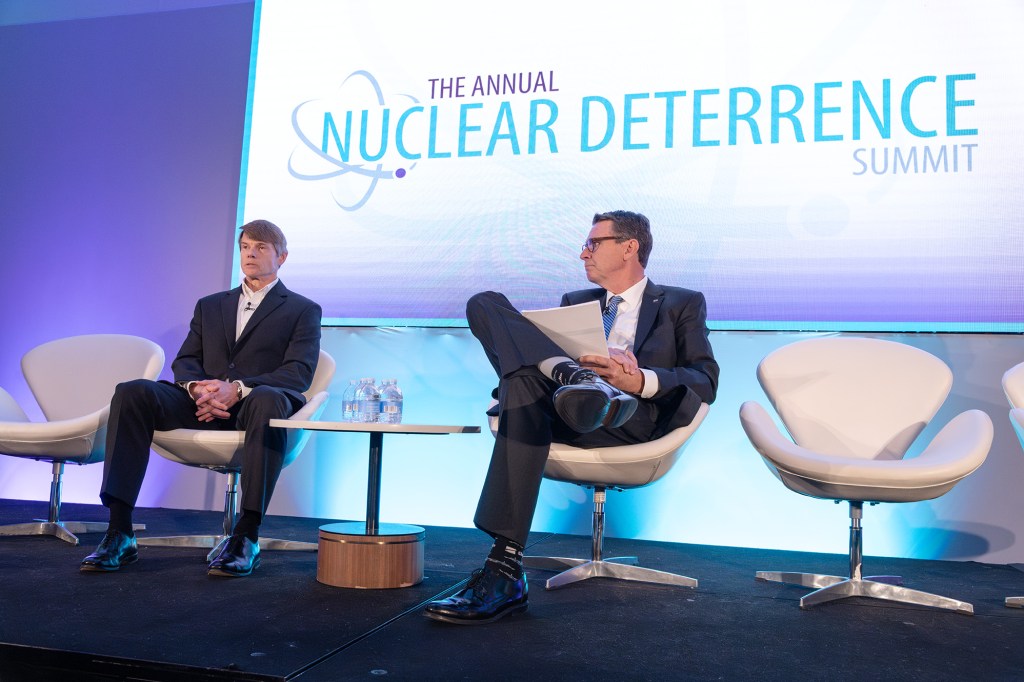
What I can say is that U.S. national security policy has been remarkably consistent in the post-World War II and post-Cold War eras. “Deterrence” – the threatened use of nuclear weapons – has been reaffirmed as the “cornerstone” of U.S. national security policy by every president, Republican or Democrat, since 1945, when President Harry Truman, a Democrat, oversaw the atomic bombings of Hiroshima and Nagasaki.
If Kamala Harris is elected in 2024, we can expect more of the same. As confirmed in an August 20, 2024, New York Times story that attracted some notice, an initiative is quietly underway by the Biden administration to beef up the U.S. nuclear arsenal. As reported by the Times, in March, President Biden approved a highly classified “Nuclear Employment Guidance” plan that seeks to prepare the United States for possible coordinated nuclear challenges from China, Russia and North Korea. This comes as the Pentagon believes China’s nuclear arsenal will rival the size and diversity of the U.S.’ and Russia’s over the next decade.
Read MoreMore nuclear reactors?
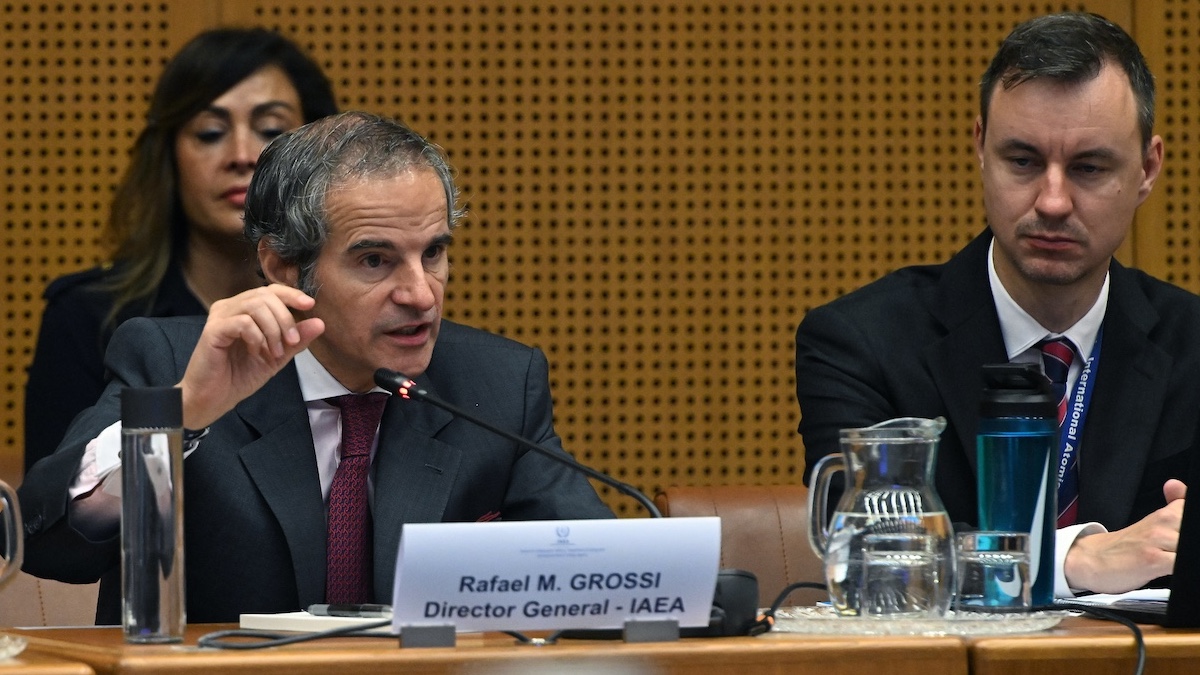
Denying the risks, IAEA’s Grossi promotes unrealistic nuclear power plans
By M.V. Ramana and Jixiang Wang
Rafael Grossi, the International Atomic Energy Agency’s Director General, has been busy over the last few years. The media has often reported on his efforts to highlight “the risk of a major nuclear accident” at the Zaporizhzhia nuclear plant. Grossi has also met with Russian President Vladimir Putin twice to discuss the situation at Zaporizhzhia, arguing that a “severe nuclear accident…would recognize no borders” and “we must do everything possible to prevent” such an accident.
But Grossi has also simultaneously been increasing the risk of accidents, albeit inadvertently, by calling for building more nuclear reactors. This advocacy takes many forms. He has written op-eds in prominent outlets like Foreign Affairs. He has been trying to canvas countries to start nuclear power programs. For example, in March 2024. he went to Baghdad and committed to working with Iraq to help build a nuclear reactor “for peaceful purposes”. And as a way to deal with the unaffordable costs of nuclear reactors, he has pushed the World Bank and Asian Development Bank to provide funding for building nuclear plants.
None of this make sense. When viewed as investment advice to banks, Grossi’s promotion of nuclear power does not meet the laugh threshold. According to Grossi, the banks’ lack of funding for nuclear energy is “out of date, out of step with what is happening”. But it is Grossi’s advocacy that is out of step with happening to nuclear energy in the real world.
Read MoreTritium into the air?

Venting plans at Los Alamos have received scant attention, writes Alicia Inez Guzmán of Searchlight New Mexico
Last fall, the international community rose up in defense of the Pacific Ocean. Seafood and salt purveyors, public policy professors, scientists and environmentalists, all lambasted Japan’s release of radioactive wastewater from the disastrously damaged Fukushima Daiichi nuclear plant into the sea.
At the heart of the contention was tritium, an element that, by mass, is 150,000 times more radioactive than the plutonium used in the cores of nuclear weapons. Odorless and colorless, tritium — the radioactive form of hydrogen — combines with oxygen to form water. Just one teaspoon is enough to contaminate 100 billion gallons more water up to the U.S. drinking water standard, according to Arjun Makhijani, an expert on nuclear fusion and author of the monograph, “Exploring Tritium Dangers.”
What didn’t make international headlines — but was quietly taking place on the other side of the world — was Los Alamos National Laboratory’s own plans to vent the same radioactive substance into northern New Mexico’s mountain air. Japan’s releases would take place over three decades. LANL’s would include up to three times more tritium — and take place in a matter of days.
There is no hard timeline for the release, but if the plans are approved by the Environmental Protection Agency, LANL is looking at a period with “sufficiently warm weather,” a spokesperson from the National Nuclear Security Administration wrote by email. That could mean as soon as this summer.

Those controversial plans date back to 2016, when LANL discovered that a potentially explosive amount of hydrogen and oxygen was building up in four containers of tritium waste stored in a decades-old nuclear dump called Area G. The safest and most technically viable solution, the lab decided — and the best way to protect workers — would be to release the pressure and, with it, thousands of curies of tritium into the air.
Read More“We can’t afford it”
UK will let children starve and the elderly freeze but will happily overfeed the nuclear hogs, writes Linda Pentz Gunter
The United Kingdom’s Labour government won’t scrap the two-child benefit cap because, they claim, the country can’t afford it. Doing away with this punitive measure would lift close to half a million children out of poverty at an estimated cost of $4.7 billion a year. The cap prevents parents from claiming child tax credit or universal credit for more than two children. It was introduced by the Conservative Government in 2017.
On the other hand, the UK government is perfectly happy to scrap the winter fuel allowance for pensioners, because doing so saves money — an estimated $1.8 billion this financial year. That potentially life-saving support will now be stripped from as many as 10 million eligible senior citizens.
That’s $6.5 billion saved, on the backs of children and the elderly, two of the most vulnerable segments of society.
Instead, the Labour government has now announced it will assign even more than this amount — as much as $7.2 billion in life support — to the planned 3,200 megawatt (MW) two-reactor Sizewell C nuclear power plant project on the Suffolk coast.

Apparently, it’s perfectly fine to let children go hungry while pensioners shiver in the dark in exchange for an entirely futile energy project that will keep no one warm anytime soon if at all.
Reacting to the announcement, Pete Wilkinson, spokesperson for Together Against Sizewell C, a local opposition group, observed: “It’s staggering that Labour have increased the potential outlay on this white elephant project to £8 billion ($10.5 billion) just days after Labour claimed the country couldn’t afford winter fuel payments for millions of pensioners.”
This would be the second government subsidy the scheme has received on top of an earlier $3.2 billion handed out by the previous Tory government.
Read More Beyond Nuclear International
