 Beyond Nuclear International
Speaking with one voice

Tribes call for cleanup, remediation and an end to uranium mining and milling
By Linda Pentz Gunter
They were there to tell their stories. The contamination of air, land and water. The sicknesses. The displacement. The loss of community, culture and language. The deprivation of fundamental human rights. And they spoke with one voice in their plea for justice, the voice of Indigenous peoples in the United States and their lived experience of uranium mines and mills.
The occasion was a thematic hearing before the Inter-American Commission on Human Rights (IACHR) at the Organization of American States. The topic was: United States: Impacts of uranium exploitation on indigenous peoples’ rights.
The speakers came from Navajo, Arapaho, Havasupai, Ute and Oglala Lakota.
And, across the room, they came from the Environmental Protection Agency, the Nuclear Regulatory Commission and the Department of the Interior.
The Native American speakers made the same plea they have reiterated for decades: effective cleanup and removal of the radioactive waste that has poisoned their communities and people, and will do so again as long new uranium mines are allowed to go forward. And no new mines.
The personal stories they told the listeners — representatives from the US government, the IACHR panel and members of the public in the audience —were those of universal injustice against Indigenous communities, stories that have been told before and, seemingly, have to be told over and over. They are stories that are listened to and not heard, often not responded to and almost never acted upon.
Read More“Nuclear comes last”
Banks reject nuclear funding, stocks nosedive and the industry says it should, believe it or not, slow down
By Linda Pentz Gunter
NuScale, the company whose small modular reactor project collapsed so spectacularly last November, is “burning cash at the rate of $185 million per year”. On March 22, the company’s CEO, John Hopkins, sold 59,768 of his shares in the company. This is the same CEO who declared NuScale’s SMR project, aptly named VOYGR, “a dead horse.” It’s clearly on a journey to nowhere.
Wells Fargo, with an eye on prudent investments, has declared, “We think investor enthusiasm for SMR is misguided”. As The Motley Fool reported, “NuScale’s VOYGR nuclear power product has ‘no secure customers’ and is ‘not cost competitive’ says the analyst.”
The splashy cheerleading Nuclear Energy Summit organized by the International Atomic Energy Agency in Brussels on March 21 proved to be just that. The participants arrived floating on the hot air of their misplaced enthusiasm but “left humbled by the tepid reaction of bankers assessing the price tag of their ambitions”.
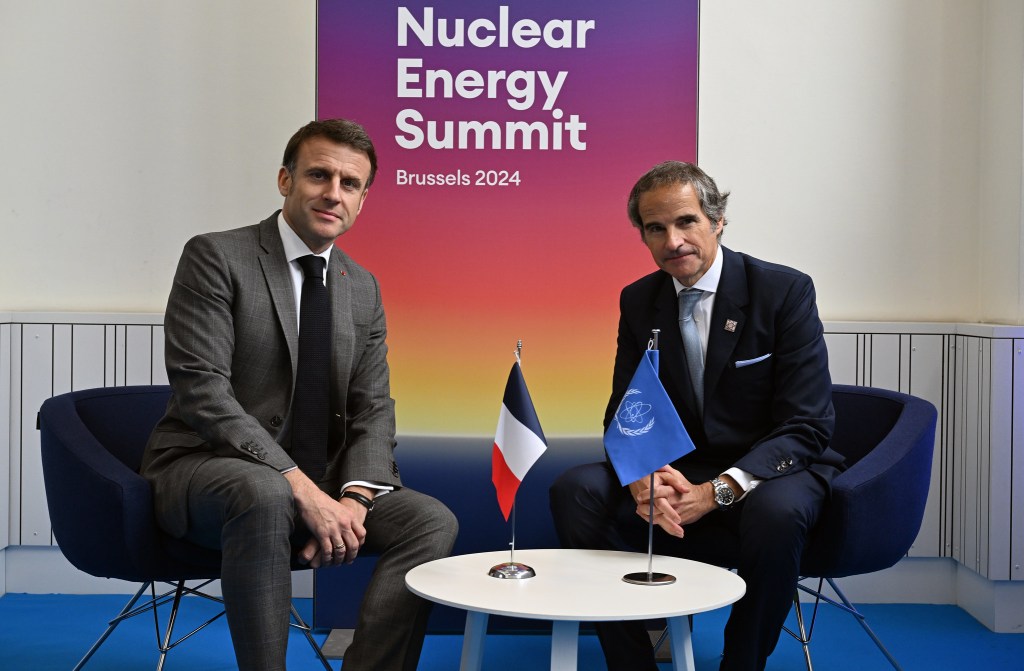
European Investment Bank Vice President Thomas Ostros, told Summit attendees to their face that “The project risks, as we have seen in reality, seem to be very high”. Representatives from the European and Latin American banking worlds said that “their lending priorities lean toward renewables and transmission grids” and that “nuclear comes last”.
Read MoreEinstein’s vision for peace

Aghast at the use of nuclear weapons, he threw himself into efforts to prevent worldwide nuclear annihilation
By Lawrence S. Wittner
Although the popular new Netflix film, Einstein and the Bomb, purports to tell the story of the great physicist’s relationship to nuclear weapons, it ignores his vital role in rallying the world against nuclear catastrophe.
Aghast at the use of nuclear weapons in August 1945 to obliterate the cities of Hiroshima and Nagasaki, Einstein threw himself into efforts to prevent worldwide nuclear annihilation. In September, responding to a letter from Robert Hutchins, Chancellor of the University of Chicago, about nuclear weapons, Einstein contended that, “as long as nations demand unrestricted sovereignty, we shall undoubtedly be faced with still bigger wars, fought with bigger and technologically more advanced weapons.” Thus, “the most important task of intellectuals is to make this clear to the general public and to emphasize over and over again the need to establish a well-organized world government.”
Four days later, he made the same point to an interviewer, insisting that “the only salvation for civilization and the human race lies in the creation of a world government, with security of nations founded upon law.”
Determined to prevent nuclear war, Einstein repeatedly hammered away at the need to replace international anarchy with a federation of nations operating under international law. In October 1945, together with other prominent Americans (among them Senator J. William Fulbright, Supreme Court Justice Owen Roberts, and novelist Thomas Mann), Einstein called for a “Federal Constitution of the World.”
That November, he returned to this theme in an interview published in the Atlantic Monthly. “The release of atomic energy has not created a new problem,” he said. “It has merely made more urgent the necessity of solving an existing one. . . . As long as there are sovereign nations possessing great power, war is inevitable.” And war, sooner or later, would become nuclear war.

A special (nuclear) relationship

A little known US-UK nuclear weapons agreement is up for renewal. It needs to end instead.
By Kate Hudson
The “special relationship” is a longstanding refrain in British politics, used to justify so much that’s bad in UK foreign policy choices.
I recall in 2002 when Tony Blair agreed Britain had to pay a “blood price” to secure its special relationship with the US. We all know how that ended up.
But it wasn’t Blair who paid the blood price – it was 179 British service personnel, killed in an illegal war, and hundreds of thousands of Iraqis, and countless more injured, displaced and traumatised.
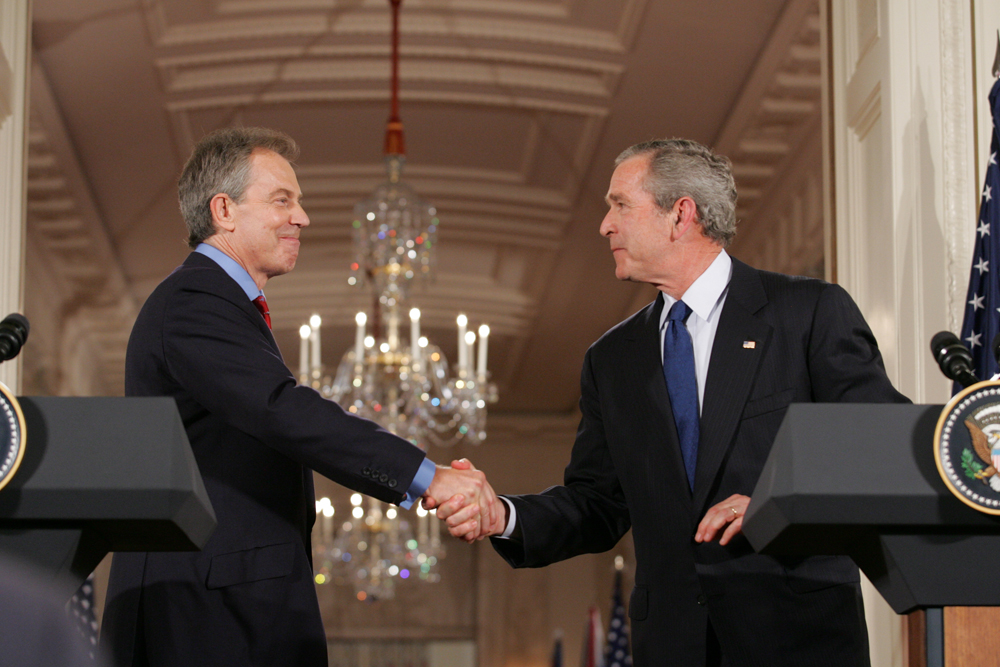
Much that feeds war can be notched up to the US/UK special relationship, but it goes far beyond providing diplomatic and military cover and assistance to US enterprises.
That relationship is also responsible for the development of the UK’s nuclear arsenal and its continued possession of these weapons of mass destruction.
The special nuclear relationship is facilitated by the US-UK Mutual Defence Agreement (MDA) – the world’s most extensive nuclear sharing agreement.
Even though it comes up for renewal in parliament every ten years, few seem to know of its existence.
Neither do many know the extent to which it makes us dependent on the US – or indeed that it underpins the wider relationship between the US and UK.
Read MoreThe Lying Piper of Nukeland
The IAEA’s nuclear fairy tales are leading nations — and all of us — into climate catastrophe
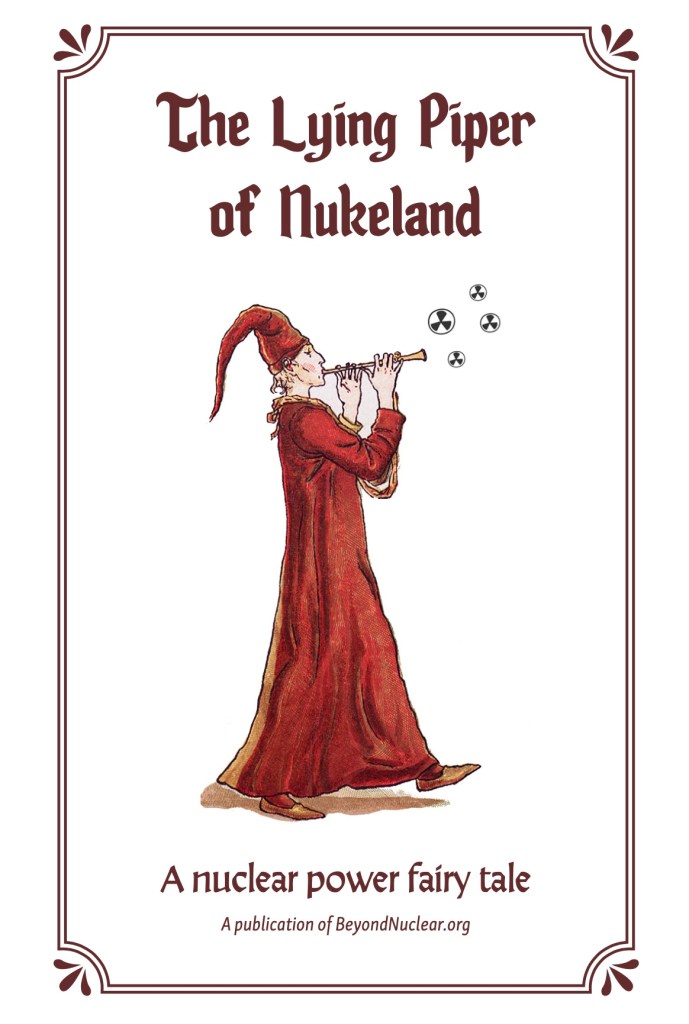
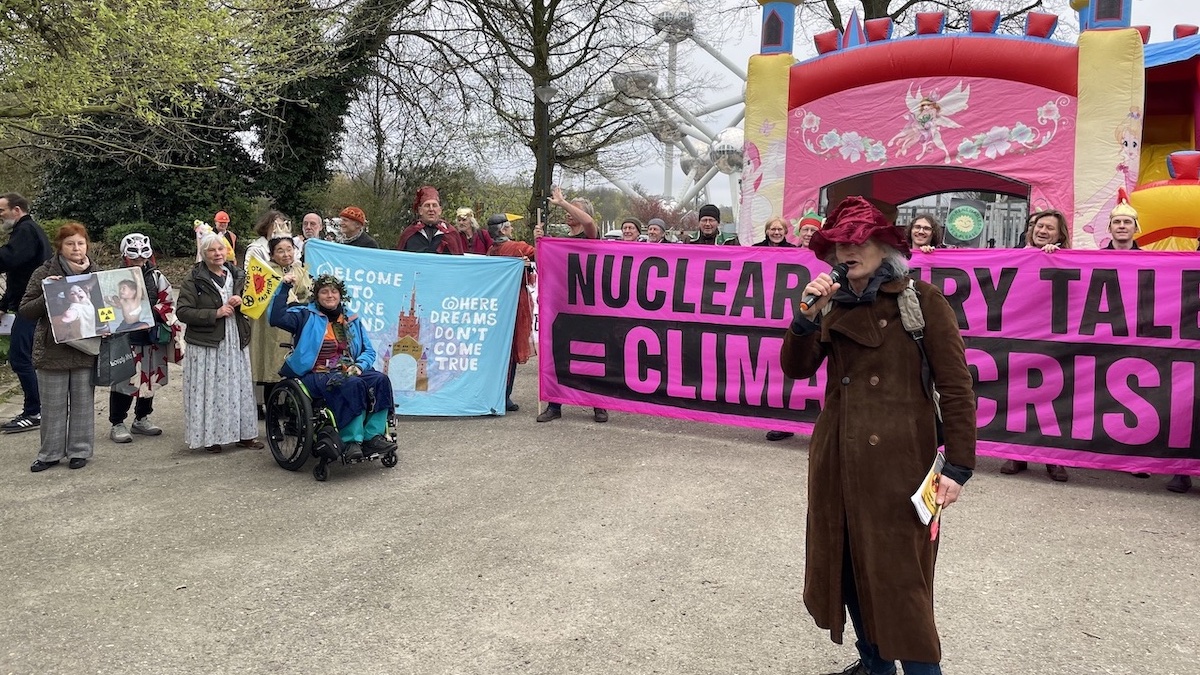
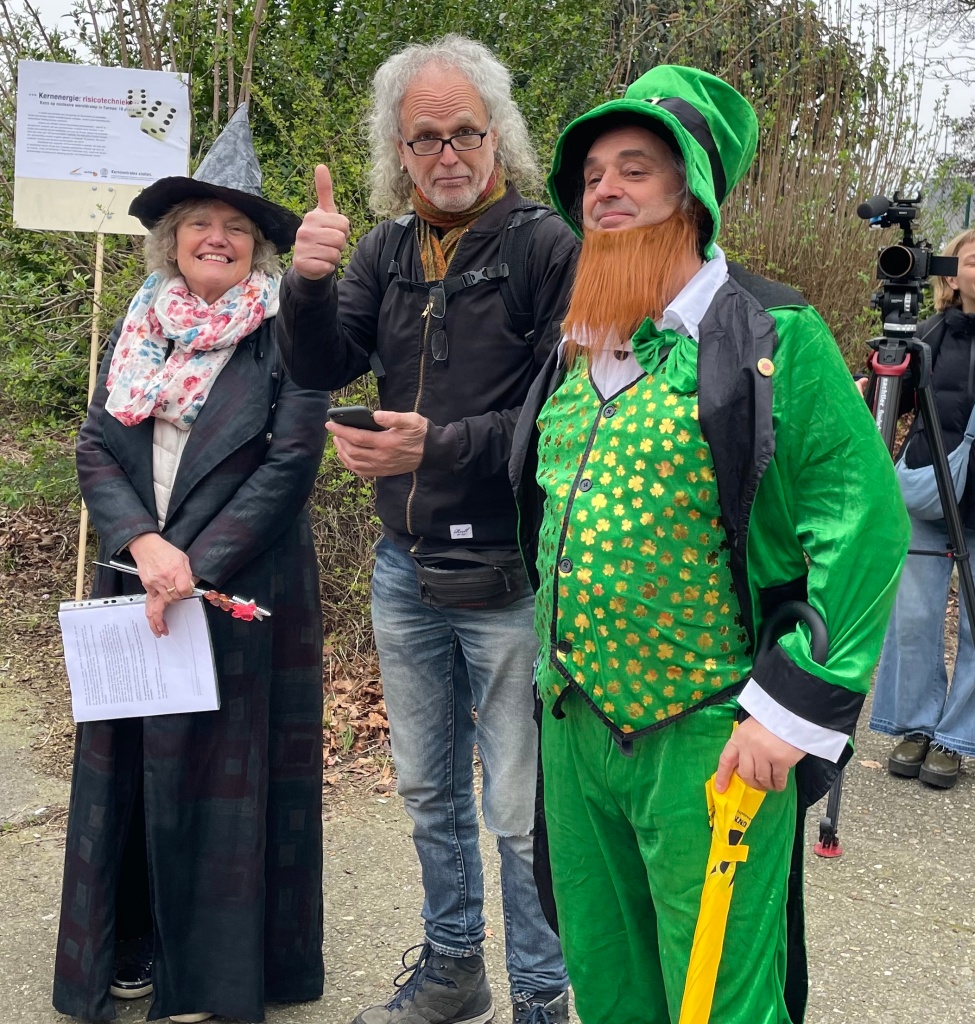
On March 21, more than 40 groups, mainly from Europe, protested the false promises and nuclear fairy tales being spun at the March 21 International Atomic Energy Agency’s Nuclear Energy Summit in Brussels. Prior to our fairy tale-themed rally close to the venue we issued a declaration signed by 621 organizations from across the world and issued a press release.
Our fairy tale handout parodied the story of nuclear power — see the text below. Beyond Nuclear also published a pamphlet exposing the hypocrisies and conflicts of interest of the IAEA. Feel free to download both and to distribute freely. The photos below are from our March 21 rally.
At the end of the one-day summit, the IAEA and 34 countries issued a pledge “to work to fully unlock the potential of nuclear energy“, code for taking taxpayer money and going with a begging bowl to the World Bank. That bubble quickly burst during the summit when a panel of bankers declared nuclear too financially risky and “last” on their list of lending priorities, preferring renewables instead. (A (slightly) more serious analysis follows next week.)
By Linda Pentz Gunter
Once upon a time… long ago, a Piper arrived in Carbonville. The people of Carbonville welcomed him warmly because they had heard that when he played his flute he had magical powers.
“Oh Piper!” they cried. “Here in Carbonville it is always dark and cold. It is smokey and polluted. Can you help us find a better way to create warmth and light?”
The Piper was happy to oblige. “I know just the answer,” he told them. “It’s called nuclear power! It’s safe, cheap and reliable. Very soon you will have warmth and light that is too cheap to meter!”
The people of Carbonville were so excited to get shiny new nuclear power plants that they took a vote and changed the name of their town to Nukeland.
The Piper began to play and very soon beautiful drawings of nuclear power plants started to appear for the people of Nukeland to admire. But several years passed and nothing else happened.
“What use are these drawings?” the people said. “We need warmth and light!”
“Be patient,” said the Piper. “I will bring you 15 nuclear power plants and you will have all the heat and light you need. I just need five gold coins to get them started.”
The people of Nukeland were very poor but they did without and saved up until they had five gold coins. They gave them to the Piper and once again he began to play.
Read MoreA spy in Vienna

The IAEA is recruiting, but it’s barking up all the wrong trees
By Linda Pentz Gunter
Note: On March 21st the International Atomic Energy Agency will be hosting what it bills as the “First Nuclear Energy Summit” in Brussels, Belgium, co-hosted with the Belgian government. We will have something to “show” and “tell” about that next week.
I have recently received three offers via LinkedIn to apply for different job openings at the International Atomic Energy Agency. Each time, the representative from the IAEA who pitched me wrote that: “I just came across your profile, and it caught my attention”, then described the job itself and why my skill set was ideally suited. Really?
Caught their attention, yes, although evidently they didn’t actually read what is on my LinkedIn page. Unless the IAEA is looking to “turn” me, because I presume what they don’t want is a dissenting mole in their midst. That would mean the IAEA had suddenly developed a conscience.
It was tempting, though, given the goodies thrown in.
“As this position is based in Vienna, Austria, we would support you with multiple benefits, including relocation, rental subsidy, visa support, education grant for your children, tax-free salary, health insurance, and many more,” read each invitation.
Wow, I am in the wrong job! But for all the right reasons.
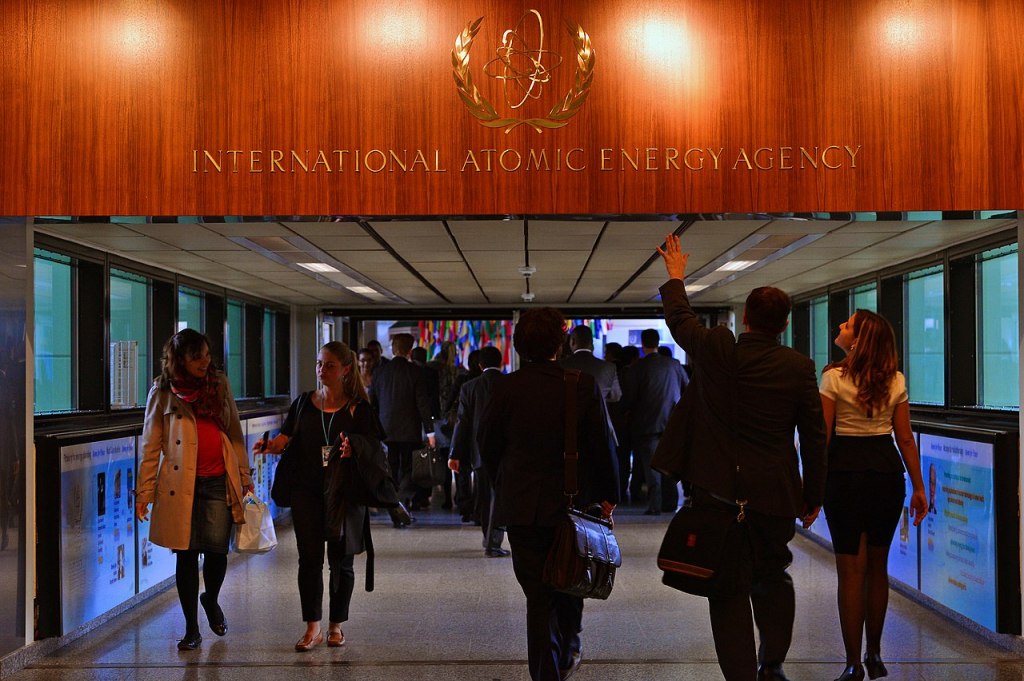
The official mission of the IAEA, an agency of the United Nations, is that it quote “seeks to promote the safe, secure and peaceful use of nuclear technologies.”
What it is actually seeking to promote, with unprecedented aggression, is a massive expansion of nuclear energy. This is the exact opposite of “peaceful” and presents some real proliferation problems the agency seems entirely willing to ignore.
Read More Beyond Nuclear International