 Beyond Nuclear International
Big costs sink flagship nuclear project
And they’ll sink future small modular reactor projects too
By Susan O’Donnell and M.V. Ramana
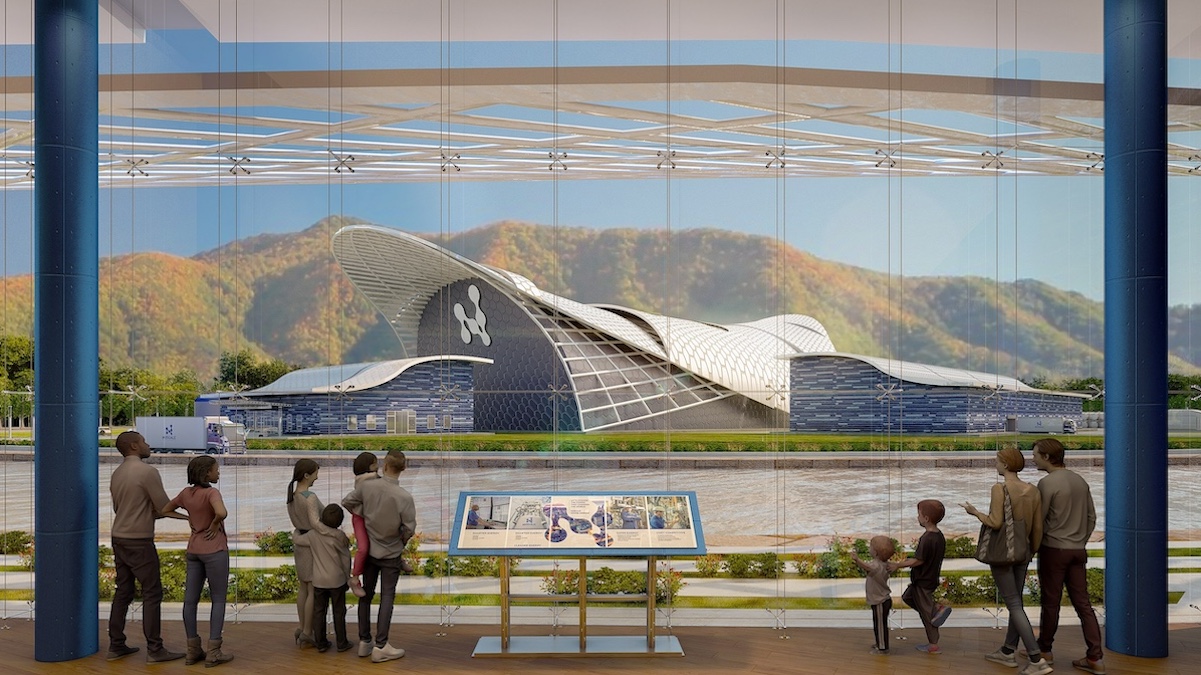
The major news in the world of nuclear energy last November was the collapse of the Carbon Free Power Project in the United States. The project was to build six NuScale small modular nuclear reactors (SMRs). Given NuScale’s status as the flagship SMR design not just in the U.S. but even globally, the project’s cancellation should ring alarm bells in Canada. Yet SMRs are touted as a climate action strategy although it is becoming clearer by the day that they will delay a possible transition to net-zero energy and render it more expensive.
The NuScale project failed because there were not enough customers for its expensive electricity. Construction cost estimates for the project had been steadily rising—from USD 4.2 billion for 600 megawatts in 2018 to a staggering USD 9.3 billion (CAD 12.8 billion) for 462 megawatts. Using a combination of government subsidies, potentially up to USD 4.2 billion, and an opaque calculation method, NuScale claimed that it would produce electricity at USD 89 per megawatt-hour. When standard U.S. government subsidies are included, electricity from wind and solar energy projects, including battery storage, could be as cheap as USD 12 to USD 31 per megawatt-hour.
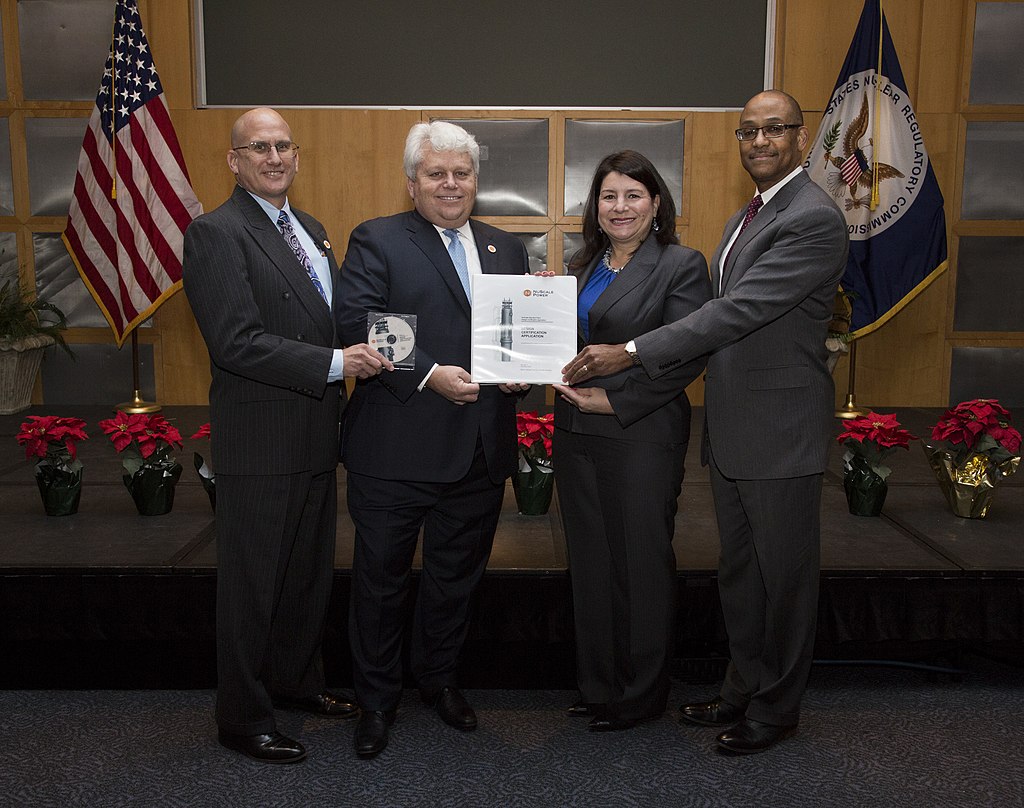
A precursor to the failed NuScale project was mPower, which also received massive funding from the U.S. Department of Energy. Described by The New York Times as the leader in the SMR race, mPower could not find investors or customers. By 2017, the project was essentially dead. Likewise, a small reactor in South Korea proved to be “not practical or economic”.
Ignoring this dire economic reality, provincial governments planning for SMRs – Ontario, New Brunswick, Saskatchewan and Alberta – published a “strategic plan” seemingly designed to convince the federal government to open its funding floodgates. Offering no evidence about the costs of these technologies, the report asserts: “The power companies assessed that SMRs have the potential to be an economically competitive source of energy.”
For its part, the federal government has coughed up grants totalling more than $175 million to five different SMR projects in Ontario, New Brunswick, and Saskatchewan. The Canada Infrastructure Bank loaned $970 million to Ontario Power Generation to develop its Darlington New Nuclear project. And the Canada Energy Regulator’s 2023 Canada’s Energy Future report envisioned a big expansion of nuclear energy based on wishful thinking and unrealistic assumptions about SMRs.
Read MoreA new ‘Cold War’ on a deadly hot planet?
China and the US must cut war-like posturing and face a world in desperate danger
By Tom Engelhardt, Tom Dispatch/Common Dreams
Tell me, what planet are we actually on? All these decades later, are we really involved in a “second” or “new” Cold War? It’s certainly true that, as late as the 1980s, the superpowers (or so they then liked to think of themselves), the United States and the Soviet Union, were still engaged in just such a Cold War, something that might have seemed almost positive at the time. After all, a “hot” one could have involved the use of the planet’s two great nuclear arsenals and the potential obliteration of just about everything.
But today? In case you haven’t noticed, the phrase “new Cold War” or “second Cold War” has indeed crept into our media vocabulary. (Check it out at Wikipedia.) Admittedly, unlike John F. Kennedy, Joe Biden has not actually spoken about bearing “the burden of a long, twilight struggle.” Still, the actions of his foreign policy crew — in spirit, like the president, distinctly old Cold Warriors — have helped make the very idea that we’re in a new version of just such a conflict part of everyday media chatter.
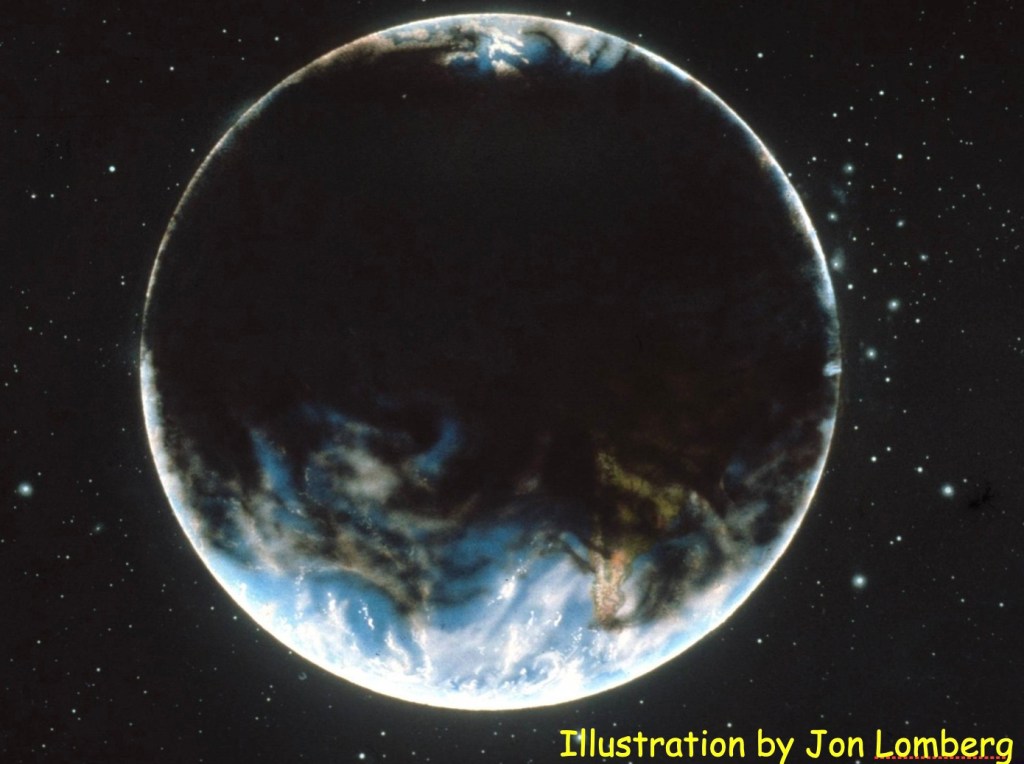
And yet, let’s stop and think about just what planet we’re actually on. In the wake of August 6 and August 9, 1945, when two atomic bombs destroyed the Japanese cities of Hiroshima and Nagasaki, there was little doubt about how “hot” a war between future nuclear-armed powers might get. And today, of course, we know that, if such a word can even be used in this context, a relatively modest nuclear conflict between, say, India and Pakistan might actually obliterate billions of us, in part by creating a — yes, brrr — “nuclear winter,” that would give the very phrase “cold” war a distinctly new meaning.
These days, despite an all too “hot” war in Ukraine in which the U.S. has, at least indirectly, faced off against the crew that replaced those Soviet cold warriors of yore, the new Cold War references are largely aimed at this country’s increasingly tense, ever more militarized relationship with China. Its focus is both the island of Taiwan and much of the rest of Asia. Worse yet, both countries seem driven to intensify that struggle.
In case you hadn’t noticed, Joe Biden made a symbolic and much-publicized stop in Vietnam (yes, Vietnam!) while returning from the September G20 summit meeting in India. There, he insisted that he didn’t “want to contain China” or halt its rise. He also demanded that it play by “the rules of the game” (and you know just whose rules and game that was). In the process, he functionally publicized his administration’s ongoing attempt to create an anti-China coalition extending from Japan and South Korea (only recently absorbed into a far deeper military relationship with this country), all the way to, yes, India itself.
Read More‘Steadfast Noon’ spells doom
US prepares for nuclear war at foreign bases
By John LaForge
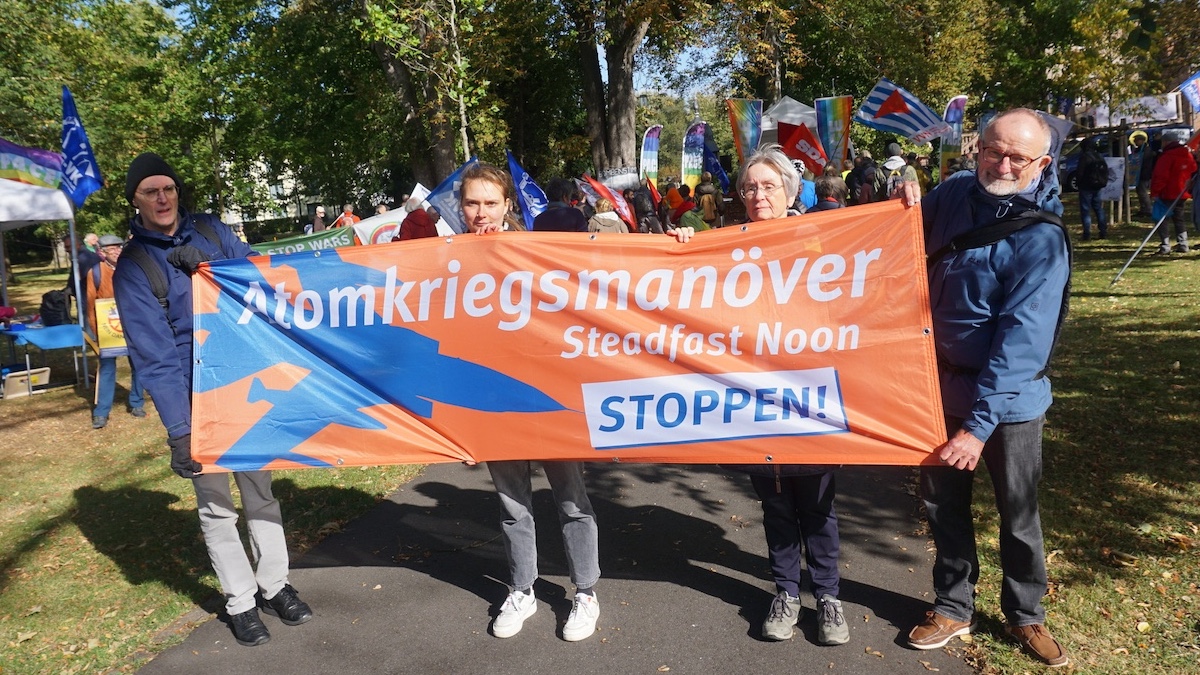
On October 16, 2023, during the NATO-supplied, nuclear-armed hot war in Ukraine, the alliance began its annual nuclear attack rehearsal dubbed “Steadfast Noon.” This practice involves air forces from 13 countries, the “exercising” of fighter jets and U.S. B-52s, lasted until October 26, and roared over Italy, Croatia and the eastern Mediterranean — not far from two aircraft carrier battle groups charging toward the war over the Gaza Strip prison break.
A hundred people joined an October 14 protest outside Germany’s Nörvenich Air Base calling for cancellation of the rehearsal, to no avail.
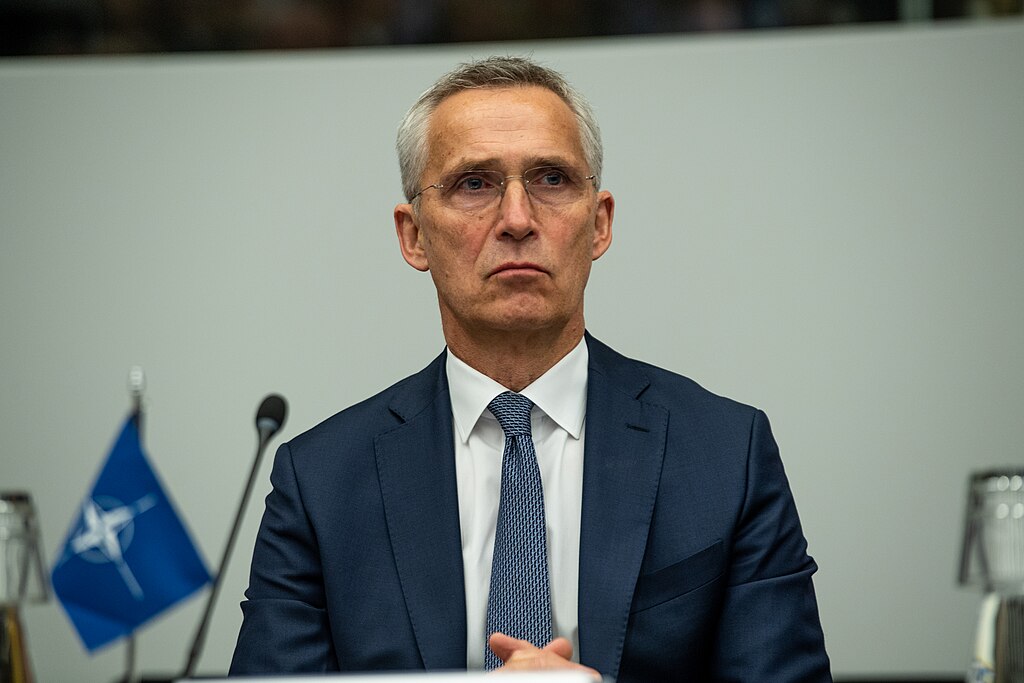
NATO Sec. Gen. Jens Stoltenberg naturally said, “Our exercise will help to ensure the credibility, effectiveness and security of our nuclear deterrent.” This is shrewd, silk tie talk about threatening nuclear attacks, threats barely distinguishable from Russia’s verbal warnings. Mr. Stoltenberg dared to add, “[T]he fundamental purpose of NATO’s nuclear capability is to preserve peace, prevent coercion and deter aggression.”
Aware that this fundamental purpose was disproved and vaporized by Russia’s 2022 invasion of Ukraine, NATO practices nuclear attacks. Steadfast Noon is a role-play for pilots, a dry run to test classroom preparations made at the German branch of the U.S. Air Force Nuclear College on Ramstein Air Base. According to the AFNC website, the school “is responsible for delivering, sustaining and supporting air-delivered nuclear weapon systems for our warfighters … every day.” Some such air-delivered nuclear weapons are the U.S. “B61” free-fall gravity bombs stationed in Germany, Italy, the Netherlands, Belgium and Turkey.
Read MoreMore nuclear corruption?
Georgia joins list of states acting against best interest of ratepayers
From: Georgia Wand, Nuclear Watch South
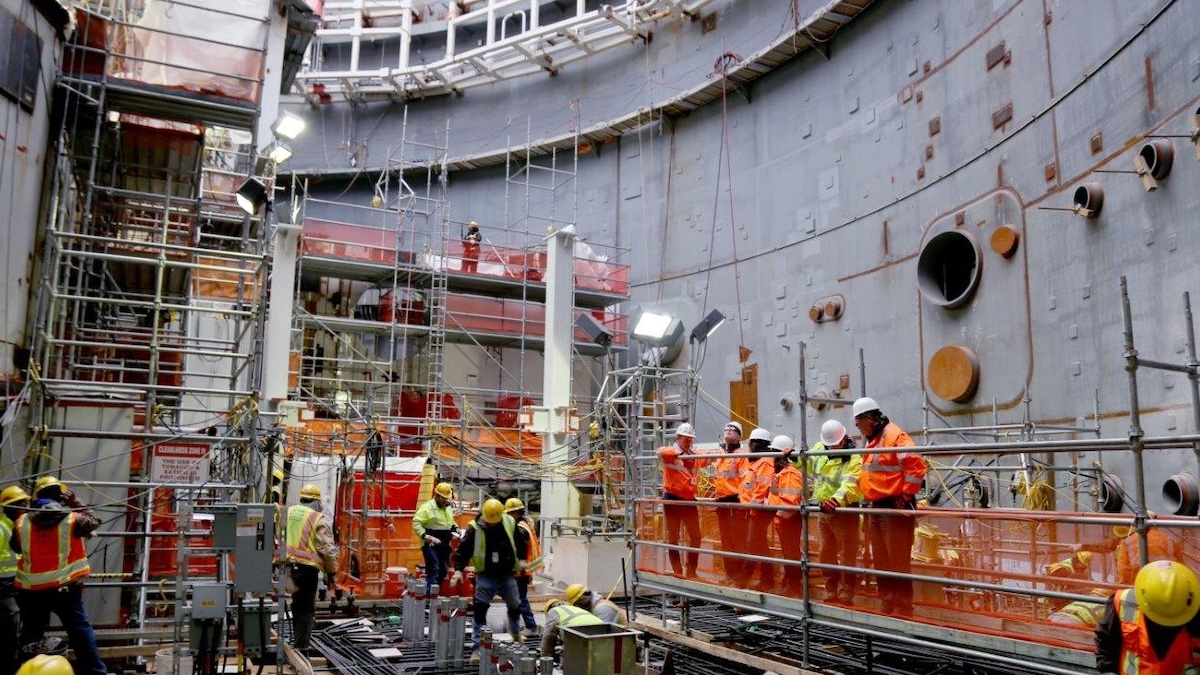
The Georgia Public Service Commission (PSC) and Georgia Power are facing renewed accusations of collusion and possible corruption following the recent rate increase approved by the PSC for the Vogtle units 3 and 4 nuclear expansion project. Similar to recent high-profile nuclear corruption scandals in Ohio, Illinois and South Carolina, Georgia’s utility commissioners acted against the best interests of Georgia ratepayers, rubber-stamping cost recovery for mistakes made by Georgia Power.
Georgia Power, despite numerous warnings and opportunities to avert rate increases, secured rate base increases of $7.56 billion in cost overruns for Vogtle 3 and 4 during the December 19, 2023 hearing before the Georgia PSC. This rate increase, added to previous rate increases for Vogtle, will raise residential and small business electric rates by 26%. The full rate increase adopted by the PSC will go into effect when Vogtle 4 attains commercial operation. The December 19 PSC vote for $7.56 billion only included construction costs. Once Unit 4 enters commercial operation, Georgia Power will expand their rate base an astounding $11.1 billion to include financing costs of $3.5 billion, on which Georgia Power also profits.

Nuclear Watch South and Georgia WAND believe the SEC should investigate Georgia Public Service Commission and Georgia Power as it did for the failed Summer nuclear expansion in South Carolina and the recent bribery scandals in Ohio and Illinois. In October a Southern Company whistleblower brought the SEC to bear on the failed Kemper carbon capture coal plant being built by Southern Company’s Mississippi Power. Southern Company is also the parent of Georgia Power.
Glenn Carroll, Nuclear Watch South’s coordinator, said: “The Commission’s decision to saddle Georgia Power ratepayers with an additional $7.56 billion in costs for Vogtle Units 3 and 4 demonstrates the complete lack of meaningful regulatory oversight to protect consumer interests. From the very beginning, the PSC and Georgia Power have turned a blind eye to the construction problems and delays that have plagued this unneeded project. This level of contempt for hard working Georgians, who pay their electric bills under the assumption that they aren’t getting ripped off, is shameful and deserving of a federal investigation — similar to the investigation in Ohio that found its top utilities regulator accepting bribes from the utilities he was supposed to regulate.”
Read MoreThe ride aboard our “Pale Blue Dot”

Reflections from an 87-year journey
Every Winter Solstice, Walt Patterson, a UK-based Canadian physicist and widely published writer and campaigner on energy, sends Solstice Greetings to some 600 friends and colleagues around the world. Beyond Nuclear was one of the recipients. It’s a delightful read to start the new year, with some important reflections, so we republish it here, thereby expanding Walt’s circle of “friends and colleagues.”
By Walt Patterson
Once more the time rolls round to send you the traditional Solstice Greetings. I am frankly dumfounded to realize that since I arrived on this planet the earth has gone the whole way around the sun eighty-seven times. A lot has happened to me in those eighty-seven trips, and I’m delighted to find that I can still recall a lot of it, despite the stroke that hit me two years ago. Was that really only two years ago? Amazing.
In 1990 the NASA Voyager spacecraft 3.7 billion miles away took and sent back to us the photo that Carl Sagan the US astronomer called ‘The pale blue dot’. For what we call eighty-seven years, I’ve been riding this pale blue dot around the universe, as it circles an unremarkable ordinary star in a tenuous arm of what we call our local galaxy. Even on the blue dot I’ve covered a lot of ground.
Soon after I got here, Otto Frisch, Otto Hahn and Lise Meitner discovered nuclear fission in uranium. Physics had long been the most dramatic and exciting branch of science, but now nuclear physics leapt to the forefront. My first love of science was astronomy, but as an impressionable youngster I decided I wanted to study nuclear physics too. I did, acquiring a post-graduate Master’s degree, and was about to try for a PhD at the University of Edinburgh, until I changed my mind.
After leaving my home town of Winnipeg in the middle of Canada, five hundred miles from anywhere, I had spent the winter in Greenwich Village in Manhattan, crossed the Atlantic on a freighter, travelled around the UK in an old black London taxicab with two South African guys and three Australian girls, hitchhiked all over northern Europe, including an unforgettable ride with a fellow Danish hitchhiker in a vast American convertible with two young US GIs who picked us up at the Dutch-German border and drove us all the way to Copenhagen.
When I reached Wien (Vienna) on my return trip I walked to the Zentralfriedhof, the Central Cemetery, which is far from central as it proved, and found area 31, the burial place of great composers. I can’t now recall which exactly were actually buried there rather than just memorials; walking among the statues of many Strausses, and Mozart and Schubert and Beethoven and Bach, the air and my head were filled with melody, a vivid sensation.
Read MoreA ‘dangerous distraction’
COP plot to triple nuclear power by 2050 decried
By Jon Queally, Common Dreams
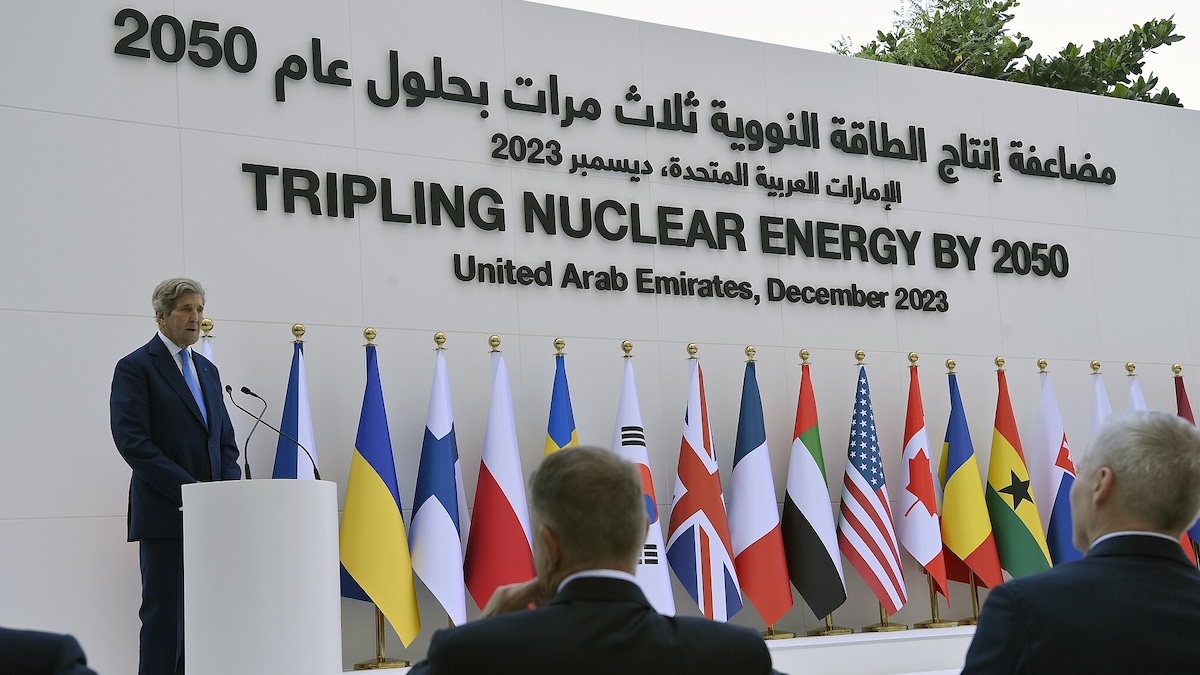
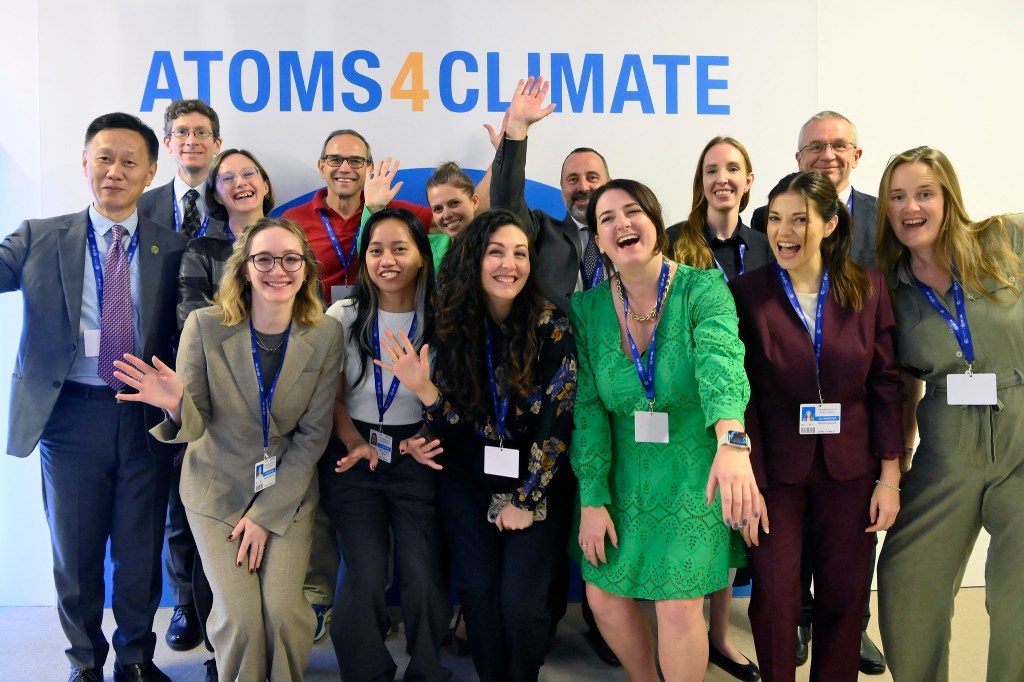
Climate campaigners scoffed Saturday at a 22-nation pledge to triple nuclear power capacity by mid-century as a way to ward off the increasing damage of warming temperatures, with opponents calling it a costly and “dangerous” distraction from the urgent need for a fossil fuel phaseout alongside a rapid increase in more affordable and scaleable renewable sources such as wind and solar.
The Declaration to Triple Nuclear Energy—backed by the United States, Canada, France, the Czech Republic, and others—was announced as part of the Climate Action Summit taking place in Dubai as a part of the two-week U.N. climate talks known as COP28.
While the document claims a “key role” for nuclear energy to keep “a 1.5°C limit on temperature rise within reach” by 2050 and to help attain the so-called “net-zero emissions” goal that governments and the fossil fuel industry deploy to justify the continued burning of coal, oil, and gas, critics say the false solution of atomic power actually harms the effort to reduce emissions by wasting precious time and money that could be spent better and faster elsewhere.
“There is no space for dangerous nuclear power to accelerate the decarbonization needed to achieve the Paris climate goal,” said Masayoshi Iyoda, a 350.org campaigner in Japan who cited the 2011 Fukushima disaster as evidence of the inherent dangers of nuclear power.
Nuclear energy, said Iyoda, “is nothing more than a dangerous distraction. The attempt of a ‘nuclear renaissance’ led by nuclear industries’ lobbyists since the 2000s has never been successful—it is simply too costly, too risky, too undemocratic, and too time-consuming. We already have cheaper, safer, democratic, and faster solutions to the climate crisis, and they are renewable energy and energy efficiency.”
Read More Beyond Nuclear International