 Beyond Nuclear International
Germany launches next solar expansion
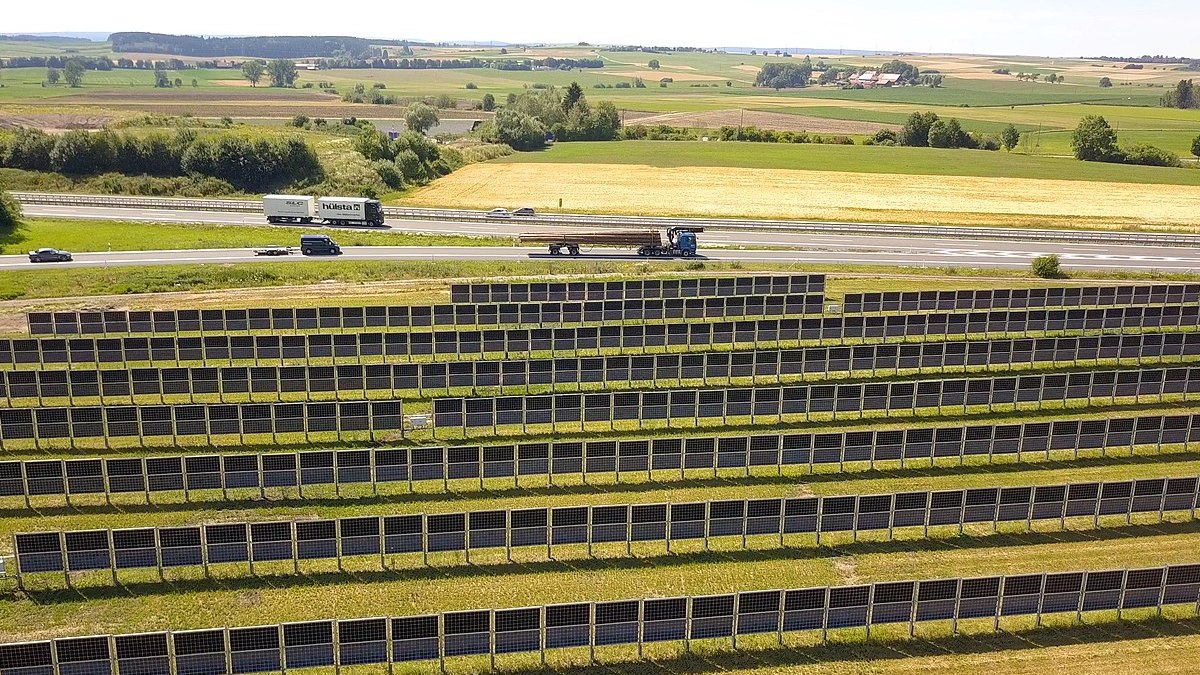
Technology will be a key power source going forward
News from Clean Energy Wire
In a bid to greatly improve the roll-out of solar power in the next years, Germany’s government has put a strategy on the table aimed at simplifying regulation, unlocking new locations, and incentivizing investments in the technology.
At a press conference after the government’s second ‘Solar PV-Summit’ this year, economy and climate action minister Robert Habeck said the technology will be one of the key power sources of the future and greatly contribute to the goal of a share of 80 percent renewables in Germany’s electricity mix by 2030. Total capacity is planned to then be 215 gigawatts (GW), from about 63 GW in 2022.
“We see that the buildout is gaining traction,” Habeck said, adding that the 2023 goal of adding 9 GW capacity could well be surpassed by the end of the year and reach more than 10 GW. In the first three months of this year the solar industry already marked its most busy quarter ever by installing 2.7 GW of new capacity. The expansion target by 2026 is 22 GW per year.
“With the strategy we presented today we intend to greatly increase expansion speed once more and remove all brakes that so far have hindered a faster pace,” the Green Party politician added.
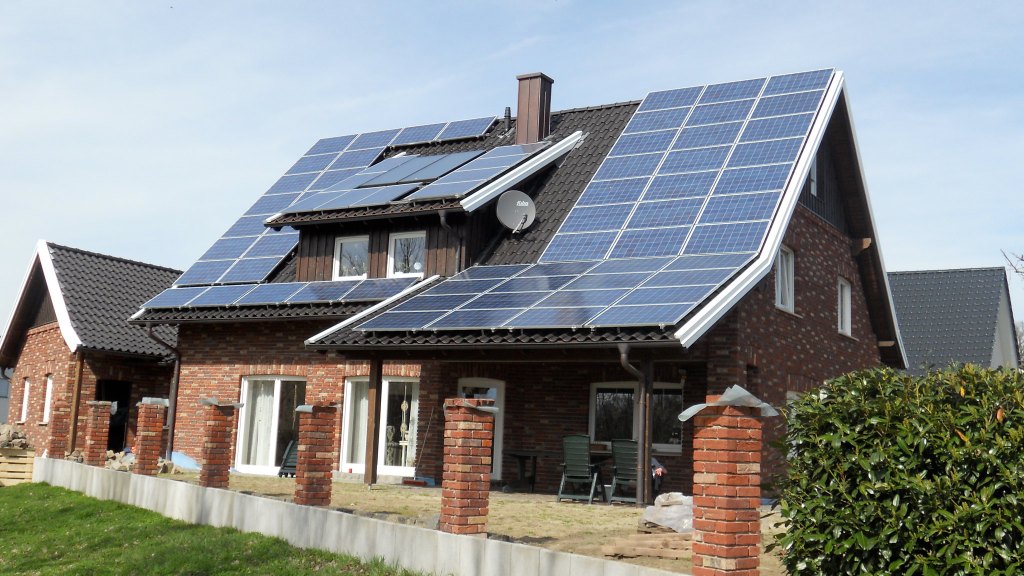
Carsten Körnig, head of industry lobby group BSW Solar, said the push by private homeowners in the energy crisis to become more independent regarding electricity supply had greatly helped boost expansion to record levels. Given the challenges arising from inflation and higher interest rates, it would now be necessary to also incentivise corporate users to invest in solar PV installations to uphold the positive trend.
Read More“Radioactive” is compelling viewing
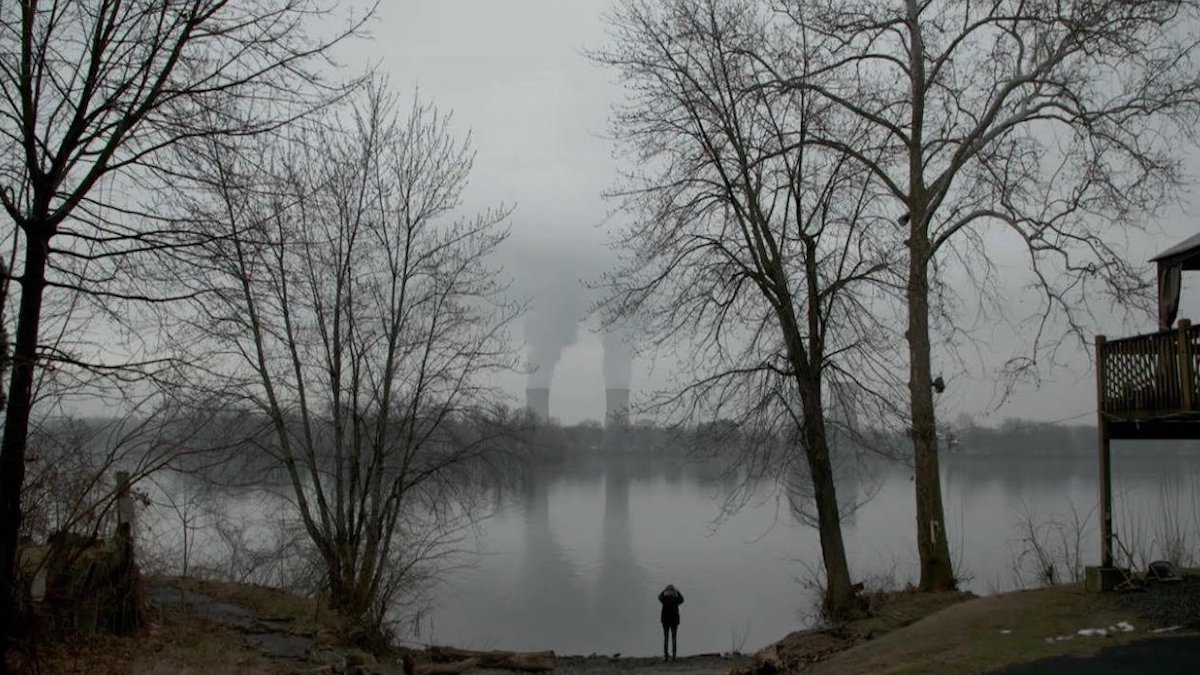
New film spotlights women’s experiences with the Three Mile Island nuclear accident
By Karl Grossman
Radioactive: The Women of Three Mile Island is the title of a newly-released documentary feature film directed, written and produced by award-winning filmmaker Heidi Hutner, a professor of environmental humanities at Stony Brook University, a “flagship” school of the State University of New York.
With greatly compelling facts and interviews, she and her also highly talented production team have put together a masterpiece of a documentary film.
It connects the proverbial dots of the 1979 Three Mile Island nuclear plant disaster—doing so brilliantly.
The documentary has already received many film awards and has had a screening in recent months in New York City—winning the “Audience Award for Best Documentary” at the Dances With Films Festival—and Harrisburg, Pennsylvania; Sarasota, Florida; Dubuque, Iowa; Long Island, New York; First Frame International Film Festival in New York City; the Environmental Film Festival in Washington D.C., and is soon the featured film at Kat Kramer’s #SHEROESForChange Film Festival in Los Angeles and the Cinequest Film Festival in San Jose, California, as well as the Uranium Film Festival in Rio de Janeiro in Brazil. And there will be tours across the U.S.
Resident after resident of the area around Three Mile Island is interviewed and tells of widespread cancer that has ensued in the years that have followed the accident—a cancer rate far beyond what would be normal. Accounts shared in the documentary are heartbreaking.
A whistleblower who had worked at the nuclear plant tells Hutner of the deliberate and comprehensive attempt by General Public Utilities, which owned TMI, to cover up the gravity of the accident and its radioactive releases, especially of cancer-causing Iodine-131 and Xenon 133.
An attorney, Lynne Bernabei, involved in litigation in the wake of the accident, says the Three Mile Island “cover-up was one of the biggest cover-ups in history.” Meanwhile, the U.S. Nuclear Regulatory Commission which is “supposed to protect the public” has then and since been just “interested in is promoting the [nuclear] industry. This is corrupt,” says attorney Joanne Doroshow, now a professor at New York Law School and director of the Center for Justice & Democracy. Many examples of this are presented.
Read MoreWe need this, for the children

US and Russia should join the nuclear ban treaty
By Ivana Nikolić Hughes
Near the end of his life, in fear of nuclear war erupting and engulfing the planet, President John F. Kennedy reportedly told friends: “I keep thinking of the children — not my kids or yours, but the children all over the world.”
Having been shaken and awakened by the Cuban Missile Crisis and just how close they had gotten to destroying the world, Kennedy and the Soviet Union’s Nikita Khrushchev negotiated the Partial Test Ban Treaty in 1963. It took only 12 days for them to come to agreement on what the treaty should entail.
Kennedy’s wisdom was supplemented by genuine care. Speaking about banning atmospheric nuclear tests, JFK said, “This treaty is for all of us. It is particularly for our children and our grandchildren, and they have no lobby here in Washington.” He went on to discuss consequences of nuclear testing, mentioning “children and grandchildren with cancer in their bones, with leukemia in their blood, or with poison in their lungs,” and noting that “malformation of even one baby — who may be born long after we are gone — should be of concern to us all.”
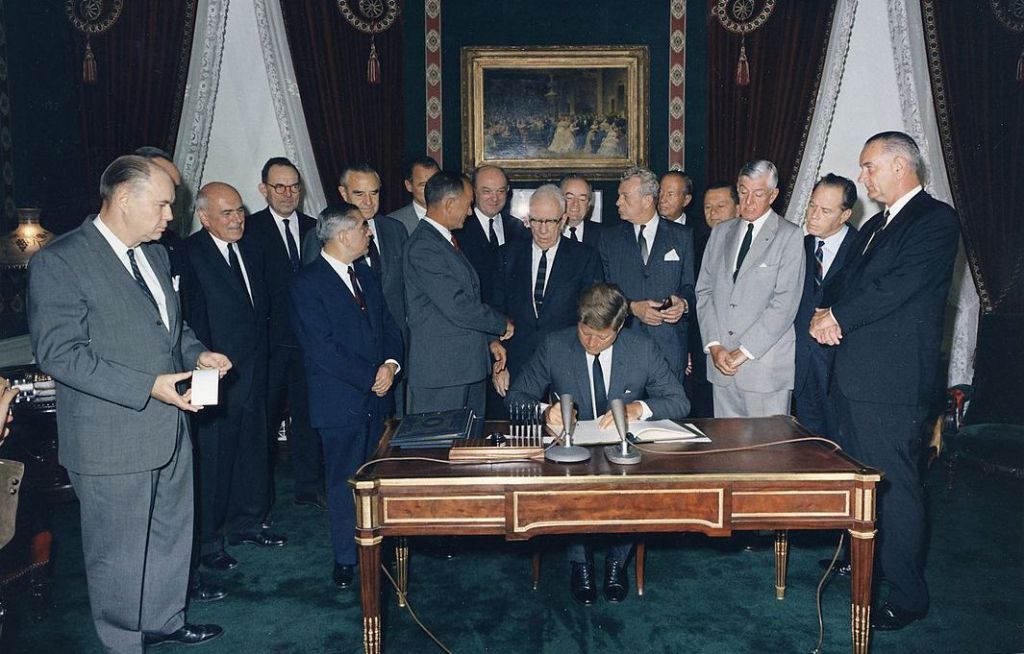
When Kennedy set off to make the treaty a reality, it looked like an impossible task. The Washington establishment was not interested in ending nuclear tests in the atmosphere. It was only through public pressure that U.S. senators started changing their minds, one by one. Following a two-month, nationwide campaign that drew widespread public support, the treaty was ratified by the Senate with an 80-19 vote.
Read MoreVisiting a park is not paying respects
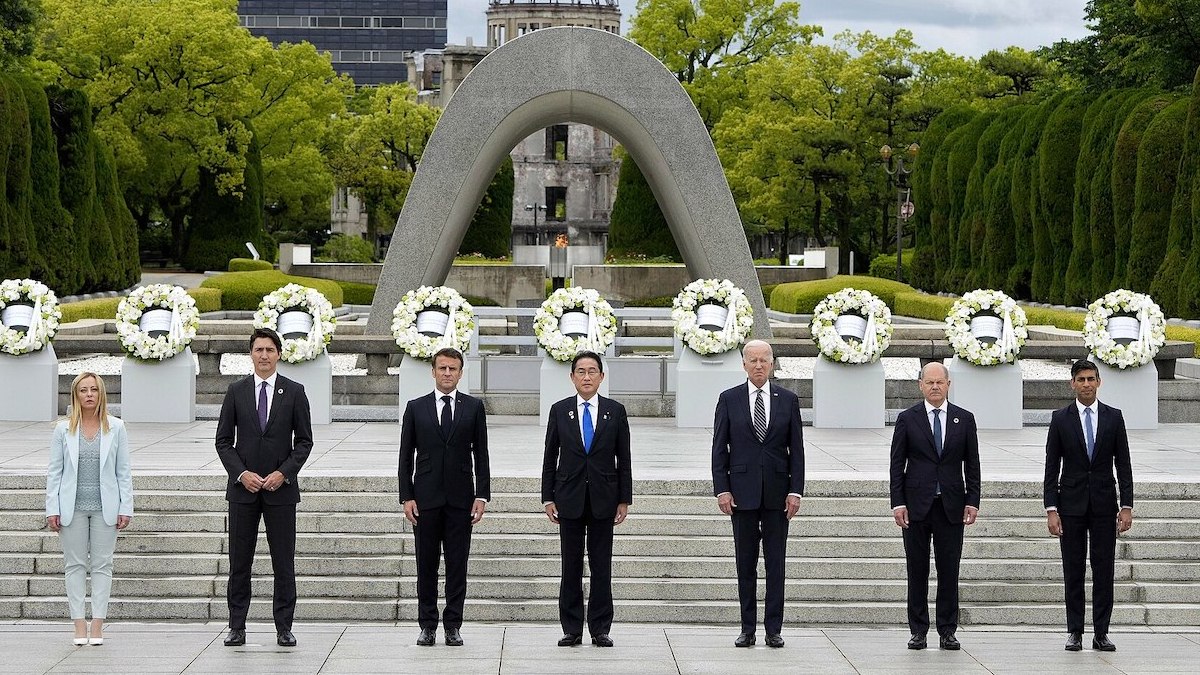
The appalling failure of the G7 to act on nuclear disarmament
By Linda Pentz Gunter
Seven super-hypocrites took a walk in a park recently and called it paying respects. If this sounds like the opening to a Hans Christian Andersen fairy tale, it may as well be. Because nothing tangible or real came of this caper.
The park was the Hiroshima Peace Memorial Park and the visitors were the leaders of the G7 countries: Canada, France, Germany, Italy, Japan, the United Kingdom and the United States.
Afterwards, US president, Joe Biden, tweeted: “Today, my fellow G7 Leaders and I paid a visit to Hiroshima’s Peace Memorial Park where we paid our respects.”
Walking in a park isn’t paying respects to the dead of Hiroshima, where at least 140,000 were killed (although estimates have never been certain) when the United States dropped the first of its two atomic bombs on Japanese citizens.
Abolishing nuclear weapons is paying respects.
And the G7 haven’t paid. The US has never apologized for the Hiroshima and Nagasaki bombings. France and the UK (as well as the US) have not only never apologized, but have refused to acknowledge the true extent of the harm caused by their decades of atomic testing. Germany and Italy have not kicked the US nuclear weapons bases out of their countries.

At the close of the G7 summit, hosted by Japan and deliberately held in Hiroshima as a reminder of the horrific consequences of the use of nuclear weapons, the member countries released a joint statement — grandiosely entitled “G7 Leaders’ Hiroshima Vision on Nuclear Disarmament”. They prefaced it by saying they were issuing it in “a solemn and reflective moment’.
But the statement, which never once acknowledges the Treaty on the Prohibition of Nuclear Weapons (TPNW) as the only genuine instrument for nuclear disarmament, is even worse than the “thoughts and prayers” offered after a mass shooting. In its protracted finger-pointing, principally directed at Russia, which is mentioned 11 times, the statement lays out a pathway toward the provocation of yet more violence, not disarmament, making the likelihood of nuclear war greater.
And with breathtaking hypocrisy, while also castigating North Korea, Iran and China, it conveniently fails to mention US plans to spend $1 trillion on revamping its nuclear weapons arsenal.
Read MoreNo survivors
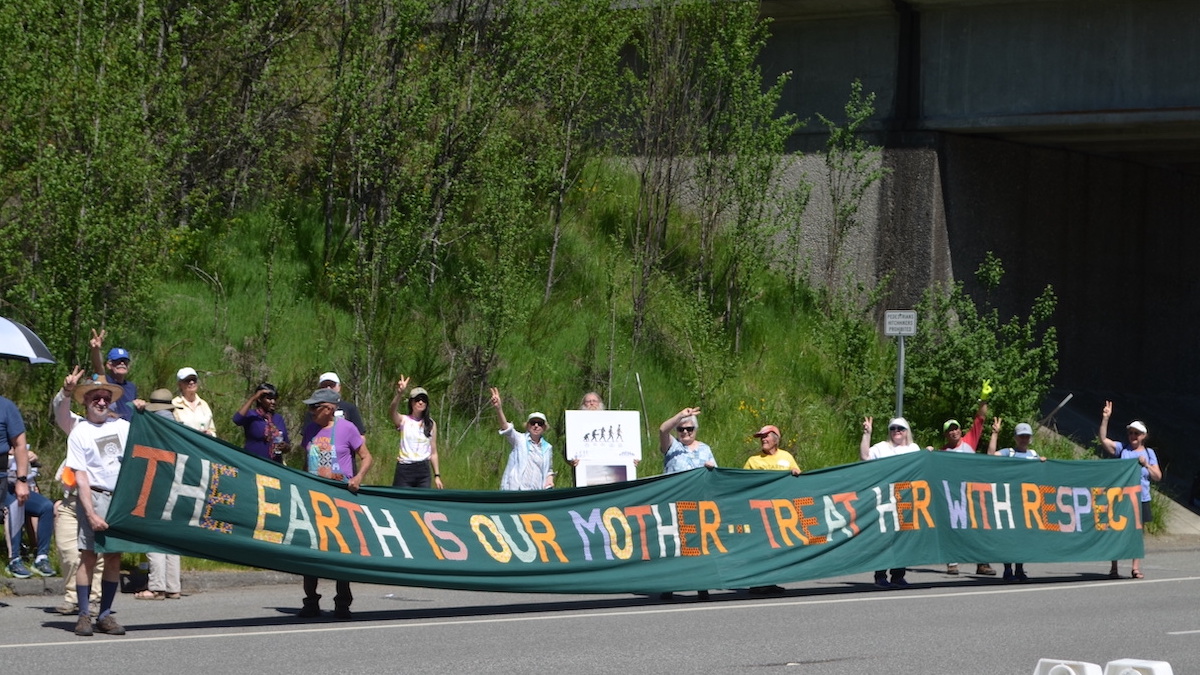
Protestors bring their annual message for peace to the gates of hell
By Leonard Eiger
Activists blockaded the entrance to the US Navy’s west-coast nuclear submarine base, which is home to the largest operational concentration of deployed nuclear weapons, in a nonviolent direct action the day before Mother’s Day.
Eight peace activists from the Ground Zero Center for Nonviolent Action, holding banners reading “The Earth is Our Mother Treat Her With Respect” and “Nuclear Weapons are Immoral to Use, Immoral to Have, Immoral to Make,” briefly blocked all incoming traffic at the Main Gate at Naval Base Kitsap-Bangor in Silverdale, Washington as part of a May 13th Mothers Day observance.
Traffic was diverted as the 15 member Seattle Peace Chorus Action Ensemble, facing the Navy’s security detail, sang “The Lucky Ones”, an original composition by their director, Doug Balcom of Seattle, to the assembled guards and Navy personnel.
The song describes the different stages of personal, regional and global destruction that a nuclear war would inflict on humanity and the earth’s biosphere, and posits whether survivors to later stages of the devastation would wish they’d perished earlier; it ends with a call to save us from this fate by eliminating all nuclear weapons.
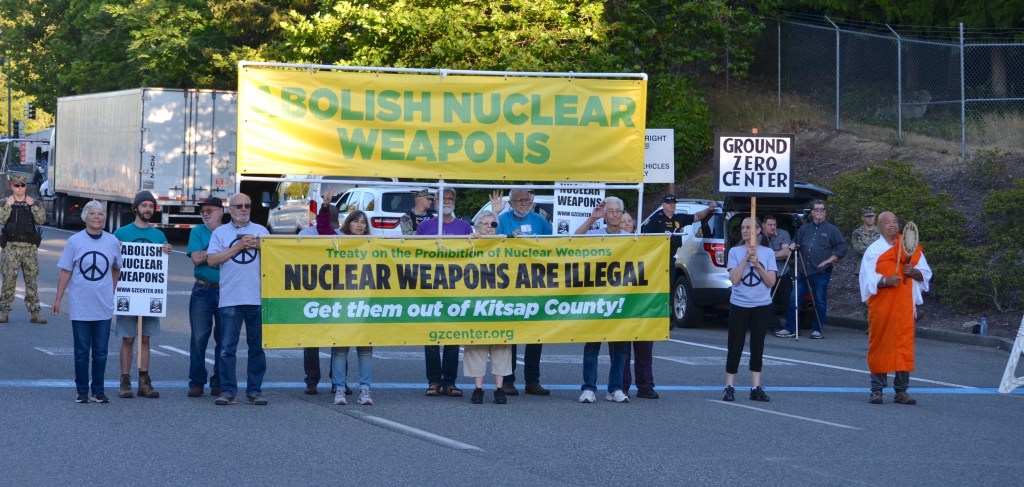
The group then led the assembled activists in singing various traditional protest songs, while the State Patrol processed the demonstrators who were being cited for interrupting traffic.
Those blocking the roadway were removed from the highway by the Washington State Patrol, cited for violating RCW 46.61.250 (Pedestrians on Roadways), and released at the scene.
Read MoreLying is the new black

And the nuclear industry is going for the fiction prize
By Linda Pentz Gunter
Lying is the new black. It is everywhere. It is in, and cool and entirely acceptable in the circles where judgement and ethics are permanently suspended. Disgraced (and now criminally charged) U.S. congressman, George Santos, is the poster child of this new fashion statement. Make up something outlandish and Santos has probably claimed to have said it or done it. None of it is true. And he is still in Congress.
In this (hopefully permanently) post-Trump era, lying with impunity has become precisely that: unpunishable, even applauded, as Trump was on his CNN debacle, which consigned that network to the dustbin of what once used to be called journalism.
It’s all about entertainment now, and clicks, likes, readership and ratings. And fiction. And the nuclear industry boosters are going for the Pulitzer Prize on that one. We used to say, “you couldn’t make this stuff up,” but the pro-nukers do. All the time.
So nuclear power is “the cheapest, safest, greenest” form of energy ever invented. It is “carbon-free.” No one ever died because of a nuclear accident. Irrational fear-mongering by the anti-nuclear movement killed off nuclear power growth in the United States. Renewables are a pipe-dream of the crunchy granola set and about as boring and superfluous. And so on and so on.
There used to be fact-checkers at media organizations. Not any more. Because all this twaddle appears in print and on the air, unchecked and unchallenged. Not only that, media outlets are no longer impartial and are, in fact, deliberately fanning the flames of deceit. Thus, Bloomberg could trumpet an article about the Vogtle 3 and 4 reactors in Georgia with this headline: Nuclear Power Makes Comeback with Massive Carbon-Free Vogtle Plant in Georgia.
This is a comeback? From what, exactly? A comeback is usually a triumphant return to greatness by a previously successful but then faded star. Actor Robert Downey Jr made a comeback. Basketball legend, Michael Jordan, made a comeback.

But Vogtle 3 and 4 are a nuclear comeback? The two reactors are more expensive than any previous reactors — far more — and will exceed at least $35 billion when both are finally operational. That’s over $21 billion more than originally planned.
Read More Beyond Nuclear International