 Beyond Nuclear International
More nuclear corruption?
Georgia joins list of states acting against best interest of ratepayers
From: Georgia Wand, Nuclear Watch South
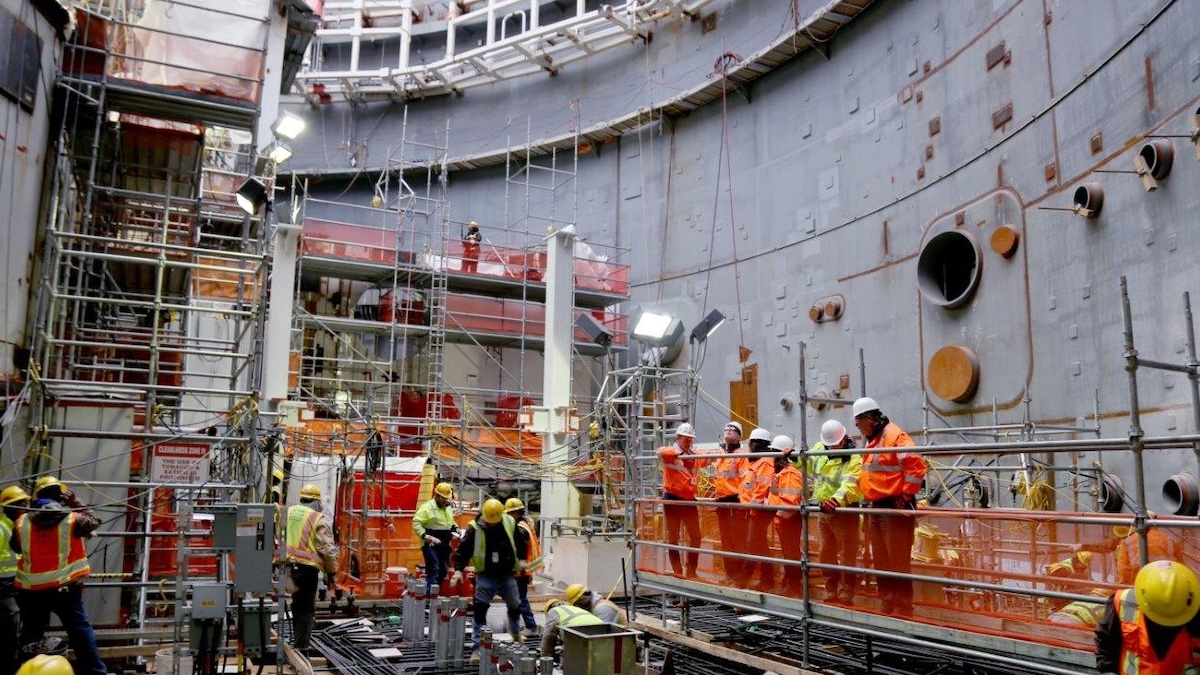
The Georgia Public Service Commission (PSC) and Georgia Power are facing renewed accusations of collusion and possible corruption following the recent rate increase approved by the PSC for the Vogtle units 3 and 4 nuclear expansion project. Similar to recent high-profile nuclear corruption scandals in Ohio, Illinois and South Carolina, Georgia’s utility commissioners acted against the best interests of Georgia ratepayers, rubber-stamping cost recovery for mistakes made by Georgia Power.
Georgia Power, despite numerous warnings and opportunities to avert rate increases, secured rate base increases of $7.56 billion in cost overruns for Vogtle 3 and 4 during the December 19, 2023 hearing before the Georgia PSC. This rate increase, added to previous rate increases for Vogtle, will raise residential and small business electric rates by 26%. The full rate increase adopted by the PSC will go into effect when Vogtle 4 attains commercial operation. The December 19 PSC vote for $7.56 billion only included construction costs. Once Unit 4 enters commercial operation, Georgia Power will expand their rate base an astounding $11.1 billion to include financing costs of $3.5 billion, on which Georgia Power also profits.

Nuclear Watch South and Georgia WAND believe the SEC should investigate Georgia Public Service Commission and Georgia Power as it did for the failed Summer nuclear expansion in South Carolina and the recent bribery scandals in Ohio and Illinois. In October a Southern Company whistleblower brought the SEC to bear on the failed Kemper carbon capture coal plant being built by Southern Company’s Mississippi Power. Southern Company is also the parent of Georgia Power.
Glenn Carroll, Nuclear Watch South’s coordinator, said: “The Commission’s decision to saddle Georgia Power ratepayers with an additional $7.56 billion in costs for Vogtle Units 3 and 4 demonstrates the complete lack of meaningful regulatory oversight to protect consumer interests. From the very beginning, the PSC and Georgia Power have turned a blind eye to the construction problems and delays that have plagued this unneeded project. This level of contempt for hard working Georgians, who pay their electric bills under the assumption that they aren’t getting ripped off, is shameful and deserving of a federal investigation — similar to the investigation in Ohio that found its top utilities regulator accepting bribes from the utilities he was supposed to regulate.”
Read MoreThe ride aboard our “Pale Blue Dot”

Reflections from an 87-year journey
Every Winter Solstice, Walt Patterson, a UK-based Canadian physicist and widely published writer and campaigner on energy, sends Solstice Greetings to some 600 friends and colleagues around the world. Beyond Nuclear was one of the recipients. It’s a delightful read to start the new year, with some important reflections, so we republish it here, thereby expanding Walt’s circle of “friends and colleagues.”
By Walt Patterson
Once more the time rolls round to send you the traditional Solstice Greetings. I am frankly dumfounded to realize that since I arrived on this planet the earth has gone the whole way around the sun eighty-seven times. A lot has happened to me in those eighty-seven trips, and I’m delighted to find that I can still recall a lot of it, despite the stroke that hit me two years ago. Was that really only two years ago? Amazing.
In 1990 the NASA Voyager spacecraft 3.7 billion miles away took and sent back to us the photo that Carl Sagan the US astronomer called ‘The pale blue dot’. For what we call eighty-seven years, I’ve been riding this pale blue dot around the universe, as it circles an unremarkable ordinary star in a tenuous arm of what we call our local galaxy. Even on the blue dot I’ve covered a lot of ground.
Soon after I got here, Otto Frisch, Otto Hahn and Lise Meitner discovered nuclear fission in uranium. Physics had long been the most dramatic and exciting branch of science, but now nuclear physics leapt to the forefront. My first love of science was astronomy, but as an impressionable youngster I decided I wanted to study nuclear physics too. I did, acquiring a post-graduate Master’s degree, and was about to try for a PhD at the University of Edinburgh, until I changed my mind.
After leaving my home town of Winnipeg in the middle of Canada, five hundred miles from anywhere, I had spent the winter in Greenwich Village in Manhattan, crossed the Atlantic on a freighter, travelled around the UK in an old black London taxicab with two South African guys and three Australian girls, hitchhiked all over northern Europe, including an unforgettable ride with a fellow Danish hitchhiker in a vast American convertible with two young US GIs who picked us up at the Dutch-German border and drove us all the way to Copenhagen.
When I reached Wien (Vienna) on my return trip I walked to the Zentralfriedhof, the Central Cemetery, which is far from central as it proved, and found area 31, the burial place of great composers. I can’t now recall which exactly were actually buried there rather than just memorials; walking among the statues of many Strausses, and Mozart and Schubert and Beethoven and Bach, the air and my head were filled with melody, a vivid sensation.
Read MoreA ‘dangerous distraction’
COP plot to triple nuclear power by 2050 decried
By Jon Queally, Common Dreams
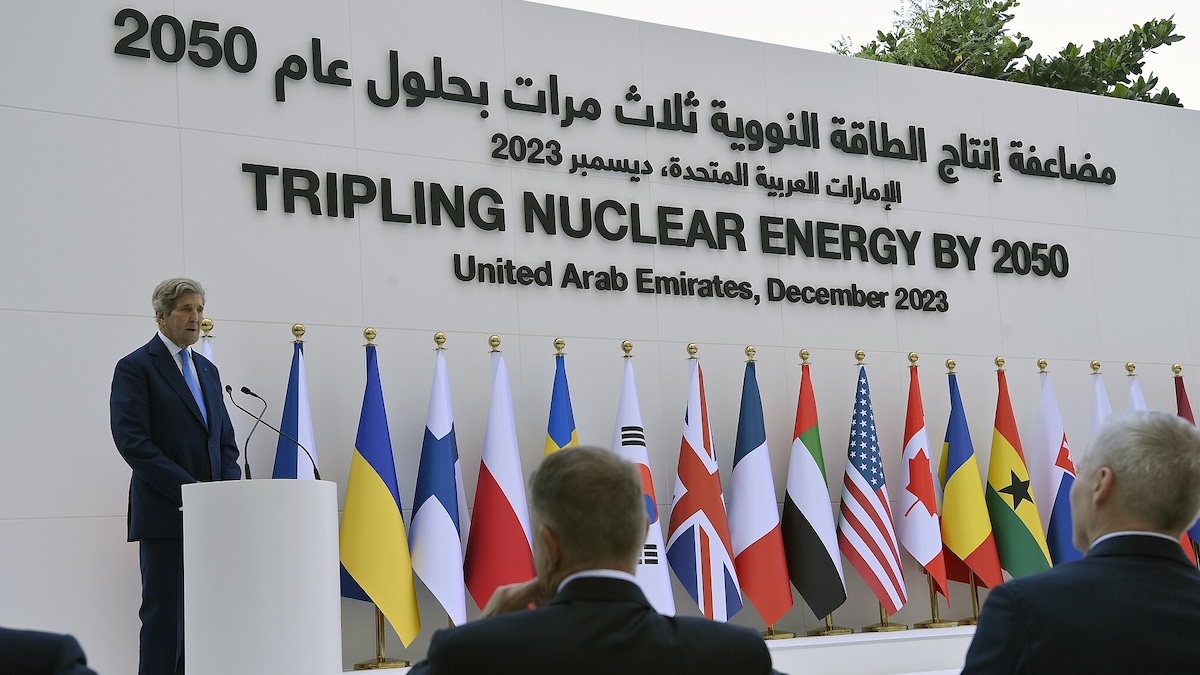
Climate campaigners scoffed Saturday at a 22-nation pledge to triple nuclear power capacity by mid-century as a way to ward off the increasing damage of warming temperatures, with opponents calling it a costly and “dangerous” distraction from the urgent need for a fossil fuel phaseout alongside a rapid increase in more affordable and scaleable renewable sources such as wind and solar.
The Declaration to Triple Nuclear Energy—backed by the United States, Canada, France, the Czech Republic, and others—was announced as part of the Climate Action Summit taking place in Dubai as a part of the two-week U.N. climate talks known as COP28.
While the document claims a “key role” for nuclear energy to keep “a 1.5°C limit on temperature rise within reach” by 2050 and to help attain the so-called “net-zero emissions” goal that governments and the fossil fuel industry deploy to justify the continued burning of coal, oil, and gas, critics say the false solution of atomic power actually harms the effort to reduce emissions by wasting precious time and money that could be spent better and faster elsewhere.
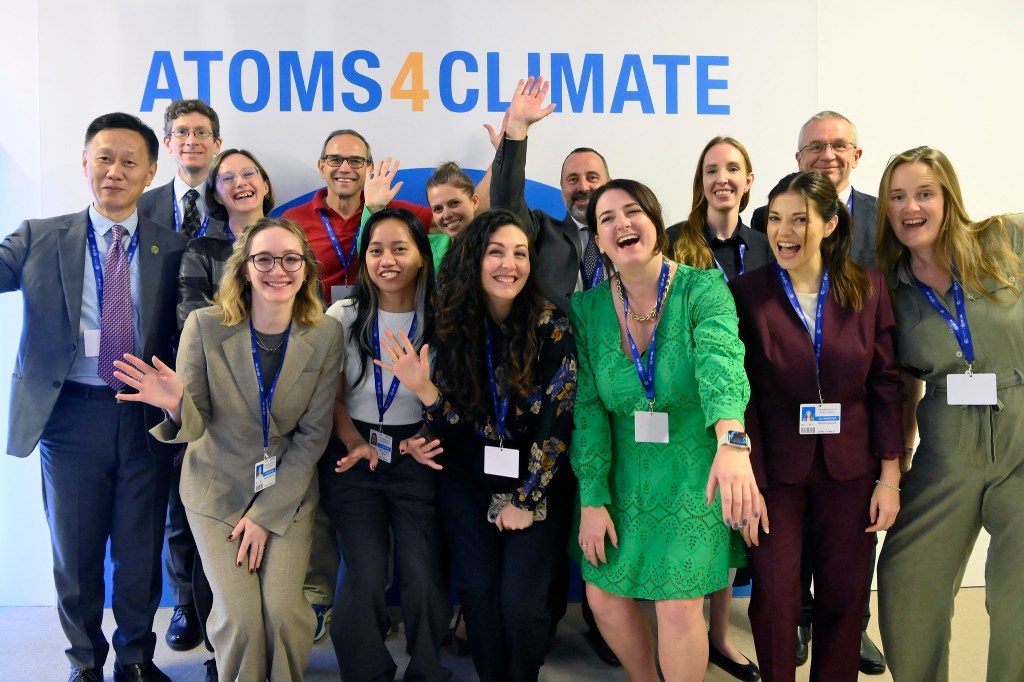
“There is no space for dangerous nuclear power to accelerate the decarbonization needed to achieve the Paris climate goal,” said Masayoshi Iyoda, a 350.org campaigner in Japan who cited the 2011 Fukushima disaster as evidence of the inherent dangers of nuclear power.
Nuclear energy, said Iyoda, “is nothing more than a dangerous distraction. The attempt of a ‘nuclear renaissance’ led by nuclear industries’ lobbyists since the 2000s has never been successful—it is simply too costly, too risky, too undemocratic, and too time-consuming. We already have cheaper, safer, democratic, and faster solutions to the climate crisis, and they are renewable energy and energy efficiency.”
Read MoreA resounding rejection of ‘nuclearism’
Non-nuclear states gathered in New York are decidedly anti-nuclear in outlook and approach
By Tom Unterrainer, chair, Campaign for Nuclear Disarmament
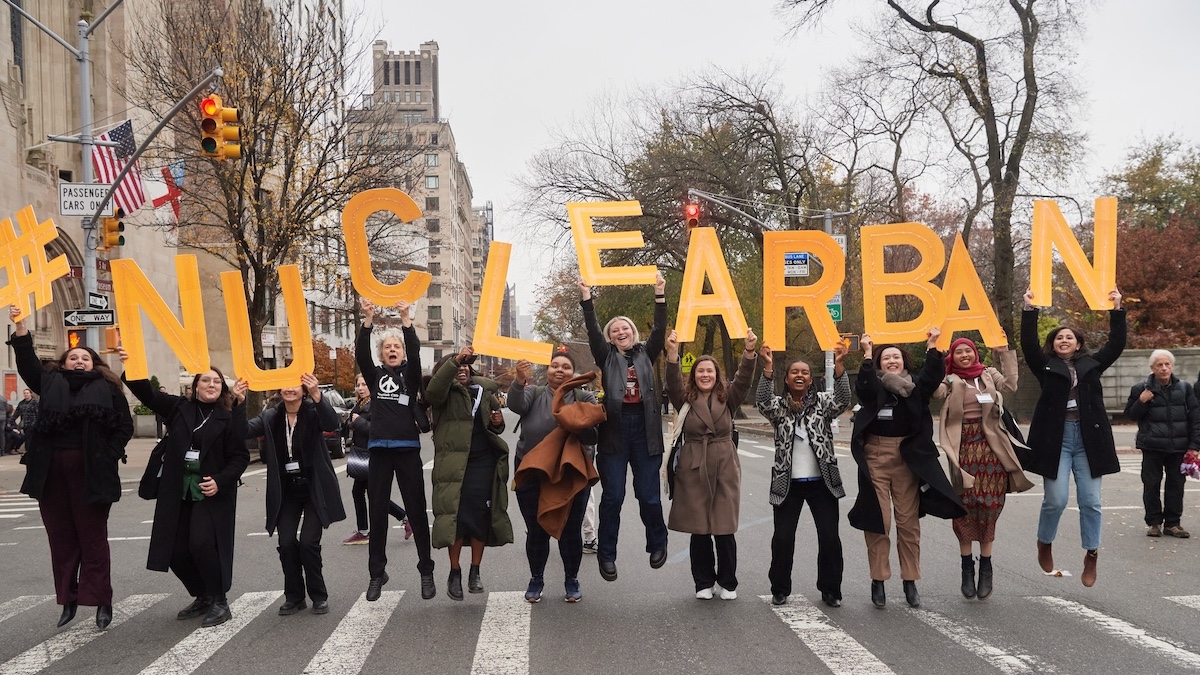
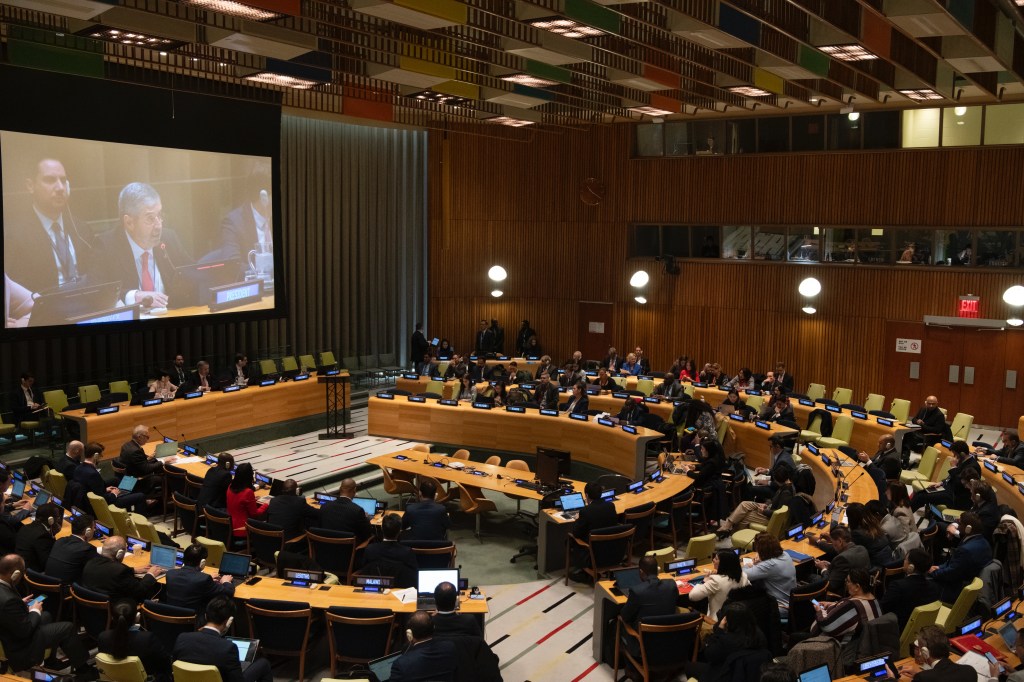
The non-nuclear majority met in New York between 27 November and 1 December for the Second Meeting of States Parties (2MSP) to the Treaty on the Prohibition of Nuclear Weapons (TPNW). This coming together was not simply ‘non-nuclear’ but decidedly anti-nuclear in outlook and approach.
The TPNW represents many things: a ‘work in progress’, a part of international law, a mechanism for the eventual abolition of nuclear weapons and similar. What it represents politically, at the time of coming into force and since, is a full-frontal rejection of ‘nuclearism’ and a challenge to the nuclear-armed world. 2MSP saw discussion and decision making on how to embed this aspect of the Treaty.
Between 15 and 27 October 1953, the British government carried out ‘Operation Totem’ over an area in Southern Australia. Totem I and Totem II were atmospheric nuclear tests and together with five additional ‘non-critical’ tests, Britain delivered death and catastrophe on the First Nations people inhabiting the area.
These people “felt the ground shaking and the black mist rolling”, as Karina Lester put it on the floor of 2MSP. “We know our lands are poisoned”, she went on, clearly stating that “we want governments to recognise what they have done.”
What the British government did in 1953 was to consign a people and their land to death, destruction and continuing – intergenerational – harm.
The British government has refused to recognise or make recompense for what it did over seventy years ago and recently affirmed that it would not do so now. This roadblock to justice must be challenged, as should the other roadblocks to peace and justice that are erected by nuclear-armed states.
Read MoreDoes nuclear war as entertainment numb our fears?

Do movie heroes who stop nuclear war breed apathy about the real danger?
By Farah Sonde
(This article contains film plot spoilers)
As much as I love my job as a Communications Associate at the Center for Arms Control and Non-Proliferation, there’s nothing more refreshing than taking a step back from the issues to pop on a film or a television show. However, art reflects the anxieties of the world around us, and as such I still find myself followed by nuclear weapons, whether it’s a throwaway comment or a major plot point.
In the wake of Oppenheimer, I decided to take a critical eye to films from around the world that found box-office success and contained nuclear weapons as a plot device. While Oppenheimer’s release has reminded us how films can draw more eyes to the nuclear field, we should be concerned about how blockbuster films from Hollywood to Bollywood subliminally encourage audiences to sit out of nuclear policy conversations.
Deus ex Machina
Tom Cruise seems to have an affinity for stopping nuclear disasters. At the climax of “Mission: Impossible – Fallout,” three nuclear bombs are primed to destroy the water supply of India, China and Pakistan. Superspy Ethan Hunt saves the day by wrestling a detonator from an impossibly handsome Henry Cavill, averting the nuclear poisoning plot.
More recently, “Top Gun: Maverick” also had a nuclear dimension somewhat obscured by the razzle-dazzle of supersonic jets. The ticking clock that drives Maverick’s plot is an unsanctioned uranium enrichment plant that needs to be eliminated before it becomes operational. The plant is destroyed and Maverick makes a daredevil escape, leaving questions on nuclear security unanswered and an audience in awe.

Nuclear weapons have long had their place in Hollywood, whether as a Macguffin or a deus ex machina, and it’s not hard to see why. At the height of the Cold War, films like “Dr. Strangelove” and “On the Beach” allowed audiences to critically engage with their worst anxieties.
When nuclear weapons seemed to leave the cultural zeitgeist, they still found a place in Hollywood as entertainment. What better way to raise the stakes for the heroes than to threaten a nuclear disaster?
Or if the writers painted themselves into a corner with an absurd plot, nuclear weapons offer a way out. Need to get aliens off of Earth? Take Will Smith’s example in “Independence Day” and nuke them away!
Read MoreA nuclear assault on freedoms in South Africa
Industry shows contempt for democratic processes and civil society groups
By Gerard Boyce
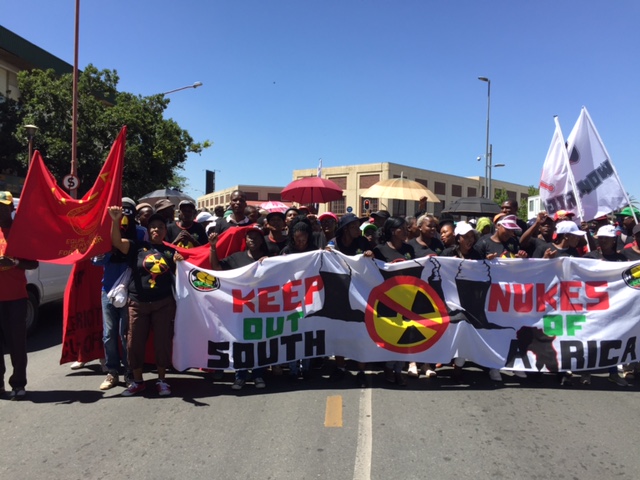
A considerable number of pro-nuclear articles penned by supposedly impartial nuclear experts or professed nuclear industry lobbyists have appeared in the South African media of late. The flurry of pro-nuclear activity has been so noticeable that the cynic would be forgiven for thinking that this outpouring of pro-nuclear sentiment was not random but part of a concerted campaign to push a pro-nuclear agenda that coincided with some specific event or cause.
One possibility could be that it was aimed at delegates attending this summer’s BRICS summit, an alliance of countries whose members (both current and invited) are all pro-nuclear, that was held in Johannesburg during August.
Alternatively, observers of South Africa’s nuclear industry might attribute this activity to Mineral Resources and Energy Minister Gwede Mantashe’s still delayed address to Cabinet on what he has dubbed an ‘updated Integrated Resource Plan’ that will reportedly include an allocation for nuclear power even though the Presidential Climate Commission concluded in its recently released final report into South Africa’s energy transition that there was no place for nuclear power in the country’s least costly energy plans.
Seen against this backdrop, it is relatively easy to ignore most of these articles or dismiss them as propaganda produced by the nuclear lobby as part of its ongoing and seemingly futile bid to have government expand nuclear power output.
It is difficult, however, to dismiss a specific recent article that appeared in a nationally syndicated business news supplement that is distributed along with daily newspapers belonging to the Independent Online (IOL) media group; a large South African newspaper group that is owned by embattled holding company Sekunjalo Investment Holdings.
Read More
