 Beyond Nuclear International
Reckless or rhetoric?
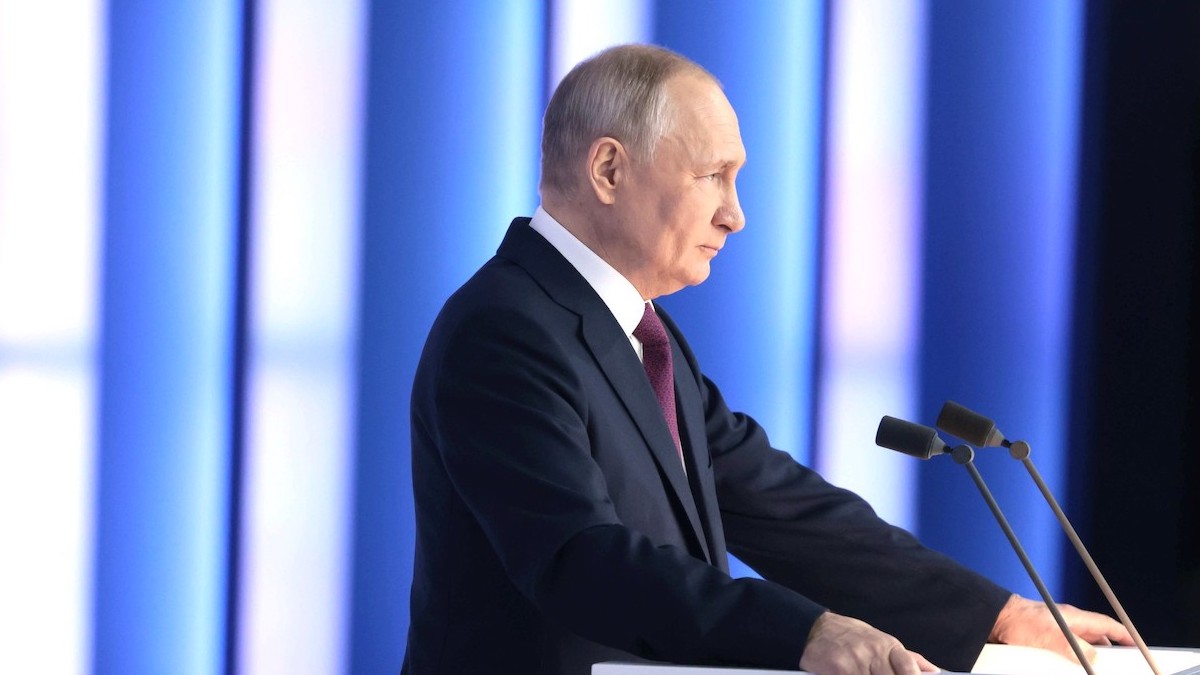
Was Russian premier threatening a new arms race or warning the West off Ukraine?
By Linda Pentz Gunter
In a major state-of-the-union address in Moscow on February 21, Russian president, Vladimir Putin said: “I am forced to announce today that Russia is suspending its participation in the Strategic Arms Reduction Treaty.”
International reaction was swift, most of it condemnatory, but some also cautioning that it may contain more bluster and implicit threat than a true escalation.
Putin was referring to the New START treaty, first signed by then presidents Obama (US) and Medvedev (Russian Federation) in Prague in 2010. The treaty caps the number of strategic nuclear warheads that the US and Russia may deploy and the deployment of land- and submarine-based missiles and bombers to deliver them. The treaty was renewed in 2021 for another five years.
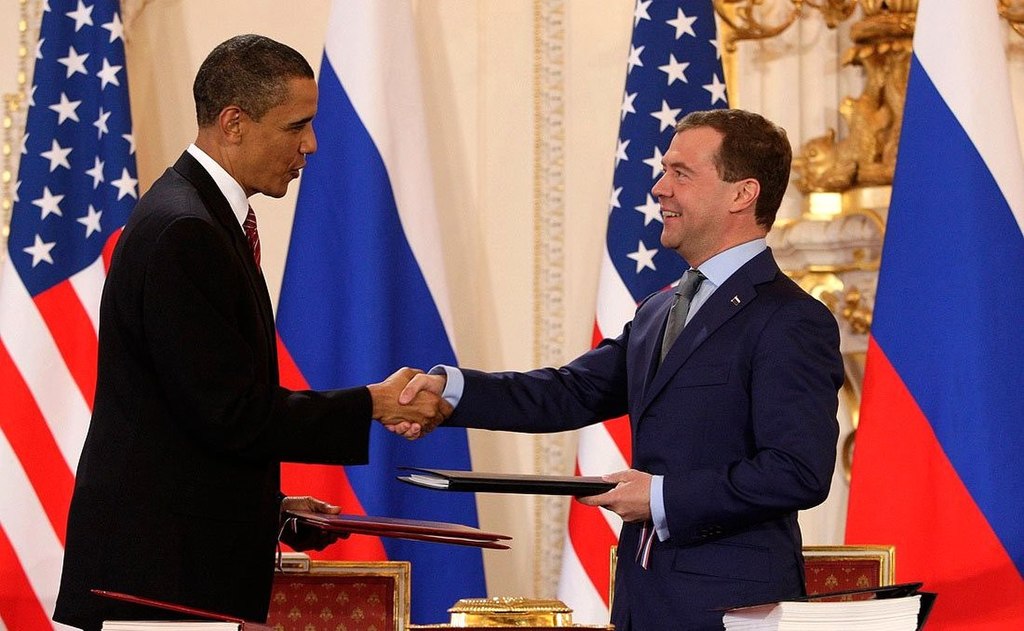
Specifically, New START sets out limits, which so far both the United States and the Russian Federation have met or remained below. They are:
- 700 deployed intercontinental ballistic missiles (ICBMs), deployed submarine-launched ballistic missiles (SLBMs), and deployed heavy bombers equipped for nuclear armaments;
- 1,550 nuclear warheads on deployed ICBMs, deployed SLBMs, and deployed heavy bombers equipped for nuclear armaments (each such heavy bomber is counted as one warhead toward this limit);
- 800 deployed and non-deployed ICBM launchers, SLBM launchers, and heavy bombers equipped for nuclear armaments.
Suspending participation is in itself a violation of the treaty. Russia has arguably already been out of compliance with the treaty since well before the invasion of Ukraine, by refusing to allow weapons inspections since 2020 and refusing to join arms control talks under the terms of the treaty since 2021.
Read MoreCourting disaster
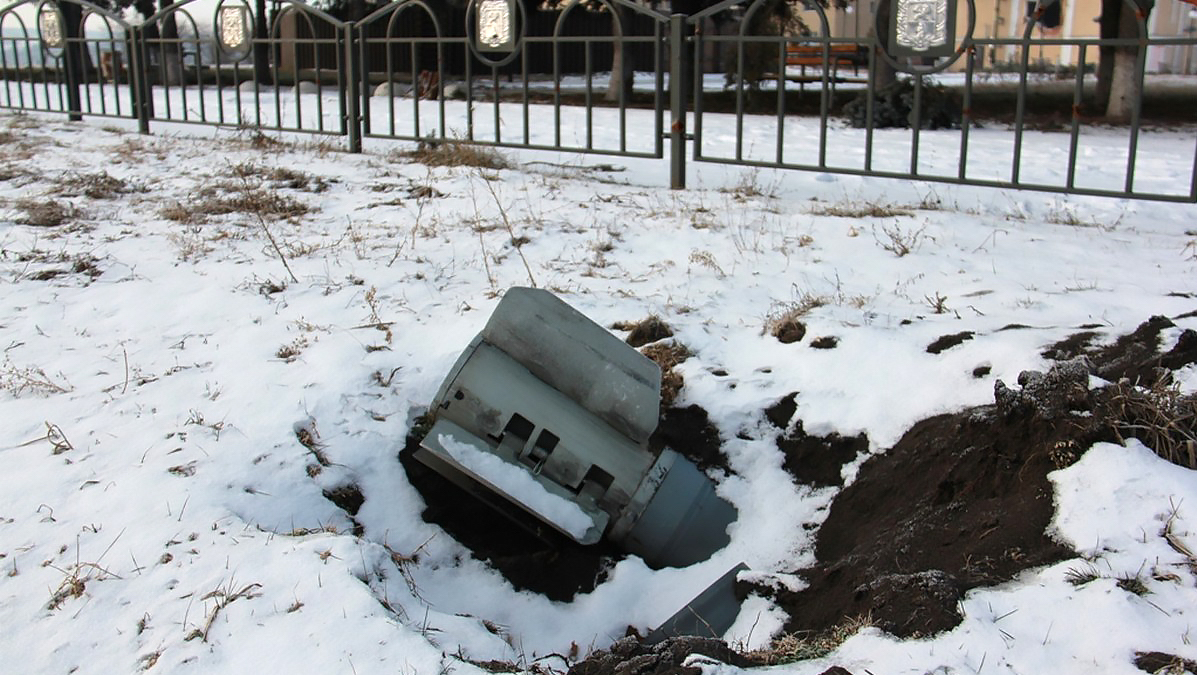
Embroiled in a year-long war, Ukraine’s reactors face new threats
By Linda Pentz Gunter
A year ago, we warned of the significant and unacceptable risks to Ukraine’s 15 nuclear reactors, should they become caught up in a war zone as a consequence of an invasion by Russia. A year later, as we outlined in a Beyond Nuclear press release, those risks have become a reality. And in recent days, the scares and close calls have ramped up again.
Just last week, cruise missiles flew dangerously low over the South Ukraine nuclear power plant in the country’s western region. Then alarms were raised as observers noticed an alarming drop in the water level of the Kakhovka Reservoir, on which the six-reactor Zaporizhzhia nuclear power plant depends for its essential cooling water supply.
A missile strike or loss of cooling water are just two of the many scenarios that could lead to a nuclear power plant disaster in Ukraine. Others include loss of electricity supply, human error or sabotage. The conditions of war just make any and all of these outcomes far more likely.
Indeed, these latest close calls and others prompted a recent statement by the head of Germany’s Federal Office for Radiation Protection, Inge Paulini, who warned that an incident at one of Ukraine’s nuclear power plants would have, “far-reaching consequences as long as the war continues.” And yet, she pointed out, “this danger already seems to be receding into the background of public awareness.”
Indeed, it has been a consistent pattern in the press not to take nuclear power risks seriously. Instead, the media publishes story after story, planted there by a well-orchestrated worldwide nuclear industry campaign, about the benefits of expanding nuclear power.
The Ukrainian energy ministry would seem to agree. Even in the midst of this devastating war, it has just made a deal with the American company, Westinghouse, to purchase two new AP1000 reactors. It is of course unrealistic to envisage these actually being built during a war and, if ever operational, they would simply become additional lethal targets.
In Ukraine, we have seen Russia routinely attack the electric grid, leading to periodic loss of offsite power at all four of Ukraine’s nuclear power plant sites. Zaporizhzhia, in the contested southeastern part of the country, has experienced multiple disconnections from the grid. So far, the diesel generators have functioned until offsite power was restored. But they are reliant on a steady replenishment of fuel, which could be impeded were the plant to come under siege.
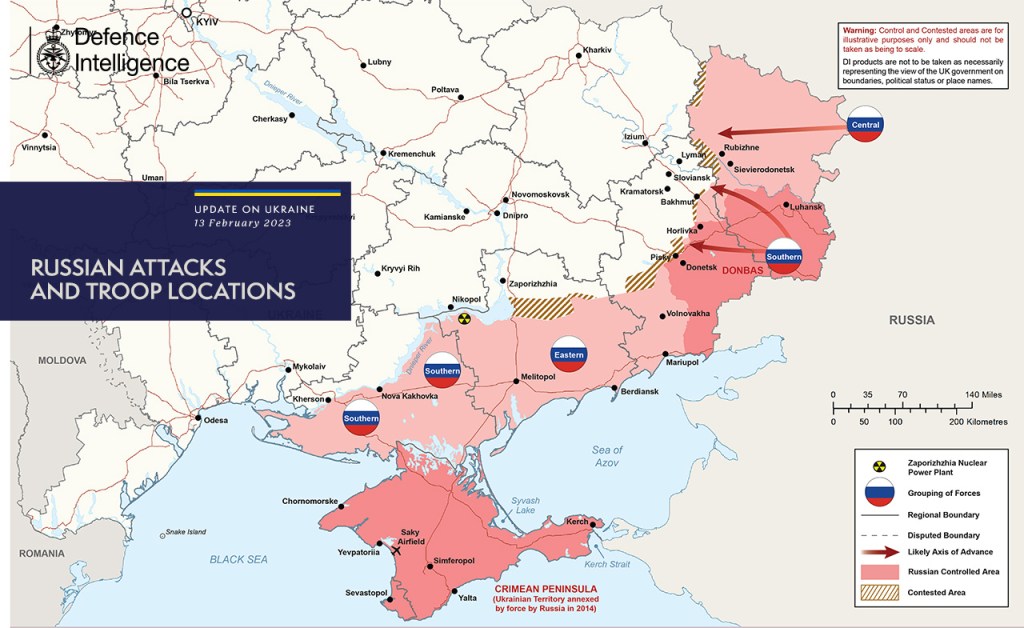
A ready supply of cooling water is also essential so the drain down of the Kakhovka Reservoir is a serious concern. Why this is happening is unclear, but it is thought to be a possible Russian military tactic to flood strategic areas, making them impassable to advancing Ukrainian troops.
Read MoreCities must not be targets
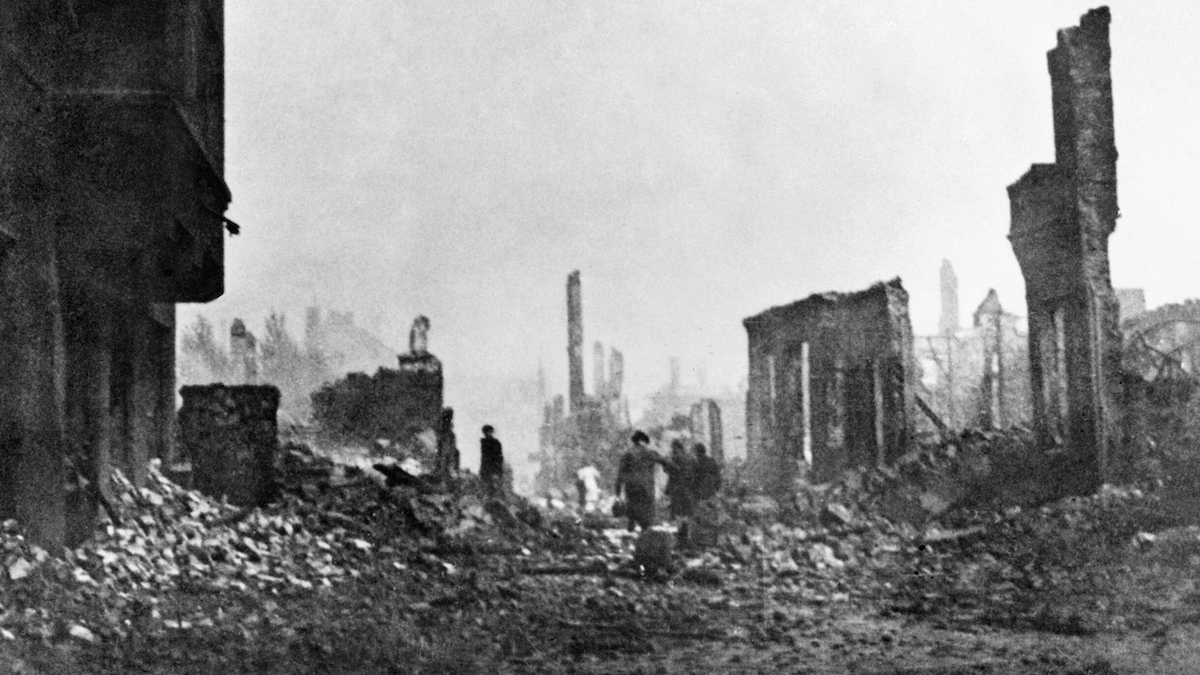
Using nuclear weapons on populations is inherently racist and xenophobic
By Carlos Umaña, MD
The following was a live presentation made by Dr. Umaña inside the basement of the St. Nikolai Church, destroyed during the firebombing of Hamburg during World War II but now housing a museum commemorating the horrors of targeting cities during war.
I am honored speak on such a special occasion, to such a special crowd, and humbled to do so in such a special place. Here, the name of my presentation, “Cities are not targets” takes a special meaning, as in the basement of St. Nikolai’s Memorial Church one cannot help but marvel at the grandeur of human enterprise, while at the same time be appalled by the reaches of human destruction.
“Cities are not targets,” the title of my presentation, is also the name of a campaign launched in 2006 by Mayors for Peace, an organization founded in 1982 by the mayor of Hiroshima with the aim of producing nuclear abolition, an organization that currently has over 8,200 member cities.
Now, when we talk about cities, urban centers of civilian population being targets, we are not talking about peace, we are talking about war, and the bare minimum of humanity that must be followed during war. We are talking about the rules of war, for civilians ‐ innocent noncombatants ‐ must not be a part of war.

During World War II, attacks on civilian structures were justified by “othering”, that is, by objectifying populations, making not the government or the army the enemy, but the people. In popular culture nowadays we see how nuclear weapons are used to fight off evil aliens in scientific action movies. Entire races of evil, ugly aliens who want to destroy humanity are killed off and humanity is saved by the atomic bomb.
In the 1940s, the aliens, in the public eye of many people in the United States, were the Japanese. The Japanese people themselves, who looked and acted so differently, were somehow evil. In the collective mind of many in the United States, all Japanese people were accomplices to their army’s misdeeds. Hence, they deserved the atomic bomb. They had it coming.
Nuclear weapons are inherently racist and xenophobic: they were created and used with the idea of killing off a population of people who are “not like us”. This “othering”, this extreme indifference towards the horrible suffering of those who are somehow different is the reason for being of these weapons and why they are the epitome of cruelty. In this sense, the words of our dear and renowned Hiroshima survivor Setsuko Thurlow resonate loudly: “nuclear weapons are not a necessary evil, but the ultimate evil”.
Read MoreWar is a climate killer
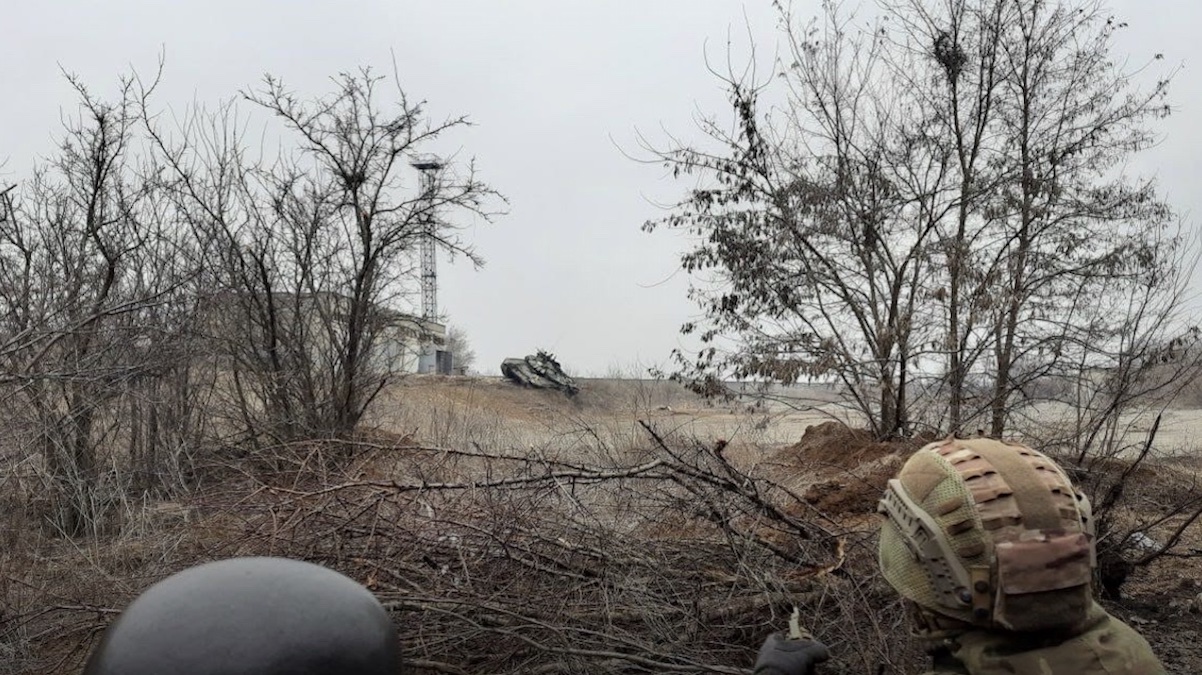
The military already has the largest carbon footprint. Going to war makes it far worse
By Angelika Claussen
War brings death and destruction – not least to the environment and climate. Russia’s invasion of Ukraine offers a depressing reminder of that fact, and further increases the military sector’s already enormous global CO₂ footprint. In addition, the eastern Ukrainian cities where fighting is taking place are home to fossil fuel infrastructure such as chemical factories, oil refineries, and coal mines, the bombing of which produces a cocktail of toxic substances that has devastating environmental impacts. Efforts to arm the two sides, moreover, are consuming materials and resources that could otherwise go towards tackling the climate crisis.
Based on the global CO₂ budget, humanity has less than eight years to ensure it still hits its 1.5-degree warming target. To do so, we need to urgently implement reforms in all areas, to bring about “systemic change,” as the IPCC report from early April puts it. The military sector barely gets a mention in this almost 3,000-page document, however, with the word “military” coming up just six times. You might thus conclude that the sector is of little relevance to the climate emergency.
The reality is rather different. Using military hardware results in huge quantities of emissions. In the war in Ukraine, 36 Russian attacks on fossil fuel infrastructure were recorded in the first five weeks alone, leading to prolonged fires that released soot particulates, methane and CO₂ into the atmosphere, while oil infrastructure has been ablaze on the Russian side too. The oil fields that were set on fire in 1991 during the second Gulf War contributed two per cent of global emissions for that year.
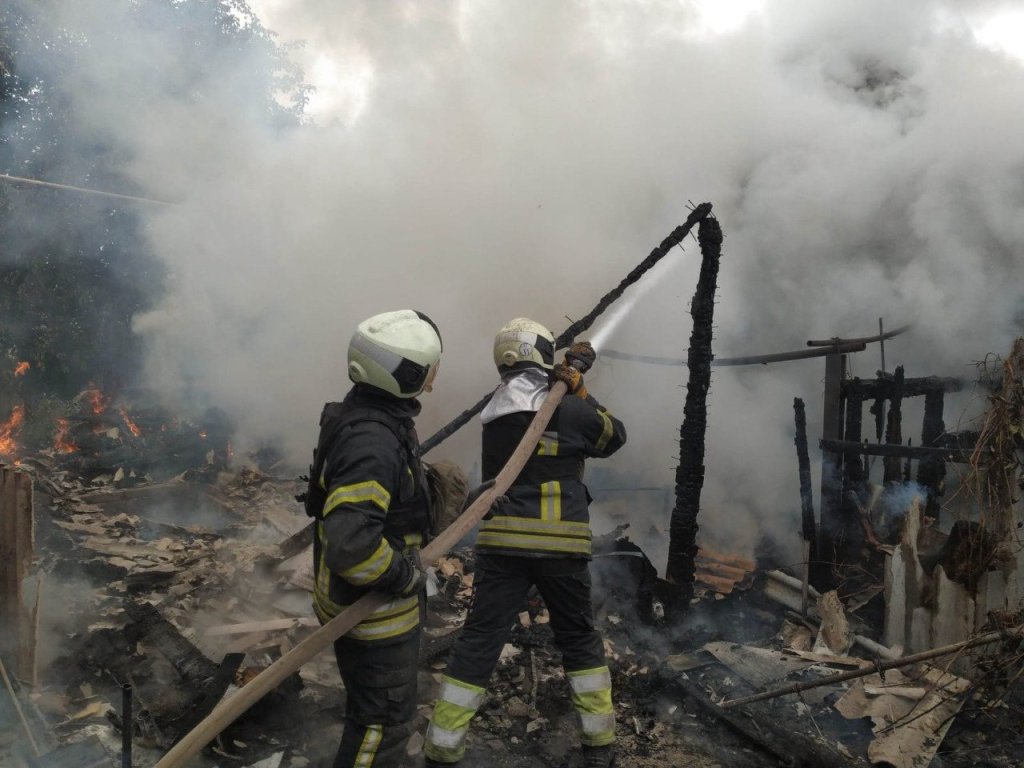
While greenhouse gas emissions are one of the most significant impacts of war, the quantity emitted depends on the duration of the conflict and on what tanks, trucks, and planes are used. Another is the contamination of ecosystems that sequester CO₂. Staff from Ukraine’s environment inspectorate are currently collecting water and soil samples in the areas around shelled industrial facilities.
Read MoreThe latest warning
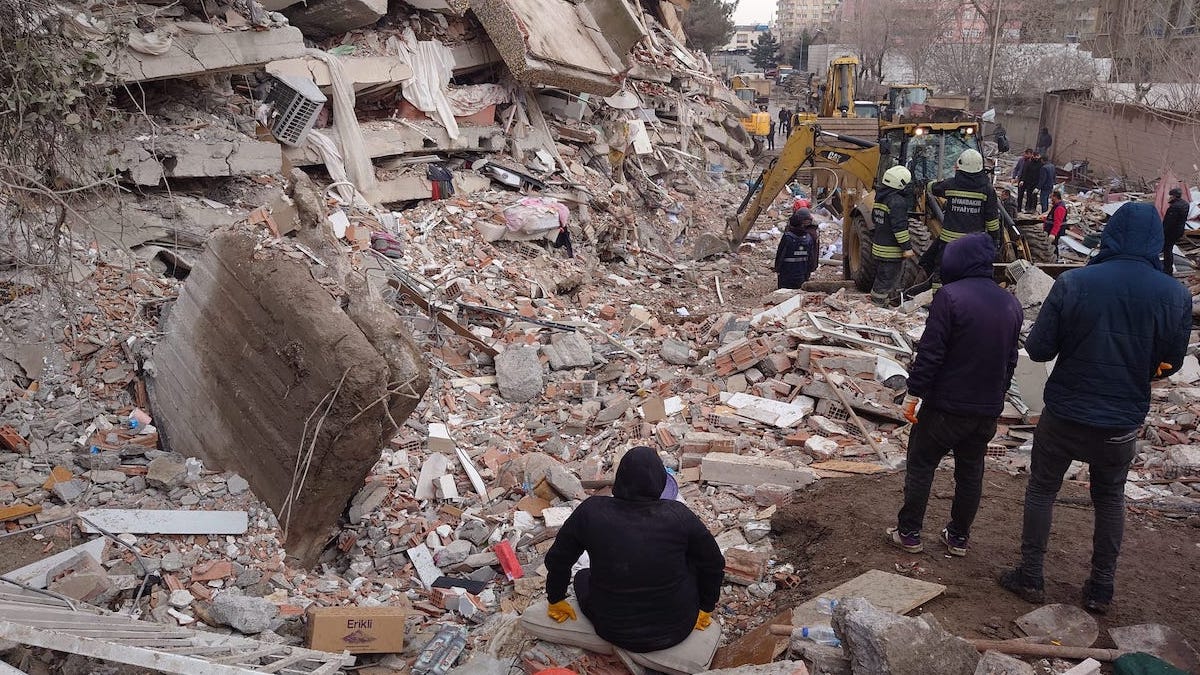
Continuing with Akkuyu nuclear plant in seismic Turkey would be reckless
By Maria Arvanitis Sotiropoulou
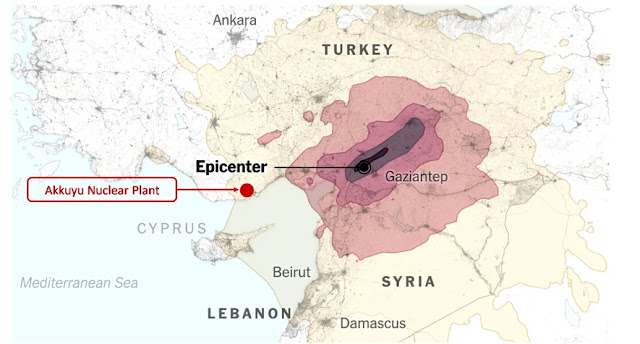
The devastating earthquakes of February 7, with a magnitude of 7.8 in Turkey, brought to the fore the issue of the danger of the nuclear plant under construction there in Akkuyu.
The Akkuyu Nuclear Power Plant, consisting of four 1,200 MWe VVER1200 units, is being built under an intergovernmental agreement between the Turkish and Russian governments. In May 2010, Russia and Turkey signed an agreement that Rosatom would build, own and operate the 4.8 GW nuclear power plant at Akkuyu. The agreement was ratified by the Parliament of Turkey in July 2010. Construction began in 2011 and was expected to be commissioned in 2023 in celebration of the 100 years of the Turkish Republic.
The station is being built like all major projects in Turkey through non-transparent procedures with direct commissioning and guarantees from the government, just like the apartment buildings we saw crumble into rubble during the recent earthquake.
From the beginning of the construction, many technical issues were revealed: ground subsidence, serious deficiencies in the geotechnical and environmental studies, even a case of a forged design signature in 2015. Then, in January 2021, two explosions occurred at the construction site, causing interventions in the European Union where MEP George Georgiou submitted a pertinent question to the European Commission, while the Minister of Foreign Affairs Nikos Dendias also took similar actions without a response.
Unfortunately, as demonstrated by the Classification Vote (on including nuclear power in the green taxonomy) in the European Parliament, the nuclear lobby prevails in the EU today, despite the justifiable alarm among European citizens caused by the war in Ukraine, due to the presence of the Chornobyl and Zaporizhzhia nuclear plants in the war zone.
On January 10, 2021, Kemalist Republican People’s Party (CHP) MP, Mahir Basasir, tweeted that seawater was seeping through the concrete floor of the Akkuyu station. But even if the nuclear plant were structurally safe, such strong earthquakes can cause damage to the piping, so a Fukushima-style disaster is to be expected.
In Fukushima, we saw radioactive contaminated water pouring into the Pacific ocean and pollution has now been measured in the Atlantic as well. The Mediterranean is a closed basin and a similar disaster would turn it into a Dead Sea.
Read MoreSigns of madness?

Decisions on nuclear future are guided by myths
By Linda Pentz Gunter
Last month I rushed through the august halls of the British parliament in Westminster, on my way to a briefing on small modular reactors for Members of the Welsh Affairs Select Committee.
Running late though I was, it was tempting to slow down and take in all the historic portraits and portals as I hurried down flagstoned hallways, through heavy oak doors and finally into the richly carpeted committee room. But the albeit fleeting impression all of this left was of a world completely isolated from the reality of the daily struggles most of us endure. The rarified air was almost suffocating.
This became even more apparent as, unwillingly gagged, I listened to testimony from executives representing Westinghouse, Bechtel and Rolls Royce. One unsubstantiated sound bite after another tumbled from the mouths of these corporate executives, all serving their rich agenda of vested interests (read shareholders and profits).
But the questions they faced, at least from the Conservative nuclear cheerleaders present, were mainly mild softballs. Give us the soundbite, they urged. What do we need to tell the government to do to make all this happen?

Even Labour MP, Beth Winter, while challenging them on the obvious detriments of small modular, or any, reactors — time and cost — given, as she pointed out, climate change is very much here now, politely did not expose their utter hypocrisy. It was, after all, not a room in which arguing was on the agenda.
The Rolls Royce response was to trot out the “we need to do everything” mantra, which is what nuclear companies have to say in order for their technology to stand any chance at all. In reality, it is clear that choosing nuclear cancels out renewables. Meanwhile, Rolls Royce has pocketed — and presumably invested — £250 million (around $302 million US) with which it has done precisely nothing. But that’s the government’s fault, the company says. We just need to get in a room and get things done.
Read More Beyond Nuclear International