 Beyond Nuclear International
La castastrope de Fukushima a ruiné leur vie

Ils ont milité pour la justice, mais l’accident nucléaire les a tués de toute façon
Par Linda Pentz Gunter
Kenichi Hasegawa était producteur laitier dans le département de Fukushima au moment de la catastrophe nucléaire de Fukushima Daiichi du 11 mars 2011. Il vivait dans une famille composée de huit personnes, dans le village d’Iitate avec ses parents, sa femme, ses enfants et ses petits-enfants.
Iitate se trouve à environ 50 kilomètres du site nucléaire, mais est rapidement devenu l’un des endroits les plus contaminés par la radioactivité à la suite de la catastrophe de Fukushima. Pourtant, les habitants ont été peu informés et il a fallu plus d’un mois pour qu’un ordre d’évacuation soit émis pour Iitate. Beaucoup ne sont partis qu’à la fin du mois de juin.
M. Hasegawa lui-même est resté à Iitate pendant cinq mois après la catastrophe, s’occupant de ses vaches, jusqu’à ce qu’elles soient toutes abattues. Pendant cette période et jusqu’à la fin de l’année 2012, il a pris plus de dix mille photos et fait 180 vidéos (en japonais) afin de conserver une trace visuelle des conditions de vie sur place.
Le 22 octobre 2021, Hasegawa est décédé d’un cancer de la thyroïde à tout juste 68 ans, très probablement causé par son exposition prolongée à l’iode radioactif libéré, lors de la catastrophe nucléaire de Fukushima Daiichi.
Avant la catastrophe nucléaire, Hasegawa possédait 50 vaches laitières et cultivait des légumes. Il était également un leader politique, occupant le poste de maire de son quartier. Mais l’accident de Fukushima a tout changé.
Avec une forte concentration de substances radioactives dans le lait, son entreprise a été ruinée. Furieux de la dissimulation de l’étendue réelle de la contamination radioactive par les autorités, il est devenu co-représentant, avec Mme Ruiko Muto, du Comité de liaison du groupe des victimes d’accidents nucléaires, créé en 2015.
Il avait déjà écrit un livre en 2012: Genpatsu ni « furusato » wo ubawarete (La centrale nucléaire nous a volé notre pays natal). Il existe une traduction anglaise de ce livre (Fukushima’s Stolen Lives : A Dairy Farmer’s Story), dans lequel il rapporte une série de témoignages sur les conséquences de la catastrophe nucléaire, « alors qu’il souffrait de savoir que ses enfants et ses petits-enfants avaient été exposés aux radiations, qu’il perdait tout son bétail (qui était considéré comme faisant partie de la famille, et pas seulement comme étant la source de sa subsistance), et qu’il était très affecté par le suicide d’un collègue et ami, producteur de lait comme lui. »
Cet ami a écrit ces derniers mots sur un mur, avant de mourir : « Si seulement il n’y avait pas la centrale nucléaire. »
Hasegawa est retourné à Iitate en 2018, une fois l’ordre d’évacuation levé, et a commencé à cultiver du sarrasin, en grande partie pour éviter que ses pâturages ne se transforment en friches. Bien que les niveaux de radiation dans le sarrasin se situaient en dessous de la norme considérée comme dangereuse, Hasegawa n’a pas pu vendre sa récolte.
Read MoreThe Fukushima disaster ruined their lives
They campaigned for justice, but the nuclear accident killed them anyway
By Linda Pentz Gunter
Kenichi Hasegawa was a dairy farmer in Fukushima Prefecture at the time of the March 11, 2011 Fukushima Daiichi nuclear disaster, living in a family of eight in Itate village with his parents, wife, children and grandchildren.
Iitate is approximately 50 kilometers away from the nuclear site, but quickly became one of the most radioactively contaminated places as a result of the Fukushima disaster. Yet, residents were told little and it took more than a month for an evacuation order to be issued for Itate. Many did not leave until late June.
Mr. Hasegawa himself stayed on in Itate for five months after the disaster, tending to his cows until all of them were put down. Meanwhile, he kept a visual record of conditions there, taking more than ten thousand photos and 180 videos (in Japanese).
On October 22, 2021 Hasegawa died of thyroid cancer at just 68, almost certainly caused by his prolonged exposure to radioactive iodine released by the Fukushima Daiichi nuclear catastrophe.
Before the nuclear disaster, Hasegawa owned 50 dairy cows and farmed vegetables. He was also a political leader, serving as mayor of his local ward. But the Fukushima accident changed everything.
With a high concentration of radioactive substances now found in dairy milk, his business was ruined. Angered by the cover-up by authorities of the true extent of radioactive contamination, he became a co-representative along with Ms. Ruiko Muto, of the Nuclear Accident Victims Group Liaison Committee, established in 2015.
By then, he had already authored the 2012 book, Fukushima’s Stolen Lives: A Dairy Farmer’s Story, in which he delivered an eyewitness account of the aftermath of the nuclear disaster, “as he suffered with the knowledge that his children and grandchildren had been exposed to radiation, as he lost all of his cattle (who were considered part of the family, not simply the source of their livelihood), and as he endured the suicide of a fellow dairy farmer and friend.”
That friend wrote his final words on a wall before he died: “If only there were no nuclear power plants.”
Read MoreThe Fukushima taboo
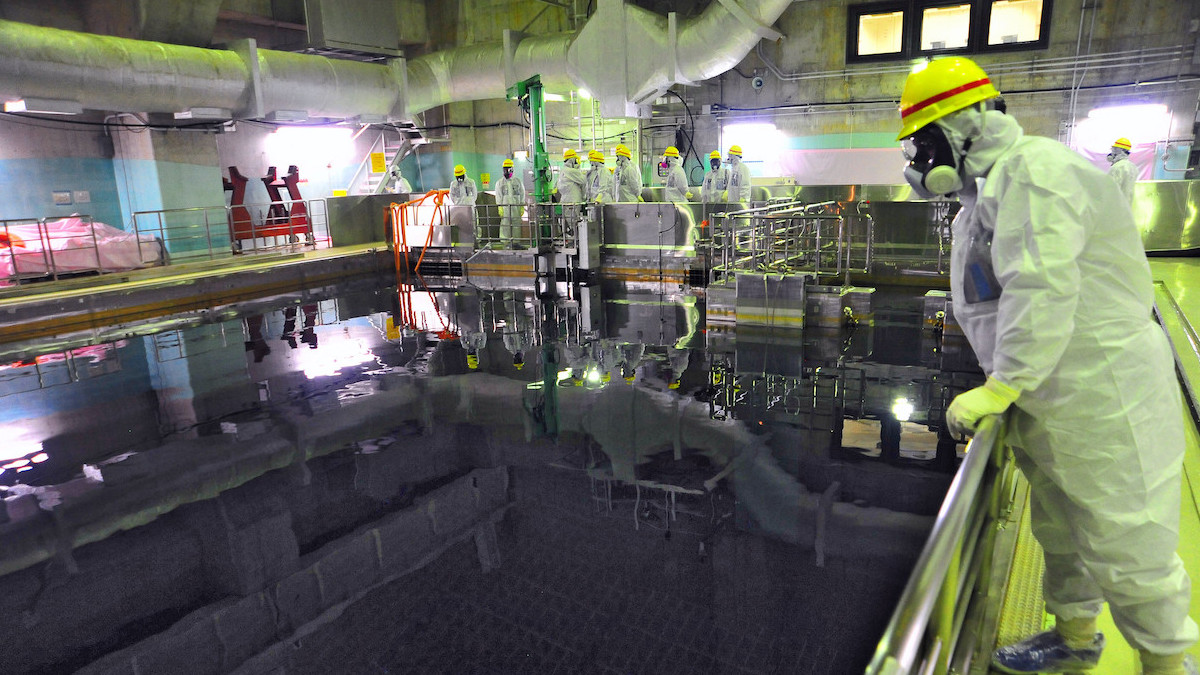
“Coming out” on thyroid cancer from Fukushima is an act of bravery in today’s Japan
By Linda Pentz Gunter
In the midst of the arcane fight over whether to include nuclear power in the European Union’s green “Taxonomy”, five former prime ministers of Japan made an unprecedented statement. They roundly condemned any inclusion of nuclear power as a green or sustainable energy, even as a so-called bridging fuel.
The current Japanese government glossed over the climate arguments in the former prime ministers’ argument, quickly seizing upon one tiny phrase concerning conditions in Japan post-Fukushima that read: “many children are suffering from thyroid cancer”.
The ruling Liberal Democratic Party even went so far as to approve a resolution condemning the five former prime ministers, one of whom, Junichiro Koizumi, is from that party. The resolution alleges that their statement was not “scientific” and that they were reigniting prejudice and encouraging people to view people from Fukushima as social outcasts.
The party’s Policy Research Board said it would submit its resolution to current prime minister, Fumio Kishida.
On the same day — January 27, 2022 — as the former prime ministers’ letter was submitted to the EU, six young people who were children at time of the March 2011 Fukushima Daiichi nuclear disaster, filed a lawsuit in the Tokyo District Court against TEPCO, the owner and operator of the nuclear plant.
The six, ages 17 to 27, hold the company responsible for the thyroid cancers each of them developed after being exposed to the radiation released by the nuclear disaster.
In filing suit and thus making the issue public, the six were immediately on the receiving end of an unprecedented level of abuse for speaking out. In this video of their testimony, they were obliged to keep their physical appearances concealed for fear of further reprisals.
“Coming out” on thyroid cancer — or indeed about any negative health impacts resulting from the Fukushima nuclear disaster — remains largely taboo in Japan. Studies that conclude the medical impacts are significant or even substantial, are met with equal hostility, stoniness or just plain silence.
Read MoreUkraine’s reactors at risk

15 reactors plus Chernobyl in unprecedented warzone situation
Note: This statement was released on February 25. However, the situation is clearly evolving. Updates can be found on the Beyond Nuclear website.
A statement by Beyond Nuclear
Beyond Nuclear joins the chorus of voices calling for a peaceful resolution to the conflict in Ukraine, a situation that could become orders of magnitude worse should any of the country’s 15 nuclear reactors suffer major damage due to military exchanges.
We are in an unprecedented situation, with, for the first time, a war happening in a region where there are operating nuclear reactors. This presents an extreme risk to human life unlike any we have seen in previous wars, even when traditional infrastructure has been bombed and destroyed.
The humanitarian tragedy is already enormous, with people fleeing, abandoning homes and businesses, with their lives upended and their safety and survival in jeopardy. However, should a major release of radioactivity occur due to the damage or destruction of any one of the country’s 15 reactors, the scale of the disaster would escalate to unimaginable proportions, affecting populations well beyond the boundaries of Ukraine and Russia.

Military activity around the Chernobyl nuclear site and within the Exclusion Zone is also of great concern. Reports are coming in showing elevated rates of radiation stirred up by the presence of troops, tanks and heavy equipment moving through the highly radioactively contaminated region, which is closed to regular human habitation. In April 2020, when a major wildfire consumed the area, radiation levels rose by 16 times.
The occupation of the site by Russian military personnel, reportedly the result of a firefight at the plant site, is already a concern. This takeover has called a halt to all activities on the site, which houses a significant inventory of radioactive waste.
Read MoreVogtle delayed again

And customers will pay for ballooning costs
By Stanley Dunlap, Georgia Recorder
Georgia Power’s parent company Southern Co. announced Thursday that the Plant Vogtle nuclear expansion project has hit another roadblock, delaying completion of the final reactor into 2023. Vogtle’s expenses ballooned to $30 billion after it was originally projected to cost $14 billion.
Further setbacks at the snakebit Plant Vogtle nuclear expansion are reportedly expected to result in delays lasting up to six months while the operator added a $920 million charge at the end of last year.
Thomas Fanning, president and CEO of Southern Co., said during Thursday’s earnings call that the parent company of Georgia Power took past repeated disruptions and challenges into account when it revised this timeline for completing the plant’s two final units, with the latest mishap caused by incomplete and missing inspection records that resulted in a backlog of more than 10,000 records.
The completion of the third and fourth reactors at Plant Vogtle, chiefly owned by Southern and its subsidiary Georgia Power, is now projected to be delayed three-to-six months, with the third unit coming on line in March 2023 and the final reactor ready by the end of the year, according to Southern’s report.

“Over the last year a number of challenges including shortcomings, and construction and documentation quality have continued to emerge, adding to project timelines and costs,” Fanning said. “In recognition of the possibility for new challenges to emerge, we further risk adjusted our current forecast by establishing a range of three to six additional months for each unit, and we’ve reserved for the maximum amount.”
Vogtle’s expansion construction costs are expected to rise to more than $30 billion, up from an initial estimate of $14 billion in 2012. As part of an agreement with Georgia Power, which owns 46% of the plant outside of Augusta, the $920 million charge includes $440 million from other utilities involved in the project.
Last year, Georgia Power exceeded a limit of $7.3 billion on how much its 2.6 million customers must pay in capital costs. However, once the expansion is complete, the company can request that the five-member Public Service Commission add other costs to customers’ bills instead of further cutting into its profits or passing them along to shareholders.
Read MoreStranded in Vladivostok
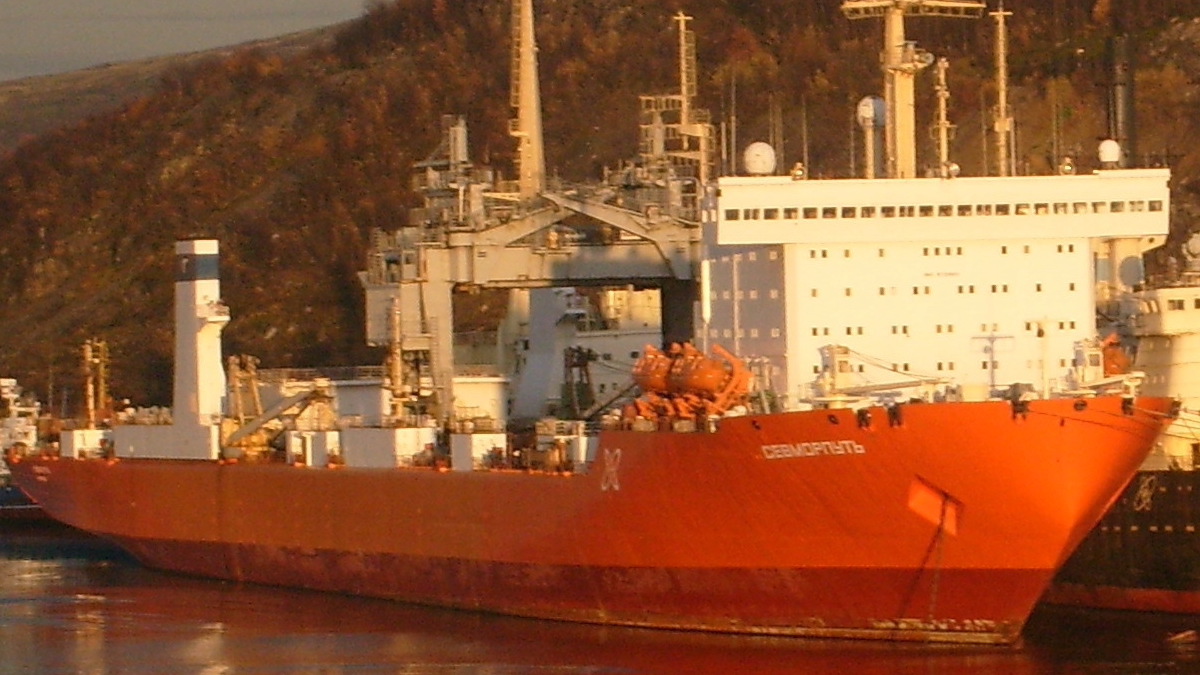
Freighter with nuclear supplies shrouded in mystery
From KIMO and NFLA*
Update: Since the story below appeared, according to the Barents Observer, on February 9, 2002, the ice-breaker Arktika has rescued the stranded ships and started a several thousand kilometre long escort operation across the Northern Sea Route. In the convoy are two cargo ships, the diesel-engined icebreaker Kapitan Dranitsyn and the nuclear-powered container ship Sevmorput. However, concerns remain about any nuclear leaks that may have occurred during the stranding. Several shipping companies expressed criticism of ROSATOM’s handling of the situation saying it was not adequately prepared for the conditions.
KIMO International and the UK/Ireland Nuclear Free Local Authorities, two organisations campaigning for pollution-free oceans have expressed their concerns at the possible danger posed to the marine environment by a Russian nuclear-powered freighter stranded in the Russian Far East.
The Sevmorput (or Northern Sea Route) is the sole survivor of Russia’s original fleet of four nuclear powered cargo ships which traversed the Arctic trade routes. Sevmorput has now been operational for over thirty years, and though refitted within the last decade, is showing her age with recent voyages plagued by mechanical breakdowns. Her latest transit of the Northern Sea Route which links North Western Russia to Eastern Siberia ended badly.
The Sevmorput was ordered in 1978 and was completed more than a decade later. With a maximum seasonal displacement of 62,000 tons and 260 metres in length, the ship is powered by a single 135 MWt reactor at a maximum speed of 21 knots. With an ice-breaking capacity, the ship can pass through 1 metre thick ice at a speed of 2 knots.
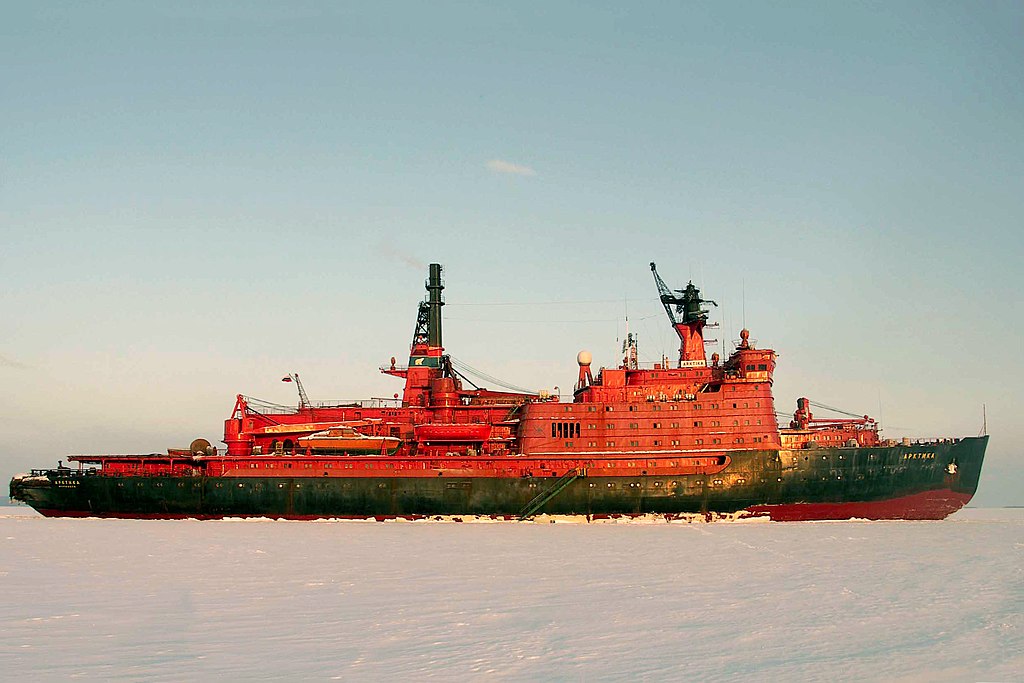
Operated by the Murmansk Shipping Company for her first twenty years of service, the Sevmorput was transferred to ATOMFLOT, the mercantile marine subsidiary of ROSATOM, Russia’s State Atomic Energy Corporation, in 2008.
Read More
