 Beyond Nuclear International
Captured by climate propaganda

Nuclear power doesn’t belong in the Green New Deal
Note: On February 11, 2022, the U.S. Department of Energy issued a press release full of false rhetoric, claiming that an injection of $6 billion under the Department’s Civil Nuclear Credit Program would end the shutdown of the country’s aging reactors because this has “led to an increase in carbon emissions in those regions, poorer air quality, and the loss of thousands of high-paying jobs“.
Energy Secretary, Jennifer Granholm, compounded that mythology by repeating the nuclear propaganda line, unfounded in empirical data, that “U.S. nuclear power plants are essential to achieving President Biden’s climate goals”. In reality, diverting such sums to shore up old plants will significantly hinder and damage Biden’s climate plans. Last month, we endeavored to set the record straight in an article published by Truthout. It is reproduced below.
We should note that while the statement from the Sunrise Movement reflects an apparent support of the DOE position to keep existing nuclear power plants running, they are on record as being opposed to new nuclear in the Green New Deal. However, efforts to contact the group to clarify their position have received no response. Beyond Nuclear will continue to outreach to the Sunrise Movement on this.
By Linda Pentz Gunter, Truthout
Amid rising public outcry over government inaction toward the climate crisis, the nuclear power industry has attempted to advertise itself as “zero emissions,” “carbon-free” and even “renewable” in order to convince politicians and the public that it is essential to solving this world-historical disaster.
However, nuclear power is none of these things, and it in fact stands in the way of achieving an ecologically just society.
Unfortunately, a persistent and widespread public relations campaign by the nuclear power industry is endeavoring to convince some in the climate movement, as well as prominent Democrats in Congress, that nuclear energy has a role to play.

For example, after we checked in recently with the Sunrise Movement, the leading youth climate lobbying group on Capitol Hill, to see where the group stands on nuclear power, a volunteer signing his name “Josh” wrote to my organization, Beyond Nuclear, in an email that, “We don’t think shutting down existing [nuclear] plants makes much sense.” It’s not clear if this is a shift in Sunrise’s official position, since it contradicts the views on nuclear power in a position paper targeted at U.S. representatives that it signed onto in 2019, but, if so, we’ll be working to shift it.
This mythmaking had apparently infiltrated those backing the Green New Deal (GND) in 2019, when Rep. Alexandra Ocasio-Cortez (AOC) said she was happy to leave “the door open on nuclear.”
What AOC, Sunrise, and others may have overlooked is that nuclear power violates the very cornerstone of the GND: a “Just Transition.” Supporting existing nuclear power operation ignores the fact that currently operating U.S. reactors still have to run on fuel manufactured almost entirely from imported uranium — predominantly from Canada and Kazakhstan — often mined by Indigenous peoples. The radioactive detritus left behind by uranium mining and milling has decimated these and other Indigenous communities around the world. These operations, often conducted by foreign corporations, perpetuate racist colonialism.
Read MoreTime is running out
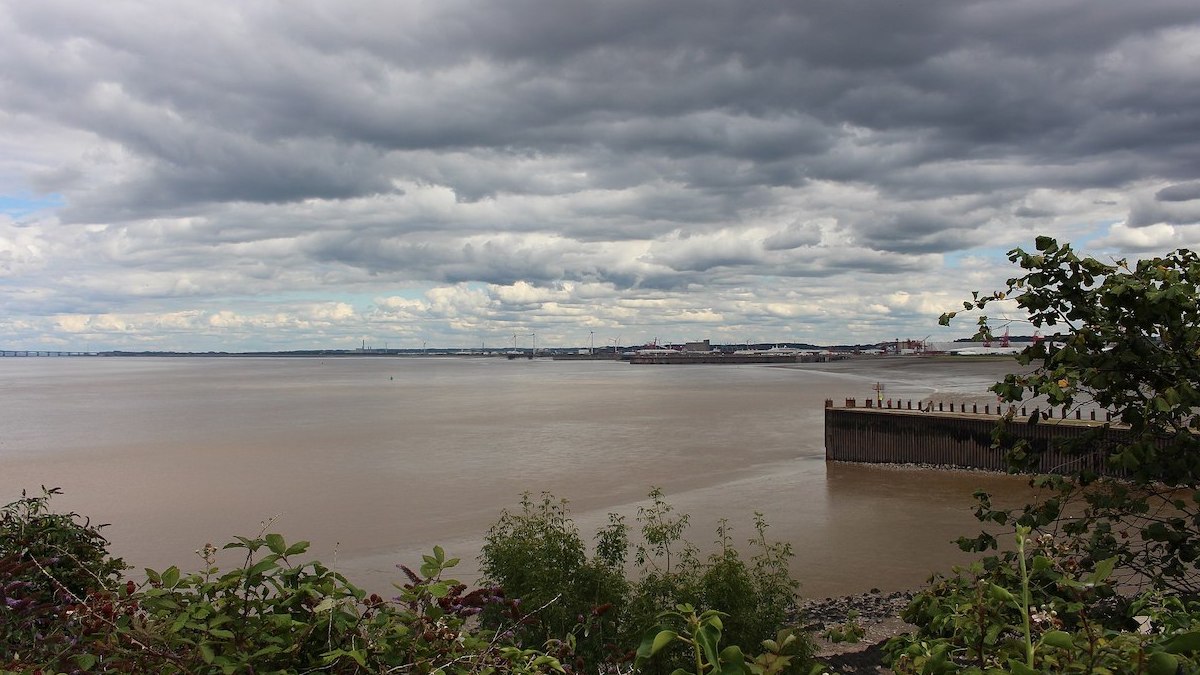
Coalition is fighting urgent battle to stop latest radioactive mud dump by EdF
By Linda Pentz Gunter
An urgent campaign is underway in the UK to save the Severn Estuary from the prospect of more dredging and dumping of radioactive mud from the Hinkley C two-reactor construction site. The Severn Estuary is a marine protected area that lies between the Somerset coast in England and south Wales.
Hinkley C is a project of the French energy giant, Électricité de France (EdF), which has scored an electricity strike price guarantee from the UK government to get the project done that will gouge British ratepayers at rates three times the current costs.
EdF say the dredge and dump operations are needed in order to make way for a water-cooling system for the two unneeded, expensive and dangerous Hinkley C reactors — the flawed Evolutionary Power Reactor (EPR) design now suffering massive delays and cost-overruns at sites in France and Finland, and dangerous technical flaws that caused the shutdown of an operating EPR in China.
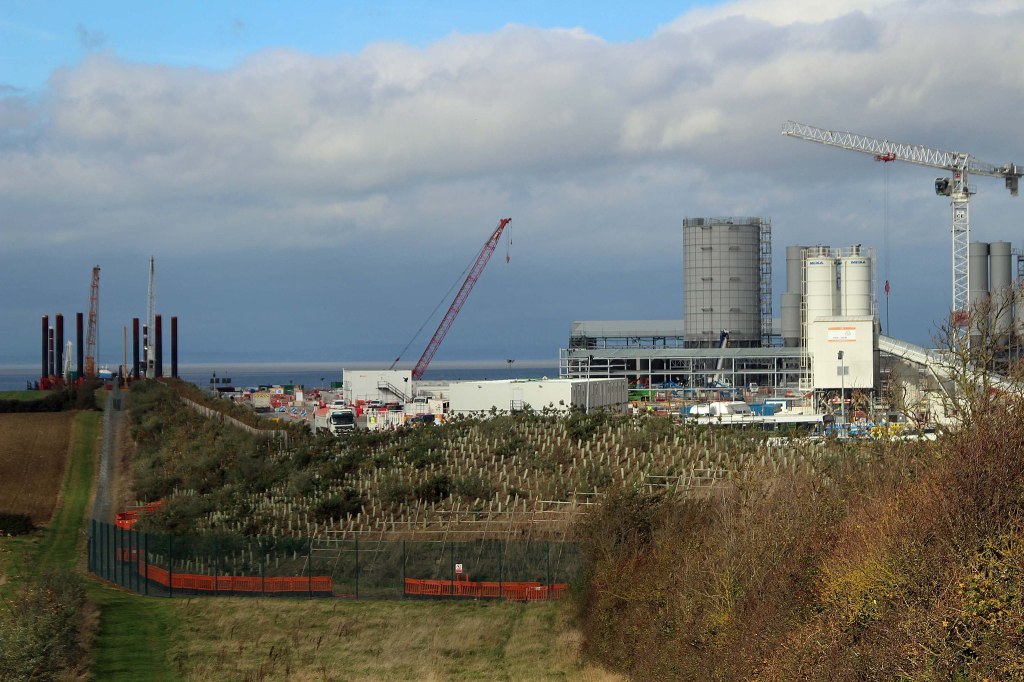
The water-cooling system, already banned in other countries, would draw seawater into a 7-metre diameter tunnel, destroying billions of fish in the process each year. These include eels, for which the Severn is an internationally important breeding ground. The system has already been vigorously opposed by wildlife and marine conservation groups. However, EdF has refused to install a fish deterrent system to reduce these impacts, citing cost issues.
In 2018, EdF dumped radioactively contaminated mud and sediment off the coast of Cardiff in Wales against wide and vigorous objection and a legal challenge in court. The mud was dumped into the “Cardiff Grounds” disposal site less than two miles from the Welsh coast in Cardiff Bay, quickly nicknamed “Geiger Bay” (a play on the old local name, Tiger Bay).
Read MoreSweden takes a chance on Forsmark

Nuclear waste repository site will be near nuclear plant
By Linda Pentz Gunter
“Who is going to take care of it if we’re not going to do it?” asks a Swedish official during the 2013 Swiss documentary, Journey to the Safest Place on Earth.
The councilman was attempting to justify and rationalize his municipality’s willingness to host a deep geologic repository (DGR) for Sweden’s high-level radioactive reactor waste. It was all about a sense of collective responsibility, he said.
Last week, the Swedish government approved a nuclear DGR for the Forsmark community in the municipality of Östhammar, one of two previously identified volunteer communities.
Forsmark is already home to one of Sweden’s three nuclear power plants, as well as a low-level radioactive waste repository. Sweden has accumulated more than 8,000 tons of highly radioactive waste since its six reactors first began operating in the 1970s.
Echoing the earlier sentiment, Sweden’s environment minister, Annika Strandhall, said in a press conference announcing the selection of the repository site: “Our generation must take responsibility for nuclear waste.” But there may be more to the story.
The Forsmark announcement comes on the heels of considerable political pressure to maintain or even expand Sweden’s nuclear power program. A recent story by Bloomberg — Sweden Approves Nuclear Waste Site to Keep Its Reactors Running — gives away right in the headline the likely agenda behind the repository announcement.
Currently, Swedish operators are “only allowed to build a new unit to directly replace an old one”. Meanwhile, operators had warned that they were running out of nuclear waste storage space, forcing closures.
But if a “solution” to the waste problem should suddenly manifest, such as a DGR, the argument for nuclear maintenance and expansion is considerably, if wrongly, strengthened.
Sweden’s decision is based on the same premise, in principle, that Hagen’s film takes; that a DGR is the preferable option for storing the world’s most dangerous and long-lived nuclear waste. But the journey Hagen takes only serves to highlight the near-impossibility, almost everywhere, of finding a technically, ethically and politically acceptable site.
Read MoreComfortably numb

Why are we risking nuclear war instead of saving the planet?
Note: IPPNW will be holding an emergency online briefing on the risks in Ukraine on Saturday. February 19th, 3pm GMT (10am EST). Speakers will explore topics related to conventional war, damage to nuclear power reactors, and escalation to nuclear weapons. Speakers are: Linda Pentz Gunter (Beyond Nuclear), Dr. Ira Helfand (IPPNW & ICAN), and Barry S. Levy, M.D., M.P.H. (Tufts University School of Medicine), with facilitation by Dr. Olga Mironova (IPPNW Russia). Register now.
By Linda Pentz Gunter
“Hello? (Hello? Hello? Hello?)
“Is there anybody in there?
Just nod if you can hear me
Is there anyone home?”
Those echoing opening lines of the Pink Floyd song, “Comfortably Numb” keep wafting through my psyche as I watch the US, Russia, and China, amass ever more sophisticated, deadly and downright evil nuclear weapons capabilities. What are they thinking?
Meanwhile, tensions continue to mount at the Ukraine-Russia border, as Putin moves more armaments and fleets around and the US flies its elite 82nd Airborne Division into standby mode in Poland, part of 3,000 US troops now deployed to the region.
All of this has sent US nuclear hawks, sounding more and more like General ‘Buck’ Turgidson from Dr. Strangelove, chafing at the bit to justify the further escalation and acceleration of the so-called modernization of the entire US nuclear weapons complex.

Meanwhile, there is even speculation that maybe Ukraine should not have given up its nuclear weapons at the end of the Cold War as the Soviet Union collapsed. The Russian seizure of Crimea and the seemingly endless conflict on Ukraine’s eastern border has led some to urge a Ukraine nuclear rearmament.
A nuclear-armed Ukraine, goes the logic, would allow it to “deter” a Russian invasion or, at least, any possible use of nuclear weapons by Russia in a grab for Ukraine.
But this thinking further exposes the hollow argument for deterrence. Nuclear weapons in Ukraine would have only one outcome — they would make the prospect of nuclear weapons being used in any current conflict more likely. (Then, of course, there is the ever-present danger of Ukraine’s 15 operating nuclear reactors — addressed in a January 30, 2022 article on these pages.)
Read MoreNuclear baloney
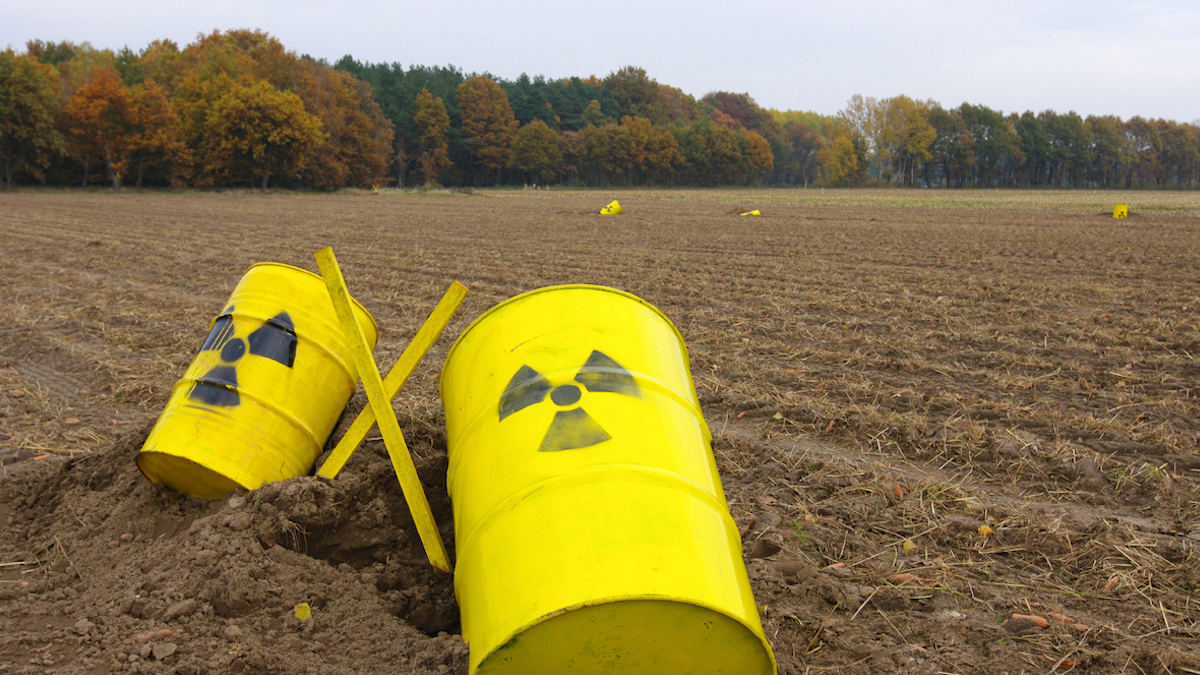
AP story on states’ nuclear choice fails to point out key realities
By Linda Pentz Gunter
There are geniuses amongst us. We just didn’t know it. They are the supporters of nuclear power, who, according to the Associated Press, “say the risks can be minimized” when it comes to the perpetual and unsolved problem of long-lived, high-level radioactive waste — the main by-product of generating electricity using nuclear power.
This observation comes within an AP story headlined: “Majority of US states pursue nuclear power for emission cuts”, and which has garnered significant pickup in numerous media outlets. (However, we never do learn the secret to precisely how nuclear waste risks can be “minimized”.)
The agency surveyed “the energy policies in all 50 states and the District of Columbia,” finding that “about two-thirds” plan to use nuclear power to replace fossil fuels.
The mantra about solving the nuclear waste problem has been repeated since the dawn of the Nuclear Age, coming up on 80 years this December. That was when, on December 2, 1942, the first cupful of radioactive waste was generated, a result of the first self-sustaining nuclear chain reaction achieved at the Chicago Pile-1 by Enrico Fermi and his team.

At that time, scientists knew that radioactive waste was a problem, but assumed it would be solved later. Well, here we are at “later” and it’s still unsolved. Now, “minimizing” rather than solving the problem is apparently justification enough to keep using this dangerous technology.
Read MoreA big pile of PU
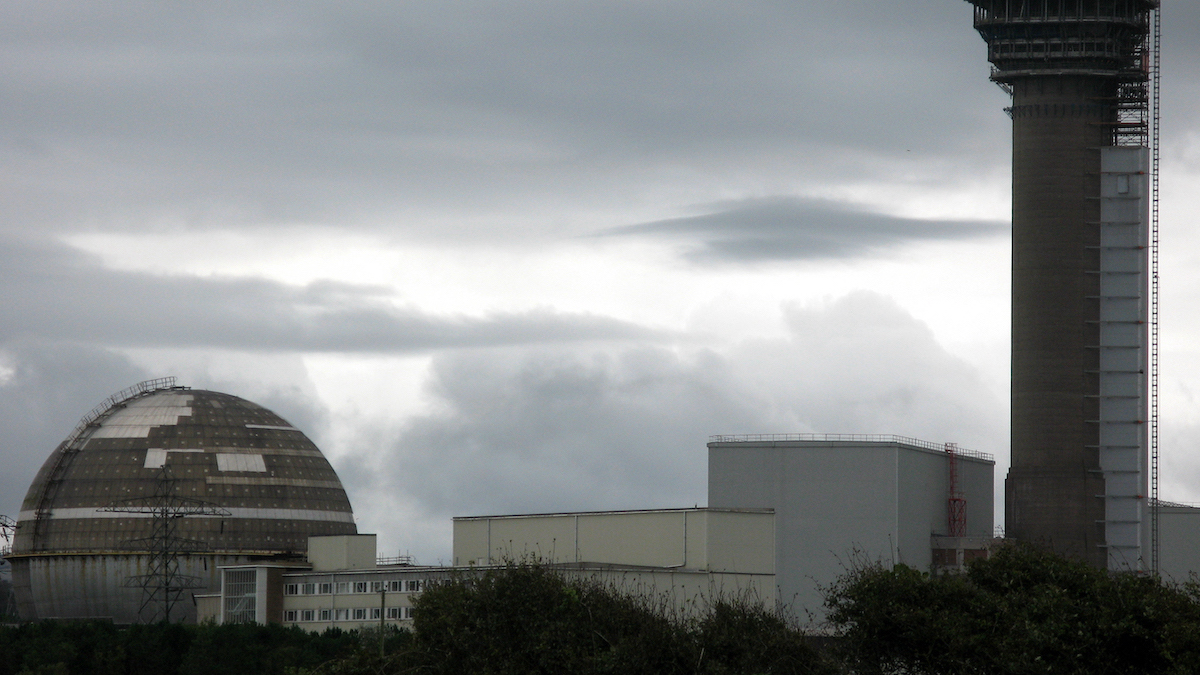
120 tons of plutonium is legacy of Britain’s dirty decades of reprocessing
By Paul Brown, The Energy Mix
Seventy years after the United Kingdom first began extracting plutonium from spent uranium fuel to make nuclear weapons, the industry is finally calling a halt to reprocessing, leaving the country with 120 tons of the metal, the biggest stockpile in the world. However, the government has no idea what to do with it.
Having spent hundreds of billions of pounds producing plutonium in a series of plants at Sellafield in the Lake District, the UK policy is to store it indefinitely—or until it can come up with a better idea. There is also 90,000 tons of less dangerous depleted uranium in warehouses in the UK, also without an end use.
Plans to use plutonium in fast breeder reactors and then mixed with uranium as a fuel for existing fission reactors have long ago been abandoned as too expensive, unworkable, or sometimes both. Even burning plutonium as a fuel, while technically possible, is very costly.
The closing of the last reprocessing plant, as with all nuclear endeavours, does not mean the end of the industry, in fact it will take at least another century to dismantle the many buildings and clean up the waste. In the meantime, it is costing £3 billion a year to keep the site safe.
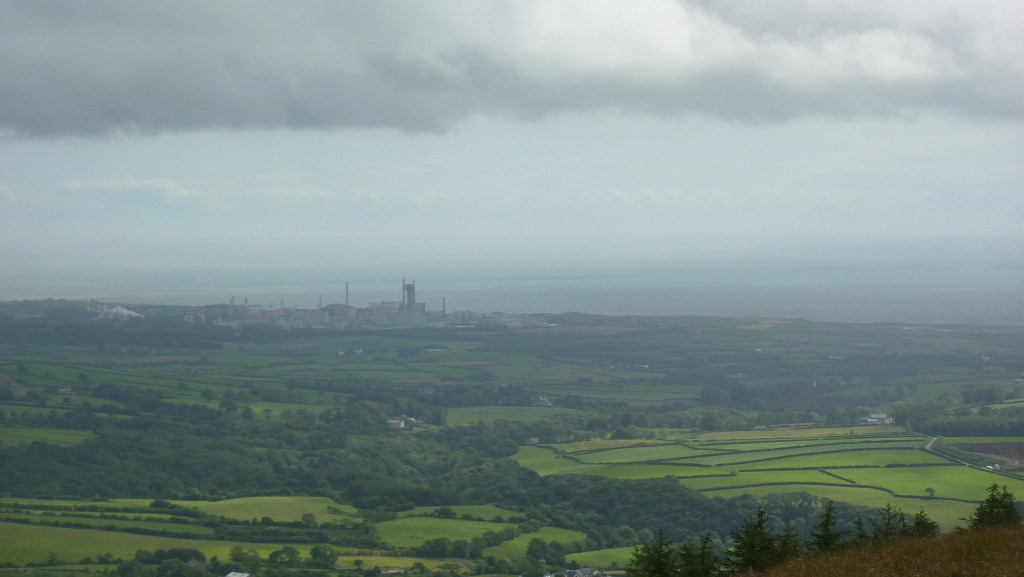
Perhaps one of the strangest aspects of this story to outside observers is that, apart from a minority of anti-nuclear campaigners, this plutonium factory in one of prettiest parts of England hardly ever gets discussed or mentioned by the UK’s two main political parties. Neither has ever objected to what seems on paper to be a colossal waste of money.
The secret of this silence is that the parliamentary seats in the Lake District are all politically on a knife-edge. No candidate for either Conservative or Labour can afford to be anti-nuclear, otherwise the seat would certainly go to the opposition party.
Read More
