 Beyond Nuclear International
Nuclear weapons are a crime
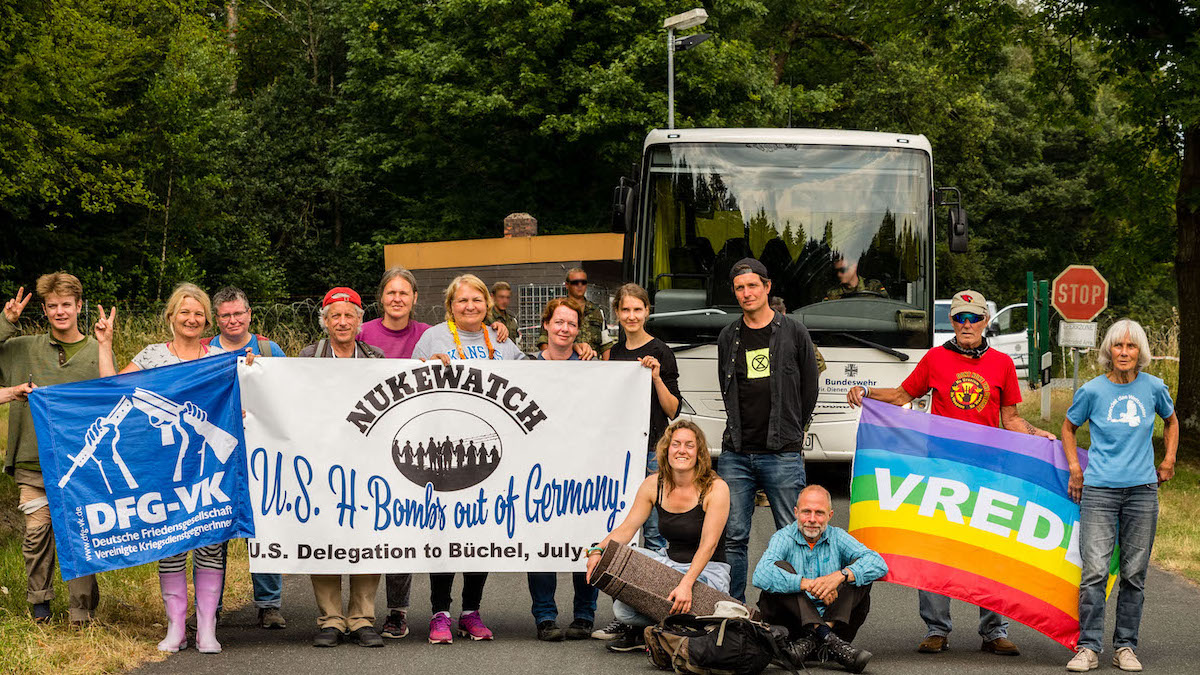
Why a US activist broke into a military base in Germany
From Nukewatch
A U.S. peace activist was convicted on December 9, 2021 in the Regional Court in Koblenz, Germany on two charges of trespassing, following a 4.5-hour appeal hearing stemming from two 2018 protests against the U.S. nuclear weapons stationed in Germany’s Büchel air force base.
The Koblenz hearing for John LaForge, 65, of Luck, Wisconsin, was an appeal of two May 31, 2021 trespass convictions in Cochem District Court for “go-in” actions at the base during protests July 15, and August 6, 2018. Koblenz Regional Court Judge _____ van den Bosh — (German judge’s first names are not made public) — ruled that LaForge’s affirmative defense of “crime prevention” was inadmissible and that such a defense would better be heard by a higher court. She ordered the long-time co-director of the nuclear watchdog organization Nukewatch (nukewatchinfo.org) to pay a fine of 600 Euros or about $680.00.
Judge van der Bosh denied motions from defense attorney Anna Busl to allow testimony from three experts regarding the status of nuclear weapons. Retired German judge Bernd Hahnfeld, a former board chair of the International Association of Lawyers Against Nuclear Arms, and University of Trier Professor of Computer Science Karl-Hans Bläsius both arrived at court for the hearing.
Judge Hahnfeld planned to explain that the 1970 Nonproliferation Treaty and the 1990 Two-Plus-Four Treaty (on German reunification) both prohibit the stationing of U.S. nuclear weapons in Germany; and Prof. Bläsius would have testified about the growing risk of computer-driven accidental nuclear war. Univ. of Illinois Professor of Law Francis A. Boyle intended to explain via video conference from Champaign, Ill. the criminality of ongoing thermonuclear attack threats known as “deterrence.”
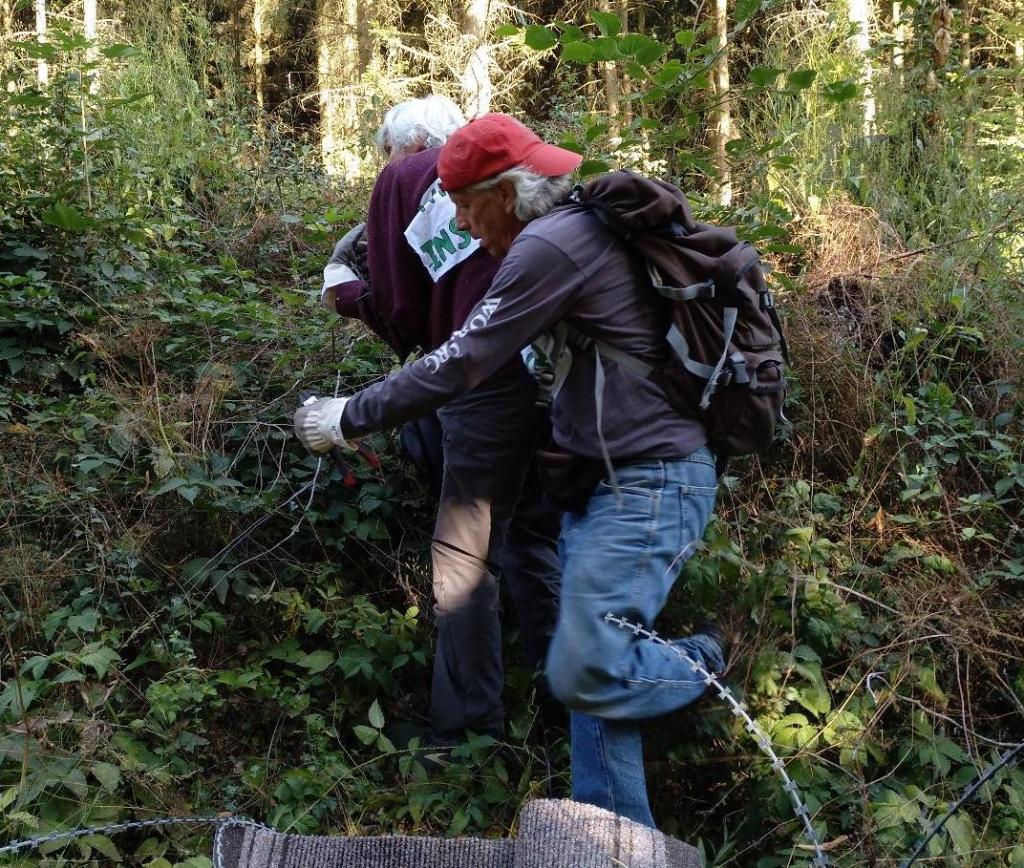
As is the practice in German criminal court, LaForge was able to testify at length and uninterrupted. With a German translator translating for the court, he spoke for 25 minutes (lasting 50 minutes with German interpretation), saying in part, “The ghastly effects of hydrogen bombs are well-known to be massacres caused by the weapons’ uncontrollable, indiscriminate, city-size blast destruction, ferocious mass fires, vastly widespread radiation burns, radiation-related diseases, and genetic damage. Deliberately planning to cause these effects is prohibited by international humanitarian law, the Nuremberg Charter, the Nuremberg Tribunal, and the Nuremberg Principles all of which are binding on Germany and the United States.”
Read MoreWhat if it doesn’t work?
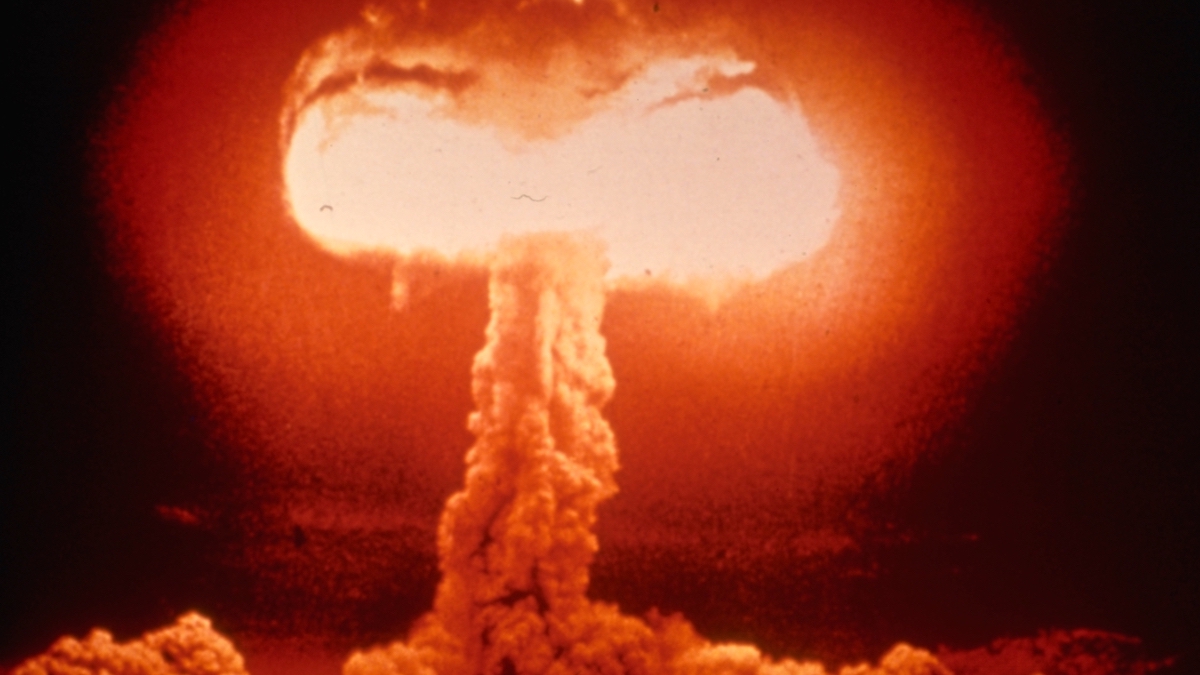
“Not absolutely foolproof” isn’t good enough when it comes to nuclear deterrence
By Linda Pentz Gunter
“Long live deterrence to dissuade nuclear attacks” blasted the headline on Gwynne Dyer’s December 6, 2021 column in The Hill Times. And then came this subheader:
“It’s not absolutely foolproof, but it has protected us all from nuclear war for 75 years.”
There is just one obvious problem with this statement. In order for deterrence to work, it has to be absolutely 100 percent foolproof. The consequence of it being less than that is beyond catastrophic. It could amount to the end of life on earth as we know it. That’s one hell of a gamble. And it’s a gamble that is not morally defensible on any level. It’s one that should never be taken.
As we wrote on the cover of our pamphlet —The Myth of Deterrence: Why nuclear weapons don’t deter or protect and aren’t really weapons at all — “The only way to be 100% certain of nuclear deterrence is to have 100% nuclear weapons abolition.”
Trusting in nuclear deterrence is a risk of such monumental humanitarian consequences that it changed the entire dialogue around disarmament, prompting a new civil society movement to push the United Nations to adopt, sign and ratify the Treaty on the Prohibition of Nuclear Weapons (TPNW). The TPNW worked — and came into law in January 2021 — precisely because the issue of nuclear weapons was viewed from the perspective of their humanitarian consequences if used.
Those consequences — and the myth of nuclear deterrence that could allow such horrors to play out — was discussed eloquently during an online event recently by a man who played an integral part in steering the TPNW into fruition — Ambassador Alexander Kmentt of Austria.
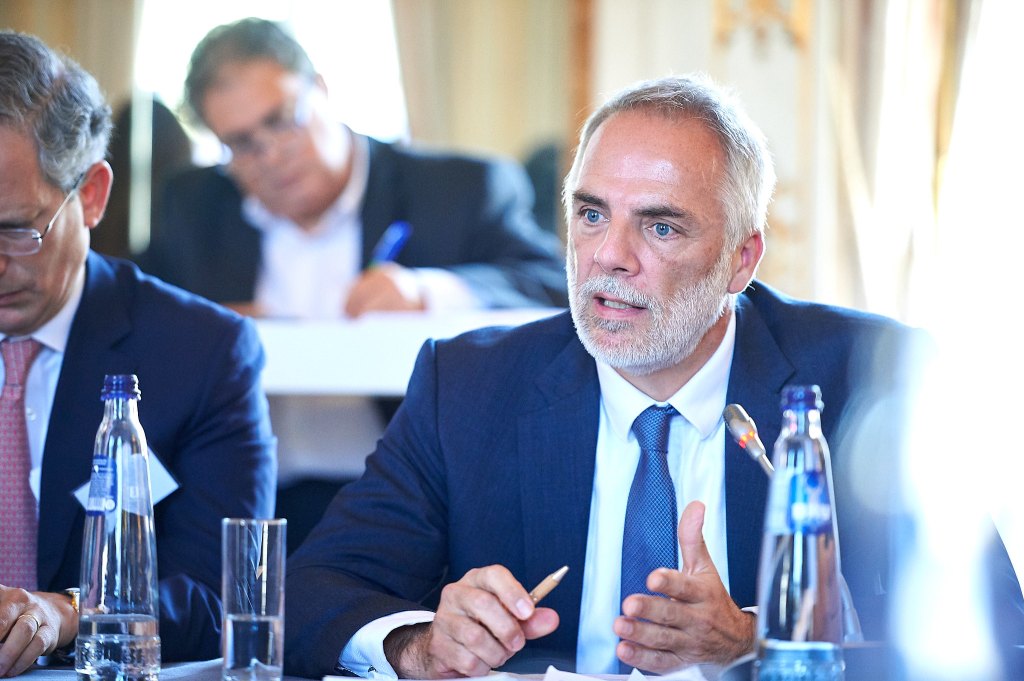
Kmentt recently published a book — The Treaty Prohibiting Nuclear Weapons. How it was Achieved and Why it Matters — telling the behind-the-scenes backstory of how the treaty happened and, as the title suggests, defending its necessity. He gave a recent talk on the contents and background to his book, hosted by the University of Ottawa, Faculty of Law.
The impediment of deterrence, clung to by governments and academics, is, says Kmentt, “a psychological construct,” one “based on an assumption of rationality: If both sides have it, we will never use it.” It is even, admits Kmentt, “a very attractive idea.”
But when the proponents of deterrence, such as Dyer, argue that deterrence has proven effective, Kmentt pushes back.
“It’s not proof,” he says. “It’s an assumption. We can assume nuclear weapons prevented nuclear war. Do we know for sure it will be the case in the future? Neither can I prove that nuclear deterrence doesn’t work, but also proponents cannot prove that it does work.”
Read MoreSix reasons to say ‘no’
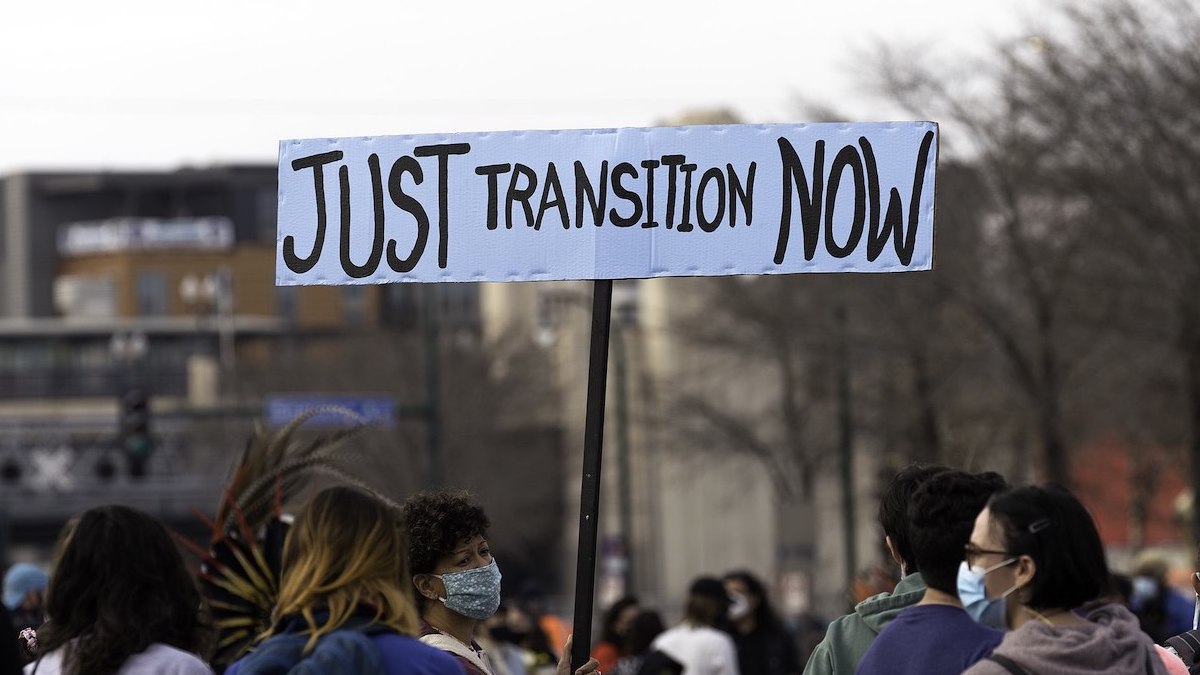
Nuclear energy is spectacularly unfit to power a just transition
By Makoma Lekalakala
A just transition is the only way out of the multiple crises we face — the climate emergency, the collapse of life systems the world over, and growing political and social discontent. Over the past year, we have seen some argue that not only is nuclear the best way to “green” our economies, but we have also seen nuclear being framed as a technology that will be good for “workers”.
However, the publication by Dr Neil Overy and the Heinrich Böll Foundation, Neither Climate Nor Jobs: Nuclear Myths About the Just Transition, offers a comprehensive account of why nuclear will be detrimental to our collective capacity to transform our energy systems in a way that leaves no one behind — #LeaveNoOneBehind.

Here are six reasons why nuclear energy is spectacularly unfit to power a just transition, in a way that leaves no one behind:
1 Just transitions require stable electricity supplies in the face of extreme weather. It is widely claimed that nuclear power is reliable but, over the past five years, French nuclear power plants have had to shut down for up to 7,000 hours due to climate events. In fact, nuclear energy’s reliance on water for cooling makes it particularly vulnerable to the impacts of climate change. The causes for these have ranged from floods to droughts and dramatic temperature increases. Earlier this year, we saw that in the Texas snowstorm, nuclear plants had to be shut down because water in pump stations froze.
It is also argued that a green energy system would require nuclear for “baseload”, but technology has moved far beyond this. It is outdated thinking such as this that keeps us from doing what must be done to keep temperatures below 1.5°C, even though it has been shown that smart grids can draw from a mix of renewable energy sources to provide a constant energy supply.
Read MoreMore fusion folly

Billions already spent on ‘energy pipedream’
By David Blackburn
Nuclear fusion has been a long-held ambition of the nuclear industry and governments who support nuclear power for decades. Since the end of the Second World War, governments around the world, backed by elements of their scientific communities, have always lauded fusion power as the ‘next step’ above and beyond fission that is almost within reach, yet many billions has so far been spent over the past seven decades on what has often been called by its critics an ‘energy pipedream’.
Nuclear Free Local Authorities (NFLA) has rarely commented on nuclear fusion, given such energy projects have yet to be commercially realised. All have foundered around the complex challenges in developing such technology, many of which in the third decade of the 21st century remain unsolved.
In summary, to date, none of the experimental reactors in operation have produced more energy than was put into them.
However, given the current UK Government’s declared intent to invest further money in fusion reactor development with the aspiration to develop a commercially viable design within two decades, it would be remiss of NFLA not to comment on this consultation.
Operating a fusion reactor presents many challenges and risks.
In response to concerns expressed by member authorities, the NFLA itself commissioned a special briefing on this subject (Edition 62, published in September 2020) ‘NFLA New Nuclear Monitor Policy Briefing – NFLA Response to the UKAEA call for potential sites to host a nuclear fusion reactor in England’.
The Committee on Radioactive Waste Management (CoRWM) has also recently published a preliminary position paper ‘Radioactive Wastes from Fusion Energy’ (6 December).
Many of the following comments are taken from the NFLA paper, particularly from pages 4-6, but reference is also made to specific sections of the CoRWM report.
Read MoreTelling the truth

Parade of false climate solutions betrays global south
Statement from Global Campaign to Demand Climate Justice
Organizations can sign on and endorse the below statement here.
As social movements and civil society organisations, we exist to uphold the centrality of life, people and planet, and fight until we win a better existence for all. It is our duty to tell the truth about the world we all share and the crises that engulf us. This is the truth about COP26.
Even before it began, COP26 was presented as a resounding success. Those of us who could find a way around the vaccine apartheid, “hostile environment”, constantly changing quarantine rules, challenges of visa processing, and exhorbitant prices which made the ‘most inclusive summit in history’ the most exclusionary ever, found ourselves locked out of the negotiations. Meanwhile the fossil fuel industry and other merchants of misery had a red carpet welcome, and made up the single largest delegation at COP26. We came to Glasgow and found ourselves in Davos, policed heavily while the criminals were feted.

For days we were force-fed long pronouncements, speeches and declarations from so-called world leaders in government and business, who descended in their private jets and broke the rules the rest of us were expected to comply with to tell us to applaud them. But being honest we must say these statements are delusions – a distraction from the truth, and a dangerous one at that. For the richest countries, the relationship between affirmation and action doesn’t exist. The ugly reality is that developed countries are all in favour of climate action — as long as they don’t have to do much of the work themselves.
Year after year we have tried to intervene as these negotiations drift further away from their purpose. The process, stacked as it is in favour of the powerful, has not led to binding commitments to keep temperatures below 1.5 degrees Celsius and the redistribution of resources to ensure a just transition, but instead to flexible and voluntary “contributions” misaligned with science and divorced from justice. Across three decades in this process we have witnessed polluters’ great escape, an historic shifting of burden from rich to poor, from those who created these injustices to those upon whom these injustices are forced. There may be some language in some texts that have been the smallest of victories but 26 consecutive COPs have in practice ignored the need to pay the outrageous historical debt owed to the global south by the global north.
Instead there is an endless parade of false solutions, empty promises and fake, opportunistic announcements empty in their content and dangerous in their implications. Marked by corporate capture, the very talks that are meant to foster global collaboration to address climate change have now become the main vehicle for corporate and government “greenwashing.”
Read MoreA symphony for Rachel Carson

At nearly 90, piano jazz legend, Marian McPartland, paid tribute in music to the famed environmentalist
By Linda Pentz Gunter
It’s always a joy to come across extraordinary women. Rachel Carson was certainly one; Marian McPartland, longtime host of the NPR program, Piano Jazz, another.
Who would have thought there was a connection between them? It was therefore another joy to discover that there very much was.
Aside from being a wonderfully talented jazz pianist, McPartland was also an environmentalist. And so, a few months before her 90th birthday, with her show still on the air, McPartland set down an improvised piece of piano music in tribute to Carson. (McPartland hosted Piano Jazz from 1978 until her retirement in 2011. She died in 2013 at 95. NPR retired the show in 2018.)
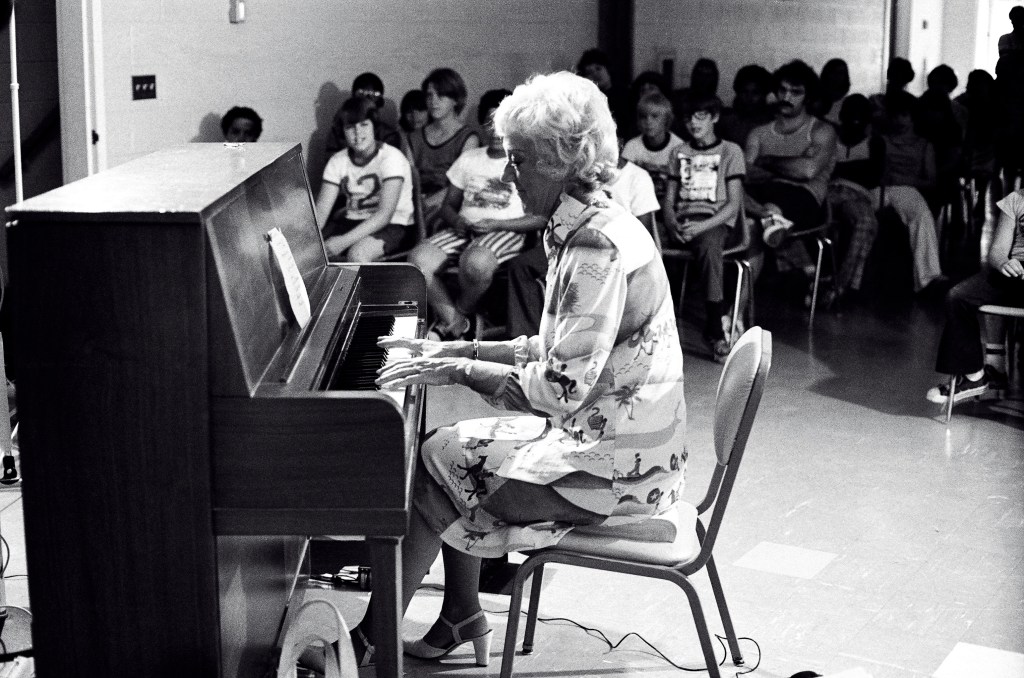
For McPartland, as for many of us, Silent Spring, Carson’s breakout 1962 masterpiece, was a work of seminal importance. And it was to honor Carson and that book that McPartland composed what became her symphony, A Portrait of Rachel Carson. The orchestration was arranged by New Zealand pianist, Alan Broadbent.
McPartland premiered the work on November 15, 2007 with the University of South Carolina Symphony Orchestra, herself on piano. At the time, she was enduring considerable medical challenges, and announced before the performance that “I can’t walk. I’m in miserable pain. But at the piano, I don’t feel a thing.”
Read More
