 Beyond Nuclear International
Keep Takoma Park truly nuclear-free
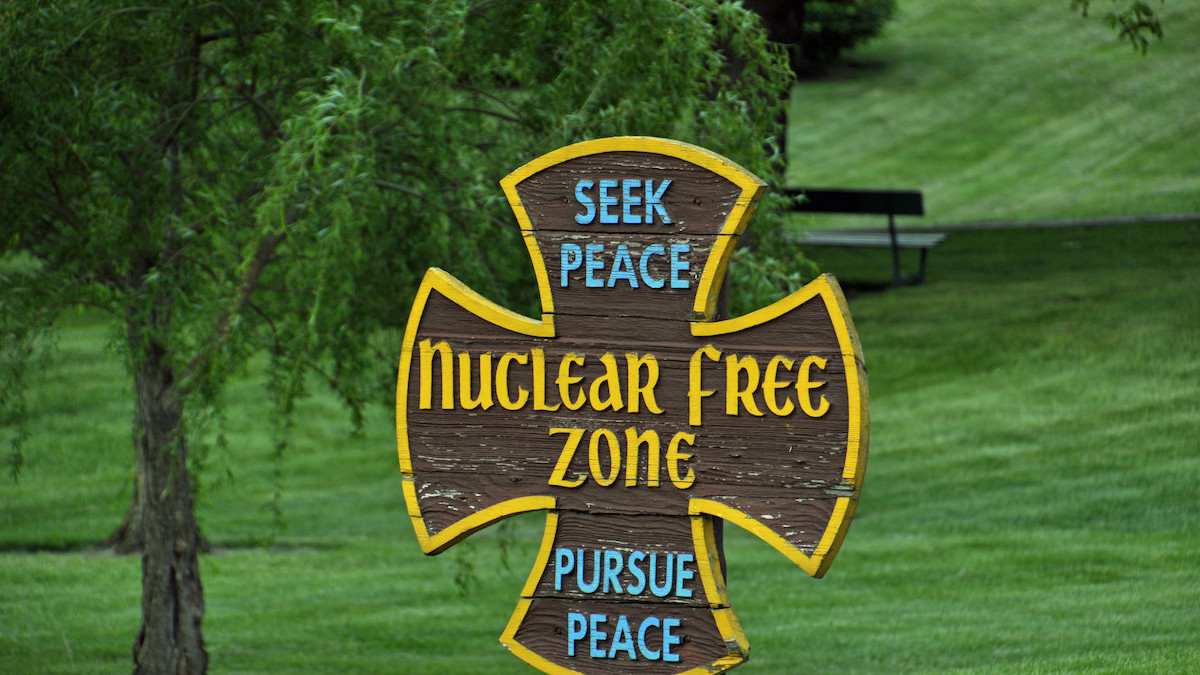
City’s Sustainability Task Force must not fall prey to nuclear power propaganda
By Linda Pentz Gunter
Normally, we do not use these pages for what might be considered strictly “local” news. But in light of the inadequate ending to the COP26 climate conference — where the words Not Good Enough are its only fitting epitaph— it is important to remind our own communities that we are past time to return to the past. We cannot afford to do anything now, such as clinging onto slow, outdated and unaffordable energy technologies like nuclear power, that would make climate change worse.
Our community, Takoma Park, Maryland, just outside Washington, DC, is a “nuclear-free city.” A number of months ago, many of you were drawn into a struggle — at our invitation — to preserve the Nuclear-Free Takoma Park Committee, a group of citizens tasked with upholding the city’s storied nuclear-free zone ordinance. Takoma Park was one of the first US cities to become a Nuclear-Free Zone, doing so in 1983.
After a protracted battle, the committee survived, for now, but with a giant caveat. Both its existence and purpose would be reviewed by a newly-established city entity comprised of nine Takoma Park residents — a Task Force on Sustainable Banking and Investments. The Task Force is primarily charged with defining and identifying “steps to implement sustainable banking and investment policies that fulfill both the City’s nuclear-free and climate change goals”.
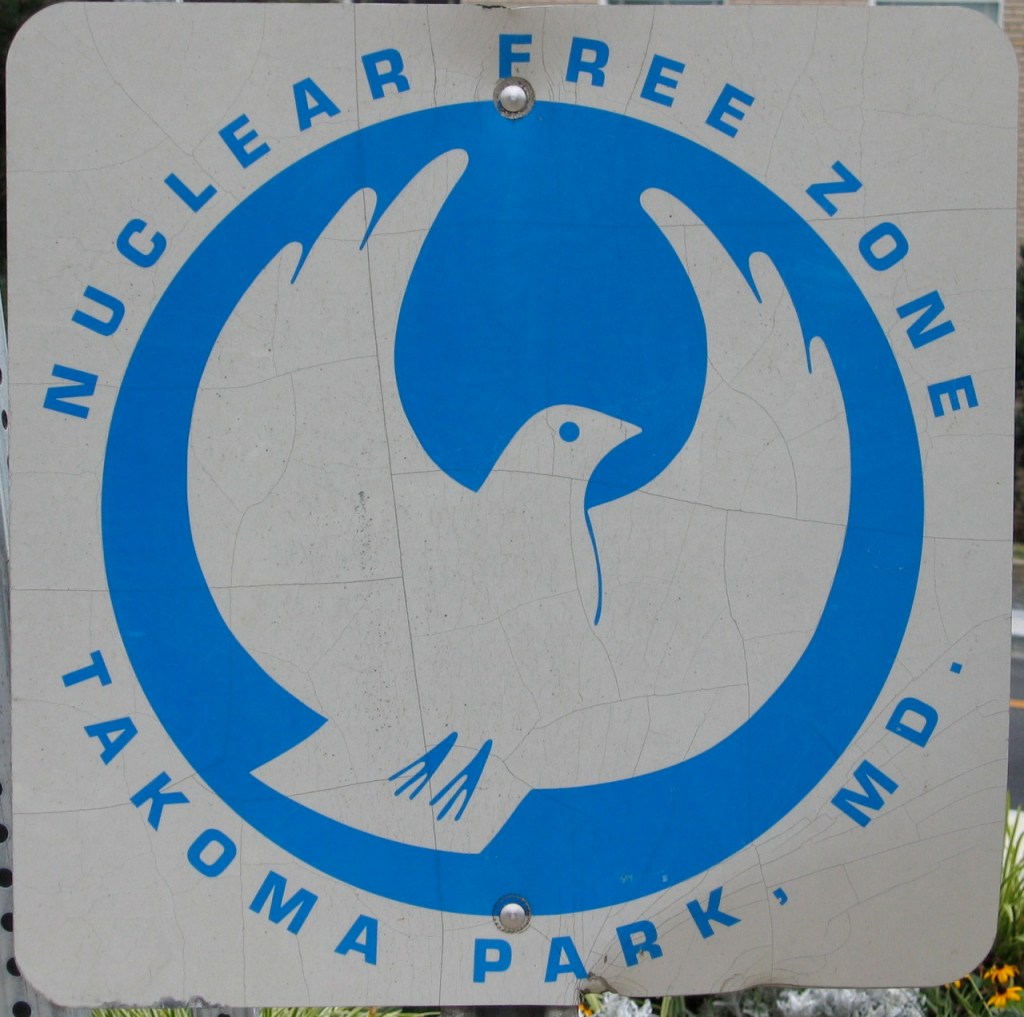
But the Task Force has also been asked to “Review and recommend updates to the implementation specifics of the nuclear-free ordinance, to best fulfill the purposes of the ordinance and to coordinate with the city’s greenhouse gas emissions reduction goals and other priorities.” Why go there at all?
Read MoreMore of the same on nuclear weapons?
Biden’s plan includes replacement of first strike ICBMs
By Joseph Gerson
In the dangerous Trump era, the Pentagon pronounced that “There is no higher priority for national defense” than to “replace [the country’s] strategic nuclear triad and sustain the warheads it carries.” The estimated cost for upgrading the entire U.S. nuclear arsenal and replacing all its nuclear warhead delivery systems—intercontinental ballistic missiles, submarines capable of launching ballistic missiles, and long-range bombers—was $1.7 billion.
Trump’s Nuclear Posture Review, the guidelines for nuclear war fighting, and maintenance and acquisition of the weapons required for genocidal or omnicidal war, reaffirmed the country’s first-strike nuclear war fighting doctrine, and it increased U.S. reliance on nuclear weapons. This included their possible use in response to cyber and other high-tech attacks on U.S. infrastructure.
As we now know from Bob Woodward’s new book Peril, General Milley, others in Pentagon leadership, and their Chinese counterparts thought it imperative to act secretly to prevent Trump from sparking a nuclear war on the eve of the 2020 presidential election and within days of the failed January 6 coup attempt.

Tragically, despite widespread high hopes for change, in the existential realm of potentially omnicidal nuclear war preparations, the Biden administration has signaled more continuity than change. True, it acted quickly to extend the New START Treaty with Russia, which limits each side to 1,550 strategic nuclear weapons—enough to inflict the planet with nuclear winter. It is also engaged in exploratory talks with Moscow over establishing “strategic stability” between the two nuclear powers. While these talks are important, as the Vice Chairman of the Joint Chiefs, General Hyten, recently told a Brookings Institute audience, China—not Russia is the “pacing military threat” that now drives U.S. military planning.
The sad and dangerous truth is that the nuclear weapons budget President Biden submitted to Congress differs little from Trump’s nuclear weapons “modernization” commitments. Despite Biden’s election year and earlier statements that the “sole use” of nuclear weapons that he could imagine was in response to a nuclear attack against the United States, the budget he submitted to Congress includes funding to replace the country’s entire arsenal of first-strike—use them or lose them—ground based ICBMs.
So, too, the budget Congress will be voting on includes funding to produce 80 plutonium pits (the fissile core of a nuclear warhead) per year—each one of which with the destructive capability to devastate cities as large as Shanghai, Karachi and Moscow. Biden and his Pentagon also expect to win funding for the extremely destabilizing “more usable” tactical (roughly Hiroshima sized) B-61-12 bound for Europe, the nuclear air-launched cruise Long Range Standoff Weapon, and new warheads for submarine launched missiles, all designed to hold China hostage to a U.S. first-strike attack.
Read MorePrecious waters

Tribes, Indigenous groups, conservation organizations file petition to strengthen federal mining rules
By Earthworks
Tribes, Indigenous groups and conservation organizations filed a rulemaking petition on September 16 with the U.S. Department of the Interior to improve and modernize hardrock mining oversight on public lands. The proposed revisions aim to safeguard critically important lands across the West and Alaska, including sacred lands and their cultural resources, vital wildlife habitat, and invaluable water resources.
“It’s long past time to reform the nation’s hardrock mining rules, end generations of mining-inflicted injustice to Indigenous communities, and chart a new course for public lands stewardship toward a sustainable, clean energy economy,” the petition states. “For far too long, mining companies have had free rein to decimate lands of cultural importance to tribes and public lands at enormous cost to people, wildlife, and these beautiful wild places of historic and cultural significance. The harm is undeniable, severe, and irreparable. Reforming these rules will prevent more damage, help us transition to green infrastructure, and leave a livable planet to future generations.”
The petition seeks to significantly update hardrock mining regulations, a need the Biden administration has also identified, to avoid perpetuating the mining industry’s toxic legacy. Current regulations disproportionately burden Indigenous and other disenfranchised communities with pollution and threaten land, water, wildlife and climate. New mining rules would help protect these resources and minimize the damage from the mineral demands of transitioning to a cleaner energy economy.

“Our community is entirely dependent on subsistence from the North, Unalakleet and Nulato Rivers. Yet, due to a combination of climate change and commercial by-catch, these rivers had dismal returns for King, silver and chum salmon this summer,” said Doug Katchatag, president of the Norton Bay Inter-Tribal Watershed Council. “People are scared. Basically, if virtually unregulated mining, as under the current law, is allowed in these watersheds it will combine with these other impacts to push our salmon runs into collapse. This threatens the very existence of our community.”
Read MoreHidden agenda

The unspoken argument for more nuclear power
By Linda Pentz Gunter
So here we are again at another COP (Conference of the Parties). Well, some of us are in Glasgow, Scotland at the COP itself, and some of us, this writer included, are sitting at a distance, trying to feel hopeful.
But this is COP 26. That means there have already been 25 tries at dealing with the once impending and now upon us climate crisis. Twenty five rounds of “blah, blah, blah” as youth climate activist, Greta Thunberg, so aptly put it.
So if some of us do not feel the blush of optimism on our cheeks, we can be forgiven. I mean, even the Queen of England has had enough of the all-talk-and-no-action of our world leaders, who have been, by and large, thoroughly useless. Even, this time, absent. Some of them have been worse than that.
Not doing anything radical on climate at this stage is fundamentally a crime against humanity. And everything else living on Earth. It should be grounds for an appearance at the International Criminal Court. In the dock.

But what are the world’s greatest greenhouse gas emitters consumed with right now? Upgrading and expanding their nuclear weapons arsenals. Another crime against humanity. It’s as if they haven’t even noticed that our planet is already going quite rapidly to hell in a handbasket. They’d just like to hasten things along a bit by inflicting a nuclear armageddon on us as well.
Not that the two things are unconnected. The civilian nuclear power industry is desperately scrambling to find a way into the COP climate solutions. It has rebranded itself as “zero-carbon”, which is a lie. And this lie goes unchallenged by our willing politicians who blithely repeat it. Are they really that lazy and stupid? Possibly not. Read on.
Read MoreRenewable not radioactive
Our shared energy future should serve human needs
Joint organizational statement released prior to the COP26 Climate Summit
The latest Intergovernmental Panel on Climate Change (IPCC) report highlights the growing climate crisis and the energy challenges we face. We need an urgent global shift to clean and renewable energy and national governments need to actively facilitate and manage the transition from reliance on fossil fuels and nuclear to renewable energy.
This global transition to clean, safe, nature-friendly renewable energy is already underway and is generating employment and opportunity. Growing this based on principles of environmental and social justice, equity, diversity, resilience and the rights and interests of communities and our environment will provide skilled and sustainable jobs, economic activity and reliable electricity access around the world.
Every dollar invested in nuclear power makes the climate crisis worse by diverting investment from renewable energy technology. Nuclear is increasingly unsafe and unreliable in a warming world with more frequent shutdowns and an inability to operate safely under changed climate conditions.

From nuclear weapons tests to radioactive waste facilities the nuclear industry has a history of displacing, disrupting and damaging the health and rights of workers and communities. Indigenous peoples face a disproportionate burden and risk from the nuclear industry as mining and waste storage primarily affects their lands and they are often not consulted, compensated or respected.
Read MoreNot making sense

Yes, Australia is buying a fleet of nuclear submarines. But nuclear-powered electricity must not come next
By Ian Lowe, Griffith University
The Australian federal government has announced a landmark defence pact with the United States and United Kingdom that involves this nation acquiring nuclear-powered submarines. The question of nuclear submarines in Australia has been bubbling along for some time – and with it, whether we should also develop a nuclear energy sector.
Prime Minister Scott Morrison insisted the defence deal did not mean Australia would look to develop a civil nuclear capability.
But there is strong support within Coalition ranks for a homegrown nuclear power industry. And the Minerals Council of Australia on Thursday quickly pointed out the “opportunity” the submarine announcement created for expanding nuclear technology in Australia.

The submarine announcement is sure to trigger a new round of debate on whether nuclear energy is right for Australia. But let’s be clear: the technology makes no sense for Australia, economically or politically, and would not be a timely response to climate change.
A twin discussion
The topics of nuclear submarines and nuclear energy are often discussed in tandem.
The technology is similar: the energy source for a nuclear submarine is basically a miniature version of that for a power station. And a similar supply chain is needed for mining and processing uranium, fuelling the reactor and managing waste. That also means both technologies require similar skills and regulatory frameworks.
The Minerals Council of Australia chief executive Tania Constable on Thursday responded to the submarine announcement, pointing out the apparent synergies with nuclear power:
Read MoreThis is an incredible opportunity for Australia’s economy – not only will we develop the skills and infrastructure to support this naval technology, but it connects us to the growing global nuclear power industry and its supply chains.
Now that Australia is acquiring nuclear submarines which use small reactors, there is no reason why Australia should not be considering [small modular reactors] for civilian use.
 Beyond Nuclear International