 Beyond Nuclear International
Diné groups seek justice
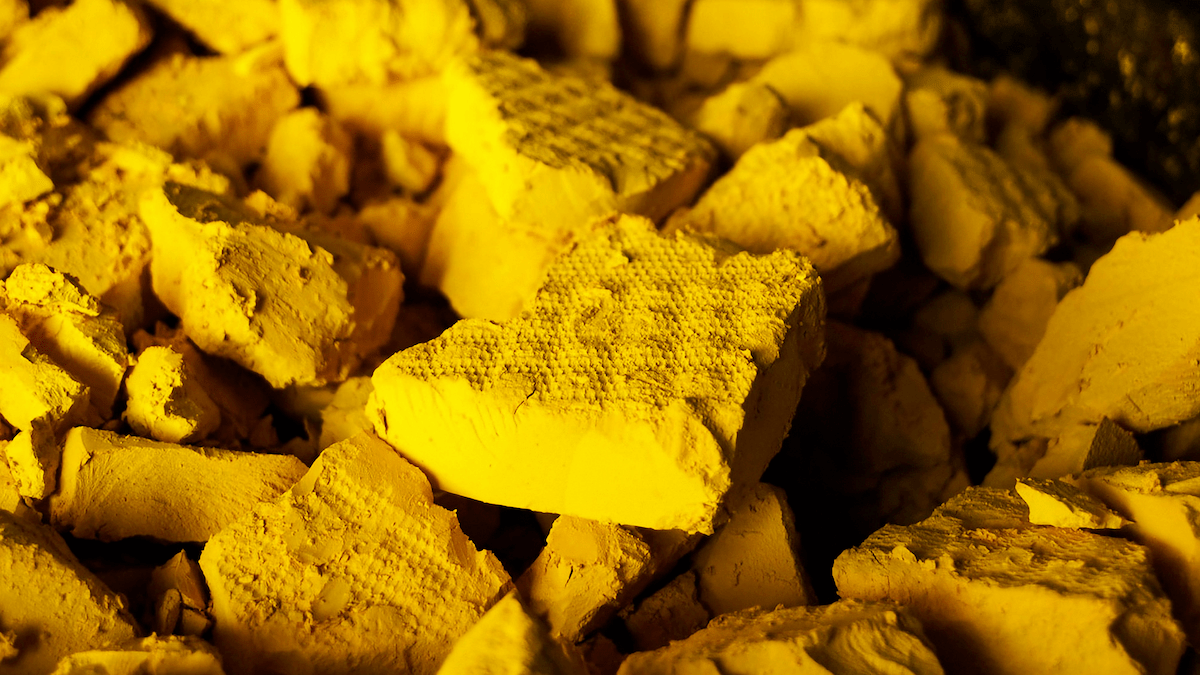
Appeal ruled “admissible” by Inter-American Commission on Human Rights
By Valerie Rangel
History of the Diné Territory
Both the Crown Point and Church Rock communities lie within the area of northwestern New Mexico traditionally used and occupied by the Diné. According to Navajo cosmology, the Diné emerged from a series of worlds into the current world. When First Man and First Woman emerged, they formed the four sacred mountains with soil from the previous world. This area is considered the cradle of Diné civilization and the birthplace of several important Diné deities.
Water is Life
Water is the lifeblood of the planet. Access to a clean environment is vital to the continuation of language and culture for Indigenous communities. The Diné have distinct cultural and spiritual ties to the land, and the environment provides subsistence within their traditional homeland. The Diné worldview is that all things are interrelated and interdependent; to exploit or destroy any aspect of creation is to harm one’s self and the balance and harmony of Hózhó.
Environmental Injustice
The Navajo Nation hosts 520 abandoned uranium mines and three uranium mills that are Superfund sites. These sites have contaminated billions of gallons of groundwater and countless acres of land, and are the cause of significant illnesses and death in the indigenous communities located nearby.
On July 16, 1979, the largest nuclear accident in U.S. history occurred at the United Nuclear Corporation (UNC) mill site, when the earthen dam to the pond holding UNC Mill uranium tailings was breached. The spill released over 1,000 tons of radioactive mill waste and 93 million gallons of acidic radioactive tailings solution into the Puerco River and traveled downstream through the Navajo Nation to the community of Sanders, AZ. The negative consequences of this spill are still being felt today by residents in the immediate vicinity and in surrounding communities.
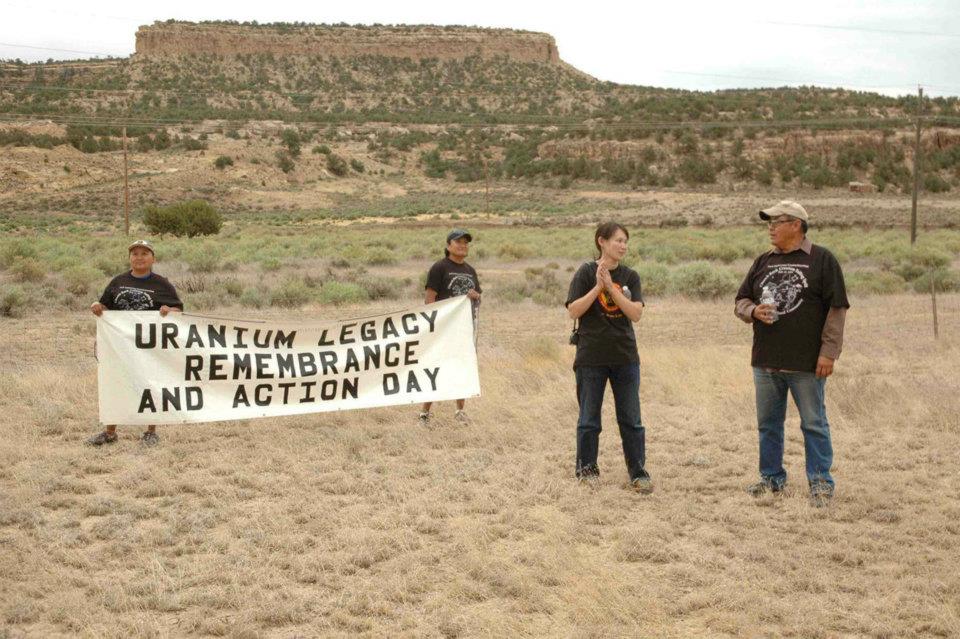
Despite the ongoing public health and environmental crises that have resulted from the State’s failure to reasonably regulate the uranium mining and milling industry in the past, the State continues to license uranium operations that it acknowledges will contaminate natural resources within the Navajo Nation.
In 1998, the Nuclear Regulatory Commission (NRC) granted a source and byproduct materials license to Hydro Resources, Inc. (“HRI”) to conduct uranium mining, using in situ leach technology, at four sites in the Navajo communities of Church Rock and Crownpoint in northwestern New Mexico.
Read MoreNuclear submarine deal needlessly raises tensions
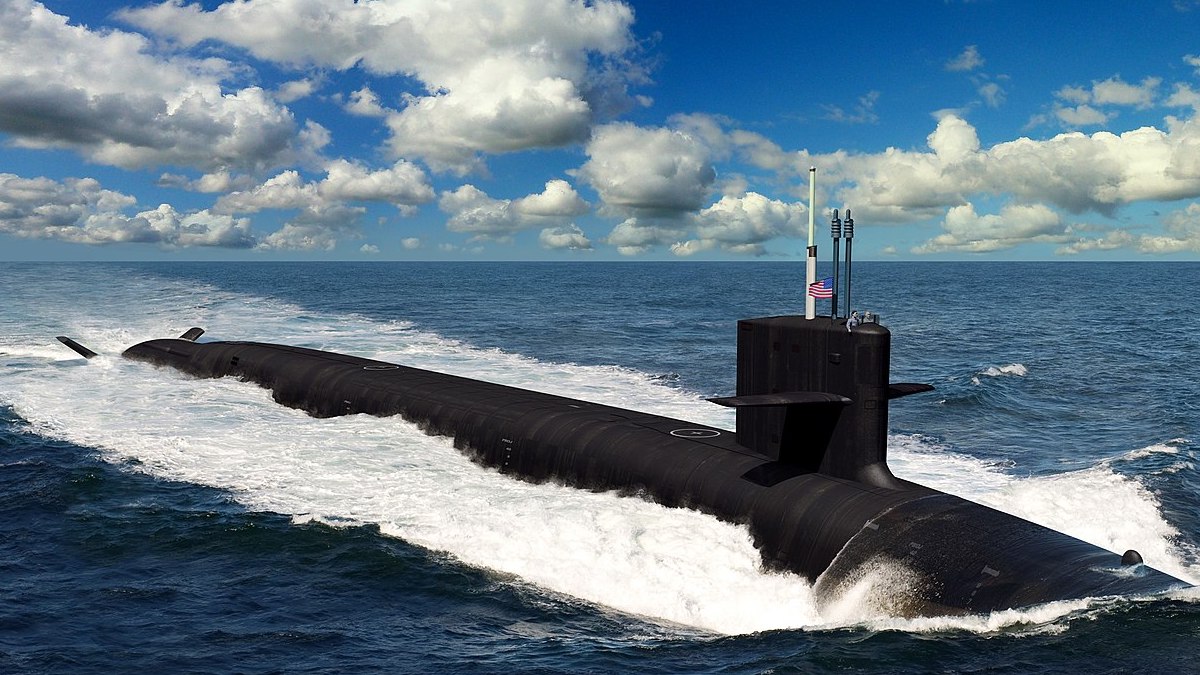
Proposed US/UK nuclear-powered submarines for Australia jeopardise health while escalating an arms race no one can win
Joint statement by International Physicians for the Prevention of Nuclear War and its affiliates in Australia, UK and USA: Medical Association for Prevention of War (Australia); Medact (UK); Physicians for Social Responsibility (USA)
Physicians in the countries involved in the proposal announced on 16 September for Australia to acquire nuclear-powered submarines with UK and US assistance are concerned this plan will jeopardise global health and security. Under this proposal, Australia would become the seventh country to use nuclear propulsion for its military vessels, and the first state to do so which does not possess nuclear weapons, or nuclear power reactors. These submarines are to be armed with sophisticated long-range missiles including US Tomahawk cruise missiles. These submarines would increase tensions and militarisation across Asia and the Pacific region, fuel an arms race and risk deepening a new cold war involving China.
The wrong decision at the wrong time
Humanity is in the midst of a major pandemic, and facing twin existential threats of dire urgency — global heating and the growing danger of nuclear war. People everywhere desperately require our leaders to work together to address these major challenges, which can only be solved cooperatively.
Beginning on November 1, the UN Climate Change Conference will be held in Glasgow, when leaders have a choice to condemn humanity to cascading climate catastrophe, or step up and take the decisive and ambitious actions needed to drastically reduce greenhouse gas emissions and keep warming within 1.5 degrees. COVID vaccines are still out of reach for most of the world’s poor people. If ever there was a time to build goodwill and focus on cooperation to complex global problems rather than escalate military confrontation, that time is now.
Our leaders should be focussing their energies not on escalating a new cold war arms race with China, but on building peaceful cooperation to address urgent shared threats with the government of the world’s most populous and largest greenhouse gas emitting nation.
Instead, this plan will raise tensions, make cooperation more difficult, drive proliferation of ever more destructive weapons, divert vast resources needed to improve health and well-being and stabilise our climate, and increase the risks of a slide to armed conflict between the world’s most heavily armed states, risking nuclear escalation in which there can be no winners.
Read More“Low-carbon” misses the point

Arguments favoring nuclear power as a climate “solution” are fundamentally misframed
By Amory B. Lovins
The view that climate protection requires expanding nuclear power has a basic flaw in its prevailing framing: it rarely if ever relates climate-effectiveness to cost or to speed—even though stopping climate change requires scaling the fastest and cheapest solutions. By focusing on carbon but only peripherally mentioning cost and speed, and by not relating these three variables, this approach misframes what climate solutions must do.
The climate argument for using nuclear power assumes that since nuclear power generation directly releases no CO2, it can be an effective climate solution. It can’t, because new (or even existing) nuclear generation costs more per kWh than carbon-free competitors—efficient use and renewable power—and thus displaces less carbon per dollar (or, by separate analysis, per year): less not by a small margin but by about an order of magnitude (factor of roughly ten). As I noted in an unpublished 17 Aug letter to The New York Times:
…[The Times’s 14 August] editorial twice extols “wind, solar and nuclear power” as if all three had equal climate benefits. They don’t. New electricity costs 3–8 (says merchant bank Lazard) or 5–13 (says Bloomberg New Energy Finance) times less from unsubsidized wind and solar than from nuclear power. Renewables thus displace 3–13 times more fossil-fueled generation per dollar than nuclear, and far sooner. Efficiency is even cheaper, beating most existing reactors’ operating costs. Competing or comparing all options…saves more carbon.
Thus nuclear power not only isn’t a silver bullet, but, by using it, we shoot ourselves in the foot, thereby shrinking and slowing climate protection compared with choosing the fastest, cheapest tools. It is essential to look at nuclear power’s climate performance compared to its or its competitors’ cost and speed. That comparison is at the core of answering the question about whether to include nuclear power in climate mitigation.
The record-breaking failures of nuclear power

TVA’s Bellefonte cancelation is just the latest in a long line of nuclear debacles
By Linda Pentz Gunter
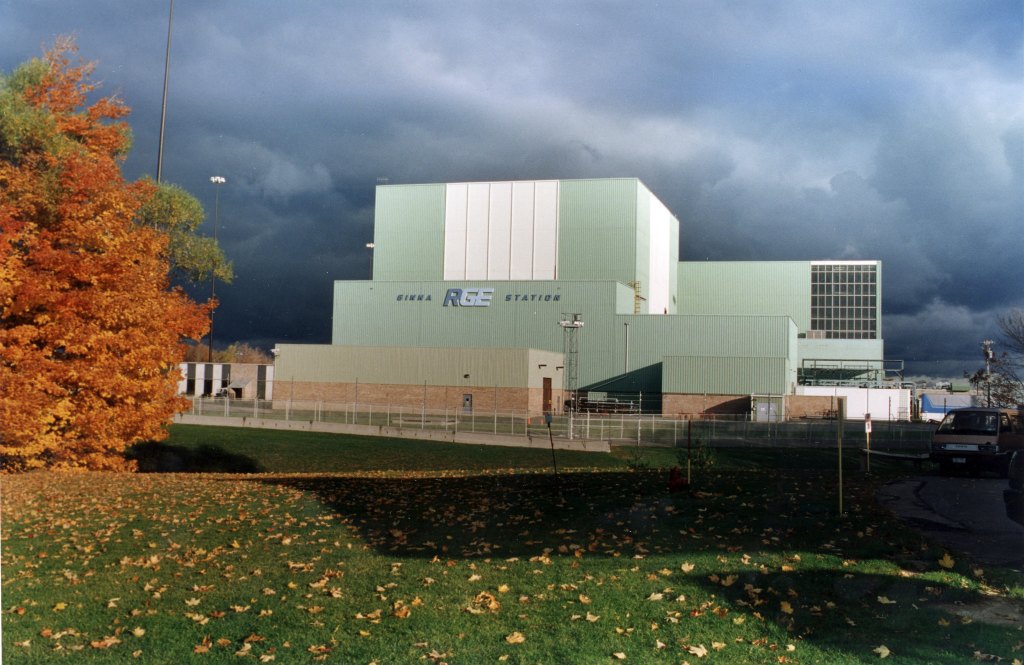
The Tennessee Valley Authority could likely rightfully claim a place in the Guinness Book of World Records, but it’s not an achievement for which the federally-owned electric utility corporation would welcome notoriety.
After taking a whopping 42 years to build and finally bring on line its Watts Bar Unit 2 nuclear power reactor in Tennessee, TVA just broke its own record for longest nuclear plant construction time. However, this time, the company failed to deliver a completed nuclear plant.
Watts Bar 2 achieved criticality in May 2016, then promptly came off line due to a transformer fire three months later. It finally achieved full operational status on October 19, 2016, making it the first United States reactor to enter commercial operation since 1996.

Now, almost five years later, TVA has announced it has abandoned its unfinished two-reactor Bellefonte nuclear plant in Alabama, a breathtaking 47 years after construction began.
TVA was apparently happy to get out of the nuclear construction business, because, as the Chattanooga Times Free Press reported, the company “did not see the need for such a large and expensive capacity generation source.” No kidding!
Read MorePoland’s nuclear folly
Refusing to learn the lessons from Chernobyl, Poland embarks on a rash nuclear power program
By Beata Cymerman
It was April 28, 1986, early morning in Poland. The radiation monitoring station in Mikołajki, Mazury area (north-eastern region of Poland) showed that the radioactivity in the air was 550,000 times higher than the day before. The radioactive cloud from Chernobyl had travelled to Poland. The story of the catastrophe began here.
The Chernobyl disaster in Poland
The government of Poland didn’t immediately release an official statement regarding the catastrophe. Poland was a satellite state of the Soviet Union. After the day of the explosion, April 26, no information was presented by the Polish media. One of the first people informed about the catastrophe was Prof. Jaworowski – Chairman of the Scientific Council of the Central Laboratory for Radiological Protection (CLOR) in Warsaw. He obtained information about the catastrophe from BBC radio and connected it to the unusual measurements from the Mikołajki station.
Together with the President of Polish National Atomic Agency, he set out to monitor the situation. After taking several more measurements on the same day, it became clear that they were dealing with a high radiation risk. Despite the obstacles presented by the Soviet bureaucratic system and with the help of Jaworski’s wife, who was affiliated with the Polish Academy of Science, they managed to directly inform the Prime Minister of their findings.
On April 29, members of the Political Bureau of the Central Committee of the Polish United Workers’ Party (KC PZPR) and the government appointed Government Commission took measures to combat the crisis. The priority was overcoming the effect of exposure to the radioisotope I – 131, which greatly increases the risk of thyroid cancer. The rapid action of administering iodine, which began on the afternoon of April 29, serves as a model for action in the event of a radioactive crisis. It was the largest preventive action in the history of medicine performed in such a short time. In just three days, 18.5 million people were administered iodine solution, adults as well as children. In comparison, in Russia, iodine was distributed a month after the catastrophe.
From personal stories from our parents, I know that we were told not to eat salad, mushrooms and not to drink milk, while friends told us about the radioactive cloud coming to Poland. But there weren’t any official restrictions. Children had to go to school as normal. Moreover, the national bank holiday on May1, and the obligatory march that was customarily held on that day, went on as planned. That shows how the Soviet Union worked, placing political interests over human health.
Read MoreVested interests
How monolithic institutions decide what is safe for the rest of us
By Christine Fassert and Tatiana Kasperski
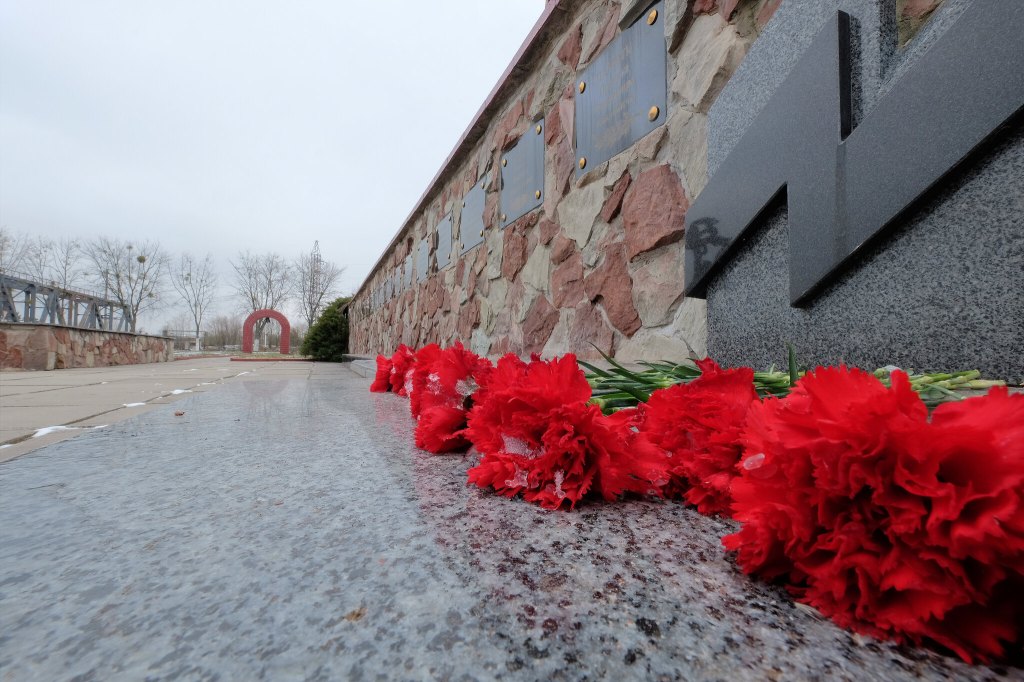
In December 2020, twenty years after the final closure of the Chernobyl nuclear power plant, the Ministry of Culture of Ukraine announced its intention to prepare an application to include certain objects in the exclusion zone around Chernobyl in the UNESCO World Heritage List.
The ministry planned to submit its application in the spring of 2021, as a way to mark the 35th anniversary of the accident on April 26.
This project would allow the establishment of a scheme to preserve the site, but above all to highlight its universal historical importance.
On the UNESCO list
Two sites linked to the dark nuclear past are already on the UNESCO list: the Hiroshima Peace Memorial and the Bikini Atoll Nuclear Test Site.
The Chernobyl site would symbolize the long history of accidents that have marked the atomic age, from Kychtym and Windscale (1957), to Three Mile Island (1979) and Fukushima (2011), whose tenth anniversary we commemorated this year.
Moreover, the Chernobyl accident constitutes a particular moment in this history, namely the beginning of the institutionalization of the international management of the consequences of nuclear accidents, whose impact became fully apparent at the time of the Fukushima accident.
A small group of organizations
If the origins of accidents are most often explained by factors related to the development of the nuclear industry and its regulatory bodies at the national level, the “management” of their consequences gradually extends beyond national borders.
In this respect, Chernobyl established the monopolization of the authoritative knowledge of ionizing radiation by a small group of organizations — the International Atomic Energy Agency (IAEA), the International Commission on Radiological Protection (ICRP) and the United Nations Scientific Committee on the Effects of Atomic Radiation (UNSCEAR).
Through a series of alliances and co-options, these organizations formed a monolithic bloc on the issue of radiological risk.
Read More
