 Beyond Nuclear International
The Taishan death blow
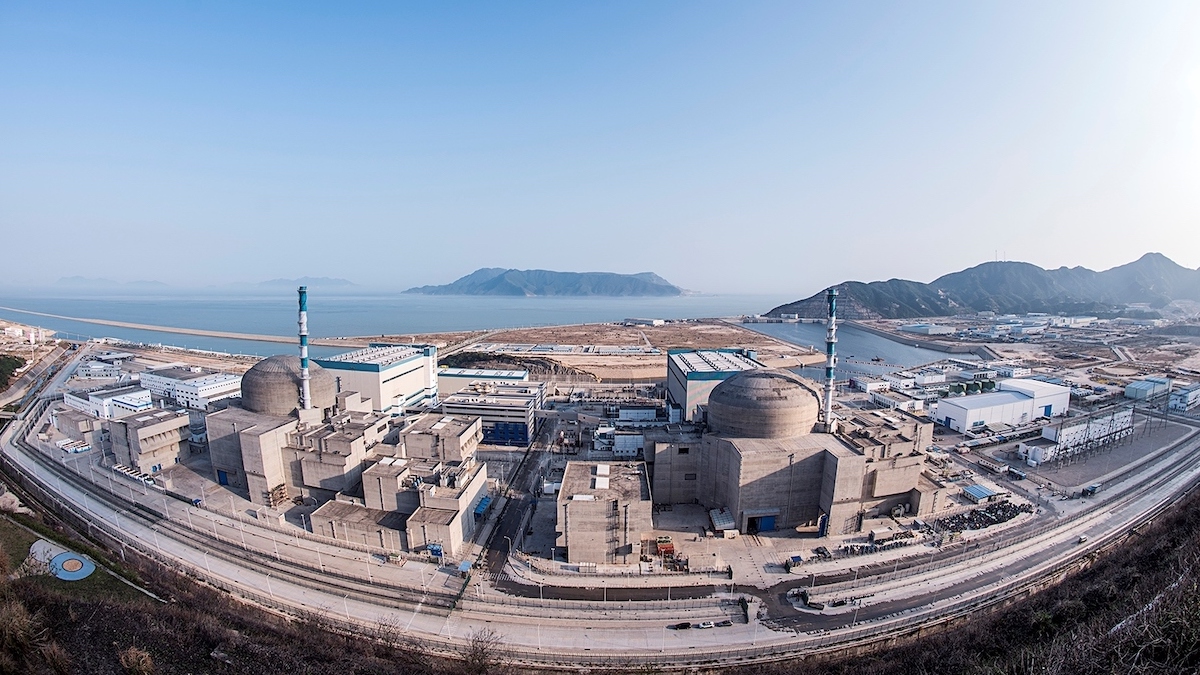
Radioactive leak at Chinese reactor could finish French nuclear exports
Update from Paul Gunter, Beyond Nuclear (6/24/2021): Taishan Unit 1 nuclear power station was the first French-designed European Pressurized Reactor (EPR) in the world to provide electricity, beginning in December 2019. After 19 months of operation, the reactor is experiencing structural failure in the first “defense-in-depth” barrier, the thin-walled steel tubes that clad 60,000 stacks of enriched uranium pellets. The cracking is releasing radioactivity from the uranium fission process into the reactor’s pressurized cooling water system. Apparently, the radioactivity is twice the technical specifications for operations per the reactor supplier, Framatome. Technical specifications have a purpose for safety and operability. That Taishan is still operating raises questions about Électricité de France’s global marketing of nuclear power plants and China’s safety policy.
By Stéphane Lhomme, Nuclear Observatory
If the opacity maintained by the Chinese regime prevents us, for the time being, from knowing the exact consequences of the radioactive leak involving the EPR no.1 reactor at Taishan, revealed on June 14 by CNN, it is, on the other hand, already possible to see how this unfolded and to recommend some next steps.
The fault in the fuel duct seals inside the Taishan EPR dates back to October 2020, that is to say, it had already been going on for more than eight months: the operators of the reactor — the Chinese and the French company Framatome — were perfectly well aware of the gravity of the situation and had jointly decided to hide the existence of the problem from not only the surrounding population but also from the International Atomic Energy Agency.
Luckily, the information ended up seeping out via the American subsidiary of Framatome (Areva NP Inc.). This latter, likely after discussions with the CIA and the White House, happily informed CNN.
Indeed, now that the situation at the EPR at Taishan is known around the world, it will be difficult for the Chinese to continue to operate the reactor under conditions that are most likely beyond its “scope of authorized operational safety” — contrary to what Framatome claims in order not to offend the Chinese.
Read MoreShattered remains

The fight to right the injustices of Trinity
By Tina Cordova
In a world searching for sustainable energy infrastructures, the US has still not rectified the injustices that came about with the earliest moments of the nuclear era. On July 16, 1945, when the US government detonated the first atomic bomb at the Trinity Site in South Central New Mexico, officials had little to no concern for the people who lived in the adjacent area.
Most of them were people of color, Native Americans and also Hispanos who had emigrated north from Mexico (or their ancestors had likely done so). These people were warned neither before nor after the so-called “test” as to the dangers they were facing as a result of the bomb.

As we know, this “test” would be the first of many from both Western and Eastern superpowers. Within the US context, other communities considered marginal to the US would be devastated; the atomic explosions on the Marshall Islands and their impacts on Indigenous communities are one of the best-known of these horrific accounts. Debates around nuclear power continue to have great international resonance today.
As documented in written and oral histories recorded by the Tularosa Basin Downwinders Consortium (TBDC), ash fell from the sky for days after the bomb was detonated and settled on everything—the people, the land, and the animals. The TBDC was originally organized to bring attention to the negative health effects suffered by the people of New Mexico as a result of their overexposure to radiation as a result of the “test.” Ultimately, the TBDC’S goals include raising awareness and attaining justice for impacted local communities and families.
Fallout
The bomb detonated at Trinity produced massive fallout that blanketed the earth and became part of the water and food supply that the people of the area rely on for sustenance. The bomb was incredibly inefficient, inasmuch as it was overpacked with plutonium: it incorporated 13 pounds of plutonium when only three pounds were necessary for the fission process. The remaining 10 lbs. of plutonium—with a half-life of 24,000 years—was dispersed in the radioactive cloud that rose over eight miles above the atmosphere, penetrating the stratosphere.
The bomb was detonated on a platform at a height of 100 feet off the ground, the only time a device was ever detonated so close to the ground. At this height the blast did not produce massive destruction—but it did produce massive fallout. In fact, Trinity produced more fallout than any of the atomic bombs detonated at the Nevada Site. In Japan, the bombs were detonated at heights of 1600 (Nagasaki) and 1800 (Hiroshima) feet respectively, which produced massive destruction and the horrific images which we know too well. In contrast, the accounts of communities in southern New Mexico are best characterized by what Rob Nixon calls “slow violence.” Through this concept, Nixon wants us to focus on how environmental degradation that occurs at the hands of human actors can slowly accumulate and impact communities for years after an initial event.
Read MoreTwo’s a crowd
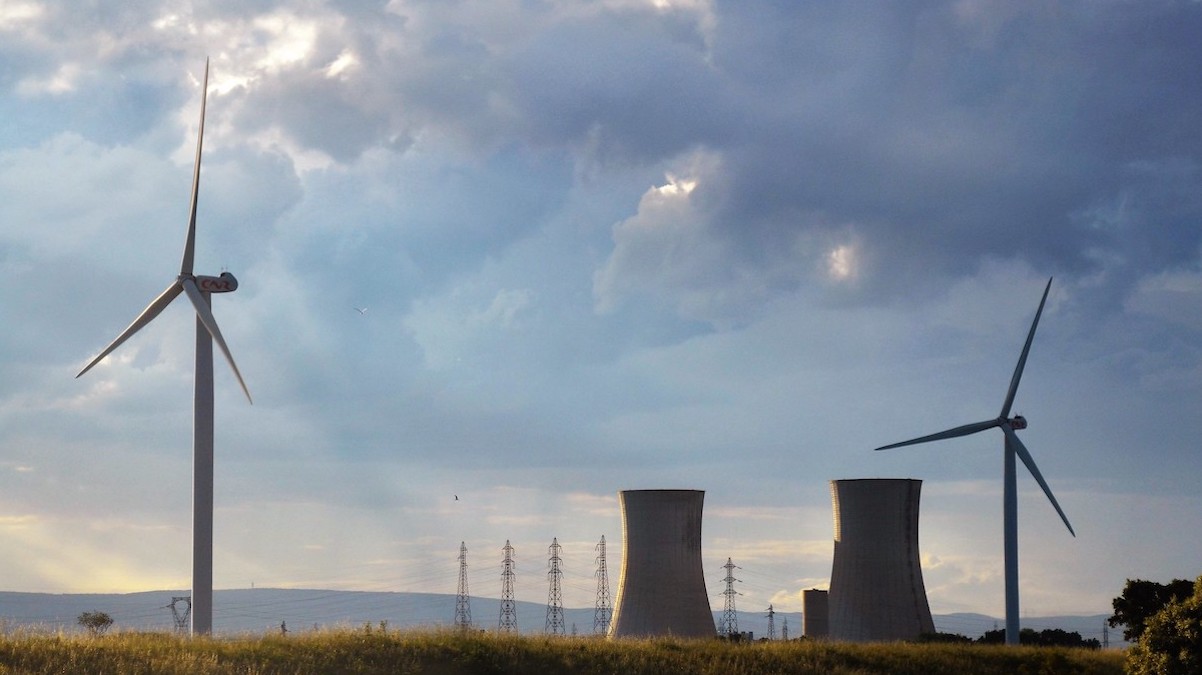
Only renewables — and not nuclear power — can deliver truly low-carbon energy
Note: The third in the new Beyond Nuclear series of Talking Points, features the work of Benjamin Sovacool, Andy Stirling and colleagues, comparing the efficacy of carbon reductions using nuclear power or renewable energy. As this article reflects, they concluded that renewable energy is not only the better choice but that a ‘do everything’ strategy that includes nuclear power tends to cancel out renewable energy.
Please download, print and distribute all of our Talking Points widely. Or email us to request printed copies.
By Neil Vowles
If countries want to lower emissions as substantially, rapidly and cost-effectively as possible, they should prioritize support for renewables, rather than nuclear power.
That’s the finding of a new analysis of 123 countries over 25 years by the University of Sussex Business School and the ISM International School of Management which reveals that nuclear energy programs around the world tend not to deliver sufficient carbon emission reductions and so should not be considered an effective low carbon energy source.
Researchers found that unlike renewables, countries around the world with larger scale national nuclear attachments do not tend to show significantly lower carbon emissions — and in poorer countries nuclear programs actually tend to associate with relatively higher emissions.
Published in Nature Energy, the study reveals that nuclear and renewable energy programs do not tend to co-exist well together in national low-carbon energy systems but instead crowd each other out and limit effectiveness.
Benjmin K Sovacool, Professor of Energy Policy in the Science Policy Research Unit (SPRU) at the University of Sussex Business School, said: “The evidence clearly points to nuclear being the least effective of the two broad carbon emissions abatement strategies, and coupled with its tendency not to co-exist well with its renewable alternative, this raises serious doubts about the wisdom of prioritising investment in nuclear over renewable energy. Countries planning large-scale investments in new nuclear power are risking suppression of greater climate benefits from alternative renewable energy investments.”
Read More“Unqualified”

Nuclear trolls turn on the aggression as industry collapses around them
By Linda Pentz Gunter
“My advice is to look out for engineers. They begin with sewing machines and end up with nuclear bombs.” Marcel Pagnol
My normal rule of thumb is to ignore the unrelenting pro-nuclear trolls who pepper our sites with incessant nay-saying and, occasionally ad hominem name-calling. After all, they have only one goal in mind — other than to get up one’s nose — which is to dominate and thereby control the narrative.
But recently, a recurring theme has emerged which needs addressing, because it speaks to who is allowed to talk about nuclear power.
In the view of the trolls, if you have no scientific credentials, you are unqualified to comment on nuclear power. In my case, because I have a degree in English literature, albeit garnered many decades ago, I have, according to the trolls, no authority to expound on the negatives of nuclear anything.
There are some rather obvious flaws in this argument, the first being that it pre-supposes the human brain is incapable of learning anything new after the age of 21.

But it also exemplifies the theme of a recent conference held virtually in Linz by three Austrian anti-nuclear groups which examined the “Atomic Lie.” How has this lie been perpetuated? Answer: by those who promote the nuclear power industry anointing themselves as the only authority deemed knowledgeable enough to either comment about it or make decisions on its use and safety.
What kind of a world will we end up with if, heaven forfend, we allow only engineers to decide what is in our best interest (with all due respect to my friends who are engineers and who, I suspect, would be the first to agree)? Hence the Pagnol quote at the top of this page.
Read MoreThe USA-UK nuclear cabal

A “special relationship” in nuclear collusion
By Leonard Eiger
On March 16th the United Kingdom announced (in its Integrated Review of Security, Defence, Foreign Policy and Development titled Global Britain in a Competitive Age) that it will increase the limit on its nuclear arsenal for the first time in decades. Instead of maintaining a cap of 180 warheads (as it had previously stated), the UK will increase its stockpile cap to 260 warheads — a 40% increase. The review also broadens the role of nuclear weapons to include the possible use of nuclear weapons to address emerging technologies (cyber attacks). This is shocking and unacceptable! Indeed, it seems the British Empire is flexing its imperial muscles as it breaks away from the rest of Europe.
The announcement comes at a precarious time. A new nuclear arms race is brewing. The US and Russia, the two largest nuclear powers (with some 93 percent of global nuclear warheads) are failing to lead the world away from reliance on nuclear weapons, and other nations are following their lead. At a time when most nations are calling for an end to nuclear weapons (UN Treaty on the Prohibition of Nuclear Weapons), rather than setting a positive example and supporting the treaty, the UK is instead fanning the flames of proliferation. And, it is getting loads of help along the way.
Just prior to the announcement a spokesperson for the UK Ministry of Defence reiterated the longstanding claim that the “UK is committed to maintaining its independent nuclear deterrent, which exists to deter the most extreme threats to our national security and way of life.” The British have been claiming their nuclear weapons systems to be “independent” for so long that the world seems to have accepted this fraudulent claim. In fact, the UK’s nuclear forces are anything but independent, and there is ample evidence to disprove the governments claim. To more fully understand the situation, we need to study a bit of history.

Although the US declared its independence when the original 13 American colonies severed their political connections to Great Britain, the two countries have since found it mutually beneficial to develop a strong alliance; what has become known as the “Special Relationship,” an unofficial term used to describe certain aspects of their relationship including political, diplomatic, cultural, economic, and military.
And nowhere has their relationship been quite as special as is the case involving nuclear weapons. The two countries signed the Mutual Defence Agreement (MDA) in 1958, a secretly negotiated bilateral treaty on nuclear weapons cooperation under which both countries agreed to exchange classified information to develop their respective nuclear weapon systems.
Read MoreThyroid cancer in Fukushima children increased 20-fold

Latest results of the Fukushima thyroid screenings confirm worrying trend
By Dr. Alex Rosen
In 2011, people in Japan were exposed to radioactive fallout. Some still live in contaminated regions where they are exposed to elevated levels of radiation on a daily basis: radioactive hot-spots on the side of the road, in rice paddies or in sandboxes, contaminated mushrooms or algae, contaminated groundwater, and recontamination from forest fires or flooding.
One of the most dreaded effects of radioactive exposure is the development of cancer through mutation of the DNA. Thyroid cancer in children is certainly not the most dangerous form of radiation-induced cancer, but it is probably the easiest to detect. For one thing, the latency periods before a cancer develops are relatively short, while at the same time, thyroid cancer in children is an extremely rare disease, so that even a slight absolute increase can be statistically detected. Accordingly, in 2011, there was great pressure on Japanese authorities to investigate the development of thyroid cancer in children and adolescents in Fukushima by conducting long-term screening examinations.

For almost 10 years now, Fukushima Medical University has been regularly examining the thyroid glands of people who lived in Fukushima Prefecture at the time of the meltdowns and were under 18 years of age. Initially, this group consisted of about 368,000 individuals. Of these, 300,000 (about 82%) were successfully screened in the first few years. After the initial screening (2011-2014), follow-up examinations of these children took place every two years. The second examination has already been completed, the third examination is in its final stage, the fourth series of examinations has been running since 2018, and the fifth since 2020.
Read More Beyond Nuclear International