 Beyond Nuclear International
Paul Flynn, anti-nuclear politician, dies
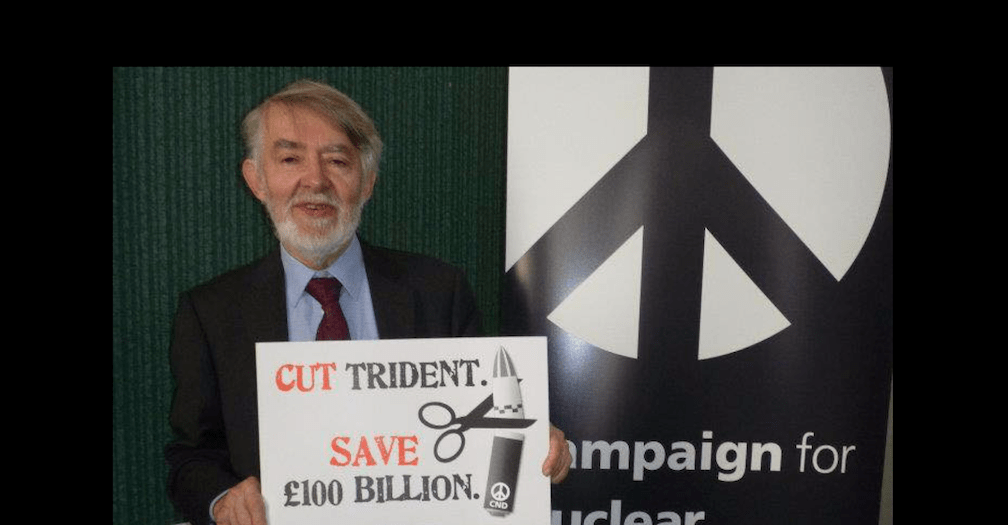
“Welsh pixie” who fought for the “you” in Labour
By Linda Pentz Gunter
Paul Flynn, the UK Member of Parliament for West Newport in Wales, who died on February 17 at age 84, knew how to spell Labour and also what it meant. For those who believe a Labour Party — whether you spell it with a “u” or not — ought to represent working people, Paul Flynn was a big loss. His was, for a while, a dying breed. Now he has died, there may not be enough of his ilk to keep a genuine Labour Party alive. Already, defections are happening. There are those in the Labour Party today who dread success if it is led by a Socialist. Flynn was one. Current Labour leader, Jeremy Corbyn, is another.
The defectors hail from “New Labour” but now call themselves “Independent.” New Labour was an artifice of former Labour Prime Minister, Tony Blair, a tactic to move the party rightward. It sowed the seeds of destruction for the Labour Party which is now, like its Tory counterpart, riven with dissent. It threw bus drivers, and other working people, under their own bus.
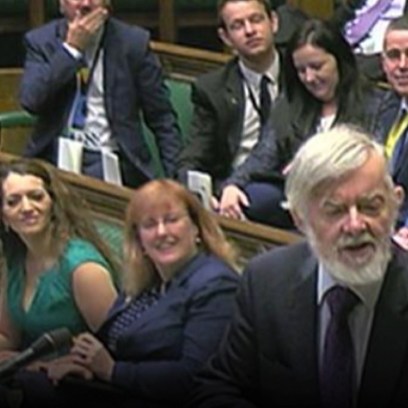
Paul Flynn was a consummate — and often witty — backbencher. (Photo: Ninian Reid, Creative Commons/Flickr)
Flynn, a consummate and lifelong backbencher, didn’t like New Labour one bit. Writing about Flynn in The Guardian in March 2001, Andrew Roth said Flynn derided New Labour as “a malign alien force [which] could infiltrate a political party with beautiful people reared in public schools [and] fed an idealism-inhibiting diet”.
Flynn described himself as “Hyper-assiduous, Welsh-speaking, green-leaning off-beat semi-hard Leftist, fears Labour Party is being taken over by ‘Midwitch Cuckoos’.”* He saw the death knell that Blair’s regime would sound on “old” Labour, writing in 1995 that ‘We will win the election but lose the Labour Party”. Which is pretty much what happened.
The uranium map in our bodies

Where uranium and its decay products go and how they harm us
By Cindy Folkers
Uranium is radioactive. Humans have been digging uranium out of the earth worldwide for over a century, using it in everything from pottery glaze to atomic bomb production. While health impacts of uranium and its decay products were at first unknown, by the time of the Cold War atomic arsenal buildup, obvious health impacts (lung cancer, for instance, had become associated with uranium mining as early as the 1930s) were ignored in favor of nuclear warhead production. Uranium mines and mills spread across the US.
In the Western US, as in most of the rest of the world, the miners and people living near these facilities were largely indigenous. Not only was the health of workers impacted, but because uranium industrial processes left radioactive contamination in soil and water, people living in the area also suffered health effects. Uranium and decay products still litter these landscapes, posing a continuing danger, particularly when inhaled or ingested
While these radioisotopes occur naturally, they are artificially available due to industrial processing. Although mining for uranium is the most obvious source, gold and other mine processes can also release these materials. Mine sites and surrounding areas pose the greatest danger of exposure to uranium and all of its decay products
Additional sites that could pose a danger from individual decay products include thorium waste disposal sites and factories that used radium paint for commercial and military items such as watch and airplane dials. These sites dot the North American landscape and although a number of these facilities have been cleaned up as part of the Superfund program, for some, monitoring is ongoing. Radon gas can leach out from the ground in many places, not just from mines, and become trapped in buildings. In this instance, however, radon can be easily, safely removed by simple technology as recommended by the US Environmental Protection Agency (EPA), posing essentially no danger.
While all exposed are at risk, radiation poses a particular danger to women, children and pregnancy. Pregnancy is a unique concern, as the impacts are not accounted for in current radiation exposure standards.
Radioactive sea spray is dosing communities
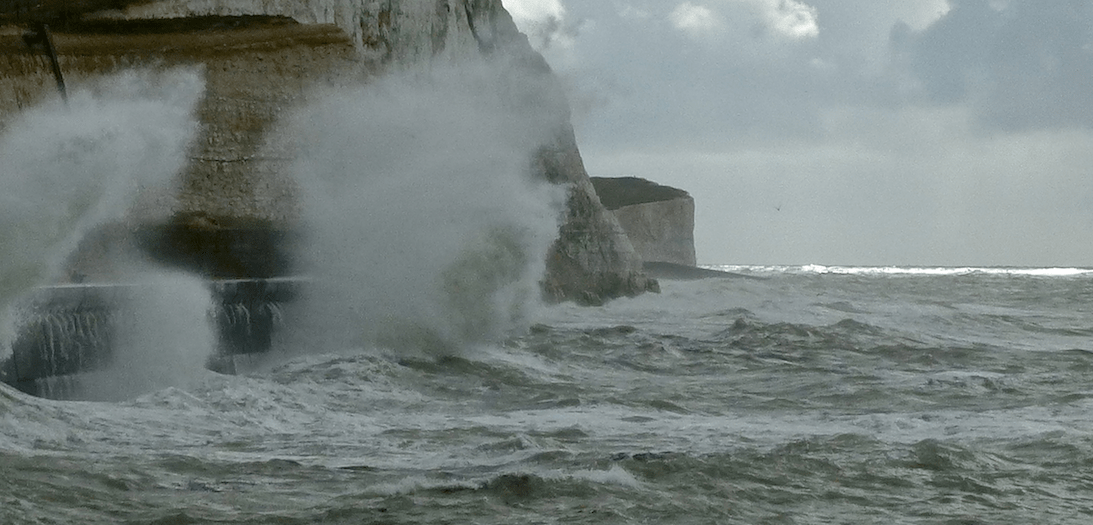
Governments want to cover it up
By Tim Deere-Jones
I am taking a walk along the path at Manorbier on the south Pembrokeshire coast in Wales. The tomb of King’s Quoit is still in its midwinter shadow. It gets no direct sunlight for 28 days either side of the solstice. And yet the first daffodils and pink campions are already in bloom.
A visit to the tomb on the first day when light returns is a truly amazing sight. It is perched by fresh running water, on the edge of cliffs, just above the sea. You can smell the salt in the air, and feel the mist of sea spray blown in by the prevailing onshore winds.
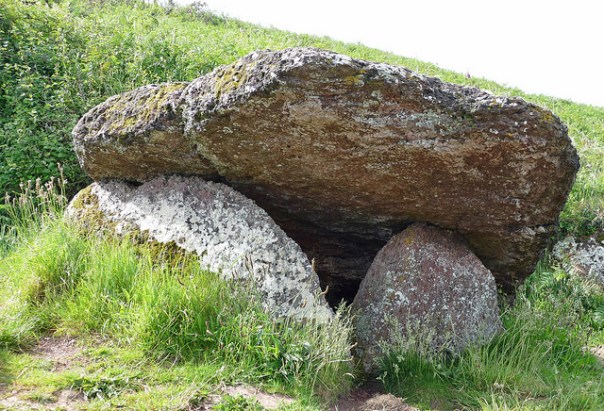
The idyllic King’s Quoit on the Welsh coast may hide something more sinister. (Photo: Andrew for Creative Commons/Flickr)
And yet in some coastal areas such a moment may not be as idyllic as it seems.
It is clear from the available empirical data that coastal populations impacted by prevailing onshore winds and living next to sea areas contaminated with liquid radioactive effluents from nuclear sites, are annually exposed to dietary and inhalation doses of man-made marine radioactivity.
A return to Greenham Common?
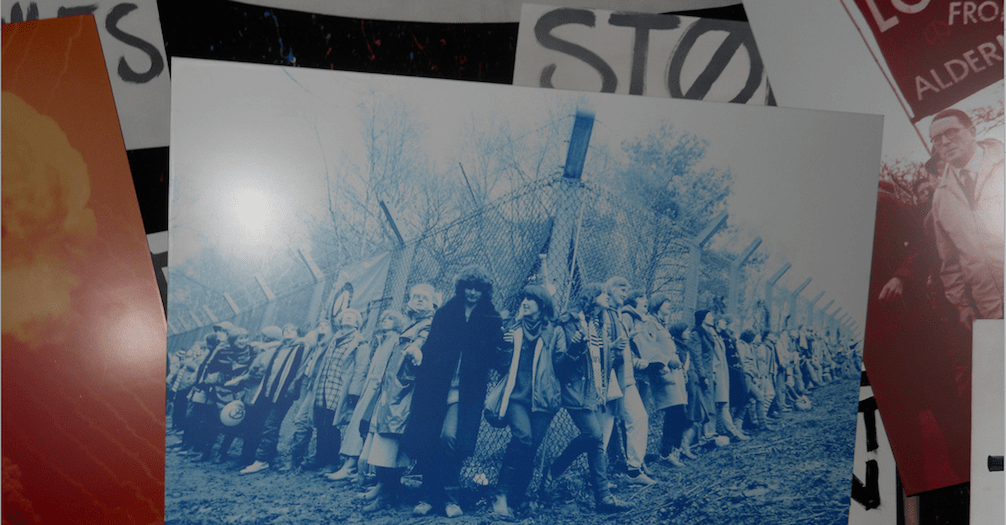
Putin and Lockheed Martin are the winners as Trump withdraws US from INF Treaty
By Rebecca Johnson
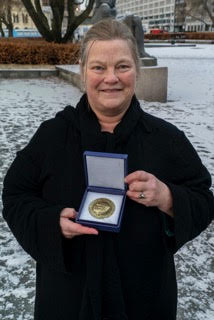
Author Rebecca Johnson with the Nobel Peace Prize. (Photo: Ari Beser)
On 1 February the White House announced US “suspension” of the Intermediate-range Nuclear Forces (INF) Treaty, which Presidents Reagan and Gorbachev signed in 1987. A day later Vladimir Putin announced Russia would suspend as well. Freed of the Treaty’s restraints, Russia is now poised to deploy a new generation of medium-range nuclear weapons on its territory again.
Once again, Donald Trump has played into Putin’s hands, to the detriment of US and European security. Unless wiser heads prevail in the next six months, the Putin-Trump team is set to destroy this successful Treaty that halted the US-Soviet arms race, pulled Europe away from the brink of nuclear war, and paved the way for the cold war to end.
Trump’s excuse for suspending US compliance is Russia’s apparent violation of the Treaty with tests on a new ground-launched cruise missile – designated 9M729. Moscow denies that the missile violates the prohibited range of 500-5,500 km, and counter claims that “Aegis Ashore” US missile defences in Romania could be adapted in the future to violate the treaty and threaten Russian cities. There are legitimate security concerns attached to both allegations. And both the US and Russia are worried about China’s arsenal of intermediate-range missiles, which are currently exempt from the INF constraints that apply across Europe.
Instead of giving Putin what he wants by suspending the Treaty, a sensible US Government would have piled on the pressure diplomatically. If reconvening the Treaty’s “Special Verification Commission” is not enough to resolve the problems – which as former Soviet president Mikhail Gorbachev noted in 2017 were more political than technical – there are other constructive ways to address the compliance challenges, rebuild confidence and develop a process to resolve and prevent future problems.
The Green New Deal goes to Washington
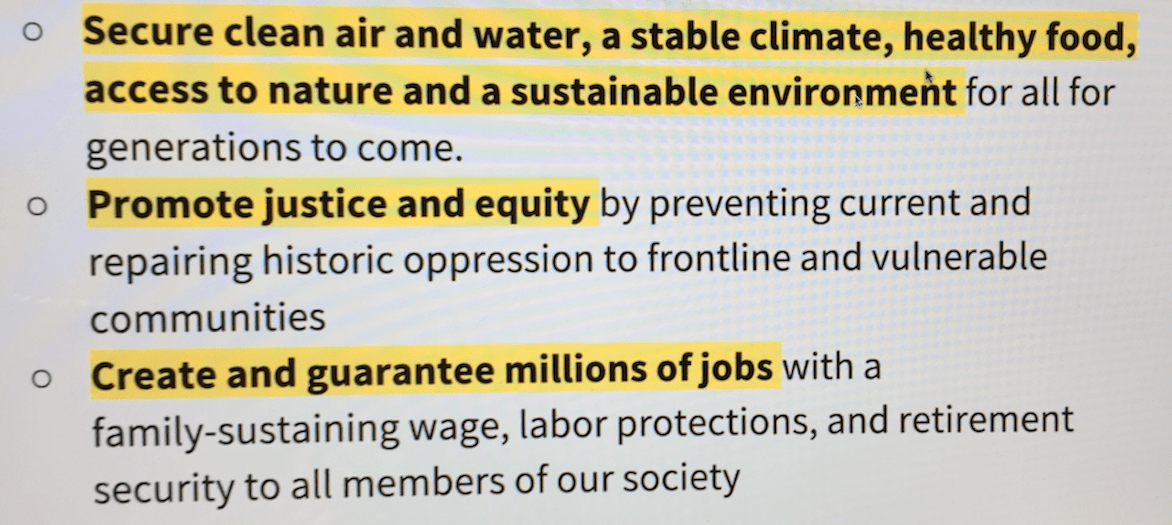
Now the battle is on to keep nuclear power out of it
By Linda Pentz Gunter
To be clear, there is no “the” in the Green New Deal. It’s a concept that is yet to become an actual bill here in Washington, DC, and the term has been appropriated — and misappropriated — by a number of different entities, each of which defined the Deal somewhat differently.
This continues to cause consternation among some in the anti-nuclear movement who feared at the outset that what might end up going to Capitol Hill would include at least vague references to “clean energy,” often code for nuclear power, if not overt demands that nuclear be included.
That confusion hasn’t entirely gone away.
A non-binding Green New Deal Resolution, was introduced on February 7 by the dynamic new Democratic Congresswoman from New York, Alexandria Ocasio-Cortez in the US House of Representatives, and by Senator Ed Markey (D-Mass.,) in the Senate. News outlets covering the rollout began to report that, in a Green New Deal (GND) fact sheet FAQ provided by Ocasio-Cortez’s office on her website, nuclear power was specifically referred to as a non-starter. Posted to the National Public Radio website, the fact sheet stated:
“The Green New Deal will not include investing in new nuclear power plants and will transition away from nuclear to renewable power sources only.”
The quote was picked up by Bloomberg as well. But then Ocasio-Cortez’s website posted a redacted version, with no mention of nuclear power. And then the fact sheet disappeared altogether.
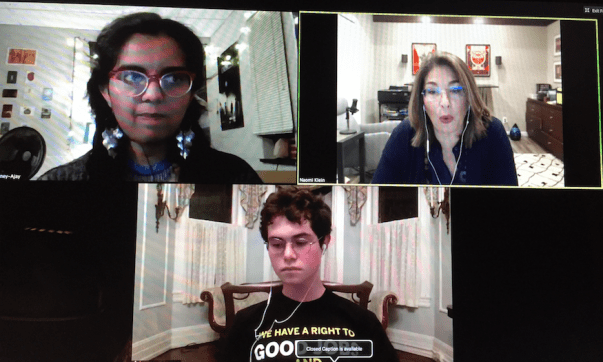
Leaders of the Sunrise Movement invited author Naomi Klein to their webinar who told the activists “to make them do it” when asking Members of Congress to support the Green New Deal.
A planet worth saving
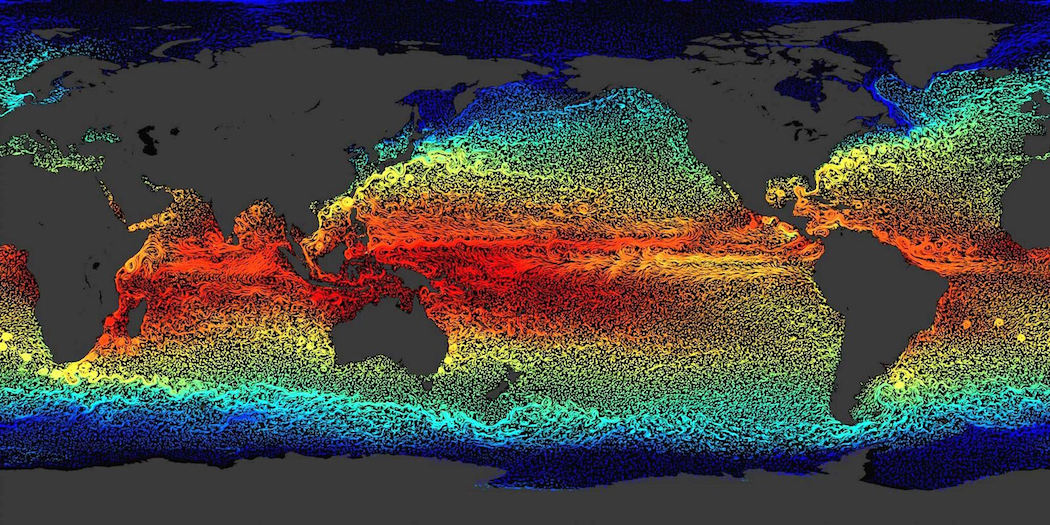
Multi-visual Bella Gaia delivers a perspective on the beauty — and human-caused tragedy — of Planet Earth
By Linda Pentz Gunter
This week, Karl Grossman’s story reminds us that dangerous political leaders like Donald Trump, choose to see space as a venue for warfare. As an antidote, therefore, we also bring you a powerful reminder of why that must never happen.
Several years ago I attended a performance of Bella Gaia. Performance is really the wrong word. Immersion would be closer, transformative experience even better. Bella Gaia is the inspiration of New York violinist Kenji Williams, and his inspiration came in turn from astronauts who went to outer space and experienced the “overview effect,” a quasi-religious epiphany that occurred on seeing planet Earth from afar and in the context of its home within the vast universe.

Violinist, Kenj Williams, creator of Bella Gaia, in performance. (Photo: Christopher Altman/Creative Commons.)
Despite his collaboration with NASA, whose breathtaking images he uses, Williams has not put together just another planetarium show. It is a multi-media experience, combining music, dance, other-worldly vocals and a lesson in just how dangerous and damaging our ever worsening human behavior is becoming for Bella Gaia (Beautiful Earth).

